Category Archives: Food Inspections

UK – Former pub owner fined £14,000 after nearly 200 people suffer food poisoning on Mother’s Day

Somerset Live


The former owner of a North Somerset pub has been fined £14,000 after nearly 200 people fell ill after eating at his venue on Mother’s Day.

Hundreds of people ate a meal at The Old Farmhouse in Nailsea on March 11, 2018, but 186 fell ill with food poisoning after their visit.

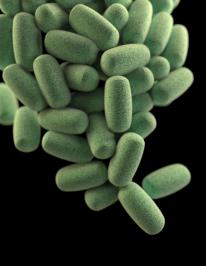
The case, brought to North Somerset Magistrates’ Court on Friday (January 11), revealed that tests on the samples taken from the pub showed that both the beef and lamb contained the bacteria Clostridium perfringens.

In a letter to the court Mr Montgomery said: “I am truly sorry for the harm caused to our patrons.”

Mr Montogomery was fined £4,000 for failing to ensure the relevant food safety documentation was in place.

He was fined a further £10,000 for placing unsafe food on the market.

He was also ordered to pay the £4,765 costs of the investigation and a £170 victim surcharge.

Research – Evaluation of lemongrass and ginger essential oils to inhibit Listeria monocytogenes in biofilms

Wiley Online

Abstract

Listeria monocytogenes, a foodborne pathogen, is hard to eliminate from food processing environments because it can persist in biofilms. Searching for natural agents that can effectively act against L. monocytogenes biofilms is important to prevent food contamination, especially in the case of ready‐to‐eat foods. Here, we determine the key components of the lemongrass and ginger essential oils (EOs) and evaluate the activity of each EO against L. monocytogenes biofilms. Biofilms grown on stainless steel and glass coupons were monitored by culture method and confocal laser scanning microscopy (CLSM). These techniques revealed the presence of live and dead cells. Monoterpenes were the main components in the lemongrass EO; monoterpenes and sesquiterpenes were the main constituents of the ginger EO. Although the lemongrass EO affected L. monocytogenes biofilms significantly, none of the tested treatments inhibited the pathogen completely. Therefore, controlling the presence of L. monocytogenes in food processing areas demands preventive measures.

Practical application

Microbial biofilms constitute a challenge for effective sanitation in the food industry. Synthetic products are commonly used as sanitizers, but consumers have demanded more natural food produced in eco‐friendly environments. This scenario has motivated the search for natural antimicrobials that can be applied in food facilities to eliminate microorganisms from biofilms. Plant‐derived compounds represent an alternative source of antimicrobials due to their potential acceptance by the consumers and wide availability. This study shows that treatment with lemongrass essential oil significantly affects biofilms formed by the foodborne pathogen Listeria monocytogenes, but the treatment does not eradicate the biofilms. Our results demonstrate that it is possible to identify natural antimicrobials with potential use as alternative sanitizers in the food industry.

USA – CDC Reports Romaine Lettuce Outbreak Over – E.coli

Food Safety Tech Eurofins Food Testing UK

Although FDA is continuing its investigation into the source of the E.coli outbreak involving romaine lettuce grown in California, the CDC has declared the outbreak over. Contaminated romaine that caused illnesses should no longer be available, FDA stated in an outbreak update. Consumers will not need to avoid romaine lettuce, and retailers and restaurants do not need to avoid selling or serving the product, according to the agency. Suppliers and distributors need not avoid shipping or selling any romaine that is on the market either.

USA – Public Health Alert Concerning a Possible Hepatitis A Contamination of Bauer’s Candies’ Modjeskas

Food Poison Journal

The FDA is alerting consumers to possible hepatitis A contamination of Bauer’s Candies Modjeskas, an individually wrapped marshmallow candy dipped in chocolate or caramel. We are advising consumers not to eat and to throw away any Bauer’s Candies Chocolate or Caramel Modjeskas, purchased after November 14, 2018 because a worker in the facility tested positive for hepatitis A.


RASFF Alert – Histamine – Chilled Tuna

RASFF-Logo

RASFF -histamine (468 mg/kg – ppm) in chilled tuna from France in Belgium

RASFF Alert- STEC E.coli – Raw Sausage

RASFF-Logo

RASFF -shigatoxin-producing Escherichia coli in raw sausage from Austria in Austria

Cambodia – Two South Korean students die of suspected food poisoning

Khmer Times

Medical doctors are seeking the cause of the death of two South Korean female students who died on Wednesday afternoon and Thursday morning over suspected food and water poisoning in Phnom Penh.

The victims in their 20 and 21 were among the 16 volunteer students and three professors from Konyang University who built facilities or products for rural people from Monday to January 19, according to an official at the South Korean embassy.

The official said that the victims and two more other friends were eating pizzas and drink beers at a foreign-owned restaurant in front of the hotel after having their dinner on Monday night.

“Except for the two, the students are known to have no health problems. The students explained that they had immunized against malaria, typhoid and tetanus before going to Cambodia,” the official said.

USA- Oasis of the Seas: 277 sickened on cruise, voyage cut short – Norovirus?

Outbreak News Today

Health officials are reporting some 277 passengers and crew onboard Royal Caribbean’s vessel, Oasis of the Seas, have fell ill with vomiting being the predominant symptom.

According to the Center for Disease Control and Prevention (CDC), 266 of 6,285 (4.23%) passengers and 11 of 2,169 (0.51%) crew were sickened.

While media reports state the cause of the outbreak as Norovirus, CDC officials report the causative agent as being “unknown” as of Jan. 10.

The ship left left Port Canaveral on a seven-day Western Caribbean cruise on Sunday. The ship will return to Port Canaveral on Saturday, one day ahead of schedule.

RASFF Alerts – Aflatoxin – Peanuts – Almond Kernels – Almonds

RASFF-Logo

RASFF – aflatoxins (B1 = 13,3; Tot. = 14,7 µg/kg – ppb) in peanuts from China in Spain

RASFF-aflatoxins (B1 = 23.9; Tot. = 26.2 µg/kg – ppb) in peanuts in shell from Egypt in Germany

RASFF-aflatoxins (B1 = 15.7; Tot. = 24 µg/kg – ppb) in almond kernels from Australia, via Vietnam in Spain

RASFF-aflatoxins (Tot. = 24 µg/kg – ppb) in almond kernel from Australia, manufactured in Vietnam in Spain

RASFF -aflatoxins (B1 = >24; Tot. = >24 µg/kg – ppb) in almond kernels from Australia, manufactured in Vietnam in Spain

RASFF-aflatoxins (B1 = >24; Tot. = >24 µg/kg – ppb) in almond kernels from Australia, manufactured in Vietnam in Spain

RASFF-aflatoxins (B1 = 22.8 µg/kg – ppb) in almonds from Australia, manufactured in Vietnam in Spain

RASFF-aflatoxins (B1 = 22.7; Tot. = >24 µg/kg – ppb) in almonds from Australia, manufactured in Vietnam in Spain

RASFF-aflatoxins (B1 = 17.2; Tot. = 21.7 µg/kg – ppb) in almonds from Australia, manufactured in Vietnam in Spain

RASFF-aflatoxins (B1 = 24; Tot. = 24 µg/kg – ppb) in almonds from Vietnam in Spain

RASFF-aflatoxins (B1 = >24; Tot. = >24 µg/kg – ppb) in almonds from Vietnam in Spain


RASFF Alert – Ochratoxin A -Raisins

RASFF-Logo

RASFF-ochratoxin A (66.5 µg/kg – ppb) in raisins from Uzbekistan, via Slovakia in the Czech Republic
