Category Archives: Food Illness

USA – CDC Update – Multistate Norovirus Outbreak Linked to Raw Oysters from Texas

CDC

Food Borne Illness - Norovirus -CDC Photo

The Centers for Disease Control and Prevention (CDC), the U.S. Food and Drug Administration (FDA), the Texas Department of State Health Services, and other public health partners, are investigating a multistate outbreak of norovirus illnesses linked to raw oysters from Texas.

FDA Advises Restaurants, Retailers and Consumers to Avoid Potentially Contaminated Oysters from Harvest Area TX 1, Texas | FDA

Fast Facts

Illnesses: 298 illnesses* have been reported as of December 20, 2022.

States affected: Alabama (AL), Florida (FL), Georgia (GA), Louisiana (LA), Mississippi (MS) North Carolina (NC), Tennessee (TN), Texas (TX)

Recall: Yes DSHS Recalls Oysters Harvested in Area of Southeastern Galveston Bay | Texas DSHS

Investigation Status: Active

*This number is an estimate based on the information we have at this time. CDC is working with state and local partners and will update this number as more information is gathered.

Raw Oysters and Norovirus

If eaten raw, oysters and other filter-feeding shellfish can contain viruses and bacteria that can cause illness or death. Anyone who consumes raw shellfish is at risk of contracting norovirus. Children younger than five years old, the elderly, and those people with weakened immune systems are more likely to have severe infections. Food contaminated with norovirus may look, smell, or taste normal. To avoid food poisoning from oysters, cook them well to a temperature of at least 145 degrees F.

USA -FDA Core Investigation Table -Investigations of Foodborne Illness Outbreaks

FDA

Active Investigations

Date
Posted
Ref Pathogen
or
Cause of
Illness
Product(s)
Linked to
Illnesses

(if any)
Total
Case
Count

Status
Outbreak/
Event
Status
11/16/22 1113 Salmonella

Typhimurium

Not Yet
Identified
274 Active Ended
See Advice
11/9/22 1127 Listeria
monocytogenes
Enoki Mushrooms See
CDC’s
Investigation
Notice
Active Ongoing
See
CDC’s
Investigation
Notice

New Zealand – The 12 food safety myths of Kirihimete – How to Avoid Food Poisoning

MPI

Ho! Ho! Uh-oh! New Zealand Food Safety deputy director-general Vincent Arbuckle busts some food safety myths to help you avoid giving your whānau and friends food poisoning over the festive season (and beyond).

1. You can reheat leftovers as many times as you like

One of the joys of the holiday season is having a mountain of leftovers. Reheating them once, to piping-hot temperature, shouldn’t be a problem (unless you’ve left them out too long before refrigerating or freezing). But every time you cool your food and reheat it, you give germs the opportunity to multiply, so doing this more than once raises the risk of foodborne illness. If you have a big batch of leftovers in the fridge, reheat only what you need, or divide it into meal-sized potions before freezing. Bin any unfinished reheated food. And, if your leftovers aren’t frozen, eat them within 2 days. While we’re at it, let’s bust the myth that leftovers are safe to eat if they look and smell okay. Although many nasties cause spoilage that will quicky make itself known in looks, texture, smell and (if you regrettably get that far) taste, there are many that are undetectable in the usual way. If in doubt, throw it out!

More information about food poisoning symptoms and causes

2. Hot leftovers should be left out to cool completely before refrigerating

Although it’s true that putting hot food in the fridge can drop its overall temperature slightly, it’s not as potentially detrimental to your health as waiting for your leftovers to cool completely. So, to decrease the risk of giving bacteria more time to grow on hot food, cool it for up to 30 minutes at room temperature (or wait till it’s stopped steaming), put it in a shallow dish (to help the food cool faster), cover, and pop it in the fridge, making sure there’s room for the air to circulate. Hot tip: most harmful bacteria can’t grow at low temperatures, so set your fridge to between 2°C and 5°C

More information about chilling your food

3. Freezing food kills bacteria and viruses

Given how much frozen berries and Hepatitis A have been talked about over the past few months, this myth is fortunately losing a bit of traction. But to be clear, freezing doesn’t necessarily kill the germs that can contaminate food. The recent frozen berry recall is a good reminder that viruses, such as Hepatitis A, can survive freezing, freeze-drying, and heat of less than 85°C. Washing frozen berries also doesn’t get rid of the problem. When the berries start defrosting, the warmer conditions allow the bacteria to wake up and start multiplying. If you want to be sure your berries are safe to eat, boil them or cook them for at least a minute at more than 85°C. Then refreeze them in an ice tray to have handy as needed.

Media release: frozen berries recall

More information about making frozen berries safe to eat

4. The best way to defrost food is to leave it out on the kitchen bench

Leaving your defrosting food on the bench is, in reality, the best way to give bacteria time to grow in a nice, warm environment. Bacteria thrive in temperatures between 5°C and 60°C, so, to decrease the likelihood of bacteria multiplying, and your food spoiling and making you sick, defrost it in the fridge, or in the microwave. Fun fact: bacteria are some of the fastest-reproducing organisms on Earth – they can double in number every 4 to 20 minutes!

More information about preparing and storing food safely at home

5. It’s okay to eat shellfish that you have gathered raw, as long as it’s fresh

Kiwis love their seafood –  and many people have traditionally gathered and eaten shellfish like mussels, kina, and pipi raw. But times have unfortunately changed. Vibrio is a type of bacteria naturally living in the sea, and some strains can cause gastroenteritis when consumed. Thanks in part to warmer sea temperatures, there’s more Vibrio around, so eating raw or undercooked shellfish, even fresh, can make you and your whānau very ill. Cases of Vibrio parahaemolyticus illness and hospitalisations have been increasing every year over summer. So, to help prevent illness, keep your gathered shellfish alive and cool, cook it thoroughly before eating, and keep raw shellfish away from other cooked or ready-to-eat food (so Vibrio can’t transfer to uncontaminated food).

More information about how to collect, store and cook shellfish – including recipes

6. You need to wash raw chicken before cooking it

Chicken in New Zealand has already been washed, so you don’t need to do it again. Although Campylobacter, Salmonella and other illness-causing bacteria live on raw chicken, it’s not a good idea to wash it again at home. Rinsing or washing it allows these bacteria to spread to other areas of your kitchen. If you’re worried about chicken juices, just pat it dry with a clean paper towel and then throw the paper towel away. While we’re on the topic of chicken, it’s also not okay to use the same chopping board, utensils, or plate for both your raw and cooked chicken. Anything that’s touched raw chicken needs to be washed in hot, soapy water before being used for any other food – and that includes your hands.

More information about handling chicken safely

7. Eating foods after the ‘use by’ date is fine

We know times are tough and few can afford to throw away food, but if the ‘use by’ date on a packaged product in your fridge or pantry has come and gone, bin it. It is not safe to eat. In fact, it’s illegal to sell food past its ‘use by’ date. However, food should still be safe to eat after the ‘best before’ date, but it’s likely to have lost some quality. Stores can sell food beyond a ‘best before’ date, as long as it’s still fit for human consumption. Make sure to check the date on your food labels, so you can make a good call on whether to chow down or chuck out.

More information about food labels

8. Plastic chopping boards are more hygienic than wooden ones

The key to a chopping board being hygienic is to thoroughly clean it after every use with hot, soapy water – particularly if you’ve been using it for raw meat, fish or shellfish. But, to bust the myth, research by food microbiology and toxicology expert Dr Dean O. Cliver showed wooden chopping boards retain less bacteria than plastic boards, particularly if the plastic has been damaged by knives, providing convenient spots for bacteria to hide before transferring onto other food. He found that wood, because it’s porous, absorbs the bacteria – and although the bacteria doesn’t die immediately, neither does it return to the surface of the board. So wood is the better option. As for glass and stainless-steel cutting boards, they’re not porous like wood and don’t scratch easily like plastic, so keep them clean, and happy chopping!

More information about food safety at home

9. It’s okay to eat a little bit of raw cookie dough or cake batter

Unfortunately, it’s not okay. Raw flour – and raw whatever-else-you’ve-popped-in-your-dough – can carry illness-inducing bacteria. Baking will kill that bacteria. Although there are clear food standards and food safety guidelines in New Zealand, raw flour can be contaminated with Salmonella, so, remember the rhyme: ‘Just a lick can make you sick!’

More information about safe cooking tips

10. You don’t need to wash bagged greens or salads

Any bagged lettuce, salad, or other manner of greens you buy, still need to be washed first before using. Under running water in a clean colander in the sink will do. This will reduce any food safety risks due to bacteria or chemical residues.

More information about other cleaning tips

11. If you drop food on the floor and pick it up within 5 seconds, it’s safe to eat

Sorry, the ‘5-second rule’ is a myth. Whether it’s 1 second or 10, all bacteria and viruses need to get onto your food – and into your gut – is any contact at all. Although the moisture and stickiness of the food will affect the number of germs that will attach to the food, to be safe, if you’ve dropped it on the way to your mouth, best to bin it – and wash your hands. If you’ve dropped it during food preparation – and it can be salvaged (we’re not talking spilt milk and broken eggs) – and if you really can’t bear to throw it away, rinse it and make sure it’s cooked thoroughly to kill unwanted nasties.

More information about food poisoning

12. Mouldy food is okay to eat, as long as I cut off the mouldy bit

That spot of mould you scrape of your bread, or the one you cut off your cheese, is the tip of the iceberg. Mould have spores and roots going into the food, which you often can’t see. They can also produce toxic chemicals called mycotoxins that can make you really ill. Not all moulds are bad – some make life-saving medicine (penicillin) and delicious cheeses. Fun fact: the mould used in the production of camembert and brie is named Penicillium camemberti, after the cheese first made in the late 18th century in Camembert, France.

More information about food poisoning

Norway -Cucumber from Spain is a suspected source of infection in outbreaks of Salmonella

Matportalen

After an extensive outbreak investigation, cucumber from a Spanish supplier stands out as the likely source of infection in a salmonella outbreak that started in November. No new cases of illness have been reported in recent weeks, which may indicate that there are no longer any contaminated products on the market and that the outbreak is probably over.

There are now 72 people registered who have become ill from the gastrointestinal bacterium Salmonella Agona. The peak of infection in Norway was in mid-November, and the last reported case of the disease came on 2 December. Cases of the same outbreak strain have also been reported in Sweden and the Netherlands, in the same period.

– It is not always possible to find the source of infection in such outbreaks, but now some batches of cucumber from a Spanish supplier have been identified as the most likely, says Catherine Svindland, senior adviser at the Norwegian Food Safety Authority.

These batches of cucumber are no longer on the market. The Norwegian importers of cucumbers from the supplier have intensified the sampling of cucumbers as an additional safety measure. Salmonella was not found in these samples. The Norwegian Food Safety Authority has notified the Spanish authorities and other countries in the EU about the suspicion.

The contaminating cucumbers have probably not been on the market since November.

The outbreak investigation continues to, if possible, definitively establish that these cucumbers are the source of infection. This can be challenging, as the polluting products are likely to be out of the market and people’s fridges.

USA – Multistate Norovirus Outbreak Linked to Raw Oysters from Texas

CDC

The Centers for Disease Control and Prevention (CDC), the U.S. Food and Drug Administration (FDA), the Texas Department of State Health Services, and other public health partners, are investigating a multistate outbreak of norovirus illnesses linked to raw oysters from Texas.

FDA Advises Restaurants, Retailers and Consumers to Avoid Potentially Contaminated Oysters from Harvest Area TX 1, Texas | FDA

Fast Facts

Illnesses: 211 illnesses* have been reported as of December 15, 2022.

States affected: Alabama (AL), Florida (FL), Georgia (GA), Louisiana (LA), Mississippi (MS) North Carolina (NC), Tennessee (TN), Texas (TX)

Recall: Yes DSHS Recalls Oysters Harvested in Area of Southeastern Galveston Bay | Texas DSHS

Investigation Status: Active

*This number is an estimate based on the information we have at this time. CDC is working with state and local partners and will update this number as more information is gathered.

Raw Oysters and Norovirus

If eaten raw, oysters and other filter-feeding shellfish can contain viruses and bacteria that can cause illness or death. Anyone who consumes raw shellfish is at risk of contracting norovirus. Children younger than five years old, the elderly, and those people with weakened immune systems are more likely to have severe infections. Food contaminated with norovirus may look, smell, or taste normal. To avoid food poisoning from oysters, cook them well to a temperature of at least 145 degrees F.

What Businesses Should Do

Do not serve or sell raw oysters harvested between 11/17/2022 and 12/7/2022 from harvest area TX 1, Galveston Bay, Texas:

  • Restaurants and food retailers should not serve raw oysters from harvest area TX 1, Galveston Bay, Texas, harvested between 11/17/2022 and 12/7/2022, which will be printed on product tags.
  • The FDA has confirmed that raw oysters harvested in area TX 1, Galveston Bay, Texas were potentially contaminated with norovirus and distributed to restaurants and retailers in Alabama (AL), Florida (FL), Georgia (GA), Louisiana (LA), Mississippi (MS) North Carolina (NC), Tennessee (TN) and Texas (TX). It is possible that additional states received these oysters through further distribution within the U.S.

Throw away any remaining oysters or return them to your distributor for destruction.

These oysters may be contaminated with norovirus. Follow these steps:

  • Wash and sanitize containers and surfaces that may have come into contact with these oysters.
  • Wash hands with warm water and soap following the cleaning and sanitation process.
What You Should Do

Do not eat any raw oysters from the areas listed above. If you have oysters at home from any of the areas listed above, throw them away. Clean any utensils or food preparation surfaces that may have touched the oysters.

If you think you might have gotten sick from eating possibly contaminated raw oysters, talk to your healthcare provider and report your illness to your local health department.


UK – Consumers warned about recalled smoked fish products linked to Listeria outbreak

FSA

Products produced by St James Smokehouse and sold under Lidl’s ‘Deluxe Oak Smoked Scottish Louch Trout’ and ‘Lighthouse Bay Smoked Trout Trimmings’ ranges are being recalled because they may contain Listeria monocytogenes.   

The products are:
 

Products  

Pack Size 

Use By Dates 

Lidl Deluxe Oak Smoked Scottish Louch Trout 

100g 

All use By Date between and including 20/12/2022 and 06/01/2023 

Lighthouse Bay Smoked Trout Trimmings 

120g 

All use By Date between and including 20/12/2022 and 06/01/2023 


Consumers should not eat the above products and return them to Lidl for a full refund.  

Junior Johnson, Director of Operations at the FSA, said: “Lidl has done the right thing in instigating this recall and their caution is to be commended. The ongoing investigation into a Listeria outbreak has identified the presence of a strain of Listeria monocytogenes which has caused serious illness. We are therefore warning consumers about these recalled products. 

“As we approach the peak of the festive season, we know consumers are more likely to eat smoked fish, such as smoked salmon and trout. While investigations into the outbreak continue, FSS and FSA are reminding vulnerable consumers of the advice more generally around consuming smoked fish – it must be heated until it is steaming hot, before they eat it. While the risk of listeria is low to the general consumer, all consumers should follow this advice if they are serving smoked fish to elderly and other vulnerable relatives and friends over the festive period.”  

To date, the investigation has identified 15 linked cases of listeriosis since 2020, with eight of these since January 2022. Cases have been identified in England, Scotland and Wales.  

Listeriosis is a form of food poisoning caused by the bacterium Listeria monocytogenes. Most people who are affected get mild gastroenteritis which subsides in a few days.  

However, certain individuals are particularly at risk of severe illness such as meningitis and life-threatening sepsis. These include those over the age of 65, those with certain underlying conditions such as cancer, liver and kidney failure or who are taking medications which can weaken the immune system. Listeriosis in pregnancy can cause miscarriages and severe sepsis or meningitis in new-born babies. 

You can find out more about the risks of listeria on the FSA website

Research – An outbreak of Cryptosporidium parvum linked to pasteurised milk from a vending machine in England: a descriptive study, March 2021

Cambridge Org

We describe the investigations and management of a Cryptosporidium parvum outbreak of linked to consumption of pasteurised milk from a vending machine. Multiple locus variable number of tandem repeats analysis was newly used, confirming that C. parvum detected in human cases was indistinguishable from that in a calf on the farm. This strengthened the evidence for milk from an on-farm vending machine as the source of the outbreak because of post-pasteurisation contamination. Bacteriological indicators of post-pasteurisation contamination persisted after the initial hygiene improvement notice. We propose that on-farm milk vending machines may represent an emerging public health risk.

RASFF Alerts – Foodborne Outbreak -Listeria monocytogenes – Chilled Smoked Mackerel

RASFF

Foodborne outbreak suspected to be caused by Listeria monocytogenes in chilled smoked mackerel from the Czech Republic in Austria

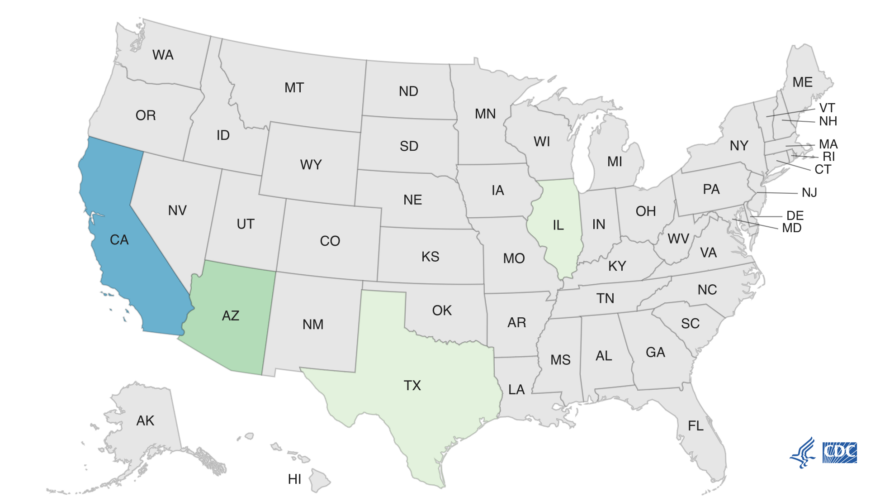
USA -39 California, Arizona, Texas and Illinois Salmonella illnesses linked to raw fish

Food Poison Journal

A total of 39 people infected with the outbreak strain of Salmonella Litchfield were reported from 4 states – California, Arizona, Texas and Illinois.


Illnesses started on dates ranging from June 14, 2022, to October 23, 2022 (see timeline). Sick people ranged in age from 1 to 80 years, with a median age of 33, and 66% were female. Of 32 people with information available, 15 were hospitalized. No deaths were reported.

Estonia improves fish controls after Listeria outbreak

Food Safety News

Measures taken by Estonian authorities following a Listeria outbreak have improved the fish control system, according to the European Commission.

A remote DG Sante audit, in October 2020, looked at checks to ensure smoked fish meets microbiological food safety criteria, as well as measures taken by authorities in non-compliances.

Eight Rapid Alert System for Food and Feed (RASFF) reports for Listeria monocytogenes in smoked fishery products from Estonia have been issued since 2015. All but one concerned the same establishment.

A multi-country outbreak of 22 listeriosis cases linked to cold-smoked salmon and trout pointed toward M.V Wool, an Estonian processing company as the manufacturer of these fish products. This was based on traceability information and a match between the outbreak strain and samples on the processing line and in four batches of the final product. Five countries were affected from 2014 to 2019 and five people died.