Category Archives: Food Illness

Iceland – 4 STEC infections in Árnessýsla county children

Outbreak News Today

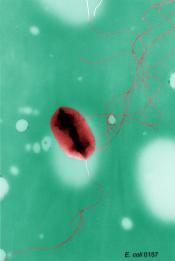
kswfoodworld E.coli O157

Image CDC


Iceland health officials have reported four pediatric Shiga-toxin-producing E. Coli (STEC) cases. Officials say all the children are from the capital of Reykjavik; however, all have probably been infected in Árnessýsla county or, more specifically, in Bláskógabyggð.

The source of the infection is unknown at this time. The Icelandic Food and Veterinary Authority and the South Iceland Health Inspectorate are now working to analyze the origin of the infections and stop further spread.

Philippines – Hundreds hospitalized with suspected food poisoning during Marco’s birthday party

Outbreak News Today

More than 300 people have been hospitalized due to suspected food poisoning during the 90th birthday celebration of Imelda R. Marcos, the former first lady of the Philippines, according to Philippines news sources.

According to Health Secretary Francisco Duque III, 306 are still admitted in the hospital. He went on to say that 149 have been discharged while the rest are still under observation or admitted in the hospital.

The patients “suffered from vomiting and dizziness,” said Richard Gordon, the chairman of the Philippine National Red Cross, which deployed emergency teams to the Ynares Sports Complex east of Manila where the party was held.

Mr. Gordon, who is also a Philippine senator, said hundreds of the estimated 2,000 people at the event apparently became ill after eating chicken adobo, rice and eggs.

UK – Belgian alert for Hepatitis A linked to supplements; update to UK outbreak

Food Safety News

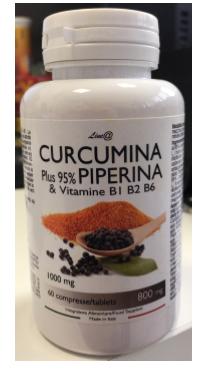
Belgian officials have issued a warning because of incidents of hepatitis infections being linked to dietary supplements containing curcumin.

The Federal Agency for the Safety of the Food Chain (FASFC) cited a notification in the Rapid Alert System for Food and Feed (RASFF) detailing cases of acute cholestatic hepatitis following consumption of various dietary supplements containing curcumin.

This alert is not public and the agency has not yet responded to a request for more information from Food Safety News.

Food supplement recalled in Italy

FASFC reported the exact source of contamination was not yet clearly established but was probably due to the presence of curcumin. Curcumin is a substance in turmeric.

The curcumin was used in lot 1810224 of the food supplement “Curcuma Liposomal and poivre noir.” The company Plastimea SA decided to withdraw the product branded Nutrimea from sale. It has an expiration date of October 2021 and was sold between Oct. 23, 2018, and May 24 this year on Amazon France.

Italian authorities first raised the alert in May with two reports of hepatitis. The National Institute of Health (Istituto Superiore di Sanità) in the country reported 21 cases as of June 20.

The number of products affected has grown from two to more than 20 involving firms such as Frama SRL, Scharper S.p.A, Vanatari International GmbH, Ekappa Laboratori S.r.l., and Fidia Farmaceutici S.p.A.

Meanwhile, the number of people with hepatitis A connected with a school in Ripon, a city in North Yorkshire County in England, has increased by two to 19. Reports of new infections connected to Outwood Academy have slowed down during the past week.

Public Health England (PHE) is reviewing data on food eaten in the school canteen to find the source of the outbreak.

USA – Outbreak Investigation of Salmonella Uganda Potentially Linked to Whole, Fresh Papayas, June 2019

FDA

June 28, 2019

The U.S. Food and Drug Administration (FDA), along with the Centers for Disease Control and Prevention (CDC), and state and local partners, are investigating a multistate outbreak of 62 Salmonella Uganda illnesses potentially linked to whole, fresh papayas imported from Mexico.  These illnesses have been reported in eight states: Connecticut, Massachusetts, New York, New Jersey, Pennsylvania, Rhode Island, Florida, and Texas.

The FDA is increasing import screening for whole, fresh papayas and will continue to investigate the cause and source of the outbreak as well as the distribution of products. Preliminary analysis of product import records indicates that the whole, fresh papayas that made people sick in this outbreak were from Mexico. As this outbreak investigation continues, the FDA will work with our Mexican food safety regulatory counterparts to better define this outbreak. Additionally, the FDA will update this advisory as more information becomes available.

Recommendations

For Consumers, Restaurants, and Retailers in Specific States:

CDC is advising that consumers in Connecticut, Massachusetts, New Jersey, New York, Pennsylvania, and Rhode Island not eat any whole, fresh papayas from Mexico, and should throw them away. Retailers, restaurants, and other food service providers in those states should not serve or sell whole, fresh papayas imported from Mexico, until more is known about this outbreak. Of the 62 illnesses, 60 have been reported in six states in the Northeast. One patient from Florida who was reported ill had traveled to Connecticut before becoming ill. Another patient from Texas was also reported ill, and at this time additional information about this patient is being collected. More information will be provided as it becomes available.

For Restaurants, Retailers, Importers, Suppliers, and Distributors in All States:

The FDA strongly advises importers, suppliers, and distributors, as well as restaurants, retailers, and other food service providers from all states to hold whole, fresh papayas imported from Mexico. This hold is intended to prevent or limit further distribution of potentially contaminated papayas that may already be in the supply chain until more information on the potential source of papayas linked to the outbreak becomes available. Any product that is held beyond expiration date should be discarded.

Research – Salmonellosis Outbreaks by Food Vehicle, Serotype, Season, and Geographical Location, United States, 1998 to 2015

Journal of Food Protection

ABSTRACT

Salmonella is a major cause of foodborne illness in the United States. Although salmonellosis outbreaks are relatively common, food vehicles and other characteristics are not well understood. We obtained data for salmonellosis outbreaks from 1998 to 2015 that were submitted by public health jurisdictions to the Centers for Disease Control and Prevention’s Foodborne Disease Outbreak Surveillance System. In total, 2,447 outbreaks (yearly average, 136) with a confirmed or suspected etiology of nontyphoidal Salmonella were identified. The outbreaks included 65,916 individual cases (mean, 27 cases per outbreak). Food vehicles were identified in 49% of the outbreaks. Frequently implicated foods included eggs (12.5%), chicken (12.4%), and pork (6.5%). Fifty-five (2.2%) outbreaks had fatalities; 87 (0.1%) individuals died. Of those outbreaks with a reported serotype, the most commonly identified were Enteritidis (29.1%), Typhimurium (12.6%), and Newport (7.6%). Serotypes with a statistically significant increase over time included Braenderup and I 4,[5],12:i:−. Some serotypes were commonly associated with outbreaks due to certain food vehicles; 81% of outbreaks due to eggs were associated with serotype Enteritidis. Food commodities that were most commonly associated with multistate outbreaks were nuts and seeds, sprouts, and fruits. Outbreaks occurred most frequently in summer. States with the highest number of salmonellosis outbreaks per 100,000 population were Alaska (0.137) and Minnesota (0.121); states with the lowest were Delaware (<0.001) and Wyoming (<0.001). The highest number of salmonellosis cases per 100,000 population were in Washington, DC (4.786) and Arkansas (3.857). Geographic variations in outbreaks may reflect differences in outbreak detection, investigation, reporting, or risk. In addition to collaboration, data-driven public health interventions are needed to decrease infection rates and to prevent complications related to salmonellosis.

HIGHLIGHTS
  • Outbreaks due to S. enterica serotypes Braenderup and I 4,[5],12:i:− have increased.

  • Deaths were most often due to seeded vegetables, nuts and seeds, and fruits.

  • Multistate salmonellosis outbreaks were often due to nuts and seeds, sprouts, and fruits.

  • Alaska, Minnesota, and Hawaii had the highest number of outbreaks per 100,000 people.

  • Delaware and Wyoming had the lowest number of outbreaks per 100,000 people.

USA – Occurrence of Foodborne Agents at Food Service Facilities in the Czech Republic

Journal of Food Protection

ABSTRACT

The aim of this study was to investigate the occurrence of foodborne agents at food service facilities in the Czech Republic. The sampling, performed from April 2016 to November 2017, focused on the microbiological monitoring of the environment at the establishment (EFS; n = 298) and the hands of staff (HFS; n = 159). The analysis targeted the presence of the following bacteria: Escherichia coli (focusing on the presence of Shiga toxigenic E. coli), Bacillus cereus, Staphylococcus aureus, Listeria monocytogenes, Salmonella spp., and Campylobacter spp. A swab method using sterile abrasive sponges was used to detect bacteria in EFS; a glove-juice method was used to monitor microbial contamination on HFS. The presence of E. coliwas confirmed in 11.8% of samples (12.4%, EFS; 10.7%, HFS; P = 0.650). The presence of Shiga toxigenic E. coli was not confirmed in the samples. B. cereus was detected most frequently, in 39.6% of all samples taken (44.6%, EFS; 30.2%, HFS; P= 0.003). S. aureus was detected in 17.9% of samples (17.4%, EFS; 18.9%, HFS; P = 0.703). Of S. aureus isolates, 58.5% were found to be positive for the presence of genes producing staphylococcal enterotoxins (70%, HFS; 52.0%, EFS). L. monocytogenes was detected in only one sample (0.2%; EFS). The presence of Salmonella spp. and Campylobacter spp. was not confirmed. The occurrence of B. cereus, S. aureus, and E. coli was dependent on the season of the year. B. cereus and S. aureus occurred less frequently in the summer months, although E. coli was recorded more frequently. B. cereus, S. aureus,and E. coli were detected in almost half of the tested samples. The relatively high percentage of B. cereus and S. aureusisolates from EFS corresponded with the model in the final European Food Safety Authority reports on the occurrence of foodborne disease outbreaks in the European Union. Managers of food service facilities should focus on reducing the occurrence of B. cereus and S. aureus.

HIGHLIGHTS
  • Contamination of food service facilities in the Czech Republic by foodborne agents was determined.

  • Bacillus cereus, Staphylococcus aureus, and Escherichia coli were detected in almost 50% of samples.

  • The occurrence of B. cereus, S. aureus, and E. coli depended on the season of the year.

  • Regular monitoring of food service facilities for agents of foodborne disease is necessary.

USA – Florida: Hepatitis A positive employee at Pizza Hut – also, unwashed hands, mold and odor of sewage

Food Poison Journal

A joint inspection was conducted on June 11 by the state and the Pinellas County Health Department after a pizza maker tested positive for the contagious disease on June 3. The Pizza Hut at 2421 4th Street North in St Petersburg is the latest restaurant to have a confirmed case of Hepatitis A.

During that food safety inspection, the state found employees not properly washing their hands after handling dirty dishes in the dish area and then unloading clean dishes from the dishwasher.

They also discovered mold on the pizza make cooler, an objectionable odor of sewage in the kitchen near the pizza oven and black mold on the walls.

Australia – Tasman Foods International Pty Ltd — Chan’s Yum Cha at Home Products

ACCC

Photograph of Chan's Yum Cha Dumplings

Identifying features

Use by date
29 July 2019
Other
APN/EAN – Vegetarian Shiitake Dumpling – 9355683000443; Prawn Hargow – 9355683000436; Sesame Prawn Toast – 9355683000474

What are the defects?

The recall is due to non-compliant labelling (incorrect Use By date).

What are the hazards?

Food products with an incorrect date marking may cause illness if consumed.

USA – Outbreak of Salmonella Infections Linked to Karawan brand Tahini

CDC

This outbreak appears to be over, but recalled tahini products have a long shelf life and may still be in people’s homes. Consumers unaware of the recall could continue to eat these products and potentially get sick. Visit the FDA websiteexternal iconfor a full list of recalled products.

Final Outbreak Information
Illustration of a megaphone.
  • As of June 26, 2019, this outbreak appears to be over.
  • A total of 6 people infected with the outbreak strain of Salmonella Concord were reported from 3 states.
    • Illnesses started on dates ranging from March 9, 2019, to May 2, 2019.
    • One hospitalization and no deaths were reported.
  • Epidemiologic, traceback, and laboratory evidence indicated that Karawan brand tahini products were the likely source of this outbreak.
  • Do not eat, sell, or serve recalled tahini that is labeled as Karawan Tahini, El-Karawan Tahin,i or SoCo Tahini. Do not eat, sell, or serve products made with recalled tahini, such as hummus.
  • This outbreak was not related to another recent multistate outbreak of Salmonella Concord infections linked to tahini. Ill people in the previous outbreak were infected with a different outbreak strain of Salmonella Concord.

USA – Norovirus sickens dozens in outbreak linked to bar drinks

Outbreak News Today norovirus-1080x655

Officials with the Benton-Franklin Health District in Kennewick, WA reported on the investigation of a norovirus outbreak linked to a local restaurant.

According to the timeline, health officials received the first reports over President’s Day weekend and at the conclusion of the investigation, 26 patrons of 3 Eyed Fish, a wine bar and restaurant in Richland were reported as infected.

In addition, the investigation revealed that drink garnishes were sometimes handled with bare hands, after interviewing bartenders.The outbreak was linked to poor food handling practices by an infectious bartender. During the investigation, it was noted that the infectious employee who worked the night most ill patrons ate, returned to work less than 12 hours after they had an episode of diarrhea that same weekend.