Category Archives: Food Hygiene

USA – Nassau County Department of Health reports Salmonella Outbreak linked to Brixx and Barley

Food Poison Journal

Nassau County Department of Health is investigating a cluster of cases of salmonellosis associated with people who consumed food or drink at the restaurant Brixx and Barley, located at 152 West Park Ave in Long Beach, NY. Potential exposures to Salmonella at the restaurant could date back to early July. Nassau County Department of Health has closed Brixx and Barley while the investigation as to the source of Salmonella is investigated.

USA – FDA Sampling of Romaine Lettuce in Yuma Finds No Widespread STEC or Salmonella Contamination

Food Safety Tech

Following last year’s widespread E.coli O157 outbreak involving romaine lettuce linked to the Yuma, Arizona growing region (Spring 2018), FDA launched a sampling assignment to test romaine lettuce for pathogenic Shiga toxin-producing Escherichia coli (STEC) and Salmonella spp. The microbiological surveillance samplingbegan on December 18, 2018 in the Yuma region and focused on 26 commercial coolers and cold storage facilities to allow FDA to sample multiple farms from several locations at once. The agency collected and tested a total of 188 samples for both pathogens. It did not detect Salmonella in any sample; STEC was detected in one sample, but additional analysis found that the bacteria was not pathogenic.

“The findings of this assignment suggest that there was no widespread Salmonella or STEC contamination of romaine lettuce from the Yuma growing region during the period when sampling occurred. As a next step, the FDA is working with leafy green stakeholders in the Yuma region to consider a longer-term environmental study to identify and control risks that will prevent future outbreaks, with the ultimate goal of protecting consumers. – FDA

The point of the sampling assignment was to determine whether target pathogens were present, and if so, to respond quickly before contaminated products reached consumers.

USA -Hepatitis A Outbreak at Mendham Golf and Tennis Club in New Jersey

Food Poisoning Bulletin

A hepatitis A outbreak has sickened 23 people after they visited the Mendham Golf and Tennis Club in Mendham Township, New Jersey. This is a members only club. A food handler was diagnosed with hepatitis A and worked at the club while infectious. One person is “seriously ill,” according to the press release by the New Jersey Department of Health.

USA – AWERS Grained Salmon Caviar Recalled For Possible Botulism

Food Poisoning Bulletin

AWERS Inc. of Bellevue, Washington is recalling Grained Salmon Caviar in 95 gram tins because it may be contaminated with botulinum toxin, which can cause life-threatening illness or death. Do not eat this product even if it does not look or smell spoiled. Botulinum toxin does not change the appearance, taste, or texture of food. No illnesses have been reported to date in connection with this issue.

UK – Listeria outbreak in English hospitals: update

Apologies for this being late but i have been on holiday 🙂

HPS

06 August 2019

Article: 53/3104

The Public Health England (PHE) team investigating cases of listeriosis linked to sandwiches and salads in NHS hospitals in England has confirmed that, since the last update on 26 June 2019, there has been another death, bringing to six the total number of deaths linked to this outbreak.

The individual who died was one of the nine previously confirmed cases. The individual is considered to have acquired listeriosis from Good Food Chain products while at Western Sussex Hospitals NHS Foundation Trust.

PHE continues to test all samples of listeria on an ongoing basis to check if they are linked to this outbreak. To date, thirty-four samples have been tested, with none linked to the outbreak.

There have been no new cases of listeriosis linked to this outbreak. Investigations are continuing and the public should be reassured that the risk continues to be low.

No cases have been reported in Scotland so far.

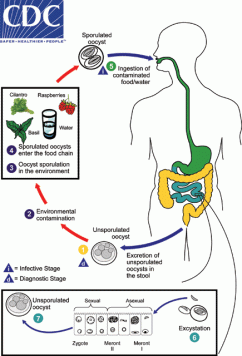
USA – Basil Cyclospora Outbreak Has Sickened 205 in 11 States

Food Poisoning Bulletin Cyclospora_LifeCycle201

The FDA has updated the basil cyclospora outbreak that has now sickened at least 205 people in 11 states. That’s an increase of 73 patients since the last update which was posted on July 25, 2019. Five people have been hospitalized because they are so sick. The basil in question is imported from Mexico by Siga Logistics de RL de CV from Morelos. That facility recalled basil on July 24, 2019.

Canada – Food Recall Warning – Rosemount brand cooked diced chicken meat recalled due to Listeria monocytogenes

CFIA CIFA

Recall details

Ottawa, August 18, 2019 – Rosemount Sales and Marketing is recalling Rosemount brand cooked diced chicken meat from the marketplace due to possible Listeria monocytogenes contamination. Consumers should not consume and distributors, retailers and food service establishments such as hotels, restaurants, cafeterias, hospitals and nursing homes should not sell or use the recalled products described below.

Recalled products

Common Name Size UPC Code(s) on Product
Cooked diced chicken meat 13 mm – ½” (#16305) 4.54 kg 2 06 20263 12454 7 PACKDATE: 01/21/19

USA -Outbreak of Listeria Infections Linked to Deli-Sliced Meats and Cheeses

Illustration with a microscope and text reading Investigation Notice

Posted April 17, 2019 at 4:30 PM ET

CDC and several states are investigating a multistate outbreak of Listeria infections linked to deli-sliced meats and cheeses. The U.S. Department of Agriculture’s Food Safety and Inspection Service and the U.S. Food and Drug Administration are monitoring the outbreak.

Latest Outbreak Information
Illustration of a megaphone.
At A Glance

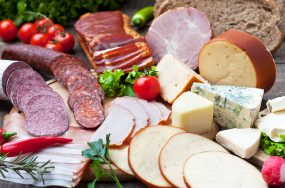
Photo of deli products.

  • A total of 8 people infected with the outbreak strain of Listeria monocytogenes have been reported from 4 states.
    • All 8 people have been hospitalized, and one death has been reported from Michigan.
  • Epidemiologic and laboratory evidence indicates that meats and cheeses sliced at deli counters might be contaminated with Listeria monocytogenes and could make people sick.
  • In interviews, ill people report eating different types and brands of products, including meats and cheeses, purchased from and sliced at deli counters in many different retail locations.
  • The outbreak strain has been identified in samples taken from meat sliced at a deli and from deli counters in multiple stores.
  • A single, common supplier of deli products has not been identified.
  • CDC is not advising that consumers avoid eating products prepared at delis, or that retailers stop selling deli-sliced products.
  • Retailers should clean and sanitize deli slicersExternal frequently and other areas where deli products are prepared, stored, or served to avoid cross contamination.
  • This outbreak is a reminder that people at higher risk for severe Listeria infection should handle deli-sliced meats and cheeses carefully to prevent illness. Pregnant women and their newborns, adults age 65 and older, and people with weakened immune systems are more likely to get sick with listeriosis.

Research – Whole Genome Sequencing Characterization of Shiga Toxin–Producing Escherichia coli Isolated from Flour from Swiss Retail Markets

Journal of Food Protection

ABSTRACT

Shiga toxin–producing Escherichia coli (STEC) strains are often found in food and cause human infections. Although STEC O157:H7 is most often responsible for human disease, various non-O157 subtypes have caused individual human infections or outbreaks. The importance of STEC serogroup typing is decreasing while detection of virulence gene patterns has become more relevant. Whole genome sequencing (WGS) reveals the entire spectrum of pathogen information, such as toxin variant, serotype, sequence type, and virulence factors. Flour has not been considered as a vector for STEC; however, this product has been associated with several STEC outbreaks in the last decade. Flour is a natural product, and milling does not include a germ-reducing step. Flour is rarely eaten raw, but the risks associated with the consumption of unbaked dough are probably underestimated. The aim of this study was to determine the prevalence of STEC in flour samples (n = 93) collected from Swiss markets and to fully characterize the isolates by PCR assay and WGS. The prevalence of STEC in these flour samples was 10.8% as indicated by PCR, and a total of 10 STEC strains were isolated (two flour samples were positive for two STEC subtypes). We found one stx2-positve STEC isolate belonging to the classic serogroups frequently associated with outbreaks that could potentially cause severe disease. However, we also found several other common or less common STEC subtypes with diverse virulence patterns. Our results reveal the benefits of WGS as a characterization tool and that flour is a potentially and probably underestimated source for STEC infections in humans.

HIGHLIGHTS
  • Several STEC serotypes, including O26, were isolated from 8 (8.6%) of 93 flour samples.

  • STEC isolates from flour had a variety of virulence patterns.

  • Flour is a probably underestimated source of STEC infections in humans.

  • WGS for STEC characterization is more comprehensive than common serotyping.

Research – Effect of Food Structure, Water Activity, and Long-Term Storage on X-Ray Irradiation for Inactivating Salmonella Enteritidis PT30 in Low-Moisture Foods

Journal of Food Protection

ABSTRACT

Recent outbreaks and recalls of low-moisture foods contaminated with Salmonella have been recognized as a major public health risk that demands the development of new Salmonella mitigation strategies and technologies. This study aimed to assess the efficacy of X-ray irradiation for inactivating Salmonella on or in almonds (kernels, meal, butter), dates (whole fruit, paste), and wheat (kernels, flour) at various water activities (aw) and storage periods. The raw materials were inoculated with Salmonella Enteritidis PT30, conditioned to 0.25, 0.45, and 0.65 aw in a humidity-controlled chamber, processed to various fabricated products, and reconditioned to the desired aw before treatment. In a storage study, inoculated almond kernels were stored in sealed tin cans for 7, 15, 27, and 103 weeks, irradiated with X ray (0.5 to 11 kGy, targeting up to a ∼2.5-log reduction) at the end of each storage period, and plated for Salmonella survivors to determine the efficacy of irradiation in terms of D10-value (dose required to reduce 90% of the population). Salmonella was least resistant (D10-value = 0.378 kGy) on the surface of almond kernels at 0.25 aw and most resistant (D10-value = 2.34 kGy) on the surface of dates at 0.45 aw. The Salmonella D10-value was 61% lower in date paste than on whole date fruit. Storage of almonds generally had no effect on the irradiation resistance of Salmonella over 103 weeks. Overall, these results indicate that product structure (whole, meals, powder, or paste), water activity (0.25 to 0.65 aw), and storage period (0 to 103 weeks) should be considered when determining the efficacy of X-ray irradiation for inactivating Salmonella in various low-water-activity foods.

HIGHLIGHTS
  • Salmonella resistance to X ray was significantly different on almonds, wheat, and dates.

  • The structural changes of almonds significantly impacted Salmonella resistance to X ray.

  • Water activity affected the efficacy of X ray for inactivating Salmonella in low-moisture foods.

  • Storing almonds up to 103 weeks had no effect on the X-ray resistance of Salmonella.