Foodborne outbreak suspected to be caused by Listeria monocytogenes in chilled smoked mackerel from the Czech Republic in Austria
KSWFoodWorld

Foodborne outbreak suspected to be caused by Listeria monocytogenes in chilled smoked mackerel from the Czech Republic in Austria
Posted in food bourne outbreak, food contamination, food handler, Food Hazard, Food Hygiene, Food Illness, Food Inspections, Food Micro Blog, Food Microbiology, Food Microbiology Blog, Food Microbiology Testing, Food Pathogen, food recall, Food Safety, Food Safety Alert, Food Safety Management, Food Testing, Foodborne Illness, foodborne outbreak, foodbourne outbreak, Illness, Listeria, Listeria monocytogenes, outbreak
A total of 39 people infected with the outbreak strain of Salmonella Litchfield were reported from 4 states – California, Arizona, Texas and Illinois.
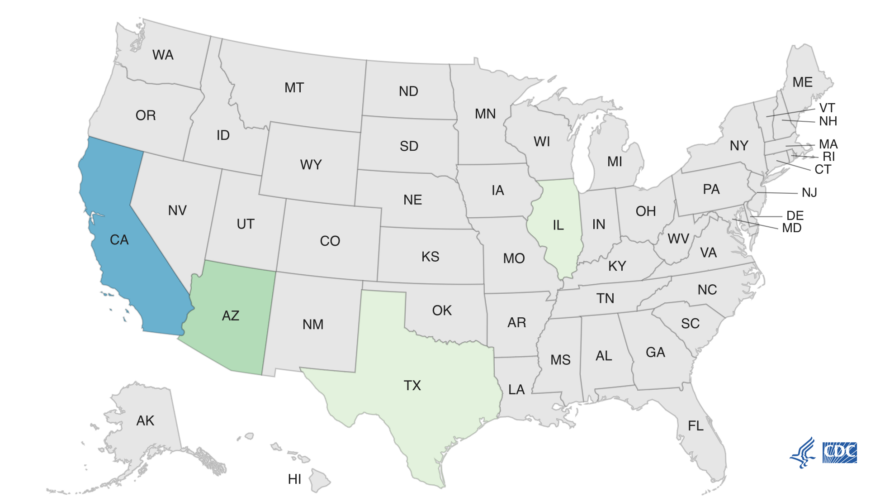
Illnesses started on dates ranging from June 14, 2022, to October 23, 2022 (see timeline). Sick people ranged in age from 1 to 80 years, with a median age of 33, and 66% were female. Of 32 people with information available, 15 were hospitalized. No deaths were reported.
Posted in Decontamination Microbial, food bourne outbreak, Food Illness, Food Micro Blog, Food Microbiology, Food Microbiology Blog, Food Microbiology Research, Food Microbiology Testing, Foodborne Illness, foodborne outbreak, foodbourne outbreak, Illness, microbial contamination, Microbial growth, Microbiological Risk Assessment, Microbiology, Microbiology Investigations, Microbiology Risk, outbreak, Salmonella
Measures taken by Estonian authorities following a Listeria outbreak have improved the fish control system, according to the European Commission.
A remote DG Sante audit, in October 2020, looked at checks to ensure smoked fish meets microbiological food safety criteria, as well as measures taken by authorities in non-compliances.
Eight Rapid Alert System for Food and Feed (RASFF) reports for Listeria monocytogenes in smoked fishery products from Estonia have been issued since 2015. All but one concerned the same establishment.
A multi-country outbreak of 22 listeriosis cases linked to cold-smoked salmon and trout pointed toward M.V Wool, an Estonian processing company as the manufacturer of these fish products. This was based on traceability information and a match between the outbreak strain and samples on the processing line and in four batches of the final product. Five countries were affected from 2014 to 2019 and five people died.
Posted in Death, Decontamination Microbial, food bourne outbreak, food death, Food Illness, Food Micro Blog, Food Microbiology, Food Microbiology Blog, Food Microbiology Research, Food Microbiology Testing, Food Poisoning Death, Foodborne Illness, Foodborne Illness Death, foodborne outbreak, foodbourne outbreak, Illness, Listeria, Listeria monocytogenes, microbial contamination, Microbial growth, Microbiological Risk Assessment, Microbiology, Microbiology Investigations, Microbiology Risk, outbreak
Posted in Cronobacter sakazakii, cross contamination, Decontamination Microbial, FDA, food bourne outbreak, Food Illness, Food Micro Blog, Food Microbiology, Food Microbiology Blog, Food Microbiology Research, Food Microbiology Testing, Foodborne Illness, foodborne outbreak, foodbourne outbreak, Illness, Listeria, Listeria monocytogenes, microbial contamination, Microbial growth, Microbiological Risk Assessment, Microbiology, Microbiology Investigations, Microbiology Risk, outbreak, Salmonella
The FDA, along with CDC and state and local partners, investigated a multistate outbreak of Salmonella Litchfield infections linked to fresh, raw salmon supplied to restaurants in California and Arizona by Mariscos Bahia, Inc.
As of December 14, 2022, CDC announced that the outbreak is over. CDC reports a total of 39 illnesses in four states. The last illness onset was October 23, 2022.
As part of this investigation, FDA and the California Department of Public Health conducted a joint inspection at Mariscos Bahia, Inc., Pico Rivera, CA and collected environmental samples from the facility. Multiple samples collected from the firm came back positive for Salmonella. Whole Genome Sequencing (WGS) indicated the Salmonella detected in at least one of the swabs from the facility matched the strain causing illnesses in this outbreak. The epidemiological evidence indicated that ill people consumed fresh, raw salmon processed at this firm; however, the presence of Salmonella in the processing environment also indicated that additional types of fish processed in the same area of the facility could have been contaminated.
On October 20, 2022, Mariscos Bahia, Inc., Pico Rivera, CA initiated a voluntary recall. Recalled products included fresh, raw salmon along with all other types of fresh fish processed in the same area as the salmon which included fresh, raw halibut, Chilean seabass, tuna, and swordfish.
According to Mariscos Bahia, Inc., seafood was only sold directly to restaurants in California and Arizona and would not be available for purchase by consumers in retail stores. The firm contacted direct restaurant customers that received recalled product. Recalled seafood was sold fresh and is now past shelf-life unless it was frozen after purchase.
Restaurants who might have purchased or received recalled fresh, raw salmon, halibut, Chilean seabass, tuna, or swordfish from Mariscos Bahia, Inc. (Pico Rivera, CA, and Phoenix, AZ) between June 14 – October 17, 2022, should check their freezers and throw away recalled product. Restaurants should also be sure to wash and sanitize locations where recalled fish from Mariscos Bahia, Inc. were stored or prepared.
Posted in Decontamination Microbial, food bourne outbreak, Food Illness, Food Micro Blog, Food Microbiology, Food Microbiology Blog, Food Microbiology Research, Food Microbiology Testing, Foodborne Illness, foodborne outbreak, foodbourne outbreak, Illness, microbial contamination, Microbial growth, Microbiological Risk Assessment, Microbiology, Microbiology Investigations, Microbiology Risk, outbreak
A foodborne outbreak can be defined as “an incident in which two or more people develop the same disease or infection following the consumption of a common contaminated food”. Most of the agents implicated in foodborne outbreaks are zoonotic agents*. The severity of the disease varies in humans, with effects ranging from mild to serious illness and even death ( WHO, food safety ).
Posted in Decontamination Microbial, food bourne outbreak, Food Micro Blog, Food Microbiology, Food Microbiology Blog, Food Microbiology Research, Food Microbiology Testing, foodborne outbreak, foodbourne outbreak, microbial contamination, Microbial growth, Microbiological Risk Assessment, Microbiology, Microbiology Investigations, Microbiology Risk, outbreak
The EFSA dashboard on foodborne outbreaks is a graphical user interface that allows for searching and querying the large amount of data on foodborne outbreaks collected by EFSA from the European Union Member States and other reporting countries based on the Zoonoses Directive 2003/99/EC. In the online EFSA dashboard, the foodborne outbreak data (since 2015) and related statistics can be displayed interactively using charts, graphs, and maps. The main statistics can also be visualised (and downloaded) in a tabular format. The present user guide describes the content and functionalities of the dashboard on foodborne outbreaks and provides detailed indications to make full use of this visualisation tool.
Updates on versioning
Version 1 includes the user guide of the foodborne outbreaks dashboard
Version 2 includes user guides both on foodborne outbreaks as well as on zoonotic agents.
Consequently the title of the records has been updated to match the content.
Posted in Decontamination Microbial, EFSA, food bourne outbreak, Food Micro Blog, Food Microbiology, Food Microbiology Blog, Food Microbiology Research, Food Microbiology Testing, foodborne outbreak, foodbourne outbreak, microbial contamination, Microbial growth, Microbiological Risk Assessment, Microbiology, Microbiology Investigations, Microbiology Risk, outbreak
Are you looking forward to the holiday season to savour the finest traditional dishes with your friends and loved ones? The second episode of our podcast “Science on the menu” is the perfect soundtrack. Valentina Rizzi, Head of EFSA’s Biological Monitoring team, walks us through the risks linked to food contamination and the rules we should follow to make sure the food we prepare and eat is safe. We will also discuss how EFSA deals with foodborne outbreaks in Europe in collaboration with other European institutions, such as the European Centre for Disease Prevention and Control (ECDC). If after this second episode you would like to know more on foodborne outbreaks, visit our dedicated story map and the interactive dashboard. If you are curious about the work of ECDC, listen to their podcast “ECDC: On Air”
In 2021 there was an overall increase in reported cases of zoonotic diseases and foodborne outbreaks compared to the previous year, but levels are still well below those of the pre-pandemic years, reveals the latest annual EU One Health zoonosis report released by EFSA and ECDC.
The general drop compared to pre-pandemic years in reported cases and outbreaks is probably linked to COVID-19 control measures, which were still in place in 2021. Among the few exceptions are the number of cases for yersiniosis and those of foodborne listeriosis outbreaks, which exceeded pre-pandemic levels.
Most foodborne outbreaks (773) were caused by Salmonella, which accounted for 19.3% of the total. Foodborne outbreaks differ from overall reported disease cases in that they are events in which at least two people contract the same illness from the same contaminated food. The most common sources of salmonellosis outbreaks were eggs, egg products, and “mixed foods”, which are meals composed of various ingredients.
The number of outbreaks caused by Listeria monocytogenes (23) was the highest ever reported. This might be linked to the increased use of whole genome sequencing techniques, which allow scientists to better detect and define outbreaks.
The report also covers overall reported zoonotic disease cases, which are not necessarily linked to outbreaks. Campylobacteriosis remains the most frequently reported zoonosis, with the number of reported cases increasing to 127,840 compared to 120,946 in 2020. Meat from chicken and turkeys was the most common source. Salmonellosis was the second most reported zoonotic disease, affecting 60,050 people compared to 52,702 in 2020. The next commonly reported diseases were yersiniosis (6,789 cases), infections caused by Shigatoxin-producing E. coli (6,084 cases), and listeriosis (2,183 cases).
The report also includes data on Mycobacterium bovis/caprae,Brucella, Trichinella, Echinococcus, Toxoplasma gondii, rabies, Q fever, West Nile virus infections and tularaemia.
Oysters harvested in Texas are making dozens of people sick to their stomach in Texas and as far as Florida and Louisiana. Health departments and Publix are warning the public. The Texas Department of State Health Services recalled oysters, both in shell and shucked, that were harvested in the southeastern Galveston Bay area from Nov. 17 through Dec. 7. It has caused a few dozen cases of gastrointestinal illness in Texas, Florida and Louisiana among those who’ve eaten them. Symptoms include fever, nausea, diarrhea, vomiting, abdominal cramps, chills and headache. There have been no reports of hospitalization.
Posted in Decontamination Microbial, food bourne outbreak, Food Illness, Food Micro Blog, Food Microbiology, Food Microbiology Blog, Food Microbiology Research, Food Microbiology Testing, Foodborne Illness, foodborne outbreak, foodbourne outbreak, Illness, microbial contamination, Microbial growth, Microbiological Risk Assessment, Microbiology, Microbiology Investigations, Microbiology Risk, outbreak


