Category Archives: food bourne outbreak

French Cheese – STEC E.coli 026 – Germany and Canada

Food Safety News

Ecoli Istock

Image CDC

Canada is one of a number of countries that has received raw milk cheese linked to an outbreak of E. coli O26 in France.

French authorities reported 13 cases of hemolytic uremic syndrome (HUS) in young children since March 21. HUS is a severe complication of E. coli infection that causes kidney failure and can occur a week or more after the onset of diarrhea.

Food Poison Journal

Two types of French cheese have been recalled in Germany over fears they could be contaminated with E.coli O26, just a few days after a similar scare in France, the German food safety authority announced on Tuesday.

French cheesemaker, Fromagerie Alpine, has been asked to recall its cheeses Saint-Felicien and Saint-Marcellin, sold in Germany under the name “Xavier David, tradition of good cheese, Alpine”, the authority said.

The decision was a precaution over concerns the brands could have been contaminated with the bacteria E.coli type 026, commonly found in the intestines of humans, livestock and other animals.

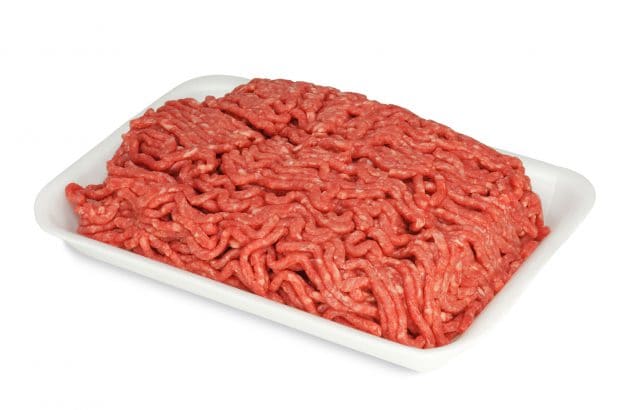
USA – 53,200 and 113,424 pounds of raw ground beef products recalled in E. coli O103 Outbreak – more recalls likely

Food Poison Journal

As of this week, a total of 156 people infected with the outbreak strain of E. coli O103 have been reported from 10 states – Minnesota, Illinois, Indiana, Ohio, Kentucky, Tennessee, Virginia, Mississippi, Georgia and Florida.

To date there have been two recalls.  Link between two producers of meat and the recalls remain unclear (How are the two connected?  Presumably a common supplier?) except that both recalls were prompted by positive E. coli O103 tests on “Unopened, intact, packages of ground beef collected as part of the ongoing investigation tested positive for E. coli O103 at an FSIS laboratory.”

It is likely that more recalls will happen as FSIS, CDC and state health authorities continue their efforts to find the source.

Food Poison Journal

What we know is that illnesses began March 1 and it is now almost May 1 – why did it take so long to figure out that 177 people with E. coli O103 were linked to ground beef? Why do we do not yet know the original source of the contamination?  Why is the public not being told the location where known illnesses occurred? Finally, are more people going to get sick?

USA – E.coli O103 Outbreak Updates

FSIS USDA

K2D Foods Recalls Raw Ground Beef Products Due to Possible E. coli O103 Contamination

FSIS USDA

Grant Park Packing Recalls Raw Ground Beef Products Due to Possible E. coli O103 Contamination

Food Poisoning Bulletin

The ground beef E. coli O103 outbreak has now sickened at least 156 people in 10 states. according to the Centers for Disease Control and Prevention (CDC). Twenty people are hospitalized because they are so ill. UPDATE: K2D Foods has recalled more than 100,000 pounds of ground beef for possible E. coli O103 contamination. But the recall notice states that “At this time, there is no definitive link between this positive product and the ongoing E. coli O103 outbreak.”

USA – FDA Investigating a Multistate Outbreak of Salmonella Carrau Linked to Pre-cut Melons

FDA

April 24, 2019

Pre-cut Melons

The United States Food and Drug Administration (FDA), along with the Centers for Disease Control and Prevention (CDC), and state and local partners, is investigating a multistate outbreak of Salmonella Carrau illnesses linked to pre-cut melon products. These products contain cantaloupe, honeydew, or watermelon, or may be mixes of some or all of these melons and other pre-cut fruit.

On April 12, 2019, Caito Foods, LLC, of Indianapolis, Ind., recalled products containing pre-cut melons because they are potentially contaminated with Salmonella.  Additionally, Caito Foods, LLC temporarily suspended producing and distributing these products. Salmonella Carrau is a rare type of Salmonella but has been historically seen in imported melons. Reports from Caito Foods, LLC indicate that imported melons were used in the suspect pre-cut melon products.

FDA and Indiana authorities continue to inspect and investigate the Caito Foods, LLC processing facility where these melons were cut and packed, including collecting samples for laboratory analysis. FDA is also continuing its traceback investigation, examining shipping records to try to identify the specific source of these melons.

Recommendation

Consumers should not eat the recalled pre-cut melon products. The products were packaged in clear, plastic clamshell containers and distributed in Illinois, Indiana, Iowa, Kansas, Kentucky, Michigan, Minnesota, Missouri, Nebraska, New York, North Carolina, Ohio, Pennsylvania, Tennessee, West Virginia, and Wisconsin. Consumers in these states who have purchased pre-cut melon products and cannot determine whether they were produced by Caito Foods, LLC should throw those products out.

These products were sold at the following retailers:

  • Kroger under the Renaissance Food Group label
  • Kroger under Boar’s Head Private Label
  • Target under the Garden Highway Label
  • Trader Joes under the Trader Joes label
  • Walmart under a Freshness Guaranteed label
  • Amazon/Whole Foods under the Whole Foods Market Label

A list of retail establishments that may have sold these products is available on the FDA website.

Retailers and restaurants should also not serve the recalled pre-cut melon products and should throw the product out.

These products were distributed by:

  • Caito Foods Distribution with the label “Distributed by Caito Foods”
  • Gordon Food Service with the label “Distributed by Caito Foods”
  • SpartanNash Distribution with the label “Open Acres”

USA – Outbreak of E. coli Infections – E.coli O103 STEC

CDC

Latest Outbreak Information
Illustration of a megaphone.
At A Glance


Photo of romaine lettuce in a wood bowl.

  • A total of 109 people infected with the outbreak strain of E. coli O103 have been reported from six states.
    • Seventeen people have been hospitalized. No cases of hemolytic uremic syndrome, a type of kidney failure, have been reported. No deaths have been reported.
  • Preliminary epidemiologic information suggests that ground beef is the source of this outbreak.
    • Ill people in this outbreak report eating ground beef at home and in restaurants.
    • Traceback investigations are ongoing to determine the source of ground beef supplied to grocery stores and restaurant locations where ill people ate.
  • At this time, no common supplier, distributor, or brand of ground beef has been identified.
  • CDC is not recommending that consumers avoid eating ground beef at this time. Consumers and restaurants should handle ground beef safely and cook it thoroughly to avoid foodborne illness.
  • At this time, CDC is not recommending that retailers stop serving or selling ground beef.
  • This is a rapidly evolving investigation. We will provide updates as more information becomes available.

USA – Norovirus Outbreak Associated with Dave and Buster’s in Auburn, WA

Food Poisoning Bulletin norovirus-1080x655

norovirus outbreak associated with Dave and Buster’s restaurant at 1101 Outlet Collection Way SW, Suite 1057, in Auburn, Washington has sickened at least 12 people, according to King County Public Health. Since April 5, 2019, five people from a single party reported illnesses after eating at that facility on March 31, 2019.

USA – E. coli O103 Outbreak Sickens 96 in 5 States; No Source Found

Food Poisoning Bulletin

An E. coli O103 outbreak sickens 96 in 5 states, according to the CDC. The outbreak was first announced less than two weeks ago and the number of patients has more than quadrupled in 10 days. Eleven people have been hospitalized. No one has developed hemolytic uremic syndrome (HUS), a type of kidney failure that is a complication of this illness

E. coli O103 Outbreak KY GA TN VA OH

Canada – Canada Salmonella Outbreak Sickens Sixty-three

Food Poison Journal

Canadian health officials are investigating an outbreak of Salmonella in six provinces that has sickened 63 people, including 18 who have been hospitalized and two deaths.

People who became ill range in age from one to 87. Individuals became sick between November and March.

The Public Health Agency of Canada said the breakdown of known cases as of Friday includes 23 people in B.C., ten people each in Alberta, Manitoba and Ontario. There are eight cases in Saskatchewan and two in Quebec.

The agency said the source of the bacterial infection has not been identified.

USA – Outbreak of E. coli Infections – Latest Outbreak Information

CDC

Latest Outbreak Information
Illustration of a megaphone.
At A Glance
  • As of April 4, 2019, 72 people infected with the outbreak strain of E. coli O103 have been reported from five states.
    • Eight people have been hospitalized. No cases of hemolytic uremic syndrome (HUS) or deaths have been reported.
  • This investigation is still ongoing and a specific food item, grocery store, or restaurant chain has not been identified as the source of infections.
  • CDC is not recommending that consumers avoid any particular food at this time. Restaurants and retailers are not advised to avoid serving or selling any particular food.
  • This is a rapidly evolving investigation. We will update our advice if a source is identified.

Uganda – UN’s Super Cereal Suspected in Food Poisoning in Uganda

All Africa

Uganda has stopped nationwide distribution of a United Nations food supplement called Super Cereal after two people died and more than 90 others came down with food poisoning.

The fortified porridge is suspected of making people in the northeastern Karamoja region ill last week.

“A big number of those were hospitalized with mental confusion and vomiting,” Ugandan Disaster Preparedness Minister Musa Ecweru said Monday.

Victims include 12 children younger than five.

The World Food Program, which sent the cereal along with sugar and oil to the Ugandan region, has not confirmed reports of the deaths. But it said it treats the situation with “extreme urgency.”

It has sent samples of the cereal to laboratories for tests.

The WFP said Super Cereal “aims to improve nutrition among pregnant or breastfeeding women by preventing stunting or treating life-threatening malnutrition.”