Category Archives: food bourne outbreak

RASFF Alert – Foodborne Outbreak Norovirus – Live Oysters

RASFF-Logo

RASFF – foodborne outbreak suspected (norovirus) to be caused by live oysters from France, via the Netherlands in Sweden

RASFF Alert- Salmonella – Foodborne Outbreak – Frozen Chicken Meat

RASFF-Logo

RASFF – foodborne outbreak caused by and Salmonella enterica ser. Virchow (presence /25g) in frozen chicken meat from Brazil, via Austria in the Netherlands


USA – Enoki Mushrooms Listeria Monocytogenes Outbreak Sickens 36

Food Poisoning Bulletin

At least 36 people are sick in an enoki mushroom Listeria monocytogenes outbreak linked to product imported from Korea. The mushrooms were imported by Sun Hong Foods. The mushrooms were just recalled after a sample tested positive for Listeria monocytogenes by the Michigan Department of Agriculture and Rural Development. There is zero tolerance for Listeria monocytogenes contamination in ready to eat foods in this country.

Enoki Mushrooms Listeria Monocytogenes Outbreak Sickens 36

Canada – Outbreak of Salmonella illnesses linked to raw turkey and raw chicken is over.

PHN


This is the final update for this outbreak investigation. The Public Health Agency of Canada collaborated with provincial and territorial public health partners, the Canadian Food Inspection Agency and Health Canada to investigate an outbreak of Salmonella infections linked to raw turkey and raw chicken products. The investigation has been closed, however illnesses could still be reported because this Salmonella strain is present in some raw turkey and raw chicken products in the Canadian marketplace.

The Public Health Agency of Canada continues to remind Canadians to always handle raw turkey and raw chicken carefully, and to cook it thoroughly to prevent food-related illnesses like Salmonella. The Public Health Agency of Canada is not advising that consumers avoid eating properly cooked turkey or chicken products, nor is it advising retailers to stop selling raw turkey and raw chicken products.

The Public Health Agency of Canada collaborated with provincial and territorial public health partners, the Canadian Food Inspection Agency and Health Canada to investigate an outbreak of Salmonella infections.

Based on the investigation findings, exposure to raw turkey and raw chicken products was identified as the likely source of the outbreak. Many of the individuals who became sick reported eating different types of turkey and chicken products before their illnesses occurred. A single common supplier of turkey and chicken products was not identified through the investigation. The Canadian Food Inspection Agency did not issue any food recall warnings related to this outbreak. The Public Health Agency of Canada and the Canadian Food Inspection Agency shared investigative findings with representatives from the turkey and chicken industries.

The investigation has been closed, however illnesses could still be reported because this Salmonella strain is present in some raw turkey and raw chicken products in the Canadian marketplace. The Public Health Agency of Canada will continue to monitor reports of illnesses and will provide updates in the future if there is an increase in newly reported cases or new investigation information is identified.


USA – Texas, Florida, South Carolina, Pennsylvania and Maine link in Listeria Egg Outbreak

Food Poison Journal

Eight ill with one death. As of March 4, 2020, this outbreak appears to be over.

A total of eight people infected with the outbreak strain of Listeria monocytogenes were reported from five states.

Listeria specimens from ill people were collected from April 10, 2017, to December 7, 2019. Ill people ranged in age from less than 1 to 82 years, with a median age of 71. Sixty-two percent of ill people were male. Of seven ill people with information available, five hospitalizations were reported. One death was reported from Texas. One illness was reported in a newborn who was infected with Listeria while the mother was pregnant, but the newborn survived.

Epidemiologic and laboratory evidence indicated that hard-boiled eggs produced at the Almark Foods Gainesville, Georgia, processing facility were the likely source of this outbreak.

USA – Possible Campylobacter Outbreak at Rediviva in Aberdeen, WA

Food Poisoning Bulletin Campylobacter_jejuni_01

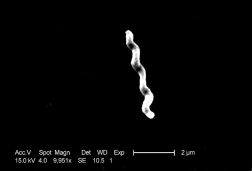
News reports are saying that a Campylobacter outbreak may have occurred at Rediviva restaurant at 118 Wishkah Street in Aberdeen, Washington. The Grays Harbor County Environmental Health Division learned about a person who tested positive for Campylobacter jejuni on February 25, 2020. That person told investigators he or she ate at Rediviva on Valentine’s Day.

France – French Salmonella outbreak linked to horse meat from Romania

Food Safety News

A Salmonella outbreak linked to horse meat from Romania sickened 25 people in France this past year, according to a new report.

Eleven cases were men and 14 were women. They ranged from 2 to 90 years of age and the median was 68 years old.

In September 2019, the regional unit of Santé Publique France in the Hauts-de-France region was alerted to a spike in Salmonella Bovismorbificans notifications in Nord and Pas-de-Calais during the first two weeks of August, found by the National Reference Center for E. coli, Salmonella and Shigella at Institut Pasteur.

The 25 salmonellosis cases, belonging to the same genomic cluster, were identified between Aug. 4 and 26, 2019. Nine people needed hospital treatment and two had severe complications but none died.

RASFF Alert – Foodborne Outbreak suspected (Norovirus) – Live Oysters

RASFF-Logo

RASFF – foodborne outbreak suspected (norovirus) to be caused by live oysters from France in the Netherlands

Information – Patient Stories: Was It Something I Ate?

CDC

These people got sick with infections that came from food or animal contact. Watch or read their stories to learn how they got sick and what they’re doing now to stay safe.

CDC’s Division of Foodborne, Waterborne, and Environmental Diseases has produced a new video series, “Was It Something I Ate?,” which presents stories of people who developed serious enteric (intestinal) infections from food or animal contact.

The stories are from families with children who developed Salmonella infection from eating contaminated chicken or contact with backyard poultry, and from a CDC veterinarian who investigated an outbreak linked to working with farm animals.

We hope these stories will highlight the importance of preventing infections from food or animal contact through efforts by industry, government, and the public.

USA – USDA Can Determine Contamination-Free Romaine Regions

Quality Assurance Magazine Eurofins Food Testing UK

USDA data on daily shipments of romaine lettuce can be used to determine which production regions are free from contamination during a foodborne illness outbreak. These data, reported by USDA’s Agricultural Marketing Service with a one- or two-day lag, provide essentially real-time information on produce shipped out to retailers. An analysis conducted by the USDA’s Economic Research Service (ERS) demonstrates how this information may allow FDA to rule out an entire production region as the source of contamination.

Leafy greens, including romaine lettuce, are the sixth most commonly consumed type of vegetable in the United States. From May to November, most romaine lettuce in the U.S. comes from California’s Central Coast region; from December to April, most comes from the Yuma, Ariz. region. Among the 29 outbreaks of Shiga-toxin producing Escherichia coli O157:H7 (E. coli) associated with romaine lettuce between 1998 and 2018, illnesses peaked in April and October, which corresponds with the tail end of harvest season in the two main romaine growing regions. In 2017 and 2018, there were three multistate, multinational foodborne illness E. coli outbreaks associated with the consumption of romaine lettuce that occurred at the tail end of either Yuma, Ariz., or California’s Central Coast production seasons. These outbreaks led to a total of 376 illnesses, 158 hospitalizations, and 7 deaths.