Category Archives: E.coli

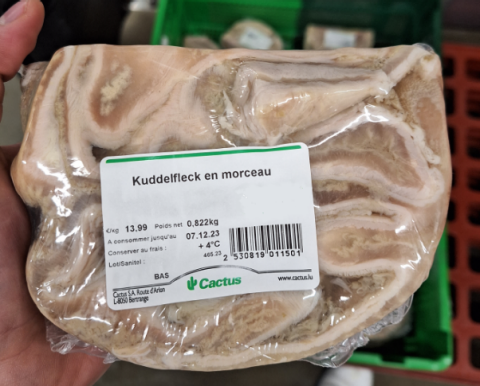
Luxembourg – Kuddelfleck from the Cactus brand – Listeria monocytogenes, Escherichia coli and Staphylococci

SAP

Name; Kuddelfleck in pieces

Brand; Cactus

Use-by date (DLC); 07/12/2023

Batch; 465.23

Sales period; 11/24/23 to 11/27/2023
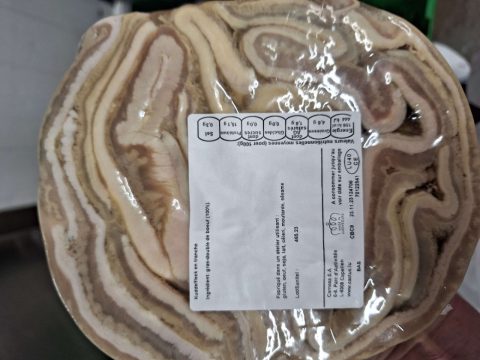
Name Sliced ​​Kuddelfleck
Brand Cactus
Use-by date (DLC) 07/12/23
Batch 465.23
Sales period 11/24/23 to 11/27/2023

Danger  : Presence of Listeria monocytogenes , Escherichia coli and Staphylococci

Listeria monocytogenes can cause fever, headache and gastroenteritis. Vulnerable people such as the immunocompromised and elderly and young children may experience neurological symptoms due to meningitis. Pregnant women should also be particularly attentive to these symptoms. Gastroenteritis can appear between a few hours and 3 days after consumption, while neurological symptoms can only appear after 3 months. People who have consumed these products and present these symptoms are invited to consult a doctor and report this consumption.

Among  Escherichia coli , some can cause food poisoning which can occur within a week after consumption and result in gastrointestinal disorders often accompanied by cramps. These symptoms may be aggravated in young children, immunocompromised individuals and the elderly. People who have consumed these products and present these symptoms are invited to consult a doctor and report this consumption.

Staphylococcus aureus can cause symptoms that usually include nausea, abdominal cramps, vomiting and diarrhea. In more severe cases, dehydration, headache, muscle cramps, and transient changes in blood pressure and pulse rate may occur. The illness is relatively mild and usually lasts only a few hours to a day; however, in some cases the illness is severe enough to require hospitalization.

Foodborne illness source attribution estimates for Salmonella, Escherichia coli O157, and Listeria monocytogenes — United States,2021

CDC

Executive Summary
Each year in the United States an estimated 9 million people get sick, 56,000 are hospitalized, and 1,300 die of foodborne disease caused by known pathogens. These estimates help highlight the scope of this public health problem. However, to develop effective prevention measures, food safety agencies and partners need to understand the types of foods contributing to the problem.

The Interagency Food Safety Analytics Collaboration (IFSAC) is a tri-agency group created by the Centers for Disease Control and Prevention (CDC), the U.S. Food and Drug Administration (FDA), and the U.S. Department of Agriculture’s Food Safety and Inspection Service (FSIS). By bringing together data from CDC, FDA, and FSIS, and by developing sound analytical methods, IFSAC scientists can improve estimates of the sources of foodborne illness.
Using outbreak surveillance data from 1998 through 2021, this report presents annual estimates of the percentages of foodborne illness attributed to 17 food categories for Salmonella, Escherichia coli O157, and Listeria monocytogenes.

Salmonella illnesses came from a wide variety of foods. More than 75% of Salmonella illnesses were attributed to seven food categories: Chicken, Fruits, Pork, Seeded Vegetables (such as tomatoes), Other Produce (such as nuts), Beef, and Turkey.

Escherichia coli (E. coli) O157 illnesses were most often linked to two categories.
Over 80% of Escherichia coli (E. coli) O157 illnesses were linked to Vegetable Row Crops (such as leafy greens) and Beef.

Listeria monocytogenes (Listeria) illnesses were most often linked to Dairy products, Vegetable Row Crops, and Fruits. More than 75% of illnesses were attributed to these three categories, but the rarity of Listeria outbreaks makes these estimates less reliable than those for other pathogens.

Attribution estimates for Campylobacter are not presented in this year’s report. Evidence suggests the sources of Campylobacter outbreaks likely differ considerably from the sources of non-outbreak-associated illnesses caused by this pathogen. IFSAC is exploring alternative approaches for estimating the sources of Campylobacter illnesses.

Canada – Catering company at centre of Calgary day care E. coli outbreak pleads not guilty to municipal charges

Calgary City News

The owners of the company behind the historic Calgary E. coli outbreak at daycares back in September are appeared in court Tuesday, entering a ‘not guilty’ plea to several municipal bylaw charges.

The two directors of KidsU Centennial — operating as Fueling Brains Academy and Fueling Minds Incorporated — Faisal Alimohd and Anil Karim, are facing a fine of up to $120,000 for allegedly providing third-party food services to five Calgary childcare centres they didn’t own.

The city said in September the catering company had also been operating without a food services business license.

In total, the company faces 12 charges.

A lawyer for the company met with the Crown prosecutor in a Calgary courtroom Tuesday, where they pleaded ‘not guilty.’

A trial date has now been set for Sept. 6, 2024.

USA – Takumi Frozen Ground Tuna Recalled For Histamine and E. coli

Food Poisoning Bulletin

Takumi Frozen Ground Tuna is being recalled because the product has high histamine levels, high total plate count, coliforms, and E. coli contamination. The serotype of the E. coli in the product is unknown. There is no mention of any illnesses reported to the company to date because this recall was posted on the FDA’s Enforcement Reports page, not the regular recall page. The recalling firm is Tokai Denpun USA Inc. of Redmond, Washington.

France “Best Moments” salami with deer meat – STEC/VTEC E.coli

Lebensmittelwarnung

Alert type: Groceries
Date of first publication:

November 15, 2023

Product name: “Best Moments” salami with deer meat
Product images:

Product photos.jpg

Consumer information

Manufacturer (distributor):

Manufacturer: G. Pfitscher GmbH, Romstrasse 20, I-39014 Burgstall (Italy) Distributed via Penny, Bringoo and Wolt

Reason for warning:

Detection of verotoxin-producing Escherichia coli (VTEC)

Packaging Unit: 60g
Durability: 01/05/2024
Lot identification: Lot number: 42234
Additional Information:

Reference is made to the enclosed consumer information.

RASFF Alert- E.coli – Mussels

RASFF

Presence of Escherichia coli (non-EHEC) in mussels from Spain in France

Research – Antimicrobial Activity of Essential Oils in Vapor Phase In Vitro and Its Application in Combination with Lactic Acid to Improve Chicken Breast Shelf Life

MDPI

Abstract

The effect of essential oils (EOs) incorporated in their vapor phase combined with lactic acid immersion pretreatment was studied on fresh refrigerated chicken breast shelf life. Among the several EOs assayed, the in vitro results obtained from the vapor diffusion test allowed mustard, oregano, and garlic EOs to be selected due to their higher antimicrobial activity. In addition, it was possible to determine the EO minimum inhibitory concentrations against Pseudomonas aeruginosa and Escherichia coli and to identify EO binary mixtures showing synergistic or additive effects. Based on the obtained results, a ternary mixture constituted by 0.073, 0.292, and 0.146 µL/mL of headspace of mustard, oregano, and garlic, respectively, was proposed for its application to chicken breasts. The ternary mixture inhibitory action was confirmed in vitro against P. aeruginosa and E. coli. Furthermore, the presence of numerous compounds with recognized antimicrobial and antioxidant activity was found in its volatile phase through gas chromatography. When applying an EO mixture in its vapor phase in combination with 1.0% v/v of lactic acid immersion pre-treatment on refrigerated chicken breast, a decrease in mesophilic microorganisms’ growth rate as well as in lipid oxidation was observed. Moreover, in a preliminary sensory test, the treated chicken breast was found to be acceptable to consumers and showed no significant differences compared to untreated chicken. In conclusion, the combined use of lactic acid immersion and EOs in their vapor phase was an effective alternative to increase chicken breast shelf life.

England – Preston primary school shuts nursery after STEC E.coli cases in classrooms

Lancashire Post

Eldon Primary School said it has temporarily closed its nursery while children are tested for the bacterial infection and several deep cleans are carried out.

It comes after a small number of STEC (Shiga toxin-producing Escherichia coli) infections were confirmed among children who attend the nursery.

Ireland – Kildare café closed due to evidence of E coli in the drinking water

The Independent

A closure order was issued on October 26 as the drinking water supply was found to pose “grave and immediate danger to public health”

A Kildare café was among five businesses around Ireland that were served with closure orders by the Food Safety Authority in October.

Base Coffee, at The Mart, on Newbridge Road in Kilcullen, County Kildare, was served the order on October 26, after the FSAI inspectors had “concerns of grave and immediate danger to public health.”

The reasons for closure as stated in the FSAI food hygiene inspection report was that “a drinking water sample taken on October 24 2023 from the food business indicated that the supply [was] contaminated.”

According to the inspection report: “Coliforms, Enterococci and E coli were detected in the drinking water sample. Given these levels of contamination, the drinking water supply pose a grave and immediate danger to public health.”

Other premises which were closed in October included: Indian Spices (restaurant/café), 138 Parnell Street, Dublin 1; Mizzoni Pizza (takeaway), 12 Railway Street, Navan, Meath; Seasons Chinese, Bridge Street, Strokestown, Roscommon.

Meanwhile, one Prohibition Order was served under the Eurpoean Union (Official Controls in Relation to Food Legislation) Regulations 2020 on: Meghans Café, 8 Cecilia Street, Dublin 2.

Research – How Do People Get Sick From Contaminated Pet Food?

Food Poisoning Bulletin

Pet food recalls for bacterial contamination are pretty common. And occasionally, there is an outbreak linked to those types of products. Many people wonder, how do people get sick from contaminated pet food?

On social media, there are often comments made about people feeding children dog food, or eating it themselves. That is not how these outbreaks happen.

Any type of pet food can be contaminated with pathogens. There have been recalls linked to raw frozen pet food, to canned pet food, and to dry kibble. Just like human food, pet food can be contaminated with pathogens like Salmonella, E. coli, and Listeria monocytogenes bacteria.

When pets eat contaminated food, several things can happen. The animal may not get sick at all. Or they may become carriers of the pathogen without showing any symptoms. Or the animal may get sick, with symptoms ranging from lethargy to a fever, vomiting, or diarrhea.