Category Archives: E.coli O157

USA – Canal water likely source of E. coli in romaine-related outbreak

Food Safety News 


Federal officials say contaminated canal water near romaine lettuce growing fields is the likely source of the unusually virulent strain of E. coli that has sickened people across 36 states, killing five.

The outbreak is over, according to an update this afternoon from the Centers for Disease Control and Prevention. The agency has confirmed 210 people with infections. Twenty-seven of the victims have developed kidney failure. The most recent victim became sick on June 6.

“Samples have been collected from environmental sources in the region, including water, soil, and cow manure. Evaluation of these samples is ongoing,” according to an update this afternoon from the Food and Drug Administration investigators.

“To date, CDC analysis of samples taken from canal water in the region has identified the presence of E. coli O157: H7 with the same genetic fingerprint as the outbreak strain. We have identified additional strains of Shiga-toxin producing E. coli in water and soil samples, but at this time, the samples from the canal water are the only matches to the outbreak strain.”

USA – FDA Investigating Multistate Outbreak of E. coli O157:H7 Infections Linked to Romaine Lettuce from Yuma Growing Region

FDA Eurofins Food Testing UK

Update

The FDA, along with CDC and state partners, initiated an environmental assessment in the Yuma growing region to further investigate potential sources of contamination linked to this outbreak.

Samples have been collected from environmental sources in the region, including water, soil, and cow manure. Evaluation of these samples is ongoing.

To date, CDC analysis of samples taken from canal water in the region has identified the presence of E. coli 0157:H7 with the same genetic finger print as the outbreak strain. We have identified additional strains of Shiga-toxin producing E. coli in water and soil samples, but at this time, the samples from the canal water are the only matches to the outbreak strain.

Analysis of additional samples is still ongoing, and any new matches to the outbreak strain will be communicated publicly and with industry in the region.

Identification of the outbreak strain in the environment should prove valuable in our analysis of potential routes of contamination, and we are continuing our investigation in an effort to learn more about how the outbreak strain could have entered the water and ways that this water could have come into contact with and contaminated romaine lettuce in the region.

Holland – Research on pathogens in dairy goat and dairy sheep farms

RIVM 

Synopsis

Animals can carry pathogens that can cause disease in humans (zoonoses). In 2016, the RIVM and the NVWA investigated whether dairy goats and dairy sheep carry such pathogens; sometimes this is also done for livestock farmers, their family members and employees. These pathogens usually cause diarrhoea but sometimes the infections are more severe.

Research shows that a few pathogens occur often on dairy goat and dairy sheep farms. These bacteria reside in the intestines of the animals, and are excreted in manure. A small amount of manure is enough to contaminate raw milk or unpasteurised cheese. Visitors to these farms can also become infected if they come into contact with the animals or their environment. Contamination can be prevented by consuming or processing all milk pasteurized. Visitors can reduce the risk of disease by washing their hands if they have been in contact with the animals or their environment.

STEC and Campylobacter bacteria, in particular, were frequently found. STEC was detected at virtually all the farms that were investigated. Campylobacter was detected at 33 percent of the goat farms and 95.8 percent of the sheep farms. These bacteria were found much less often among the farmers and their family members. Listeria was detected less often: at 8.8 percent of the goat farms and 16.7 percent of the sheep farms, and not among people. However, it is a relevant pathogen since unpasteurised soft cheese is the most important source of Listeria infection in humans.

Salmonella was not found at dairy goat farms but was found at 12.5 percent of the dairy sheep farms. On most farms, only a type of Salmonella that is not transmitted to humans was found. ESBL-producing bacteria, which are insensitive to many antibiotics, were detected at 1.7 percent of the goat farms and 4.2 percent of the sheep farms. They were also found in 6.8 percent of the people. This percentage is not higher than for the general population.

Research – Outbreak of E. coli O157:H7 Infections Associated with Exposure to Animal Manure in a Rural Community — Arizona and Utah, June–July 2017

CDC O157

On June 26, 2017, a hospital in southern Utah notified the Utah Department of Health of Shiga toxin–producing Escherichia coli (STEC) O157:H7 infections in two children from a small community on the Arizona-Utah border. Both children developed hemolytic uremic syndrome, characterized by hemolytic anemia, acute kidney failure, and thrombocytopenia and died within a few days of illness onset. Over the next few days, several more STEC-associated illnesses were reported in residents of the community. A joint investigation by local and state health agencies from Arizona and Utah and CDC was initiated to identify the outbreak source and prevent additional cases; a total of 12 cases were identified, including the two children who died. Investigators initially explored multiple potential sources of illness; epidemiologic and environmental information revealed cow manure contact as the likely initial cause of the outbreak, which was followed by subsequent person-to-person transmission. One of the outbreak strains was isolated from bull and horse manure collected from a yard near a community household with two ill children. Local health agencies made recommendations to the public related to both animal contact and hand hygiene to reduce the risk for STEC transmission. Animal or animal manure contact should be considered a potential source of STEC O157:H7 during outbreaks in communities where ruminants are kept near the home

USA – E. coli Outbreak Associated with Raw Milk and Farm Animals in TN Updated

Food Poisoning Bulletin O157

The E. coli O157 outbreak associated with raw milk and contact with farm animals in Tennessee has been updated by the Knox County Health Department. Public health officials are investigating any potential connections between these two likely sources, and it is possible that there are two unrelated E. coli clusters. At least ten children have been sickened in this outbreak

Information – Parents urged to check their homes for raw milk – E.coli O157

Food Safety News 

Health officials in Tennessee have repeated their public warning against drinking unpasteurized milk from French Broad Farm, confirming Thursday that more than 10 children are sick with infections from E. coli. The majority of the children were given raw milk from the farm before becoming sick.

The dairy has stopped distributing milk, according to a statement from the Knox County Health Department (KCHD). The health department did not report when French Broad stopped distribution. The department began receiving reports “last week” about children with infections from E. coli O157:H7.

In their public warning, county health officials urged people to check their homes for French Broad unpasteurized, raw dairy products.

RASFF Alerts – STEC E.coli – Beef Burgers – Boneless Beef – Lamb Ribs – Beef – Lamb

Two week catch up due to Holidays 🙂

kswfoodworld food safety poisoning

RASFF-shigatoxin-producing Escherichia coli (O157 stx+ eae+, O157 stx- eae+, O26 stx+ eae+, O26 stx- eae+) in frozen beef burgers from France, with raw material from Poland in France

RASFF-shigatoxin-producing Escherichia coli (stx1+; stx2+; eae-) in frozen boneless beef from Brazil in Italy

RASFF-shigatoxin-producing Escherichia coli in frozen lamb ribs from the United Kingdom in Italy

RASFF-shigatoxin-producing Escherichia coli (stx1/stx2+, eae+ /25g) in chilled beef (Bos taurus) from Argentina in Spain

RASFF-shigatoxin-producing Escherichia coli (stx1+,stx2+,eae- /25g) in frozen boneless lamb from Uruguay in Germany


USA – ‘Close to 10’ children hospitalized for E. coli; ‘raw’ milk, farm animals may be sources

Knox News 

East Tennessee Children’s Hospital said Tuesday it’s treated “close to 10” children, all younger than 4, for a “serious outbreak” of E. coli-caused illness over the past 10 days.

The Knox County Health Department has confirmed two likely sources of the outbreak are unpasteurized milk and farm animals.

Most of the ill children are known to have consumed raw milk from a local cow-share dairy, French Broad Farm in Knox County, the health department said in an alert issued Tuesday evening. The health department recommends consumers dispose of all raw milk or other unpasteurized products they may have from this farm.

“People need to be aware that if they choose to drink raw milk, they’re taking a risk,” said Dr. Martha Buchanan, health department director.

Information – In the wake of E. coli outbreak linked to French Broad Farm, some ask what ‘raw milk’ is

Knox News

“Raw” milk is milk that hasn’t been pasteurized. Health officials from almost every agency and organization warn it often contains dangerous bacteria that can sicken or even kill people: E.coli, salmonella, listeria and campylobacter, to name a few.

More: ‘Close to 10’ children hospitalized for E. coli; ‘raw’ milk, farm animals may be sources

But proponents of drinking it say heating the milk during the pasteurization process kills helpful pathogens, including probiotics and enzymes.

Information – FSA – E.coli Fact Sheet

FSA 

CDC E.coli

Image CDC


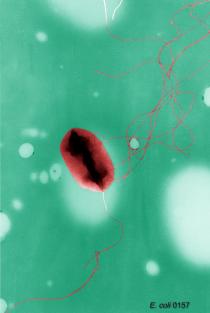
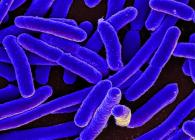
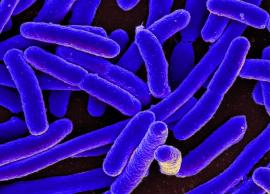
Escherichia Coli (known as E. coli) is a type of bacteria that can be found in the intestines of animals and humans. Many strains of E. coli are harmless to humans, but some can cause serious illness. Most cases of foodborne illness are caused by a strain known as E. coli O157.