Category Archives: E.coli O157

Research – An approach to improve the safety and quality of ready‐to‐eat blueberries

Wiley Online

Abstract

Bioactive edible coatings were developed and applied to blueberries as a natural treatment. E. coli O157:H7, L. innocuaS. aureus, and P. aeruginosa were subjected to four bioactive compounds and to three film‐forming solutions (FFS). Vanillin and geraniol at low concentrations (1.2–1.8 mg/mL and 0.4–1 μL/mL) demonstrated significant inhibitory effects on all pathogens counts. Chitosan (Ch) showed a high antimicrobial activity (final counts below 2 log CFU/mL). The effectiveness of Ch plus vanillin (Ch‐Va) and geraniol (Ch‐Ge) in improving the safety were tested against pathogens inoculated on blueberries. Ch, Ch‐Va, and Ch‐Ge coatings exerted a bactericidal effect on all pathogens (from 1.24 to more than 2 log reductions). Significant reduction in yeast and mold counts was achieved with Ch (1.09 log) and Ch + Va (1.74 log). Sensory attributes of blueberries remained acceptable. Ch‐Va and Ch‐Ge were an alternative to improve the quality and safety and could be effective in extending the shelf life of ready‐to‐eat blueberries.

Practical applications

The present study proposes the use of natural coatings enriched with biopreservatives as a technological alternative to enhance the quality and safety of minimally processed fruits. According to the results obtained, the application of chitosan plus vanillin/geraniol coatings on fresh blueberries would allow to offer a safe product and respond the growing demand of consumers for fresh, environmentally friendly and chemical preservatives‐free foods. These findings and those obtained by the sensory evaluation support the practical application of this alternative in the minimally processed fruit industry.
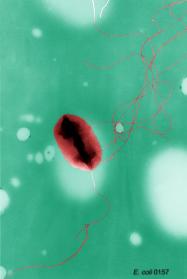
USA – Aurora Packing Recalls Beef Products For Possible E. coli 0157

Food Poisoning Bulletin

kswfoodworld E.coli O157

Image CDC


Aurora Packing Company of Illinois is recalling about 4,838 pounds of beef heel and chuck tender products because they may be contaminated with E. coli O157:H7 bacteria. No confirmed reports of illness have been received in association with this recall.

The products were produced and packed on February 27, 2019. These are the recalled products:

  • Varying catch weight cardboard box case packages containing bulk pieces of “AURORA ANGUS BEEF BONELESS BEEF – CHUCK TENDER” and case code 61150 marked on the label.
  • Varying catch weight cardboard box case packages containing bulk pieces of “BONELESS BEEF – HEEL MEAT” and case code 29970 on the label.
  • Varying catch weight cardboard box case packages containing bulk pieces of “BONELESS BEEF – HEEL MEAT” and case code 49970 stamped on the label.

These products have the establishment number “EST. 788” inside the USDA mark of inspection. They were shipped for institutional use in Illinois, Iowa, and Wisconsin. The problem was discovered during FSIS traceback activities after routine testing.

USA – Beef heel and chuck tender recalled over E. coli O157:H7 fears

Food Safety News

Aurora Packing Company, Inc.,  located in North Aurora, IL  is recalling approximately 4,838 pounds of beef heel and chuck tender products that may be contaminated with E. coli O157: H7, according to the U.S. Department of Agriculture’s Food Safety and Inspection Service (FSIS).

The bulk beef products were produced and packed on Feb. 27, 2019. The following products are subject to recall:

  • Varying catch weight cardboard box case packages containing bulk pieces of “AURORA ANGUS BEEF BONELESS BEEF – CHUCK TENDER” and case code 61150 represented on the label.
  • Varying catch weight cardboard box case packages containing bulk pieces of “BONELESS BEEF – HEEL MEAT” and case code 29970 represented on the label.
  • Varying catch weight cardboard box case packages containing bulk pieces of “BONELESS BEEF – HEEL MEAT” and case code 49970 represented on the label.

The products subject to recall bear establishment number “EST. 788” inside the USDA mark of inspection. These items were shipped for institutional use in Illinois, Iowa, and Wisconsin.

The problem was discovered during traceback activities following routine FSIS testing. There have been no confirmed reports of adverse reactions due to consumption of these products.

Research – Estimate of the annual burden of foodborne illness in nondeployed active duty US Army Service Members: five major pathogens, 2010–2015

Cambridge.org

In this study, we estimate the burden of foodborne illness (FBI) caused by five major pathogens among nondeployed US Army service members. The US Army is a unique population that is globally distributed, has its own food procurement system and a food protection system dedicated to the prevention of both unintentional and intentional contamination of food. To our knowledge, the burden of FBI caused by specific pathogens among the US Army population has not been determined. We used data from a 2015 US Army population survey, a 2015 US Army laboratory survey and data from FoodNet to create inputs for two model structures. Model type 1 scaled up case counts of Campylobacter jejuniShigella spp., Salmonella enterica non-typhoidal and STEC non-O157 ascertained from the Disease Reporting System internet database from 2010 to 2015. Model type 2 scaled down cases of self-reported acute gastrointestinal illness (AGI) to estimate the annual burden of Norovirus illness. We estimate that these five pathogens caused 45 600 (5%–95% range, 30 300–64 000) annual illnesses among nondeployed active duty US Army Service members. Of these pathogens, Norovirus, Campylobacter jejuni and Salmonella enterica non-typhoidal were responsible for the most illness. There is a tremendous burden of AGI and FBI caused by five major pathogens among US Army Soldiers, which can have a tremendous impact on readiness of the force. The US Army has a robust food protection program in place, but without a specific active FBI surveillance system across the Department of Defence, we will never have the ability to measure the effectiveness of modern, targeted, interventions aimed at the reduction of specific foodborne pathogens.

USA – Molida de Res Ground Beef Recalled For Possible E. coli O157:H7

Food Poisoning Bulletin

La Rosita Fresh Market of  Mount Prospect, Illinois, is recalling about 54 pounds of raw ground beef that may be contaminated with E. coli O157:H7 bacteria. No illnesses have been reported to date in association with this problem. That pathogen can cause serious illness and possibly hemolytic uremic syndrome (HUS) if ingested.

The beef was only sold at the La Rosita Fresh Market Inc. retail store. That facility is located at 1805 West Algonquin Road in Mount Prospect, Illinois.

The recalled products is Molida De Red Ground Beef in various weights. The product is packed in white trays covered with plastic wrap. The dates on the product are “Packed On 3/13/19 Sell By 3/20/19” and “Packed On 3/14/19 Sell By 3/21/19.”

France – E. coli O26/O157 and Salmonella behind French cheese recalls

Food Safety News


E. coli has prompted two different recalls of cheese and there has been one due to Salmonella in France in the past few weeks.

Recalls have been due to E. coli O26, E. coli O157 and Salmonella Montevideo but no illnesses have been reported.

Fromagère du Moulin de Carel recalled camembert from the supermarket Carrefour due to E. coli O26 H11.

The affected Camembert de Normandie 250-gram product has lot code of L19009C and date of March 10, 2019. It was beginning in late January.

The company, based in Saint-Pierre-sur-Dives, took the action after E. coli was detected during a microbiological control test.

Fromagère de Jort, based in Bernière d’Ailly, also recalled camembert made from raw milk from Carrefour and Auchan due to finding the same pathogen during a microbiological control.

RASFF Alerts – STEC E.coli – E.coli O157 – Raw Milk Cheese

RASFF-Logo

RASFF – shigatoxin-producing Escherichia coli (O157:H7 stx+ eae+) in raw milk cheese from France in France

RASFF – shigatoxin-producing Escherichia coli in raw milk cheese from France in Germany

Research – Survival of Salmonella enterica and Escherichia coli O157:H7 Sprayed onto the Foliage of Field-Grown Cabbage Plants

Journal of Food Protection

To reduce the number of cabbage pathogen outbreaks, it is essential to understand the fate of enteric pathogens that contaminate plants in the field. To assist in that effort, two independent trials were conducted with a red cultivar (cv. Red Dynasty) and a green cultivar (cv. Bravo F1) of field-grown cabbage (Brassica oleracea var. capitata). In the first trial, plants with small heads were sprayed with an inoculum containing both attenuated Salmonella enterica Typhimurium and Escherichia coli O157:H7 (5.0 log CFU/mL). Initial pathogen levels (ca. 3.9 log CFU per head), determined through plate count enumeration (limit of detection was 1.3 log CFU/g), dropped precipitously such that 2 days later, they could not be detected by enrichment culture in 22 to 35% of the heads. However, subsequent declines were at a slower rate; no differences were observed between red and green cabbage heads (P > 0.05), and heads were still positive for the pathogens 22 days after being sprayed with the inoculum. As a result, the logistic model revealed that for every 2 days contaminated cabbage heads remained in the field, the probability of finding a positive sample decreased by a factor of 1.1 (95% confidence interval from 1.0 to 1.2, P = 0.0022) and 1.2 (95% confidence interval from 1.0 to 1.4, P ≤ 0.0001) for Salmonella and E. coli O157:H7, respectively. In the second trial occurring 2 weeks later, plants with medium red or green cabbage heads were sprayed with an inoculum at a dose of 3.5 log CFU/mL. A similar decay in prevalence over time occurred for green cabbage as in trial 1; however, pathogen decline in red cabbage was less in trial 2 than in trial 1. The extended persistence of pathogens in cabbage heads exhibited in both trials infers that harvest of contaminated cabbage destined for raw consumption is risky. Additional field studies are necessary to determine whether similar pathogen fates occur in other regions or climates and to clarify the effect of the maturity of red cabbage on pathogen inactivation.

Research – Overview of Leafy Greens–Related Food Safety Incidents with a California Link: 1996 to 2016

Journal of Food Protection Eurofins Food Testing UK

An increase in the number of foodborne illness outbreaks associated with produce has been noted in the literature, and leafy greens have been the most common produce category associated with these outbreaks. California is the largest leafy greens producer in the United States, and many related foodborne illness incidents were traced to this state. A systematic overview of leafy greens incidents linked to California was conducted by the California Department of Public Health, Food and Drug Branch through analysis of complaints, routine surveillance sampling, disease outbreaks, and investigations covering 1996 to 2016. The goal was to develop a risk assessment tool to modernize emergency response efforts to foodborne illnesses related to leafy greens. A database including environmental, epidemiologic, and laboratory information for each incident was developed, and descriptive analysis was performed to identify trends. In the 21-year period analyzed, 134 incidents were identified, the majority of which were surveillance related. Approximately 2,240 U.S. cases of confirmed illness were reported (298 California cases resulting in 50 hospitalizations). Romaine lettuce and spinach were the most commonly implicated vehicles. The most prevalent hazard type was microbiological, in particular bacterial, specifically associated with pathogenic strains of Escherichia coli. In California, the overview provided the Food and Drug Branch with a platform to (i) enhance its Food Safety Program, Emergency Response Unit, and California Food Emergency Response Team; (ii) assist in more efficient investigation, response, control, and prevention of California-linked foodborne illness incidents; and (iii) identify knowledge gaps and develop effective definitions, procedures, training, guidelines, and policies that will be used to help prevent future outbreaks. Outcomes provide insight into the situation in the largest leafy greens–producing state and may be used to prioritize limited national food safety resources and aid in future leafy greens–related research and foodborne incident investigations.

Scotland – Scottish cheesemakers challenge guidance on raw milk in their products

Food Safety News

Five Scottish companies have launched a fundraising campaign for legal fees to challenge new inspection and enforcement guidance, including food safety measures, regarding raw milk cheese.

The guidance will effectively make production in Scotland unviable, according to the cheesemakers who specialise raw milk cheese.

It is focused on controlling microbiological risks in the production of artisan cheeses made from raw, unpasteurized milk such as Shiga toxin-producing E. coli (STEC) including E. coli O157 and applies to all sites producing cheese made from unpasteurized milk from cows, goats, sheep and buffalo.

The document was produced by a working group of the Scottish Food Enforcement Liaison Committee (SFELC) and is to be used during inspection and enforcement of food safety controls by cheesemakers making product from unpasteurised milk.

Selina Cairns from Errington Cheese told Food Safety News that to satisfy the cheesemakers the guidance needs to be removed or re-written in consultation with industry and individual cheesemakers.
