Category Archives: E.coli O104

Holland – Research on pathogens in dairy goat and dairy sheep farms

RIVM 

Synopsis

Animals can carry pathogens that can cause disease in humans (zoonoses). In 2016, the RIVM and the NVWA investigated whether dairy goats and dairy sheep carry such pathogens; sometimes this is also done for livestock farmers, their family members and employees. These pathogens usually cause diarrhoea but sometimes the infections are more severe.

Research shows that a few pathogens occur often on dairy goat and dairy sheep farms. These bacteria reside in the intestines of the animals, and are excreted in manure. A small amount of manure is enough to contaminate raw milk or unpasteurised cheese. Visitors to these farms can also become infected if they come into contact with the animals or their environment. Contamination can be prevented by consuming or processing all milk pasteurized. Visitors can reduce the risk of disease by washing their hands if they have been in contact with the animals or their environment.

STEC and Campylobacter bacteria, in particular, were frequently found. STEC was detected at virtually all the farms that were investigated. Campylobacter was detected at 33 percent of the goat farms and 95.8 percent of the sheep farms. These bacteria were found much less often among the farmers and their family members. Listeria was detected less often: at 8.8 percent of the goat farms and 16.7 percent of the sheep farms, and not among people. However, it is a relevant pathogen since unpasteurised soft cheese is the most important source of Listeria infection in humans.

Salmonella was not found at dairy goat farms but was found at 12.5 percent of the dairy sheep farms. On most farms, only a type of Salmonella that is not transmitted to humans was found. ESBL-producing bacteria, which are insensitive to many antibiotics, were detected at 1.7 percent of the goat farms and 4.2 percent of the sheep farms. They were also found in 6.8 percent of the people. This percentage is not higher than for the general population.
Information – FSA – E.coli Fact Sheet

FSA 

CDC E.coli

Image CDC


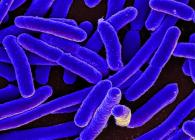
Escherichia Coli (known as E. coli) is a type of bacteria that can be found in the intestines of animals and humans. Many strains of E. coli are harmless to humans, but some can cause serious illness. Most cases of foodborne illness are caused by a strain known as E. coli O157.

Research – Shiga toxin-producing E. coli found in food

Science Daily 


Escherichia coli (E. coli) is a germ that occurs naturally in the gut of mammals and birds, as well as in the human intestinal flora. However, certain E. coli types can cause severe diarrhea in humans. These virulent E. coli types include Shiga toxin-producing E. coli (STEC), also known as Verotoxin-producing E. coli (VTEC).

Their damaging effect is due to the fact that STEC produce toxins known as Shiga toxins (Stx), which can cause disease in the human gut. As the best known STEC representative, an enterohaemorrhagic E. coli (EHEC) strain of the serotype O104:H4 was responsible for numerous severe cases of haemolyticuremic syndrome (HUS) and bloody diarrhea in Germany in 2011, as a result of which 53 people died.

USA- Beef Products Recall – STEC E.coli

E.coli Blog

PFP Enterprises, a Fort Worth, Texas, establishment, is recalling approximately 15,865 pounds of beef products because they may be contaminated with E. coli O103, E. coli O111, E. coli O121, E. coli O145, E. coli O26 and E. coliO45, the U.S. Department of Agriculture’s Food Safety and Inspection Service (FSIS) announced today.

FSIS personnel became aware of the problem during a Food Safety Assessment when they discovered that beef trim tested presumptive positive for multiple non-O157 Shiga toxin-producing E. coli (STEC) strains through the company’s testing program. The company inadvertently did not carry the test out to confirmation, and not all affected product was held.


Research – Current Intervention Strategies for the Microbial Safety of Sprouts

Ingenta Connect

Sprouts have gained popularity worldwide due to their nutritional values and health benefits. The fact that their consumption has been associated with numerous outbreaks of foodborne illness threatens the $250 million market that this industry has established in the United States. Therefore, sprout manufacturers have utilized the U.S. Food and Drug Administration recommended application of 20,000 ppm of calcium hypochlorite solution to seeds before germination as a preventative method. Concentrations of up to 200 ppm of chlorine wash are also commonly used on sprouts. However, chlorine-based treatment achieves on average only 1- to 3-log reductions in bacteria and is associated with negative health and environmental issues. The search for alternative strategies has been widespread, involving chemical, biological, physical, and hurdle processes that can achieve up to 7-log reductions in bacteria in some cases. The compilation here of the current scientific data related to these techniques is used to compare their efficacy for ensuring the microbial safety of sprouts and their practicality for commercial producers. Of specific importance for alternative seed and sprout treatments is maintaining the industry-accepted germination rate of 95% and the sensorial attributes of the final product. This review provides an evaluation of suggested decontamination technologies for seeds and sprouts before, during, and after germination and concludes that thermal inactivation of seeds and irradiation of sprouts are the most practical stand-alone microbial safety interventions for sprout production.

Europe – Laboratory Preparedness for Detection and Monitoring of Shiga Toxin 2-producing Escherichia coli O104:H4 in Europe and Response to the 2011 Outbreak

Eurosurveillance

A hybrid strain of enteroaggregative and Shiga toxin 2-producing Escherichia coli (EAEC-STEC) serotype O104:H4 strain caused a large outbreak of haemolytic uraemic syndrome and bloody diarrhoea in 2011 in Europe. Two surveys were performed in the European Union (EU) and European Economic Area (EEA) countries to assess their laboratory capabilities to detect and characterise this previously uncommon STEC strain. Prior to the outbreak, 11 of the 32 countries in this survey had capacity at national reference laboratory (NRL) level for epidemic case confirmation according to the EU definition. During the outbreak, at primary diagnostic level, nine countries reported that clinical microbiology laboratories routinely used Shiga toxin detection assays suitable for diagnosis of infections with EAEC-STEC O104:H4, while 14 countries had NRL capacity to confirm epidemic cases. Six months after the outbreak, 22 countries reported NRL capacity to confirm such cases following initiatives taken by NRLs and the European Centre for Disease Prevention and Control (ECDC) Food- and Waterborne Disease and Zoonoses laboratory network. These data highlight the challenge of detection and confirmation of epidemic infections caused by atypical STEC strains and the benefits of coordinated EU laboratory networks to strengthen capabilities in response to a major outbreak.

USDA – STEC E.coli Testing in Raw Meats Data 2013

USDAEurofins Food Testing UK

Microbiological Testing Program for E. coli O157:H7 and non-O157 Shiga Toxin-Producing E. coli: Individual Positive Results for Raw Ground Beef (RGB) and RGB Components

RASFF Alerts – Shiga Toxin E.coli – Beef

RASFF – Shigatoxin-producing Escherichia coli (presence /25g) in bovine meat (Bos taurus) from Argentina in the Netherlands

RASFF -Shigatoxin-producing Escherichia coli in chilled boneless beef (Bos taurus) from Argentina in the Netherlands

RASFF – Shigatoxin-producing Escherichia coli in bovine meat from Belgium

Research – Study Pinpoints Pathogens Causing Biggest Diarrhea Burden in Kids

CIDRAP

While many pathogens cause serious diarrhea in children in developing countries, four stand out as culprits in most of the infections, a finding that could drive new prevention strategies, an international research team reported today.

The group spent 3 years in seven developing countries, collecting health information, lab samples, and outcome data on 3,439 youngsters who had moderate-to-severe diarrhea. They published their findings today in an early online release from The Lancet.

On a global scale each year, diarrheal diseases kill about 800,000 children under age 5, most of them in sub-Saharan Africa and southern Asia, according to the report.

Though interventions such as rotavirus vaccines are starting to have an impact on deaths and disease incidence, scientific data to guide other strategies to curb the diseases are scarce, especially in regions where child deaths are the highest, the group wrote.

To fill the gap, the team focused their analysis on kids under age 5 who did and didn’t have moderate-to-severe diarrhea in selected cities in Bangladesh, Gambia, India, Kenya, Mali, Mozambique, and Pakistan. The study included 13,129 matched controls.

The researchers collected clinical and epidemiologic information, took anthropometric measurements, and took fecal samples to identify pathogens. For each child they made a follow-up home visit 60 days later to assess health status, clinical outcome, and growth measures.

Four pathogens were the most common causes of diarrhea across all sites: rotavirus, Cryptosporidium, enterotoxigenic Escherichia coli (ETEC) producing heat-stable toxin (ST), and Shigella, according to the study.


EFSA – VTEC E.coli Strains

EFSAefsa

EFSA’s scientific experts say that it is currently not possible to identify which VTEC bacteria strains have the potential to cause human diseases. In order to help risk managers to identify human health risks, EFSA has proposed a scheme to categorise VTEC strains according to their potential to cause disease. This work has been carried out in response to a request of the Austrian Federal Ministry of Health.

VTEC (verocytotoxin-producing Escherichia coli) is a group of pathogenic E. coli bacteria that can cause bloody diarrhoea and haemolytic uremic syndrome in humans, a serious condition that can lead to kidney failure and be fatal [1].

EFSA’s Panel on Biological Hazards (BIOHAZ) has evaluated data from the EU on different VTEC strains with respect to their reported frequency, severity of human disease caused by the strains, and association with outbreaks. The Panel concluded that it is currently not possible to fully predict the potential of a VTEC strain found in food to cause human disease.

However the Panel has provided guidance to assist public health authorities in assessing risks related to VTEC strains. They proposed a scheme that considers the detection of specific genes in VTEC strains from humans, food and animals. EFSA will regularly review this scheme to improve future risk assessments.

Due to under-reporting of human cases and the unavailability of complete information, EFSA’s scientific experts also recommended that all Member States collect comprehensive data on VTEC strains when these are detected. Accurate reporting will help in predicting the factors responsible for the severity of human infections and outbreaks.

To carry out this evaluation, the Panel used data from the European Surveillance System (TESSy data) provided by the European Centre for Disease Prevention and Control and from the EU Summary Report on Trends and Sources of Zoonoses, Zoonotic Agents and Food-borne Outbreaks in 2011published today as well as data from relevant scientific literature.