Category Archives: Decontamination Microbial

Research – Microbiological and physicochemical properties of farm bulk tank milk and antimicrobial resistance of its dominant bacteria

Wiley Online

Abstract

This study determined the antibiotic resistance of the dominant bacteria in the 85 farm BTMs according to the guidelines recommended by the epidemiological cutoff values in the EUCAST. In addition, some physicochemical and microbiological properties of farm BTMs were investigated. The milk samples were divided into two groups according to their SCC values. The milk samples with higher SCC than 400,000 cells mL−1 were further examined bacteriologically, and the antibiotic resistance of isolates was determined. The average TAMB value was 6.34 log CFU/mL in farm BTM. It was found that high-SCC values did not affect other physicochemical properties of BTM samples, such as fat, protein and total solids, except for lactose content. Seventy-two strains were isolated from 45 bulk milk samples. The most prevalent bacteria were Enterococcus spp. (23.61%). The other isolates were Citrobacter spp. (12.5%), Staphylococcus spp. (12.51%), Serratia spp. (11.12%), Klebsiella spp. (9.72%), Bacillus spp. (9.72%), and Enterobacter spp. (8.33%). In antibiotic resistance analysis, 52.6% of Enterobacterales isolates showed cefoxitin resistance, and nine Enterobacterales isolates were determined as the presumptive ESBL producers. None of them was confirmed as ESBL producers. Moreover, MDR was detected in 83.3% of Enterobacter spp. isolates and all Bacillus spp. isolates. The over and inappropriate use of antibiotics in mastitis treatment may cause antibiotic-resistant microorganisms in milk. It was found that 52.7% of the isolated bacteria were MDR, which could pose a risk to public health and food safety, with the consumer’s increasing interest in consuming raw milk.

Italy seizes 14 tons of food due to Listeria poisoning

PLEnglish

Rome, Nov 2 (Prensa Latina) The Italian Ministry of Health and the Health Group of the Carabinieri Armed Forces (NAS) seized 14 tons of food after inspecting 1,095 companies regarding listeria poisoning cases, a spokesman reported on Wednesday.

A health spokesman said Wednesday in a statement that this measure was rolled out following some people were reported as listeria poisoned after consuming raw or undercooked food.

As a result of a sanitary control, it was also decided to close or suspend 23 production and commercial companies, whose economic value amounts to more than seven million euros, the source said.

USA – FDA Warning Letter – Bakkavor Foods USA Inc. – Listeria monocytogenes

FDA

August 08, 2022

RE: CMS #: 630545

WARNING LETTER

Dear Mr. Anchirayco:

The United States Food and Drug Administration (FDA) inspected your ready-to-eat (RTE) dips, soups, salad bases, burritos, entrée style meals, and seafood products manufacturing facility located at 2700 Westinghouse Blvd, Charlotte, NC, 28273-0113, on February 7-11, 15, and 23, 2022. During our inspection, we collected environmental samples (swabs) from various areas in your facility. FDA laboratory analyses found the presence of Listeria monocytogenes (L. monocytogenes), a human pathogen, in your facility. Additionally, FDA found serious violations of the Current Good Manufacturing Practice, Hazard Analysis, and Risk-Based Preventive Controls for Human Food regulation (CGMP & PC rule), Title 21, Code of Federal Regulations, Part 117 (21 CFR Part 117) and Seafood Hazard Analysis and Critical Control Point (HACCP) regulation, Title 21, Code of Federal Regulations, Part 123 (21 CFR Part 123).

Based on FDA’s inspectional findings and the analytical results for the environmental swabs, we have determined that the ready-to-eat products manufactured in your facility are adulterated within the meaning of section 402(a)(4) of the Federal Food, Drug, and Cosmetic Act (the Act) [21 U.S.C. § 342(a)(4)], in that they were prepared, packed, or held under insanitary conditions whereby they may have been rendered injurious to health. Furthermore, in accordance with 21 CFR 123.6(g), failure of a processor of fish or fishery products to have and implement a HACCP plan that complies with this section or otherwise operate in accordance with the requirements of Part 123, renders the fish or fishery products adulterated within the meaning of Section 402(a)(4) of the Act, 21 U.S.C. § 342(a)(4). In addition, failure of the owner, operator, or agent in charge of a covered facility to comply with the preventive controls provisions of the CGMP & PC rule (located in Subparts A, C, D, E, F, and G of Part 117) is prohibited by section 301(uu) of the Act (21 U.S.C. § 331(uu)). You may find the Act, further information about the CGMP & PC rule, and the seafood HACCP regulation through links in FDA’s home page at http://www.fda.gov.External Link Disclaimer

At the conclusion of the inspection, the FDA investigators issued your facility a Form 483 (FDA-483), Inspectional Observations. You provided responses to the inspection and sample findings on March 16, April 16, May 13, and June 15, 2022, describing corrective actions taken by your firm. Based on our review of the inspectional findings and the responses that your firm provided, we are issuing this letter to advise you of FDA’s continuing concerns and to provide detailed information describing the findings at your facility.

USA – FDA – Core Outbreak Table

FDA

What’s New

  • For the outbreak of Listeria monocytogenes (reference #1057) in Ice Cream, the outbreak has ended, and FDA’s investigation has closed.
  • For the outbreak of E. coli (reference #1121) in a not yet identified food, the case count has increased from 10 to 11 cases.

Research – Microbial Control of Raw and Cold-Smoked Atlantic Salmon (Salmo salar) through a Microwave Plasma Treatment

MDPI

The control of the pathogenic load on foodstuffs is a key element in food safety. Particularly, seafood such as cold-smoked salmon is threatened by pathogens such as Salmonella sp. or Listeria monocytogenes. Despite strict existing hygiene procedures, the production industry constantly demands novel, reliable methods for microbial decontamination. Against that background, a microwave plasma-based decontamination technique via plasma-processed air (PPA) is presented. Thereby, the samples undergo two treatment steps, a pre-treatment step where PPA is produced when compressed air flows over a plasma torch, and a post-treatment step where the PPA acts on the samples. This publication embraces experiments that compare the total viable count (tvc) of bacteria found on PPA-treated raw (rs) and cold-smoked salmon (css) samples and their references. The tvc over the storage time is evaluated using a logistic growth model that reveals a PPA sensitivity for raw salmon (rs). A shelf-life prolongation of two days is determined. When cold-smoked salmon (css) is PPA-treated, the treatment reveals no further impact. When PPA-treated raw salmon (rs) is compared with PPA-untreated cold-smoked salmon (css), the PPA treatment appears as reliable as the cold-smoking process and retards the growth of cultivable bacteria in the same manner. The experiments are flanked by quality measurements such as color and texture measurements before and after the PPA treatment. Salmon samples, which undergo an overtreatment, solely show light changes such as a whitish surface flocculation. A relatively mild treatment as applied in the storage experiments has no further detected impact on the fish matrix.

Research – Campylobacter jejuni in Poultry: Pathogenesis and Control Strategies

MDPI

C. jejuni is the leading cause of human foodborne illness associated with poultry, beef, and pork consumption. C. jejuni is highly prevalent in commercial poultry farms, where horizontal transmission from the environment is considered to be the primary source of C. jejuni. As an enteric pathogen, C. jejuni expresses virulence factors regulated by a two-component system that mediates C. jejuni’s ability to survive in the host. C. jejuni survives and reproduces in the avian intestinal mucus. The avian intestinal mucus is highly sulfated and sialylated compared with the human mucus modulating C. jejuni pathogenicity into a near commensal bacteria in poultry. Birds are usually infected from two to four weeks of age and remain colonized until they reach market age. A small dose of C. jejuni (around 35 CFU/mL) is sufficient for successful bird colonization. In the U.S., where chickens are raised under antibiotic-free environments, additional strategies are required to reduce C. jejuni prevalence on broilers farms. Strict biosecurity measures can decrease C. jejuni prevalence by more than 50% in broilers at market age. Vaccination and probiotics, prebiotics, synbiotics, organic acids, bacteriophages, bacteriocins, and quorum sensing inhibitors supplementation can improve gut health and competitively exclude C. jejuni load in broilers. Most of the mentioned strategies showed promising results; however, they are not fully implemented in poultry production. Current knowledge on C. jejuni’s morphology, source of transmission, pathogenesis in poultry, and available preharvest strategies to decrease C. jejuni colonization in broilers are addressed in this review

Hong Kong – Food Focus – Histamine in Fish and Fish Products

CFS

Food Safety Focus (150th Issue, January 2019) – Food Safety Platform

 Histamine in Fish and Fish Products

Reported by Mr. Kenneth Yung, Research Officer,
Risk Assessment Section, Centre for Food Safety

Fish is an important part of many types of cuisine that we savour.  However, the consumption of fish and fish products containing high level of histamine may cause scombrotoxin fish poisoning (SFP), also called histamine poisoning.  In Hong Kong, the Centre for Health Protection of the Department of Health recorded a total of 26 local SFP cases, affecting 45 persons from 2009 to 2018.  In this article, we discuss how histamine is formed and the ways to control level of histamine in fish and fish products..
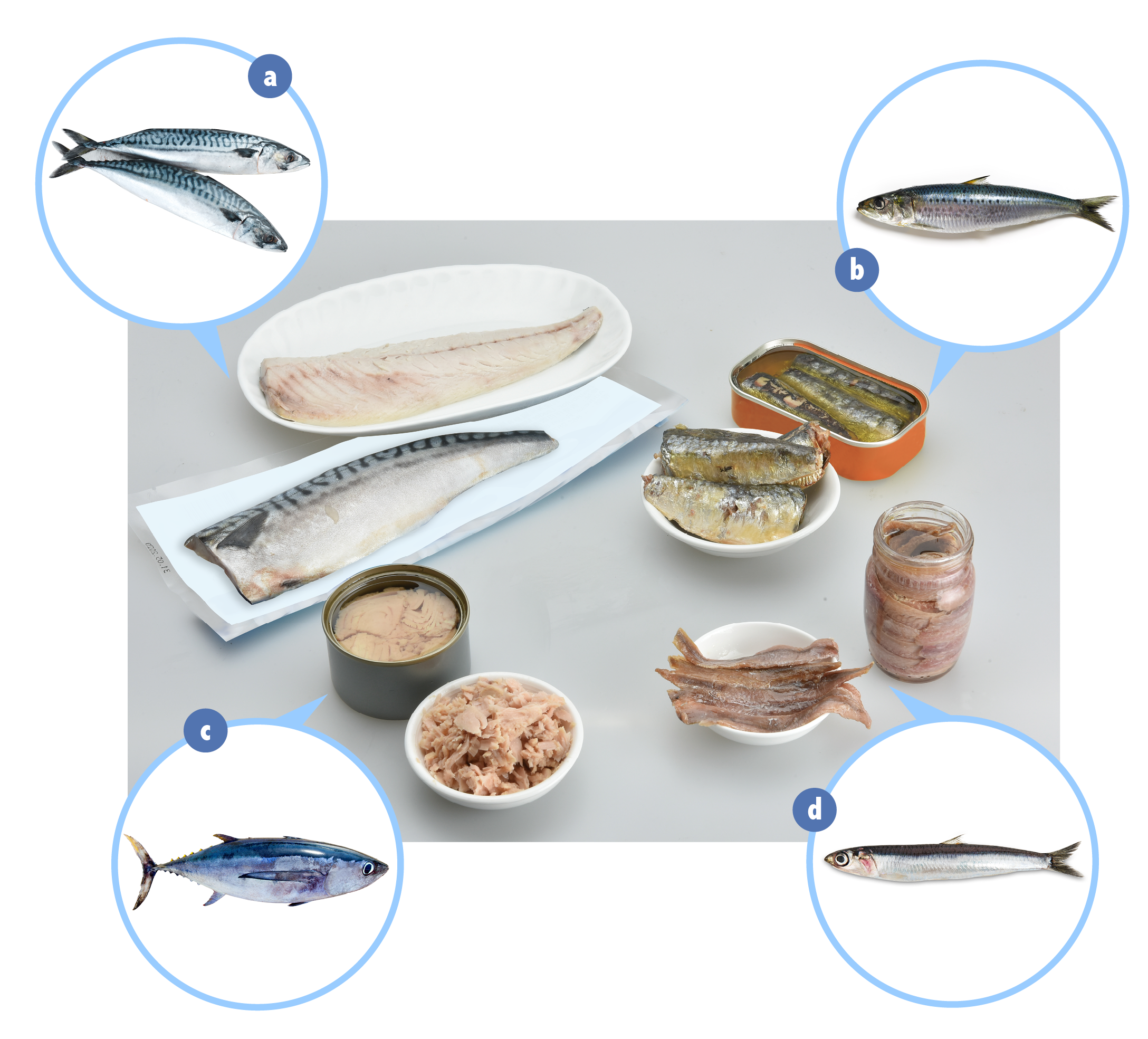
Examples of fish which contain elevated levels of naturally

Examples of fish which contain elevated levels of naturally occurring histidine: (a) mackerel, (b) sardine, (c) tuna and (d) anchovy.  Some of their respective products have also been found to contain high levels of histamine.

Formation of Histamine in Fish and Fish Products

Histamine is a toxic metabolite produced by histamine-producing bacteria during spoilage and fermentation of fish and fish products.  Many histamine-producing bacteria are part of the natural microflora of the skin, gills and gut of freshly caught fish.  Histidine decarboxylase (HDC) enzymes, synthesized by histamine-producing bacteria when they multiply, convert the amino acid histidine that are naturally present in fish into histamine.

The level of histamine in fish and fish products mainly depends on species of fish and time-temperature control. Certain fishes like mackerel, sardine, tuna and anchovy naturally contain high amount of histidine and have been associated with SFP cases in Hong Kong and/or other places.

Time and temperature control is the most effective method for ensuring food safety for fish species prone to histamine production.  In the absence of proper time-temperature control such as refrigeration and freezing, formation of histamine may occur at any point throughout the supply chain.  Previous study conducted jointly by the Food and Environmental Hygiene Department and the Consumer Council revealed that high levels of histamine (up to 2600 mg/kg) that can cause SFP were detected in opened canned fish samples that were left at room temperature for 24 hours.  However, histamine was not detected in samples that were kept at 2°C for up to 168 hours.

Health Effects of Histamine

SFP is caused by the ingestion of food containing high levels of histamine i.e. consuming a serving size of 250g fish or fish product with histamine level exceeding 200 mg/kg may cause symptoms in healthy individuals.  Symptoms of SFP include tingling and burning sensation around the mouth, facial flushing and sweating, nausea, vomiting, headache, palpitations, dizziness and rash.  Exacerbation of asthma and more serious cardiac manifestations were reported in more severe cases.  The onset of symptoms is within a few hours after consumption and these symptoms will normally disappear in 12 hours without long term effect.

Control of Histamine in Fish and Fish Products

High levels of histamine can build up in fish and fish products before any signs of spoilage (e.g. bad smell or taste) develop.  Therefore, measures for control of histamine should be taken along the food chain from harvest to consumption.

Care should be taken that the cold chain is maintained at or below 4°C along the supply chain, including points of transfer such as offloading of fish from the vessel and processing procedures.  Frozen fish and fish products should be kept at or below -18°C.  Transport vehicles or vessels should be adequately equipped to keep fish cold and pre-chilled before loading fish where applicable.  Adequate heat treatment (e.g. cooking, hot smoking) can kill histamine-producing bacteria and inactivate HDC enzymes, but cannot destroy pre-formed histamine.  Recommendations in the Code of Practice for Fish and Fishery Products (CAC/RCP 52-2003), issued by Codex Alimentarius Commission, should be observed to ensure food safety.
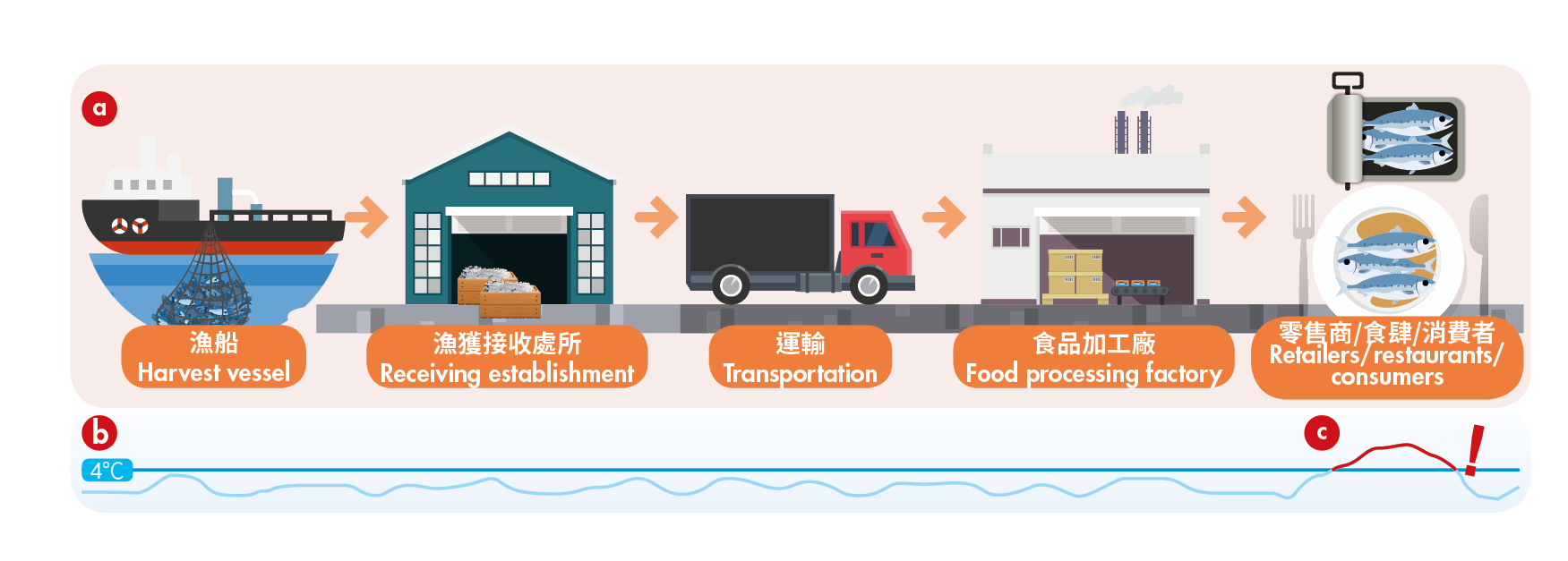
Food chain from harvest to consumption

(a) Cold chain should be maintained throughout the whole supply chain. (b) Refrigerated fish and fish products should be kept at or below 4°C. (c) The time which fish products are kept under ambient temperature should be minimised.

At the consumer level, fish should be chilled rapidly after purchase.  For pre-packaged fish and fish products, store according to the instructions of the manufacturer (e.g. keep refrigerated). If cooked fish and ready-to-eat fish products (e.g. tuna fish sandwiches and opened canned fish) are placed at room temperature all day long, they can be re-contaminated and histamine can form.  Therefore, if these foods are not being eaten immediately, they should be kept under refrigeration and be finished as soon as possible.

Research – Barry Callebaut takes $77 million hit in Salmonella incident

Food Safety News

A Salmonella contamination incident cost candy producer Barry Callebaut $77 million, according to the company’s full-year results.

The impact of the problem was CHF 76.9 million Swiss Francs ($77.3 million) in the fiscal year 2021/22, which ended on Aug. 31, 2022.

The Salmonella incident at the Wieze factory in Belgium and temporary production stoppage, followed by a gradual ramp-up toward the end of the fiscal year, had a “notable impact” on volume and profit in Europe, the Middle East, and Africa region. There was a loss because operations were paused at the factory.

As of October, cleaning of the factory was nearing completion and it began operating again at normal capacity after production was stopped in late June.

Research – The number affected in the Italian Listeria outbreak climbs to 90; three dead

Food Safety News

At least 90 people have been affected and three have died in a major Listeria outbreak in Italy.

The Ministry of Health (Ministero della Salute) said the most recent patient was reported in mid-September.

Deaths occurred in December 2021 and March and June 2022 in Lombardy, Piedmont, and Emilia Romagna. The patients were immunocompromised or particularly vulnerable to infection. One woman lost her baby in the outbreak.

Patients live in Piedmont, Lombardy, Veneto, Emilia Romagna, Liguria, Umbria, Tuscany, Calabria, Lazio, Puglia, Valle D’Aosta and Abruzzo.

USA – Norovirus Sickened 173 at D. C. Cobb’s Restaurant in Illinois

Food Poisoning Bulletin

Eurofins

A norovirus outbreak sickened 173 people at D. C. Cobb’s restaurant in McHenry, Illinois in August 2022, according to an investigation by the McHenry County Department of Health (MCDH). Two of those patients were hospitalized. The last time this investigation was updated was on September 16, 2022, when it was reported that 16 people were sick after eating at that restaurant. The restaurant is located at 1204 North Green Street in McHenry.