Category Archives: Contaminated water

RASFF Alert – Coliforms – Natural Mineral Water

European Food Alerts

RASFF

presence of coliforms (7.8 x 10¹ [5.5 x 10¹; 1.1x 10²] /250ml) in natural mineral water from Belarus in Lithuania

Research – Predicting Cholera Risk in Yemen

Earth Observatory

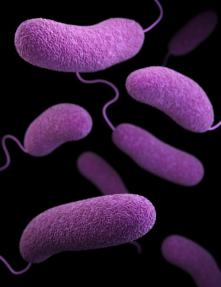
CDC Vibrio

Image CDC

This story is adapted from our recent feature, Of Mosquitoes and Models: Tracking Disease by Satellite.

In 2017, Yemen experienced one of its worst cholera outbreaks on record. Following heavy rains, flooding, and mass movement of the population due to civil unrest, more than one million people were suspected of contracting cholera and at least 2,000 died. A few scientists saw it coming, and they are now working to make sure people are prepared for future cholera outbreaks in Yemen and around the world.

Cholera is a waterborne bacterial infection that can spread quickly through a population. The disease is primarily contracted by consuming water or food contaminated with the cholera bacteria, Vibrio cholerae. It causes uncontrollable diarrhea that, if left untreated, can result in dehydration or death.

A team of NASA-funded researchers has been using satellite and ground-based data to forecast the risk of cholera in Yemen and other countries. The map above shows the forecasted risk of cholera in Yemen from August 10 to September 6, 2020. It was created with the Cholera Prediction Modeling System, which incorporates NASA precipitation data, air temperature data from NASA’s MERRA-2 reanalysis product, and population data. The number of cholera cases could increase in coming weeks, influenced by heavy rains that usually fall in August, though researchers predict the outbreaks should be limited to a few hotspots unless there is a large population displacement.

Ireland -Irish authorities probe salad link in Cryptosporidium outbreak

Food Safety News

Officials in Ireland are investigating an outbreak of cryptosporidium linked to a salad that has affected more than 40 people.

The Health Service Executive’s (HSE) Department of Public Health East was notified of an outbreak of cryptosporidiosis in the Dublin and Wicklow area. To date, 42 cases have been notified; with the onset of symptoms occurring over a 14 day period from July 15.

A food alert was issued by the Food Safety Authority of Ireland (FSAI) and certain batches of mixed salad leaves were withdrawn.

Product recall
The FSAI was notified by the HSE of an outbreak of cryptosporidiosis. An outbreak control team is in place and the investigation is ongoing. Many lines of inquiry are being followed up to identify and control the source of the outbreak, according to the agency.


USA – Texas parasitic outbreak sickens 82; health officials still trying to identify source – Cyclospora

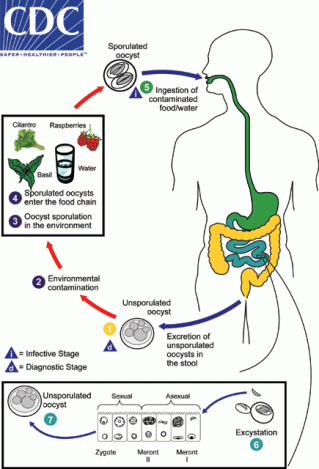
IBT Cyclospora_LifeCycle201

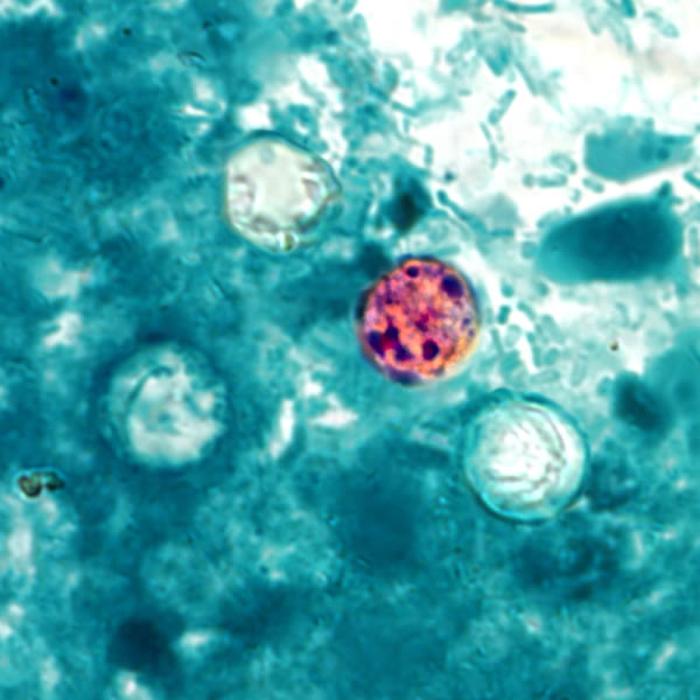
Eighty-two individuals in Texas got sick after suffering from cyclosporiasis, a parasitic infection that causes a range of symptoms.

The Centers for Disease Control and Prevention (CDC) stated that cyclosporiasis is an illness caused by a microscopic parasite. Fox News reports that the symptoms of this infection include diarrhoea, frequent bowel movements, loss of appetite, bloating, weight loss, stomach cramps, fatigue, and nausea. These symptoms can take up to a week to appear following an infection.

The most common source of the parasite is water or food contaminated by feces. However, public health officials in Austin, Texas are still trying to find out where the intestinal illness came from, which affected Austin-Travis County.

Health officials stated that previously, the source of such an outbreak would either be fruits or vegetables. The most common food sources include basil, cilantro, onions, and raspberries.

In July, the CDC warned multiple states of a cyclospora outbreak from bagged salads. However, Texas was not included in the list.

Research – Synergistic antibacterial effect of nisin, ethylenediaminetetraacetic acid, and sulfite on native microflora of fresh white shrimp during ice storage

Wiley Online

This study aims to investigate the effectiveness of using nisin, ethylenediaminetetraacetic acid (EDTA), and sulfite alone or in combination in reducing Vibrio parahaemolyticus Salmonella enterica , and Pseudomonas fluorescens in broth and native microflora on raw Pacific white shrimp during ice storage. Nisin (50 ppm), EDTA (20 mM), alone or in combination were used to test on the growth of parahaemolyticus enterica , and fluorescens in broth. Nisin (50 ppm), EDTA (20 mM), sodium metabisulfite (1.25 and 0.625%), ice; alone or in combination were used on shrimps during 1°C storage for 10 days. Microbial and chemical changes were analyzed during shrimp storage. First, the combination of nisin and EDTA exhibited antibacterial effects against parahaemolyticus enterica , and fluorescens in broth. Second, in shrimp preservation, the combination of nisin, EDTA, and sulfite at a low dose of 0.625% exhibited higher antimicrobial activity than did a high dose of sulfite (1.25%). Based on aerobic bacteria counts, psychrotrophic bacteria, and TVB‐N, shrimp treatment with combination of nisin, EDTA, and low‐dose sulfite were still acceptable within 10 days of storage. Based on our findings, nisin and EDTA can be used to reduce uses of sulfite for shrimp preservation in the future.

USA – CDC Closes Atlanta Buildings After Finding Legionella

Outbreak News Today

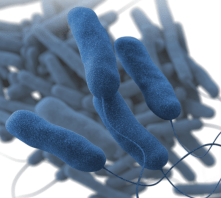
CDC legionella

Image CDC

The CDC closed several buildings it leases in Atlanta after finding legionella bacteria in the plumbing. “During the recent closures at our leased space in Atlanta, working through the General Services Administration (GSA), CDC directed the landlord to take protective actions,” CDC told CNN.

“Despite their best efforts, CDC has been notified that Legionella, which can cause Legionnaires’ Disease, is present in a cooling tower as well as in some water sources in the buildings. Out of an abundance of caution, we have closed these buildings until successful remediation is complete.”

USA – Cyclospora Outbreak in Texas

Outbreak News Today

Austin Public Health (APH) announced it was investigating an outbreak of Cyclospora, an intestinal illness caused by a parasite, after at least 82 cases have been reported since June 1, 2020. This Austin-Travis County Cyclospora Outbreak does not yet have an identified source.

According to  APH Epidemiologist Janet Pichette, “While we may be in COVID-19 season, we cannot forget the other diseases and infections that are commonly present in our community. And as we have said time and time again, there are ways to prevent many of these diseases and infections, including cyclosporiasis – thoroughly wash fresh produce, wash your hands after handling fruits and vegetables, and separate produce from raw meat and seafood.”

Until a source is found, the APH reminds all Texas residents to wash their hands and their produce.

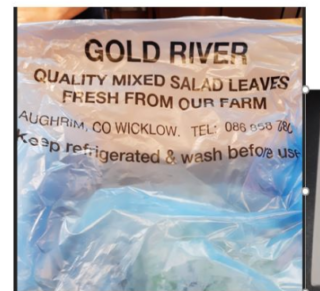
Ireland – Withdrawal of Gold River Quality Mixed Salad Leaves due to the Possible Presence of Cryptosporidium

FSAI

Summary
Category 1: For Action
Alert Notification: 2020.42
Product: Gold River Quality Mixed Salad Leaves (Seasonal Salad Box); pack size: 1kg
Batch Code: All batch codes, all best before dates.
Country Of Origin: Ireland

Message:

All batches of Gold River Quality Mixed Salad Leaves (Seasonal Salad Box) are being withdrawn from sale as a precaution, due to the possible presence of Cryptosporidium.

Nature Of Danger:

Cryptosporidium is a microscopic parasite which causes cryptosporidiosis, a common form of gastroenteritis. Watery diarrhoea is the most common symptom of cryptosporidiosis, which can be particularly serious for young children, older people, pregnant women and people with weakened immune systems.

Action Required:

Inspectors:

EHOs are requested to notify the FSAI at foodincidents@fsai.ie, if the implicated batches are found to be in use at catering premises.

Manufacturers, wholesalers, distributors, caterers & retailers:

Caterers should not use the implicated batches.

Gold River Photos

Europe – Legionnaires’ disease – Annual Epidemiological Report for 2018

ECDC European Centre for Disease Prevention and Control

Legionnaires’ disease remains an uncommon and mainly sporadic respiratory infection with an overall notification rate of 2.2 per 100 000 for the EU/EEA in 2018. There is heterogeneity in notification rates between EU/EEA countries, with the highest rate reported by Slovenia (7.7 per 100 000). The annual notification rate increased continuously over the period 2014–2018, from 1.3 per 100 000 in 2014 to 2.2 in 2018. There was a 23% increase in the number of cases in 2018 compared with 2017.Four countries (France, Germany, Italy and Spain) accounted for 71% of all notified cases in 2018. Males aged 65 years and above were most affected (8.5 per 100 000).

Research – Researchers identify biofilm hotspots, document danger zones

Food Safety News

Scientists in Austria have investigated where biofilms hide and what bacteria can be found in them.

Biofilms are proven sources of contamination in the food industry. They can cause additional costs in production and can be a danger to consumer health.

Researchers at the unit of food microbiology at Vetmeduni Vienna looked at biofilms in an Austrian meat processing environment that included pork, poultry and beef. Knowledge gained on presence and composition, published in the International Journal of Food Microbiology, could help to prevent and reduce biofilm formation within food processing environments.