Category Archives: Campylobacter

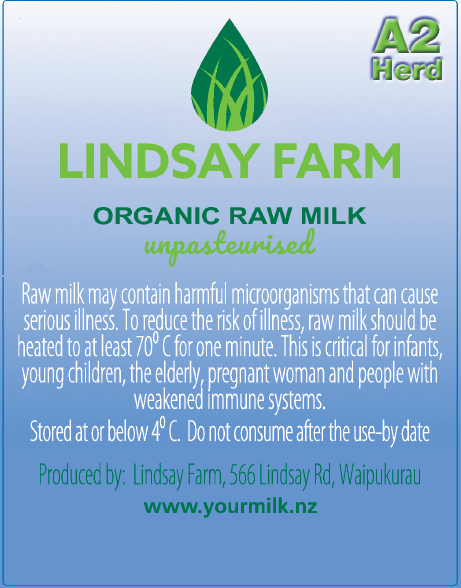
New Zealand – Lindsay Farm brand Organic Raw Milk (unpasteurised) – Campylobacter

MPI

18 March 2021: Lindsay Farm is recalling specific batches of Lindsay Farm brand Organic Raw Milk (unpasteurised) as the product may contain Campylobacter.

Lindsay Farm brand Organic Raw Milk (unpasteurised) 2L
Product identification
Product type  Raw (unpasteurised) drinking milk
Name of product (size) Lindsay Farm brand Organic Raw Milk (unpasteurised) 2L
Batch marking Lot numbers:  0203, 0303, 0403, 0503,0603, 0703, 0803,0903, 1003, 1103, 1203,1303, 1403, 1503, 1603 and 1703
Date marking Use by date between 06.03.2021 and up to and including 21.03.2021
Package size and description The product is sold in a 2L plastic bottle.
Distribution The product is sold in the Hawke’s Bay region via home deliveries and the following registered depots:

Betta Electrical, 46 – 48 Ruatainwha Street, Waipukurau

Chantal Shop, 45 Hastings Street, Napier

Cornucopia – The Organic Shop, 221 Heretaunga Street East, Hastings

Dawnacres Florist, 208 Havelock Road, Akina, Hastings

Nature’s Nurture – The Organic Grocer, 100 High Street, Waipawa

Tangaroa Seafoods, 7 Tangaroa Street, Ahuriri, Napier

Unichem Taradale Pharmacy, 288 Gloucester Street, Taradale, Napier.

Notes This recall does not affect any other batches of Lindsay Farm brand Organic Raw Milk (unpasteurised).

Consumer advice

Customers are asked to check the lot number and use by date printed on the product.

If you have purchased any of the affected product listed on this notice, do not consume it. Customers should return the product to their retailer for a full refund. Alternatively, consume after heating to 70°C and holding at this temperature for one minute. If you don’t have a thermometer, heat the milk until it nearly reaches a boil (or scald the milk) before drinking it.

There have been no reports of associated illness in New Zealand. If you have consumed any of this product and have any concerns about your health, seek medical advice.

How to reduce the risk of illness if you drink raw unpasteurised milk

Campylobacter infection: symptoms and advice

Who to contact

If you have questions, contact Lindsay Farm:

  • Phone: 06 858 5333
  • Address: Lindsay Road, Waipukurau, Central Hawke’s Bay.

Research – Prevalence and antimicrobial resistance of foodborne pathogens in select fresh produce procured from farmers’ markets in Central Virginia

Wiley Online

As farmers’ markets have increased in size, scope, and complexity, so have potential food‐safety challenges and implications. Most products sold at farmers’ markets may receive minimal to no treatment of decontamination which could increase their potential microbial risks. The aim of this study was to assess the prevalence and antimicrobial resistance (AMR) of foodborne pathogens in select fresh produce procured from farmers’ markets in Central Virginia. A total of 138 samples produced by 15 farms and sold at 9 registered farmers’ markets were obtained between March and November 2017. CampylobacterEscherichia coli, and Listeria were, respectively, detected in 8.7, 9.4, and 8.0% of the samples. A total of 46 bacterial isolates consisted of CampylobacterE. coli, and Listeria were tested for their susceptibility to 12 antimicrobials. Ampicillin resistance showed the highest frequency among Campylobacter (100%) and E. coli (47.8%) isolates while nalidixic acid resistance was the highest in Listeria isolates (72.7%). At least 17% of each CampylobacterE. coli, and Listeria isolates exhibited multidrug resistance (MDR). No isolates had matching pulsed‐field gel electrophoresis (PFGE) profiles demonstrating that the E. coli isolates had a high degree of genomic diversity. This study demonstrated a potential health hazard arising from farmers’ market‐acquired fresh produce and emphasizes the importance of good agricultural and handling practices to prevent foodborne illness and spread of multidrug antibiotic resistance. Continued research is needed to determine and intervene the cause(s) of the observed prevalence and to support the healthy development of food products sold at farmers’ markets.

Research – Campylobacter Contamination of UK-Produced Halal Chicken at Retail

Journal of Food Protection

CDC Campy

Campylobacter is the leading cause of human bacterial diarrhoeal disease worldwide, with poultry meat products accounting for the majority of human cases. Recent surveys by the Food Standards Agency estimate the Campylobacter prevalence in fresh UK retail chicken to be 41.2%. However, such surveys have not distinguished between broiler chickens produced for different consumer demographics, such as the Halal market. Campylobacter colonisation of broilers is difficult to prevent, especially during routine partial depopulation of flocks. Broilers produced for the Halal market may undergo multiple depopulation events, which may increase the risk of colonisation and subsequent Campylobacter contamination of chicken meat. This project aimed to determine the prevalence and levels of Campylobacter contamination of chicken meat produced for the UK Halal market. Campylobacter was identified and enumerated from the neck skin and outer packaging of 405 Halal chickens. Following culture, isolates were assigned to species via PCR and disc diffusion antimicrobial susceptibility tests determined. Logistic regression analysis assessed risk factors for Campylobacter isolation, the level of Campylobacter contamination among positive carcasses and antimicrobial resistance outcomes. Campylobacter spp. were confirmed in 65.4% of neck skin samples and 17.1% of packaging samples. 13.8% of neck skin samples had the highest level of contamination (>1000 cfu/g). Large birds had a significantly higher number of samples with >1000 cfu/g (p<0.001) and as chicken carcass weight increased, birds were more likely to be Campylobacter-positive (p<0.05). A high prevalence of resistance was seen to ciprofloxacin (42.0%) and 38.5% of samples contained at least one multi-drug resistant Campylobacter isolate. This study demonstrates that Halal chicken has a higher Campylobacter prevalence than non-Halal chicken. Interventions should be introduced to reduce this increased public health risk to consumers.

Canada – FoodNet Canada tables and figures 2019.

FoodNet

EXECUTIVE SUMMARYThe Public Health Agency of Canada’s (PHAC) FoodNet Canada surveillance system is pleased to present this tables and figures report which provides the annual results of our surveillance activities conducted in 2019.The report is based on findings from its sentinel sites in British Columbia, Alberta, and Ontario.It also provides preliminary findings from Quebec, representing a partial year due to their implementation part way through the year in July 2019. The report focuses on trends in enteric pathogen disease rates, as well as trends in the prevalence of these pathogens found on potential disease sources: retail meats, manure from food producing animals and water.It is our hope that this report will be used to inform and shape discussions on food safety issues regarding enteric diseases and their sources.Key findings:In 2019, Campylobacter and Salmonella remained the most common causes of human enteric illness in the FoodNet Canada sentinel sites. Travel continues to bean important factor in the burden of enteric disease. In 2019, approximately 30% of all cases of enteric disease were associated with travel outside of Canada.

Exposure to retail meat products remains a potential source of infection for human enteric illness. However, decreases in the prevalence of certain pathogen-food combinations were observed in 2019. For example, Salmonella on frozen breaded chicken products significantly decreased in 2019 compared to 2018 and is likely associated with interventions implemented at the industry level in 2019.

Other exposures, such as the farm environment and water, are also possible sources of infection for human enteric illness, with differences noted between the sites. For example, Salmonella is commonly found in broiler chicken manure, however, the prevalence significantly increased in BC whereas it significantly decreased in the AB site in 2019, resulting in an overall significant decrease in the combined sites.

The majority of clinical cases of shiga toxigenic Escherichia coli(STEC) were domestically acquired in 2019, with a significant increase in both travel and endemic incidence rates, which is primarily driven by the AB sentinel site who test all STEC-confirmed stool samples for non-O157 serogroups.

In 2019, surface water sampling was initiated for the first time in the ON site for STEC testing. The prevalence of STEC in the ON site (27%) was similar to the combined BC and AB irrigation water prevalence in 2019 (28%).

Continued monitoring of human illness and the potential exposures is important to ensure the continued health and safety of Canadians.The collection and integration of information across all of FoodNet Canada surveillance components (human, retail, on-farm, and water) in an enhanced and standardized way allows for the analysis of sub-type distributions among human cases and potential exposure sources over time. This report will be followed by a comprehensive annual report, which will include more extensive analyses of temporal trends and sub-typing information for an integrated perspective on enteric disease from exposure to illness.

Research – Food risk survey shows low awareness of Campylobacter

Food Safety News

There is low awareness of Campylobacter and its impact despite it being the main cause of food poisoning in the UK, according to a project on how people perceive food-related risks.

Results come from a survey by Kantar Public and analysis at the Food Standards Agency (FSA). The study was online and had 1,194 participants in March 2017 but results were only published this month.

The objective was to improve the FSA’s understanding of consumer perceptions on food risk. This could help develop the targeting, messaging and effectiveness of communication with the public, researchers said.

Consumer risk perception on 17 topics identified by FSA and Food Standards Scotland (FSS) including E. coli O157, food allergens, chemicals in food, Campylobacter, norovirus, pesticides, and radioactivity in food were measured.

Research – Antimicrobial resistance and interspecies gene transfer in Campylobacter coli and Campylobacter jejuni isolated from food animals, poultry processing, and retail meat in North Carolina, 2018–2019

PLOS One

CDC Campy

The Center for Disease Control and Prevention identifies antimicrobial resistant (AMR) Campylobacter as a serious threat to U.S. public health due to high community burden, increased transmissibility, and limited treatability. The National Antimicrobial Resistance Monitoring System (NARMS) plays an important role in surveillance of AMR bacterial pathogens in humans, food animals and retail meats. This study investigated Ccoli and Cjejuni from live food animals, poultry carcasses at production, and retail meat in North Carolina between January 2018-December 2019. Whole genome sequencing and bioinformatics were used for phenotypic and genotypic characterization to compare AMR profiles, virulence factors associated with Guillain-Barré Syndrome (GBS) (neuABC and cst-II or cst-III), and phylogenic linkage between 541 Campylobacter isolates (Ccoli n = 343, Cjejuni n = 198). Overall, 90.4% (489/541) Campylobacter isolates tested positive for AMR genes, while 43% (233/541) carried resistance genes for three or more antibiotic classes and were classified molecularly multidrug resistant. AMR gene frequencies were highest against tetracyclines (64.3%), beta-lactams (63.6%), aminoglycosides (38.6%), macrolides (34.8%), quinolones (24.4%), lincosamides (13.5%), and streptothricins (5%). A total of 57.6% (114/198) Cjejuni carried GBS virulence factors, while three Ccoli carried the Cjejuni-like lipooligosaccharide locus, neuABC and cst-II. Further evidence of Ccoli and Cjejuni interspecies genomic exchange was observed in identical multilocus sequence typing, shared sequence type (ST) 7818 clonal complex 828, and identical species-indicator genes mapAceuE, and hipO. There was a significant increase in novel STs from 2018 to 2019 (2 in 2018 and 21 in 2019, p<0.002), illustrating variable Campylobacter genomes within food animal production. Introgression between Ccoli and Cjejuni may aid pathogen adaption, lead to higher AMR and increase Campylobacter persistence in food processing. Future studies should further characterize interspecies gene transfer and evolutionary trends in food animal production to track evolving risks to public health.

France – Product recall: Dried, sliced ​​and smoked Duck Breast 90 g of Route des Saveurs brand – Campylobacter

Product recall: Dried, sliced ​​and smoked Duck Breast 90 g of Route des Saveurs brand

ENCOUNTERED PROBLEM

Presence of Campylobacter

PROPOSED SOLUTION

Do not consume and bring back to the place of purchase for reimbursement

People who have consumed the product mentioned above and who present with diarrhea, abdominal cramps, fever, isolated or accompanied by headaches with nausea or vomiting, are invited to consult their attending physician, notifying him of this consumption.

These symptoms may suggest campylobacteriosis, a disease that can be serious and can take up to 10 days to incubate.

Pregnant women should pay special attention to these symptoms, as well as immunosuppressed people and the elderly.

FURTHER INFORMATION

▸ Dried sliced ​​duck breast
• Barcode: 3 250 391 953 097
• Lot and DLC: 421 025 – 05/15/2021

▸ Dried sliced ​​smoked duck breast
• Barcode: 3 250 391 953 066
• Lot and DLC: 421 025 – 05/15/2021, 421 026 – 05/16/2021

▸ Packaging
90 g blister

▸ Health stamp
FR 32 079 030 CE

▸ Source
https://www.60millions-mag.com/
Photo: https://fr.openfoodfacts.org/

Greece – Evidence for waterborne origin of an extended mixed gastroenteritis outbreak in a town in Northern Greece, 2019

Cambridge Core

We investigated a large gastroenteritis outbreak that occurred in Northern Greece in 2019. A case was defined as anyone presenting with diarrhoea and/or vomiting from 24/01/2019 to 04/02/2019. We conducted a case-control study (CCS) using random selection of participants >16 years of age, residents of town X, who visited the health care centre between 25-28/01/2019.

Moreover, we conducted a retrospective cohort study (CS) at the four elementary schools of the town. We collected clinical and water samples and the water supply system was inspected. In total, we recorded 638 cases (53% female; median age was 44 years (range 0-93)). Forty-eight cases and 52 controls participated in the CCS and 236 students in the CS. Both CCS and CS indicated tap water as the most likely source (OR=10, 95% CI, 2.09-93.4, explaining 95.7% of cases; RR= 2.22, 95% CI, 1.42-3.46, respectively).

More than one pathogen were detected from stool samples of 6 of the 11 cases tested (norovirus, Campylobacter jejuni, EHEC and EPEC). Water samples, collected after ad-hoc chlorination, tested negative. Technical failures of the water tanks’ status were identified. Our results suggested a waterborne outbreak. We recommended regular monitoring of the water supply system and immediate repair of technical failures.

France – Sante Publique – Campylobacter

Sante Publique

Campylobacter kswfoodworld

Image CDC

Transmitted to humans primarily through contaminated undercooked meat, Campylobacter infections are a common cause of bacterial gastroenteritis in developed countries.

Our missions

  • Monitor the epidemiological evolution of Campylobacter infections
  • Inform the general public about prevention measures

Videos, infographics, key figures, interviews with experts … find here the latest news and key information on Campylobacter infections

Information – Food Safety During Pregnancy

MPI

FW20017: Food Safety During Pregnancy
Most foods and drinks are safe to consume during pregnancy. But there are some products pregnant women should be careful with or avoid. Public Health and Food Safety authorities in most OECD countries provide risk communication material related to food safety during pregnancy. Such a resource is available on the New Zealand Food Safety (NZFS) website.
However, this advice was published in 2007 and was based on information available then. Since that time a range of new foods has been introduced and become popular in the diet of New Zealanders, while there is improved understanding over which foods might be a risk.
NZFS wants to ensure the food safety advice for pregnancy remains current with the latest science and dietary practices for New Zealand.It is important that food safety advice for pregnant women captures all of the foods that could be a risk, however it needs to balance this with ensuring pregnant women can maintain a varied diet and have access to the widest source of nutrition without being overly restrictive.
To achieve this a research project was commissioned to the Institute of Environmental Science and Research Limited (ESR) to provide a scientifically robust background for updating food safety advice for pregnant women. Food safety considerations are focused on Listeria monocytogenes, Toxoplasma gondii, mercury and caffeine, as these four hazards have known specific impacts on the foetus.
Other microbiological and chemical hazards were not targeted as the risks are not pregnancy specific and food safety advice for the general public is also applicable for pregnant women. This report is restricted to food safety issues and does not cover advice on healthy nutrition during pregnancy.Maternal exposure to the microbiological hazards Listeria monocytogenes and Toxoplasma gondii is strongly linked to adverse effects on the foetus. For two other microbiological hazards, Salmonella spp. and Campylobacter spp., associated with adverse outcomes specific to the pregnancy period, the supporting epidemiological evidence is weaker.
The report has examined up-to-date information on these two other hazards and provided safety advice where relevant.The research examined data on complex changes in the maternal immune system that include both down regulation and up regulation of aspects of the immune system. Evidently pregnant women may be more susceptible to some infections than non-pregnant women, but no more susceptible to most types of infections. However, the complications of common infections in pregnant women can be more severe.
The main outcome of the research is an evaluation of evidence for food safety advice during pregnancy. The report included an evaluation of all food groups listed in the current New Zealand Food Safety’s guide to food safety in pregnancy. Consideration was also given to a small number of foods that were not previously evaluated in relation to pregnancy. Additional advice was proposed for these foods. NZFS agrees with the suggestion that advice should

New Zealand Food Safety Food Safety During Pregnancy be included in the guide for sprouts, recommending that these foods are not eaten unless cooked; for dried herbs recommending thorough cooking and a recommendation to not drink unpasteurised fruit juice and cider (non-alcoholic). The report confirmed that in most cases, New Zealand Food Safety’s advice on foods to eat or not eat during pregnancy are consistent with the available scientific evidence.
In a small number of instances, suggestions were made to better align the advice with the current available evidence. NZFS agrees with these suggestions and intends to expand the advice accordingly. Based on the evidence provided NZFS agrees that the current advice related to low acid soft pasteurised cheeses (e.g. Brie, Camembert, blue, ricotta, mozzarella, feta) should be strengthened to recommend that pregnant women do not eat these cheeses unless cooked.The report supports NZFS’s intention to make its advice on a range of commercial pasteurised dairy products with relatively short shelf-life less restrictive. Currently the advice is to dispose products like pasteurised milk or yoghurt after two days of opening.
The reviewed scientific evidence identified that, if that the products are refrigerated in original packaging and care is taken not to contaminate lids when using, it is safe to follow manufacturer’s advice on the package. Suggested modifications will allow pregnant women better planning of their daily diets and will also reduce unnecessary food wastage.
The report has suggested the current advice related to soft serve ice cream be reconsidered. However, NZFS’s opinion is that, given the likelihood of Listeria sloughing into the product through its processing, current advice to avoid this product during pregnancy is adequate. For some foods the scientific evidence is not currently strong enough to support specific food safety advice on these foods, although the available evidence suggests they may represent potentially emerging risk foods for pregnant women. A brief summary of such foods is provided at the end of the report. NZFS will follow up on any new scientific research related to these products.