Category Archives: Campylobacter

USA – Illinois county reports outbreak of infections from Campylobacter

Food Safety News

Campylobacter kswfoodworld

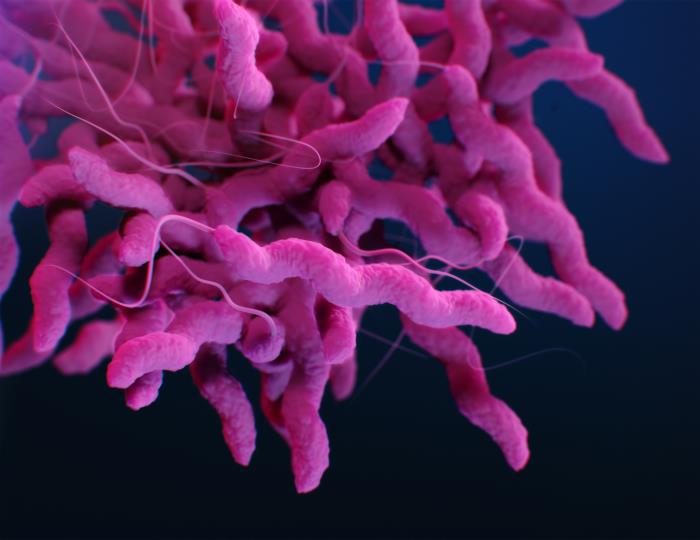
The McHenry County Department of Health in Illinois is reporting a significant increase in infections from Campylobacter.

Health officials have identified eight cases of campylobacteriosis with illness onsets between Aug. 17 and Aug. 30. That is four times more cases compared to the previous two weeks and 3.33 times more cases in August compared to July.

“No common source of infection has been identified at this time,” according to the health department.

Campylobacter bacteria is the most common cause of bacterial diarrhea in the United States, according to the county health officials. People can become ill with campylobacteriosis by eating contaminated food, drinking contaminated water or having contact with infected animals.

RASFF Alert – Campylobacter – Guinea Fowl

RASFF

Campylobacter in guinea fowl from France, via Germany in Austria and France

Research – Campylobacter Retailer Survey

Lex blog

Campylobacter kswfoodworld

Lidl has reported Campylobacter in chicken levels above the FSA’s target for the second quarter of 2022.

The supermarket chain recorded 8 percent of birds in the highest category which is up from 2 percent in the previous quarter and 6 percent in the period before that.

The Food Standards Agency (FSA) maximum level is 7 percent of birds with more than 1,000 colony forming units per gram (CFU/g) of Campylobacter.

Data from all nine retailers covers April to June 2022 on high findings of Campylobacter in fresh, shop-bought, UK-produced chickens.

Results at Lidl and Asda went up while Sainsbury’s, Marks and Spencer, Morrisons, Waitrose and Aldi recorded lower levels of contamination compared to the previous quarter. Figures for Tesco and Co-op stayed the same.

Research – Washing or rinsing chicken increases Microbial risk.

Fight Bac

Don't Wash Your Chicken Text block

Research – Lag between Campylobacter cases in broilers and humans

Poultry World

A Swedish study of human cases of campylobacteriosis and the prevalence of Campylobacter spp. in broilers has found a 2-week time lag, suggesting transmission through handling and consumption of fresh chicken meat.

The study, published in the International Journal of Food Microbiology, looked at cases between 2009 and 2019, exploring the relationship between the proportion of Campylobacter-positive broiler batches and the number of reported domestic cases in Sweden in humans.

Denmark – Health and Economic Burden of Seven Foodborne Diseases in Denmark, 2019

Mary Anne Liebert

We ranked seven foodborne pathogens in Denmark on the basis of their health and economic impact on society in 2019. We estimated burden of disease of infections with Campylobacter spp., Salmonella spp., Shiga toxin-producing Escherichia coli (STEC), Yersinia enterocoliticaListeria monocytogenes, norovirus, and hepatitis A virus in terms of incidence, mortality, disability-adjusted life years (DALY), and economic burden in terms of direct and indirect health costs. These seven pathogens accounted for 268,372 cases, 98 deaths, and 3121 DALYs, and led to a total expenditure of 434 million Euro in 1 year in a country with 5.8 million citizens. Foodborne infections by CampylobacterSalmonella, and norovirus caused the most DALYs, whereas Campylobacter, and norovirus and STEC had the higher costs. A combination of disease burden and cost of illness estimates is useful to inform policymaking and establish food safety priorities at the national level.

Research – The temporal pattern and relationship of Campylobacter prevalence in broiler slaughter batches and human campylobacteriosis cases in Sweden 2009–2019

Science Direct

Campylobacter kswfoodworld

Thermophilic Campylobacter species are the most common cause of bacterial gastroenteritis worldwide, and handling and consumption of broiler meat is considered a major foodborne transmission route. Both the incidence of campylobacteriosis and the prevalence of Campylobacter in broilers show seasonality but the impact of this association and broiler prevalence on human incidence is not clear. To explore this relationship we applied two approaches for analyzing time series data using different time resolutions (weekly, bi-weekly or monthly data) of human campylobacteriosis cases and prevalence of Campylobacter spp. in broiler slaughter batches in Sweden between 2009 and 2019. The decomposition of time series into seasonal (S), long-term trend (T) and residual components (STL model) showed a close overlap in seasonal patterns in terms of timing and the proportional change of peaks from normalized yearly levels. Starting 2016, when a large outbreak was reported, there was significant overlap in the trend components as well. The trend component of human cases prior to the outbreak corresponded to a linear increase of 6.5 % cases annually. In comparison, the estimated annual increase in broiler consumption was 2.7 %. An additive approach for time-series counts incorporating seasonal and epidemic (cases are a function of previous cases) components found a positive association between human cases and broiler prevalence with an optimal lag of 2 weeks, 1 bi-week, or 0 months. Considering the estimated time between slaughter and consumption, incubation time, and the time between on-set of disease and testing, a 2-week lag may be consistent with transmission via handling and consumption of fresh broiler meat. The best model included broiler prevalence as a factor in the epidemic model component, not in the seasonal component. The outcomes in terms of best model, optimal lags and significance of parameters, using weekly, bi-weekly or monthly data were, in general, in agreement but varied with data resolution when only a subset of the time series, not including any known broiler associated outbreaks, was analyzed. The optimal resolution based on the available data and conditions of the present analysis appeared to be weekly or bi-weekly data. Results suggest that broiler prevalence with a 2 week lag period can explain part of the human cases but has a smaller explanatory impact during the part of the study period not including the large known outbreaks. There is no simple relationship between broiler prevalence and human cases. Additional factors than broiler prevalence need to be evaluated in order to understand the transmission routes and epidemiology of campylobacteriosis.

Research – Public Health Risk of Foodborne Pathogens in Edible African Land Snails, Cameroon

CDC

In tropical countries, land snails are an important food source; however, foodborne disease risks are poorly quantified. We detected Campylobacter spp., Yersinia spp., Listeria spp., Salmonella spp., or Shiga-toxigenic Escherichia coli in 57%–86% of snails in Cameroon. Snail meat is a likely vector for enteric diseases in sub-Saharan Africa countries.

Austria – Austria reports mixed foodborne illness picture for 2021

Food Safety News

Salmonella and Campylobacter reports increased in Austria this past year but were still below levels seen before the COVID-19 pandemic.

While Listeria infections went down, a number of clusters were detected and an outbreak was solved.

In 2021, the number of human isolates sent to the National Reference Centre for Salmonella increased from 906 in 2020 to 1,048. However, this was still well below pre-coronavirus levels.

Salmonella Enteritidis was the most frequent serovar with 375 isolates. For Salmonella Typhimurium, including the monophasic variant, there were 242 human isolates in 2021, an increase compared to 166 in the previous year. Salmonella Coeln was third followed by Salmonella Infantis.

One national outbreak caused by monophasic Salmonella Typhimurium was registered in 2021. A total of 31 people from seven federal states fell ill.

Switzerland – Swiss outbreaks triple in 2021; illnesses also rise

Food Safety News

The number of foodborne outbreaks almost tripled in Switzerland in 2021 compared to the year before.

This past year, 37 outbreaks were reported with 540 people sick and 40 hospitalized versus 13 outbreaks in 2020.

Officials at the Federal Food Safety and Veterinary Office said the increase could be random, it could be due to better reporting and data collection or it could show the food safety situation has gotten worse, possibly because of the COVID-19 pandemic and other challenges facing businesses.

The agent was unknown in 17 outbreaks but Salmonella caused seven, norovirus four, Campylobacter three, two were due to Bacillus cereus and one each because of Shiga toxin-producing E. coli, Clostridium perfringens and hepatitis E.