Category Archives: bacterial contamination

Canada – My Grandfather’s Farm brand Pumpkin Pie Jam recalled due to potential presence of dangerous bacteria -Clostridium botulinum

CFIA

Recall details

Ottawa, November 20, 2020 – My Grandfather’s Farm is recalling My Grandfather’s Farm brand Pumpkin Pie Jam from the marketplace because it may permit the growth of Clostridium botulinum. Consumers should not consume the recalled product described below.

Recalled product

Brand Product Size UPC Codes
My Grandfather’s Farm Pumpkin Pie Jam 250 mL (sold in Mason Jars) None September 10, 2020

What you should do

If you think you became sick from consuming a recalled product, call your doctor.

Check to see if you have the recalled product in your home. Recalled products should be thrown out or returned to the store where they were purchased.

Food contaminated with Clostridium botulinum toxin may not look or smell spoiled but can still make you sick.

Symptoms in adults can include facial paralysis or loss of facial expression, unreactive or fixed pupils, difficulty swallowing, drooping eyelids, blurred or double vision, difficulty speaking or including slurred speech, and a change in sound of voice, including hoarseness.

Symptoms of foodborne botulism in children can include difficulty swallowing, slurred speech, generalized weakness and paralysis. In all cases, botulism does not cause a fever. In severe cases of illness, people may die.

Background

This recall was triggered by Canadian Food Inspection Agency (CFIA) test results. The CFIA is conducting a food safety investigation, which may lead to the recall of other products. If other high-risk products are recalled, the CFIA will notify the public through updated Food Recall Warnings.

The CFIA is verifying that industry is removing the recalled product from the marketplace.

Illnesses

There have been no reported illnesses associated with the consumption of this product.

Product photos

Printer ready version of photos

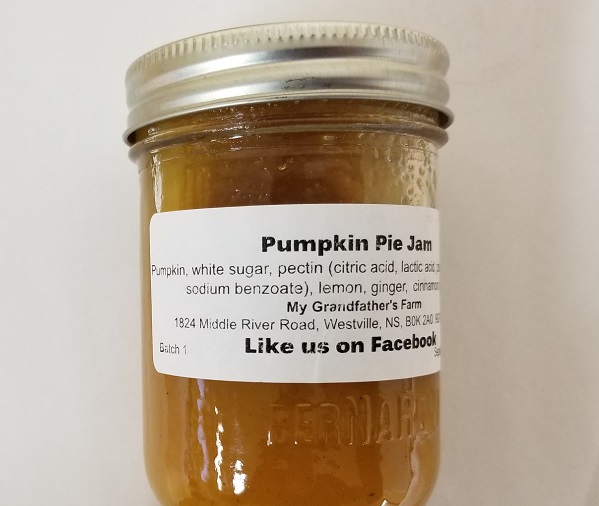
  • My Grandfather’s Farm – Pumpkin Pie Jam – 250 mL
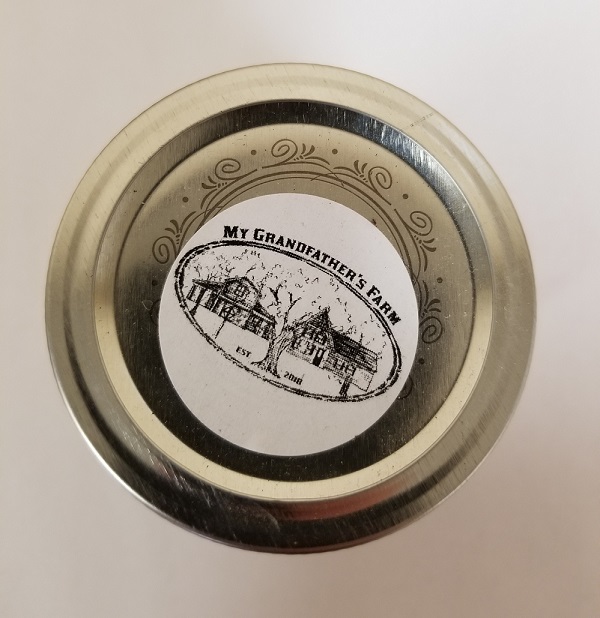
  • My Grandfather’s Farm – Pumpkin Pie Jam – 250 mL (top)
  • My Grandfather’s Farm – Pumpkin Pie Jam – 250 mL (label)
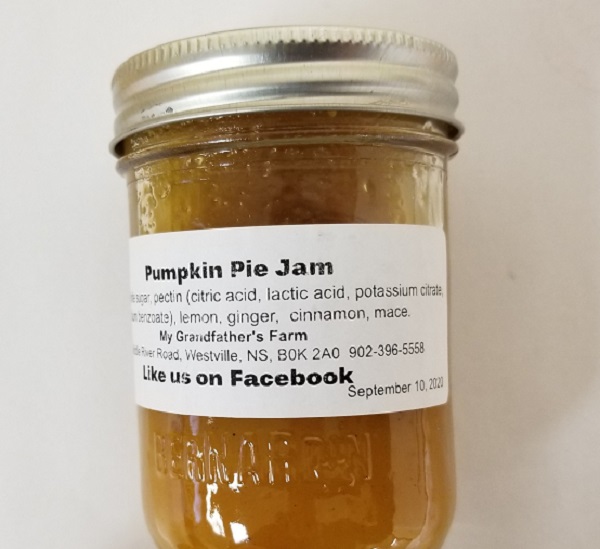
  • My Grandfather’s Farm – Pumpkin Pie Jam – 250 mL (label)

Public enquiries and media

Company information
My Grandfather’s Farm: 1824 Middle River Rd., Union Centre, NS
Telephone: 902-396-5558
Email: info@mygrandfathersfarm.ca

Canada – Food Recall Warning – Eggs from Les Œufs Richard Eggs Inc. recalled due to Salmonella

CFIA

Recall details

Ottawa, November 21, 2020 – Les Œufs Richard Eggs Inc. is recalling eggs from the marketplace due to possible Salmonella contamination. Consumers should not consume and distributors, retailers and food service establishments such as hotels, restaurants, cafeterias, hospitals, and nursing homes should not serve, sell, or use the recalled products described below.

Only eggs from Les Œufs Richard Eggs Inc. with best before dates indicated in the table below where the lot code contains “Q29” or where there is no lot code on the package are implicated by the recall.

Recalled product

Brand Product Size UPC Codes
Les Œufs Richard Eggs Inc. Large Size Eggs 12 eggs 0 57711 01056 9 20-12-26 Q29
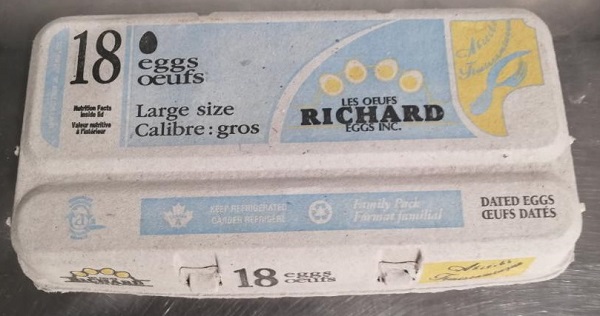
Les Œufs Richard Eggs Inc. Large Size Eggs, Family Pack 18 eggs 0 57711 01018 7 20-12-22 Q29
20-12-26 Q29
Les Œufs Richard Eggs Inc. Extra Large Size Eggs 12 eggs 0 57711 01064 4 20-12-26 Q29
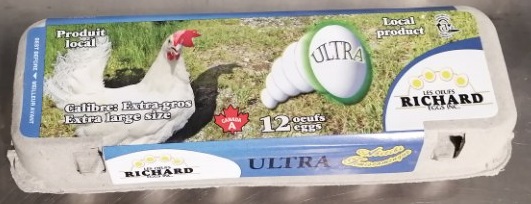
Les Œufs Richard Eggs Inc. Extra Large Size Ultra Eggs 12 eggs 0 57711 01070 5 20-12-18 Q29
20-12-22 Q29
20-12-24 Q29
Les Œufs Richard Eggs Inc. Large Size Brown Eggs 12 eggs 0 57711 08056 2 20-12-24 Q29
20-12-30 Q29
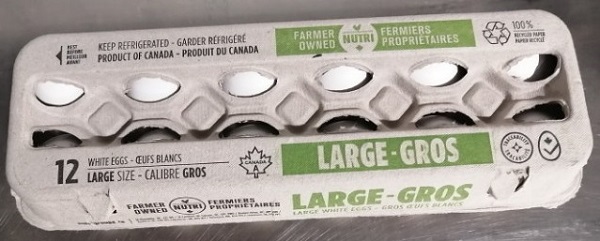
Nutri Large White Eggs 12 eggs 0 61719 01121 3 20-12-22 Q29
20-12-24 Q29
Nutri Large White Eggs 18 eggs 0 61719 01155 8 20-12-22 Q29
21-01-01 Q29
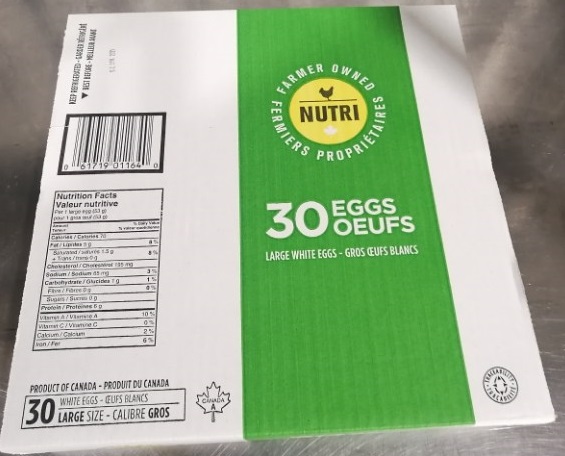
Nutri Large White Eggs 30 eggs 0 61719 01164 0 20-12-22 Q29
20-12-24 Q29
no name Medium size eggs 12 eggs 0 60383 66415 2 20-12-26 Q29

What you should do

If you think you became sick from consuming a recalled product, call your doctor.

Check to see if you have the recalled products in your home or establishment. Recalled products should be thrown out or returned to the location where they were purchased.

Food contaminated with Salmonella may not look or smell spoiled but can still make you sick. Young children, pregnant women, the elderly and people with weakened immune systems may contract serious and sometimes deadly infections. Healthy people may experience short-term symptoms such as fever, headache, vomiting, nausea, abdominal cramps and diarrhea. Long-term complications may include severe arthritis.

Background

This recall was triggered by test results. The Canadian Food Inspection Agency (CFIA) is conducting a food safety investigation, which may lead to the recall of other products. If other high-risk products are recalled, the CFIA will notify the public through updated Food Recall Warnings.

The CFIA is verifying that industry is removing the recalled products from the marketplace.

Illnesses

There have been no reported illnesses associated with the consumption of these products.

Product photos

Printer ready version of photos

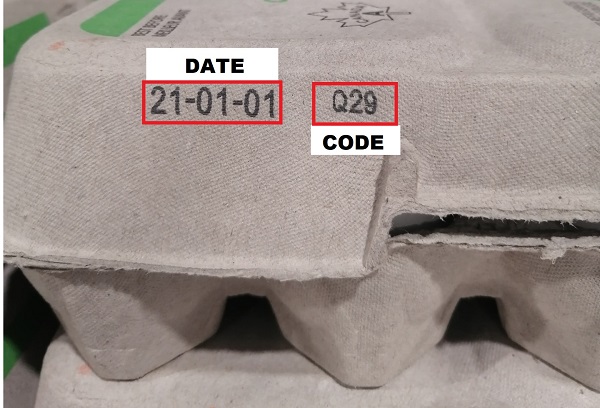
  • Example (best before date and lot code)
  • Les Oeufs Richard Eggs Inc. – Brown eggs, large size – 12 eggs
  • Les Oeufs Richard Eggs Inc. – Extra large size eggs – 12 eggs
  • Les Oeufs Richard Eggs Inc. – Extra large size Ultra Eggs – 12 eggs
  • Les Oeufs Richard Eggs Inc. – Large size eggs – 12 eggs
  • Les Oeufs Richard Eggs Inc. – Large size eggs – 12 eggs
  • No name – Medium size eggs – 12 eggs
  • Nutri – Large white eggs – 12 eggs
  • Nutri – Large white eggs – 18 eggs
  • Nutri – Large white eggs – 30 eggs

Public enquiries and media

Public enquiries
Toll-free: 1-800-442-2342 (Canada and U.S.)
Telephone: 1-613-773-2342 (local or international)
Email: cfia.enquiries-demandederenseignements.acia@canada.ca
Media relations
Telephone: 613-773-6600
Email: cfia.media.acia@canada.ca

Research – Iceland – Electronic publication of salmonella and campylobacter monitoring

MAST

Official results of monitoring Salmonella spp. and Campylobacter spp. in poultry and Salmonella spp. in pigs have been published in a live and interactive dashboard on the website of the Food Administration. The publication is part of the transfer of Matvælastofnun’s monitoring results from the agency’s databases to an accessible electronic form with transparency in mind.

The dashboard offers easy access to information where the user chooses the period he wants to view, whether on an annual or monthly basis, all the way back to 2013. He can also look up when the selected Salmonella serum type was detected and how often. With explanations on the help page (green field Help), the reader is quick to realize options.

Related material

Belgium – “Baguette Rosette” and “Bun Rosette” (salami) sandwiches – Salmonella

AFSCA

Recall of the Nonna company
Product: “Baguette Rosette” and “Bun Rosette” (salami) sandwiches.
Problem: presence of Salmonella.


In agreement with the AFSCA, Nonna withdraws two sandwiches filled with Rosette (salami):
“Baguette Rosette” and “Bun Rosette” because of the possible presence of Salmonella.
The sandwiches are individually wrapped.

ROSETTE BAGUETTE

EAN: 05425016577011
LOT and expiry date (DLC):
– lot 240311: 20/11/20
– lot 240670: 21/11/20

EAN: 05425016577080
LOT and expiry date (DLC):
– lot 240319: 11/21/20
– lot 240676: 11/22/20

Weight 240g

BUN ROSETTE

EAN: 05425016577578
LOT and expiry date (DLC):
– lot 240334: 20/11/20
– lot 240684: 21/11/20

EAN: 05425016577608
LOT and expiry date (DLC):
– lot 240686: 11/22/20

Weight 105g

The products are likely to have been sold between 11/16/2020 and 11/17/2020. Consumers who have not yet consumed the affected sandwiches can return it to the store where they were purchased.

The products were sold in Belgium through various points of sale.

Nonna has been informed by her supplier that there is a possible presence of Salmonella . Possible symptoms of salmonella poisoning are: fever, abdominal pain, diarrhea, nausea and sometimes vomiting.

People who have consumed these products and who present this type of symptoms are invited to consult their doctor without delay, notifying him of this consumption.

The Nonna company is located rue des Résistants N ° 22, 5030 Gembloux. Do not hesitate to call 081/600 803 for more information or an answer to your questions.

Belgium – Marinated boar steak 300g from the Belgian Quality brand – Salmonella

AFSCA

PRODUCT RECALL
 Printable version   |   Last updated on18.11.2020
11/18/2020
Recall of Aldi
Product: Marinated boar steak 300g from the Belgian Quality brand.
Problem: presence of Salmonella.


An analysis by our supplier has shown the presence of Salmonella in the product “Marinated boar steak 300g”.

ALDI has therefore decided, in consultation with the AFSCA, to withdraw this product from the market and to recall it to consumers.

Other ALDI products are not affected by this product recall.

PRODUCT DESCRIPTION

Name: Marinated boar steak 300g
EAN code: 20070 3000992 6
Brand: Belgian Quality
Type of packaging: Transparent skin pack type
Expiration dates (DLC): 27/11/2020 and 28/11/2020
Numbers number of lots: 20315 in 20317
Sales period: from 11/13/2020 to 11/18/2020
Points of sale: ALDI stores

DESCRIPTION OF THE RISK

Possible symptoms of salmonella poisoning are: fever, abdominal cramps and diarrhea, within 12 to 48 hours of consuming the contaminated food. The risk of infection is higher in the elderly, children, pregnant women and people with weakened immune systems.

People who have consumed these products and who present this type of symptoms are invited to consult their doctor without delay, notifying him of this consumption.

ADVICE FOR CONSUMERS

Please do not consume these products and bring them back to the store.
The returned products will be reimbursed (also without receipt).
For any further information, you can contact ALDI via customercareFR@aldi.be .

RASFF Alerts – Listeria monocytogenes – Chilled Smoked Salmon – Chilled Sliced Spicy Chorizo – Smoked Chicken Fillets

European Food Alerts

RASFF

Listeria monocytogenes (in 1 out of 5 samples /25g) in chilled sliced smoked chicken fillets from the Netherlands in the Netherlands

RASFF

Listeria monocytogenes in chilled sliced spicy chorizo from the United Kingdom in the UK

RASFF

Listeria monocytogenes (< 10 CFU/g) in chilled smoked salmon from Poland in France

RASFF Alerts – Animal Feed – Salmonella – Rapeseed Meal – Raw Cat Food – Dog Chews – Potato Pulp

European Food Alerts

RASFF

Salmonella (presence /25g) in rapeseed meal from Germany in Germany

RASFF

Salmonella enterica ser. Infantis (in 1 out of 5 samples /25g) in raw cat food from the Netherlands in Belgium

RASFF

Salmonella (presence /25g) in dog chews from India in Sweden

RASFF

Salmonella (presence /25g) in potato pulp from Germany in Germany

Research – Investigations of Possible Multistate Outbreaks of Salmonella, Shiga Toxin–Producing Escherichia coli, and Listeria monocytogenes Infections — United States, 2016

CDC

Problem/Condition: Salmonella, Shiga toxin–producing Escherichia coli (STEC), and Listeria monocytogenes are the leading causes of multistate foodborne disease outbreaks in the United States. Responding to multistate outbreaks quickly and effectively and applying lessons learned about outbreak sources, modes of transmission, and risk factors for infection can prevent additional outbreak-associated illnesses and save lives. This report summarizes the investigations of multistate outbreaks and possible outbreaks of Salmonella, STEC, and L. monocytogenes infections coordinated by CDC during the 2016 reporting period.

Period Covered: 2016. An investigation was considered to have occurred in 2016 if it began during 2016 and ended on or before March 31, 2017, or if it began before January 1, 2016, and ended during March 31, 2016–March 31, 2017.

Description of System: CDC maintains a database of investigations of possible multistate foodborne and animal-contact outbreaks caused by Salmonella, STEC, and L. monocytogenes. Data were collected by local, state, and federal investigators during the detection, investigation and response, and control phases of the outbreak investigations. Additional data sources used for this report included PulseNet, the national molecular subtyping network based on isolates uploaded by local, state, and federal laboratories, and the Foodborne Disease Outbreak Surveillance System (FDOSS), which collects information from state, local, and territorial health departments and federal agencies about single-state and multistate foodborne disease outbreaks in the United States. Multistate outbreaks reported to FDOSS were linked using a unique outbreak identifier to obtain food category information when a confirmed or suspected food source was identified. Food categories were determined and assigned in FDOSS according to a classification scheme developed by CDC, the Food and Drug Administration (FDA), and the U.S. Department of Agriculture Food Safety and Inspection Service (FSIS) in the Interagency Food Safety Analytics Collaboration.

A possible multistate outbreak was determined by expert judgment to be an outbreak if supporting data (e.g., temporal, geographic, demographic, dietary, travel, or food history) suggested a common source. A solved outbreak was an outbreak for which a specific kind of food or animal was implicated (i.e., confirmed or suspected) as the source. Outbreak-level variables included number of illnesses, hospitalizations, cases of hemolytic uremic syndrome (HUS), and deaths; the number of states with illnesses; date of isolation for the earliest and last cases; demographic data describing patients associated with a possible outbreak (e.g., age, sex, and state of residence); the types of data collected (i.e., epidemiologic, traceback, or laboratory); the outbreak source, mode of transmission, and exposure location; the name or brand of the source; whether the source was suspected or confirmed; whether a food was imported into the United States; the types of regulatory agencies involved; whether regulatory action was taken (and what type of action); whether an outbreak was publicly announced by CDC via website posting; beginning and end date of the investigation; and general comments about the investigation. The number of illnesses, hospitalizations, cases of HUS, and deaths were characterized by transmission mode, pathogen, outcome (i.e., unsolved, solved with suspected source, or solved with confirmed source), source, and food or animal category.

Results: During the 2016 reporting period, 230 possible multistate outbreaks were detected and 174 were investigated. A median of 24 possible outbreaks was under investigation per week, and investigations were open for a median of 37 days. Of these 174 possible outbreaks investigated, 56 were excluded from this analysis because they occurred in a single state, were linked to international travel, or were pseudo-outbreaks (e.g., a group of similar isolates resulting from laboratory media contamination rather than infection in patients). Of the remaining 118 possible multistate outbreaks, 50 were determined to be outbreaks and 39 were solved (18 with a confirmed food source, 10 with a suspected food source, 10 with a confirmed animal source, and one with a suspected animal source). Sprouts were the most commonly implicated food category in solved multistate foodborne outbreaks (five). Chicken was the source of the most foodborne outbreak-related illnesses (134). Three outbreaks involved novel food–pathogen pairs: flour and STEC, frozen vegetables and L. monocytogenes, and bagged salad and L. monocytogenes. Eleven outbreaks were attributed to contact with animals (10 attributed to contact with backyard poultry and one to small turtles). Thirteen of 18 multistate foodborne disease outbreaks with confirmed sources resulted in product action, including 10 outbreaks with recalls, two with market withdrawals, and one with an FSIS public health alert. Twenty outbreaks, including 11 foodborne and nine animal-contact outbreaks, were announced to the public by CDC via its website, Facebook, and Twitter. These announcements resulted in approximately 910,000 webpage views, 55,000 likes, 66,000 shares, and 5,800 retweets.

Interpretation: During the 2016 reporting period, investigations of possible multistate outbreaks occurred frequently, were resource intensive, and required a median of 37 days of investigation. Fewer than half (42%) of the 118 possible outbreaks investigated were determined to have sufficient data to meet the definition of a multistate outbreak. Moreover, of the 50 outbreaks with sufficient data, approximately three fourths were solved.

Public Health Action: Close collaboration among CDC, FDA, FSIS and state and local health and agriculture partners is central to successful outbreak investigations. Identification of novel outbreak sources and trends in sources provides insights into gaps in food safety and safe handling of animals, which helps focus prevention strategies. Summarizing investigations of possible multistate outbreaks can provide insights into the investigative process, improve future investigations, and help prevent illnesses. Although identifying and investigating possible multistate outbreaks require substantial resources and investment in public health infrastructure, they are important in determining outbreak sources and implementing prevention and control measures.

Research – Microbiological control of pasteurized and unpasteurized dairy products, 2018 – Norway

Mattilsynet

The microbiological quality was generally good for the 189 dairy products on the Norwegian market that the Norwegian Food Safety Authority examined in 2018. Nevertheless, we see that there are microbiological challenges in connection with unpasteurized dairy products.

What did we investigate? 189 samples of unpasteurized and pasteurized cheeses and other dairy products produced in Norway and in the EU.
Period: 2018
What were we looking for? The four categories have been analyzed for various disease-causing bacteria (pathogens). These choices are made in order to get the most information for each category.

The different categories are:

PN = pasteurized milk product produced in Norway.

P EU = pasteurized milk product produced outside Norway.

UN = unpasteurized milk product produced in Norway.

U EU = unpasteurized milk product produced outside Norway.
The various disease-causing infectious agents we analyzed for:

Listeria monocytogenes (pathogen): PN, P EU, UN, U EU, number 189 pcs.

Shigatoxin-producing Escherichia coli (STEC) (pathogen): UN, U EU, number 96 pcs.

E. coli (hygiene parameter): PN, UN, U EU, 169 st.

S. aureus (hygiene parameter): UN, number 71 st.

Toxins (enterotoxin) from S. aureus (pathogen): UN, U EU, number 96 pcs.

Salmonella (pathogen): U EU, number 25 st.

What did we find? Listeria monocytogenes : No detection in 189 samples of dairy product.

Shigatoxin-producing Escherichia coli (STEC):
One finding in French red cow cheese of cow’s milk ( E. coli O-, stx2 and eae ). A total of 25 unpasteurized milk products produced outside Norway were examined. No findings in 71 unpasteurized milk products from Norway.

Escherichia coli (hygiene parameter):
In 73 pasteurized milk products from Norway, there was a detection and this was above the lower limit value (100 kde / g) but below the upper limit value (1,000 kde / g). No E. coli was detected above the detection limit of 10 colony forming units / g sample (kde / g) in the other samples.

In 61 of the 71 unpasteurized milk products produced in Norway, E. coli was not detected above the detection limit of 10 colony-forming units / g sample (kde / g). 3 st. (4.2%) was above 100 kde / g.

In unpasteurized dairy products from the EU (25), 5 (20%) of the products had more than 100 kde / g E. coli. There is no microbiological criterion for E. coli in the regulations for unpasteurized cheeses.

Staphylococcus aureus:
Of 71 samples, none exceeded the regulatory limit of 10,000 kde / g.

Of the 96 unpasteurized dairy products examined, the enterotoxins AE Toxins (enterotoxins), which some S. aureus can produce , were not detected .

Salmonella was not detected in the 25 samples of unpasteurized milk products produced outside Norway.

Austria – Landliebe Semolina Pudding Cream Pudding – Microbiology Issue

AGES

AGES informs about a recall of the company Landliebe Molkereiprodukte GmbH. The company initiated a recall of the product Landliebe semolina pudding and cream pudding on November 18, 2020:

For reasons of preventive consumer protection, Landliebe Molkereiprodukte GmbH is recalling the following items:

  • 4 x 125 g cups of Landliebe semolina pudding Traditional with the best before 21.12.2020
  • 4 x 125 g cups of Landliebe semolina pudding cinnamon with the best before 21.12.2020
  • 4 x 125 g cups of Landliebe Cream Pudding Chocolate with the best before date of December 21st, 2020

As part of our quality assurance, a microbiological impairment was found in individual packs of the above products, which can lead to premature spoilage of the goods. A health impairment through the consumption of these products cannot therefore be ruled out. For this reason, the products should not be consumed.

Batches and articles other than those mentioned above are not affected and meet the usual high quality standards for our products. The trading partners supplied responded immediately, the goods in question have already been taken off the market.

Consumers who have bought one of the specified items will of course receive a reimbursement of the purchase price in the sales outlets even without presenting the receipt. The Landliebe consumer service team is also happy to answer consumer inquiries.

Questions & Contact:

customer service @ frieslandcampina.com

Original recall