Category Archives: Bacillus cereus

Malta – Powdered Food Supplement- Bacillus cereus – Mold/Mould

Health Services

In accordance with the Food Safety Act and Regulation (EC) No. 178 of 2002 of the European Parliament and of the Council, the Environmental Health Directorate within the Superintendence of Public Health wishes to inform the public that, following information received through the Rapid Alert System for Food and Feed, the following
product must not be consumed due to potential bacterial (Bacillus cereus) and mould contamination.
Brand: Dragon Superfoods
Product description: Powdered Food Supplement
Product name on the label: In Shape Mix
Weight: 200g
Lot: 23275
Durability date: 02/04/2025

Denmark – Risk of bacteria and mold/mould in organic food supplements (plant powder) – Bacillus cereus

Foedevarestyrelsen

Image of the product - Dragon Superfoods - Organic In Shape Mix

Coalas Naturprodukter is recalling the plant powder Dragon Superfoods – Organic In Shape Mix, which is used as a dietary supplement, as there is a risk that the product contains the bacterium Bacillus cereus and mould.

If you have the product, you should discard it or return it to the store where it was purchased.

Image of the product – Dragon Superfoods – Organic In Shape Mix
Image of the product: Dragon Superfoods – Organic In Shape Mix
Which food is recalled
Dragon Superfoods – Organic In Shape Mix, 200g

Origin: Bulgaria
Lot number: 23275

EAN barcode: 3800233685510
Best-before date: 02.04.2024

Where is the product sold
The product is sold through Salling grocery stores and on Matas.dk, as well as via a number of other web shops for food supplements under the company Firtal, e.g. Helsebixen.dk, made4men.dk or well.dk

Why is the product being recalled?
There is a risk that the product contains too high a content of the bacterium Bacillus cereus. The bacterium is found naturally in soil and on plants, but can cause illness such as vomiting and diarrhea in humans.

The risk of an increased content of mold does not constitute a health risk in the same way, but alone makes the product unsuitable for human consumption.

What should you do as a consumer?
The Danish Veterinary and Food Administration advises consumers to return the product to the store where it was purchased or to discard it.

If you experience symptoms in connection with consuming the product, you should contact your own doctor.

Who recalls the product
Koala’s Natural Products

AC Illumsvej

12, 8600 Silkeborg

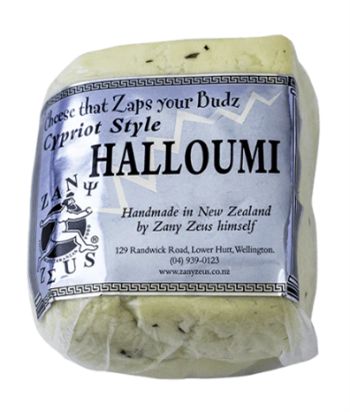
New Zealand- Zany Zeus Halloumi Cheese – Bacillus cereus

MPI

Product identification

Product type

Cheese

Name of product (size)

Zany Zeus Halloumi Cheese

Batch marking

13022024

Date marking

08.04.2024

Package size and description

The products are sold in individual packages.

Distribution

The products are sold at selected outlets throughout New Zealand.

The products have not been exported.

Notes

This recall does not affect any other Zany Zeus Cheese brand products.

If you are a retailer of the products in this recall, download a copy of the point of sale notice. You need to display it in your store for one month.

Point of sale notice – Zany Zeus Halloumi Cheese

Consumer advice
Customers are asked to check the date mark on the product.

Affected products should not be consumed. There have been no reports of associated illness, however if you have consumed any of these products/this product and have any concerns about your health/about illness, seek medical advice.

Customers should return the products to their retailer for a full refund.

Who to contact
If you have questions, contact Limited:

Phone: 04 939 0123
Email: meropi@zanyzeus.co.nz or amanda@zanyzeus.co.nz
Address: 43 Seaview Road, Seaview, Lower Hutt 5010.

RASFF Alert – Bacillus cereus – Food Supplement

RASFF

Bacillus cereus and molds in food supplements from Bulgaria, via Germany in Austria

Research – Nearly 2,000 collective food poisoning infections declared in France in 2022

Sante Publique

Foodborne infectious diseases, such as collective foodborne illness (TIAC), represent a health risk for the population and are often caused by the consumption of food contaminated by pathogenic bacteria (Salmonella, Bacillus cereus, Staphylococcus aureus, etc.). ). Each year, between 10,000 to 16,000 people are affected by TIAC in France, whether in a family environment, in commercial or collective catering. 

Each year, Public Health France publishes a report on the epidemiological evolution of TIACs based on mandatory notification data. In 2022, the number of notified TIACs is the highest recorded since the implementation of surveillance in 1987 and continuing the upward trend observed before the Covid-19 pandemic. It exceeded the increase already observed in 2019 after a decrease in 2020-2021, most certainly linked to the implementation of physical distancing measures and the application of barrier gestures during the pandemic. 

Norway – Toxins in products from Den Sorte Havre a possible reason why several infants have fallen ill – Bacillus cereus

FHI

Toxins may have been the cause of several infants aged 5–6 months becoming ill after eating products from Den Sorte Havre between November and January. The products were withdrawn from the market in January.

At the beginning of January, the Norwegian Food Safety Authority was notified that several infants aged 5–6 months had become ill after eating products from Den Sorte Havre. The investigations of the products show the discovery of toxins produced by the bacterium Bacillus cereus.

The Norwegian Food Safety Authority has collaborated with the Norwegian Veterinary Institute (VI), the Norwegian University of Environmental and Biosciences (NMBU) and the Norwegian Institute of Public Health (FHI), and carried out extensive mapping and analysis work to find a possible reason why the children fell ill.

FHI has interviewed twelve of the guardians who have notified the Norwegian Food Safety Authority about this.

– The observed course of the disease in the children is typical of food poisoning caused by a toxin produced by the bacterium Bacillus cereus, says senior researcher Umaer Naseer at FHI.

Usually this type of food poisoning causes vomiting and vomiting shortly after ingestion (0.5-6 hours), and lasts for a day or less. 

The Norwegian Food Safety Authority has a close dialogue with the business in the work to investigate where in the production process bacterial toxins may have been formed and will have further follow-up of the business.

About the outbreak

The children live in eight different counties. The children had eaten three of the five products aimed at children from Den Sorte Havre; Starter porridge, Adaptation to solid food and Oatmeal with banana, from the end of November 2023 until the beginning of January 2024. All but one of the children were aged 5-6 months, and all had repeated bouts of vomiting 1-2 hours after ingestion. One of the children was a few months older than the others, and did not vomit but had diarrhea after eating the product. Few of the children developed a fever, but several parents reported a shorter period when it was difficult to get in touch with the child.

Ten of the children have had contact with the health service due to the symptoms, but none of them have been admitted to hospital. The children with vomiting became symptom-free after a few hours or up to a day, and the child with diarrhea was ill for a week. All the children are now healthy.

VI and NMBU have carried out laboratory analyzes of samples taken from products at the homes of the affected families. Some of the samples show traces of a toxin produced by the bacterium Bacillus cereus . In some of the samples, the concentration was high enough to cause illness in young children.

Advice for preventing infection

Bacillus cereus is usually transmitted through the consumption of contaminated food containing bacteria (diarrhea type) or toxins (vomiting type). Traditionally, starchy foods, such as rice and pasta, have been associated with the type of vomiting.

To prevent infection from bacillus cereus bacteria (diarrhea type), hot food should be kept piping hot (higher than 60°C) until serving. If the food is to be cooled, this should be done quickly and in small volumes. Leftovers should be heated sufficiently before serving.

Toxins produced by bacillus cereus bacteria (vomiting type) can withstand heat and boiling. Heating food containing such bacteria will therefore not prevent infection.

Research – Characteristics of Gastroenteritis Outbreaks Investigated in Singapore: 2018–2021

MDPI

Abstract

There is a need to study the characteristics of outbreaks via Singapore’s outbreak surveillance system to understand and identify the gaps in food safety for targeted policy interventions due to the increasing trend in gastroenteritis outbreaks and consequential increase in foodborne-related deaths and economic burden on public health systems worldwide. A total of 171 gastroenteritis outbreaks were investigated in Singapore from January 2018 to December 2021. This study analyzed the annual trend of investigated gastroenteritis outbreaks, the proportion of outbreaks by implicated sources of food, and the proportion of the type of pathogens identified from human cases, food samples, and environmental swabs collected from outbreak investigations. Among the foodborne gastroenteritis outbreaks (n = 121) investigated in Singapore, approximately 42.1% of the outbreaks had food prepared by caterers, 14.9% by restaurants, and 12.4% had food prepared by in-house kitchens. Clostridium perfringens and Salmonella were the most common causative pathogens in foodborne outbreaks throughout the analysis period. The food samples and environmental swabs collected were mostly detected for Bacillus cereus. Norovirus was the most common causative pathogen in non-foodborne outbreaks and was mainly attributable to preschools. This highlights the importance of monitoring and educating the catering industry and preschools to prevent future outbreaks.

Research – Deep Impact: Shifts of Native Cultivable Microbial Communities on Fresh Lettuce after Treatment with Plasma-Treated Water

MDPI

Abstract

Foods consumed raw, such as lettuce, can host food-borne human-pathogenic bacteria. In the worst-case, these diseases cause to death. To limit illness and industrial losses, one innovative sanitation method is non-thermal plasma, which offers an extremely efficient reduction of living microbial biomass. Unfortunately, the total viable count (TVC), one of the most common methods for quantifying antimicrobial effects, provides no detailed insights into the composition of the surviving microbial community after treatment. To address this information gap, different special agars were used to investigate the reduction efficiency of plasma-treated water (PTW) on different native cultivable microorganisms. All tested cultivable microbial groups were reduced using PTW. Gram-negative bacteria showed a reduction of 3.81 log10, and Gram-positive bacteria showed a reduction of 3.49 log10. Fungi were reduced by 3.89 log10. These results were further validated using a live/dead assay. MALDI-ToF (matrix-assisted laser-desorption-ionization time-of-flight)-based determination was used for a diversified overview. The results demonstrated that Gram-negative bacteria were strongly reduced. Interestingly, Gram-positive bacteria and fungi were reduced by nearly equal amounts, but could still recover from PTW treatment. MALDI-ToF mainly identified Pseudomonas spp. and groups of Bacillus on the tested lettuce. These results indicate that the PTW treatment could efficiently achieve a ubiquitous, spectrum-wide reduction of microbial life.

RASFF Alert- Bacillus cereus – Dried Mushrooms

RASFF

Bacillus cereus in dried mushrooms from China, via Germany in Austria

Research – Identify toxin-producing bacteria more quickly

ANSES

Improving the identification of toxin-producing bacteria is a real challenge for understanding food poisoning episodes. As part of the Joint European “One Health” Program coordinated by ANSES, the agency coordinated a European collaborative project on the toxin-producing bacteria which cause the most collective foodborne illnesses (TIAC).

Staphylococcus aureus, Bacillus cereus and Clostridium perfringens were at the heart of the European TOX-Detect project. This trio was not chosen at random: they are the toxin-producing bacteria most frequently involved in collective foodborne illness (TIAC) . According to the European Union Zoonoses Report One Health 2021 published by the European Food Safety Authority (EFSA), bacterial toxins are the second leading cause of TIAC after bacteria themselves (17%). The project, coordinated by ANSES, began in 2018 for a duration of 3 years. It was funded by the One Health EJP program and involved the Institut Pasteur, INRAE ​​as well as various partners from several European countries.

 “  Depending on the bacterial strains, the expression of virulence factors is not the same. These virulence factors are, for example, the presence of adhesion proteins or the production of toxins, in food or in the body. They serve the bacteria to counter the defenses that the host could put up against them, explains Yacine Nia, co-coordinator of the project and deputy head of unit of the Staphylococcus, Bacillus, Clostridium (SBCL) unit, of the food safety laboratory. of Anses. The ability of the bacteria to harm the body will be higher or lower depending on these virulence factors.  »

Most poisonings caused by the toxins of the three bacteria studied cause gastrointestinal symptoms (nausea, vomiting, abdominal pain, diarrhea). Deaths may occur, especially in the most sensitive subjects.