Category Archives: Algal Toxin

Luxembourg – REMINDER: TELLINES – BULK SALE ON FISH STALL- DSP

SAP

Presence of lipophilic toxins (DSP) exceeding the regulatory health threshold

Auchan is recalling the following product

Last name Tellines (medium and large)
Mark Unbranded – Bulk Sale
Sale period from September 7 to 9, 2022

Danger  : Presence of lipophilic toxins (DSP) exceeding the regulatory health threshold

DSP toxins cause intoxication in the consumer, the effects of which appear within 2 to 18 hours after ingestion of the contaminated shellfish. The main symptoms are gastrointestinal: diarrhea, nausea, vomiting, abdominal pain, and chills.

Sale in Luxembourg by: Auchan on a fish stall

A sale by other operators cannot be excluded.

Source of information: Auchan recall notification

Communicated by: Government Commission for Quality, Fraud and Food Safety .

RASFF Alert – Shellfish Toxins – Oysters

RASFF

Azaspiracid toxins above the regulatory limit in oysters from Ireland in France

Norway -Do not eat the contents of crab shells in Agder – DSP Algal Toxin

Matportalen

The Norwegian Food Safety Authority warns people in Agder against eating the contents of the crab’s shells, following the discovery of diarrhea poison. The meat from the claws is safe to eat.

The Norwegian Food Safety Authority has found high concentrations of the algae poison DSP (Diarrhetic Shellfish Poisoning) in crab from Agder.

DSP is one of the most common types of mussel poisoning in Norway. Once the crab has eaten mussels with DSP, the crab becomes poisonous to people who eat it. DSP causes diarrhoea, nausea, vomiting and abdominal pain. It takes from half an hour to a few hours from the time you eat until you get sick. The symptoms disappear by themselves after 2-3 days.

Since the beginning of July this year, high levels of the algal toxin DSP have been detected in mussels along the Sørland coast, and in Agder the levels of the toxin have increased significantly in recent times. This is the reason why the Norwegian Food Safety Authority has also tested crabs in Agder for DSP. 

New Zealand – Public health warning for shellfish extended for West Coast, North Island – PSP – Toxins

MPI

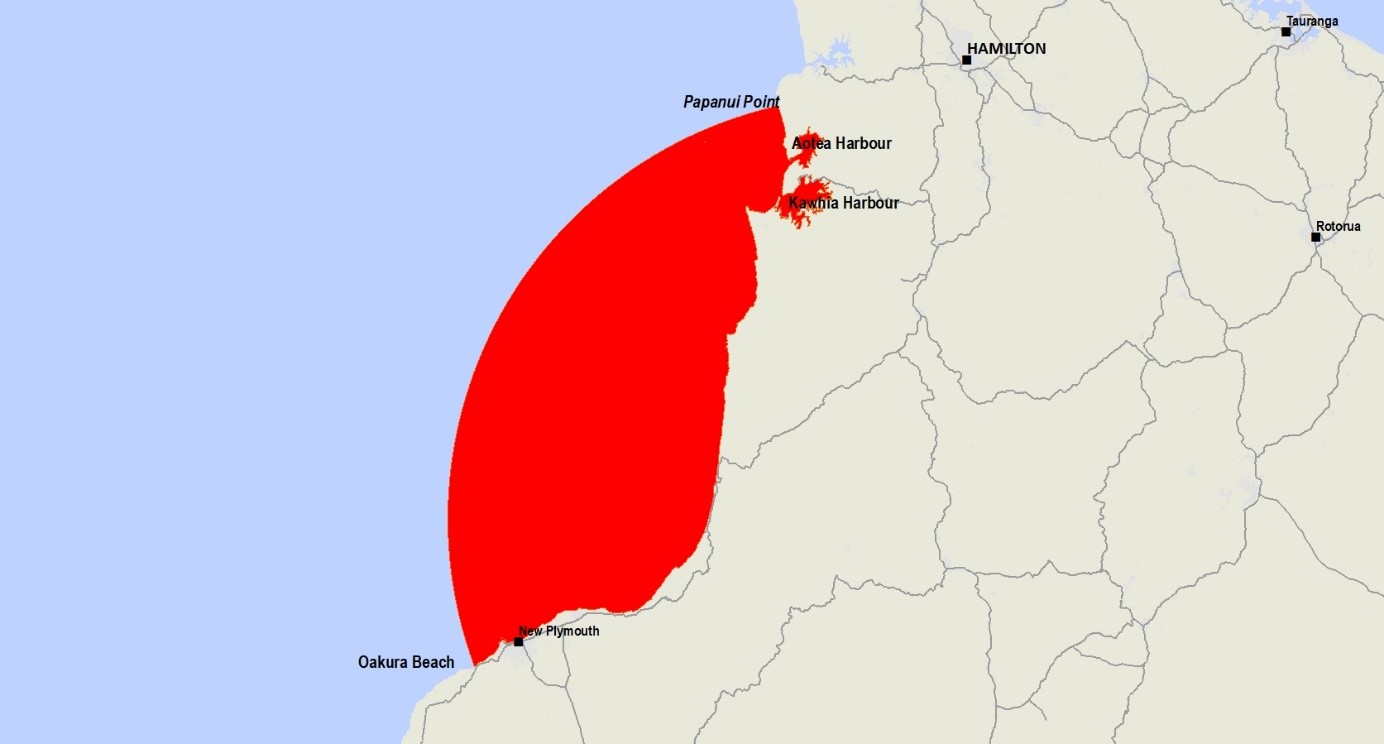
Map of the affected area in the Kawhia Harbour area, West Coast, North Island

New Zealand Food Safety today extended a public health warning against collecting shellfish in the Waikato region and have extended this south to the Taranaki region. The public health warning now applies to the coastline from Papanui Point (south of Raglan), south to Oakura Beach. Paralytic shellfish toxins have been detected at levels above the safe limit set by MPI.

Routine tests on shellfish samples taken from this region have shown levels of Paralytic Shellfish Poisoning (PSP) toxins above the safe limit of 0.8 mg/kg set by New Zealand Food Safety. Anyone eating shellfish from this area is potentially at risk of illness.

Mussels, oysters, tuatua, pipi, toheroa, cockles, scallops, catseyes, kina (sea urchin), and all other bivalve shellfish should not be eaten.

Note, cooking shellfish does not remove the toxin.

Pāua, crab, and crayfish may still be eaten if the gut has been completely removed prior to cooking, as toxins accumulate in the gut. If the gut is not removed, its contents could contaminate the meat during the cooking process.

Symptoms typically appear between 10 minutes and 3 hours after ingestion and may include:

  • numbness and a tingling (prickly feeling) around the mouth, face, and extremities (hands and feet)
  • difficulty swallowing or breathing
  • dizziness
  • headache
  • nausea
  • vomiting
  • diarrhoea
  • paralysis and respiratory failure and in severe cases, death.

If anyone becomes ill after eating shellfish from an area where a public health warning has been issued, phone Healthline for advice on 0800 61 11 16, or seek medical attention immediately. You are also advised to contact your nearest public health unit and keep any leftover shellfish in case it can be tested.

Monitoring of toxin levels will continue and any changes will be communicated accordingly. Commercially harvested shellfish – sold in shops and supermarkets, or exported – is subject to strict water and flesh monitoring programmes by MPI to ensure they are safe to eat.

New Zealand – Consumers urged not to eat illegal mussels

MPI

New Zealand Food Safety is urging consumers not to eat mussels being sold illegally at independent retailers or online.

The sale of imported mussels is carefully controlled to ensure they meet New Zealand’s food safety requirements. While mussels from Fiji may be brought into New Zealand for personal use, they cannot be sold.

Deputy director general Vincent Arbuckle says Fijian mussels have been removed from sale at some smaller retailers catering to Pacific Island communities, and online.

“As New Zealand Food Safety has not assessed Fiji’s growing, harvesting and processing controls for mussels we cannot be confident that the mussels don’t pose a food safety risk to consumers.”

The mussels are also known as: Nakai, Naakai, Nakaai, Kai, Batissa violacea and Fresh Water Mussels.

“It’s vital that mussels available to buy for members of the public are safe to eat. Knowing where the mussels you want to buy have come from can help reduce the risk of any potential health problems.

“Our message to people buying mussels is that if you are in any doubt, ask the retailer where the product has come from. If it is from Fiji, the mussels should not be for sale.”

Mussels are a higher risk food because of the way they feed, which increases the likelihood of contamination from bacteria, viruses, toxins and chemicals.

New Zealand – North Island warning Kawhia Harbour area, West Coast -PSP

MPI

North Island warning

Kawhia Harbour area, West Coast

Reason for alert Paralytic Shellfish Poisoning (PSP)

Date warning issued 17 August 2022

Media release

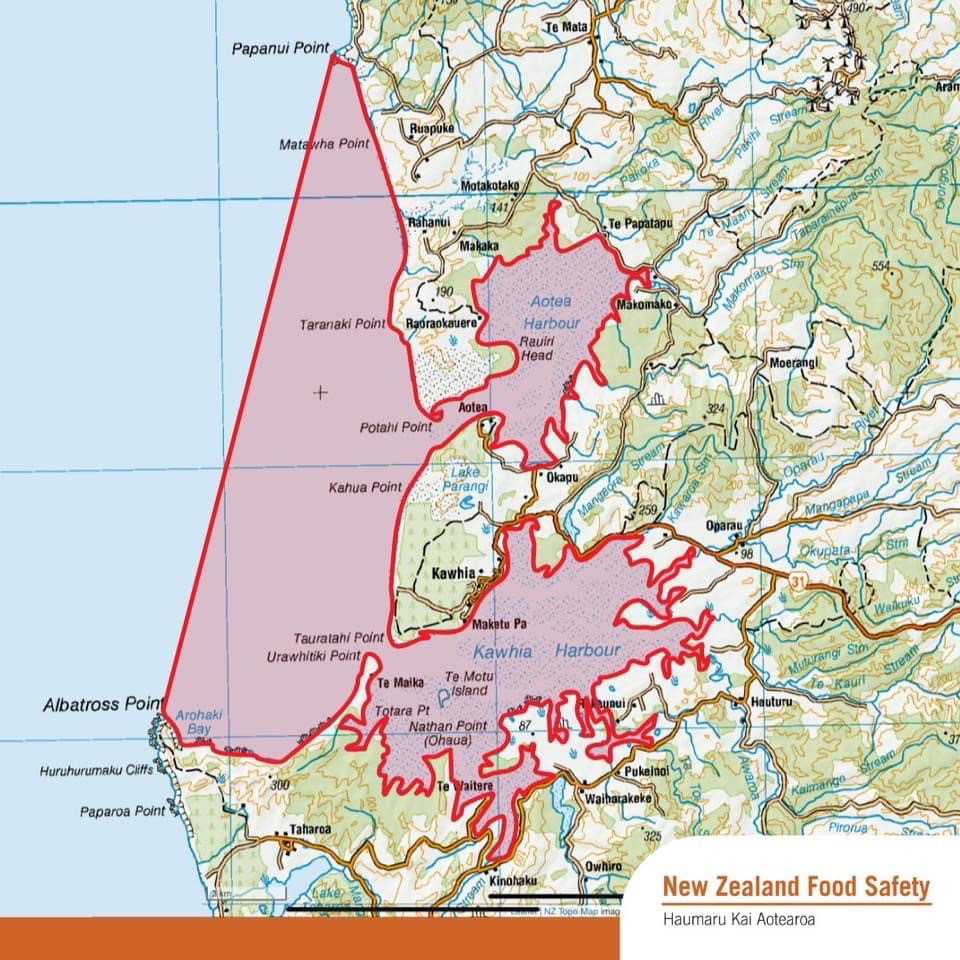
Affected area From Albatross Point across to Papanui Point, Including Kahwia and Aotearoa Harbours, West Coast North Island.
Shellfish affected Mussels, oysters, tuatua, pipi, toheroa, cockles, scallops, catseyes, kina (sea urchin) and all other bivalve shellfish.

Note, cooking shellfish does not remove the toxin.

Pāua, crab and crayfish may still be eaten if the gut has been completely removed prior to cooking, as toxins accumulate in the gut. If the gut is not removed its contents could contaminate the meat during the cooking process.

Symptoms Symptoms typically appear between 10 minutes and 3 hours after ingestion and may include:

  • numbness and a tingling (prickly feeling) around the mouth, face, and extremities (hands and feet)
  • difficulty swallowing or breathing
  • dizziness
  • headache
  • nausea
  • vomiting
  • diarrhoea
  • paralysis and respiratory failure and in severe cases, death.
Other information Paralytic shellfish toxins have been detected in shellfish at levels over the safe limit of 0.8mg/kg set by MPI. Ongoing testing will continue and any changes will be communicated accordingly.

Map of affected area

Map of the affected area in the Kawhia Harbour area, West Coast, North Island
Map of the affected area Kawhia Harbour area, West Coast

Research – Marine Harmful Algal Bloom (HAB)-Related Illness Tracking

OEHHA

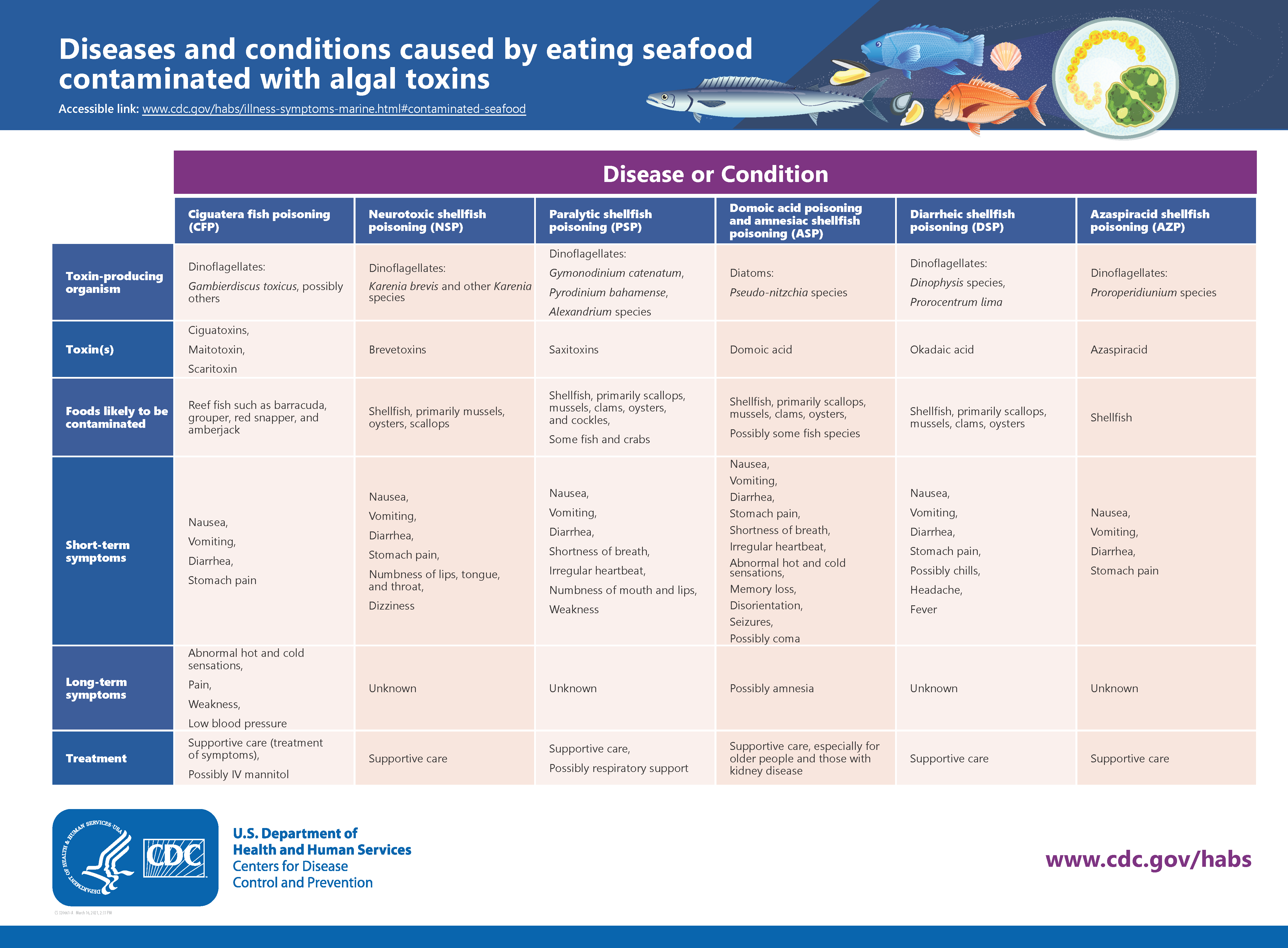
Diseases and conditions caused by eating seafood contaminated with algal toxins

What are marine harmful algal bloom (HAB)-related illnesses?

When phytoplankton and algae in marine waters occur at levels that pose a health risk to humans, animals, and the environment, they are referred to as marine harmful algal blooms (HABs). The US Centers for Disease Control and Prevention (CDC) provide resources on potential human and animal exposures to marine HABs or associated marine biotoxins via skin contact or inhalation, or consumption of fish and shellfish.

RASFF Alert – Pinnatoxins – Mussels

RASFF

Pinnatoxins in fresh mussels from the Netherlands in Belgium

Pinnatoxins (PnTXs) are toxins produced by marine microalgae called Vulcanodinium rugosum that can accumulate in shellfish. These marine biotoxins were first identified in France in 2011 in mussels from the Ingril lagoon in the Hérault département. Since then, analyses carried out in mussels from this lagoon have shown high concentrations of PnTXs for several months each year.

Pinnatoxins have also been detected, to a lesser extent, in other regions of France, notably in mussels from other Mediterranean lagoons (Vic, le Prévost, Thau, Leucate) and on the Atlantic and Corsican coasts. Outside France, data on shellfish contamination by PnTXs have also been reported in Canada, Australia, New Zealand, and other countries in Northern and Southern Europe.

RASFF Alert – Algal Toxin – Okadaic Acid – DSP – Diarrhoeic Shellfish Poisoning

RASFF

Okadaic acid in Diarrhoetic Shellfish Poisoning from Portugal in Spain

Research – Emergent marine toxins risk assessment using molecular and chemical approaches

EFSA

Cyanobacteria harmful blooms represent a deviation to the normal equilibrium in planktonic communities involving a rapid and uncontrolled growth. Owing to the capacity to produce toxins as secondary metabolites, cyanobacteria may cause huge economic losses in the fishing and aquaculture industries and poisoning incidents to humans due to their accumulation in the food chain. The conditions which promote toxic blooms have not yet been fully understood, but climate change and anthropogenic intervention are pointed as significant factors. For the detection of toxins in edible marine organisms, the establishment of international regulations and compulsory surveillance has been probed as exceptionally effective. However, not regulation nor monitoring have been settled concerning emergent marine toxins. In the light of this scenario, it becomes essential to apply fast and reliable surveillance methodologies for the early detection of cyanobacterial blooms as well as the occurrence of emergent marine toxins. Shotgun metagenomic sequencing has potential to become a powerful diagnostic tool in the fields of food safety and One Health surveillance. This culture‐independent approach overcomes limitations of traditional microbiological techniques; it allows a quick and accurate assessment of a complex microbial community, including quantitative identification and functional characterisation, in a single experiment. In the framework of the EU‐FORA fellowship, with the final goal of evaluate metagenomics as a promising risk assessment tool, the fellow worked on the development of an innovative workflow through state‐of‐the‐art molecular and chemical analytical procedures. This work programme aims to evaluate the occurrence of emergent marine toxins and the producing organisms in Cabo Verde coastal cyanobacteria blooms. Our results show the outstanding potential of a holistic metagenomic approach for the risk assessment of emergent marine toxins and the producing organisms. Additionally, we have also highlighted its value for the identification and evaluation of secondary metabolites as natural bioactive compounds with biotechnological and industrial interest.