Archives
-
Join 346 other subscribers
KSWFoodWorld
Blog Stats
- 452,725 Views
Author Archives: KSW
Research – A Critical Review of Risk Assessment Models for Listeria monocytogenes in Seafood
Invasive listeriosis, due to its severe nature in susceptible populations, has been the focus of many quantitative risk assessment (QRA) models aiming to provide a valuable guide in future risk management efforts. A review of the published QRA models of Listeria monocytogenes in seafood was performed, with the objective of appraising the effectiveness of the control strategies at different points along the food chain. It is worth noting, however, that the outcomes of a QRA model are context-specific, and influenced by the country and target population, the assumptions that are employed, and the model architecture itself. Studies containing QRA models were retrieved through a literature search using properly connected keywords on Scopus and PubMed®. All 13 QRA models that were recovered were of short scope, covering, at most, the period from the end of processing to consumption; the majority (85%) focused on smoked or gravad fish. Since the modelled pathways commenced with the packaged product, none of the QRA models addressed cross-contamination events. Many models agreed that keeping the product’s temperature at 4.0–4.5 °C leads to greater reductions in the final risk of listeriosis than reducing the shelf life by one week and that the effectiveness of both measures can be surpassed by reducing the initial occurrence of L. monocytogenes in the product (at the end of processing). It is, therefore, necessary that future QRA models for RTE seafood contain a processing module that can provide insight into intervention strategies that can retard L. monocytogenes’ growth, such as the use of bacteriocins, ad hoc starter cultures and/or organic acids, and other strategies seeking to reduce cross-contamination at the facilities, such as stringent controls for sanitation procedures. Since risk estimates were shown to be moderately driven by growth kinetic parameters, namely, the exponential growth rate, the minimum temperature for growth, and the maximum population density, further work is needed to reduce uncertainties.
Posted in Food Micro Blog, Food Microbiology, Food Microbiology Blog, Food Microbiology Research, Food Microbiology Testing, Listeria, Listeria monocytogenes, Listeria Smoked Fish, listeriosis, microbial contamination, Microbial growth, Microbiological Risk Assessment, Microbiology, Microbiology Investigations, Microbiology Risk, Research
Research – Outbreaks hit record high in France in 2022
France reported a record high number of foodborne outbreaks in 2022, according to recently released data.
Notified outbreaks were at their highest since the start of surveillance in 1987 and continued the upward trend observed before the COVID-19 pandemic.
In 2022, 1,924 outbreaks were declared, affecting 16,763 people, of whom 643 went to hospital, and 17 died, said Santé publique France.
For 376 outbreaks, a pathogen could be confirmed in the food or in at least one sick person. A pathogen was suspected without microbiological confirmation for 1,260 outbreaks. For 288 outbreaks, no infectious agent was identified or suspected.
Posted in food bourne outbreak, Food Micro Blog, Food Microbiology, Food Microbiology Blog, Food Microbiology Research, Food Microbiology Testing, Food Pathogen, foodborne outbreak, foodbourne outbreak, microbial contamination, Microbial growth, Microbial Spoilage, Microbiological Risk Assessment, Microbiology, Microbiology Investigations, Microbiology Risk, outbreak, Pathogen, pathogenic
USA- Hepatitis A exposure promotes warning for customers of Pennsylvania Cracker Barrel
The Erie County Health Department in Erie, PA, has identified a case of hepatitis A in a restaurant worker.
The employee works at Cracker Barrel, which is located at 7810 Interstate Dr. in Summit Township. Customers who ate or drank at the restaurant or ordered or delivered take-out from Jan. 30 through Feb. 21 are asked to watch for symptoms of hepatitis A.
Symptoms can take two to seven weeks after exposure before they start to appear. They include fatigue (tiredness), loss of appetite, nausea, stomach pain, diarrhea, dark urine, joint pain or jaundice (yellowing of the skin or eyes). The symptoms can last from a few weeks to several months. If they appear, health officials urge you to seek medical attention.
The health department advises dine-in and take-out customers from Feb. 10 to 21 to get the vaccine for hepatitis A as soon as possible because they may have potentially been exposed.
Posted in Hepatitis A
Belgium – La Roue cendrée – goat cheese made from raw milk – from the brand EURL BLANC FJ – STEC E.coli

In agreement with the FASFC, LALERO BV is withdrawing the Ash Wheel (180g) from sale and recalling it from consumers due to the possible presence of E.COLI (STEC).
LALERO BV asks its customers not to consume this product and to return it to the point of sale in which it was purchased in order to be refunded and the product will be returned to Lalero BV.
Product Description :
- Product name: THE ASHED WHEEL
- Brand: EURL BLANC FJ
- Minimum durability date (DDM) (“Best before (or end)”): 03/09/2024
- Lot number: 9
- Sales period: from 01/22/2024 to 02/14/2024
- Weight: 180g
The product was distributed by:
| Name of point of sale /
Distribution chain name |
Street + number | Post code | Municipality (city) |
| LALERO BV | HAACHTSESTEENWEG 47 | 1820 | STEENOKKERZEEL |
For any further information , contact VERONIQUE MOEYS 0476 62 69 94; veronique@lalero.be
Posted in afsca, E.coli, food contamination, food handler, Food Hazard, Food Hygiene, Food Inspections, Food Micro Blog, Food Microbiology, Food Microbiology Blog, Food Microbiology Testing, Food Pathogen, Food Quality, food recall, Food Safety, Food Safety Alert, Food Safety Management, Food Safety Regulations, Food Testing, STEC, STEC E.coli
Iceland – Updated news – Listeria in ham
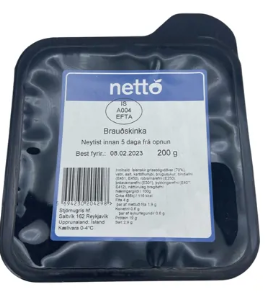
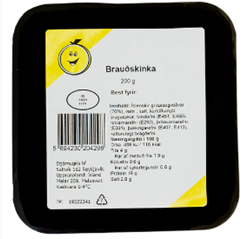
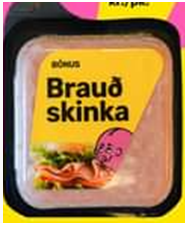
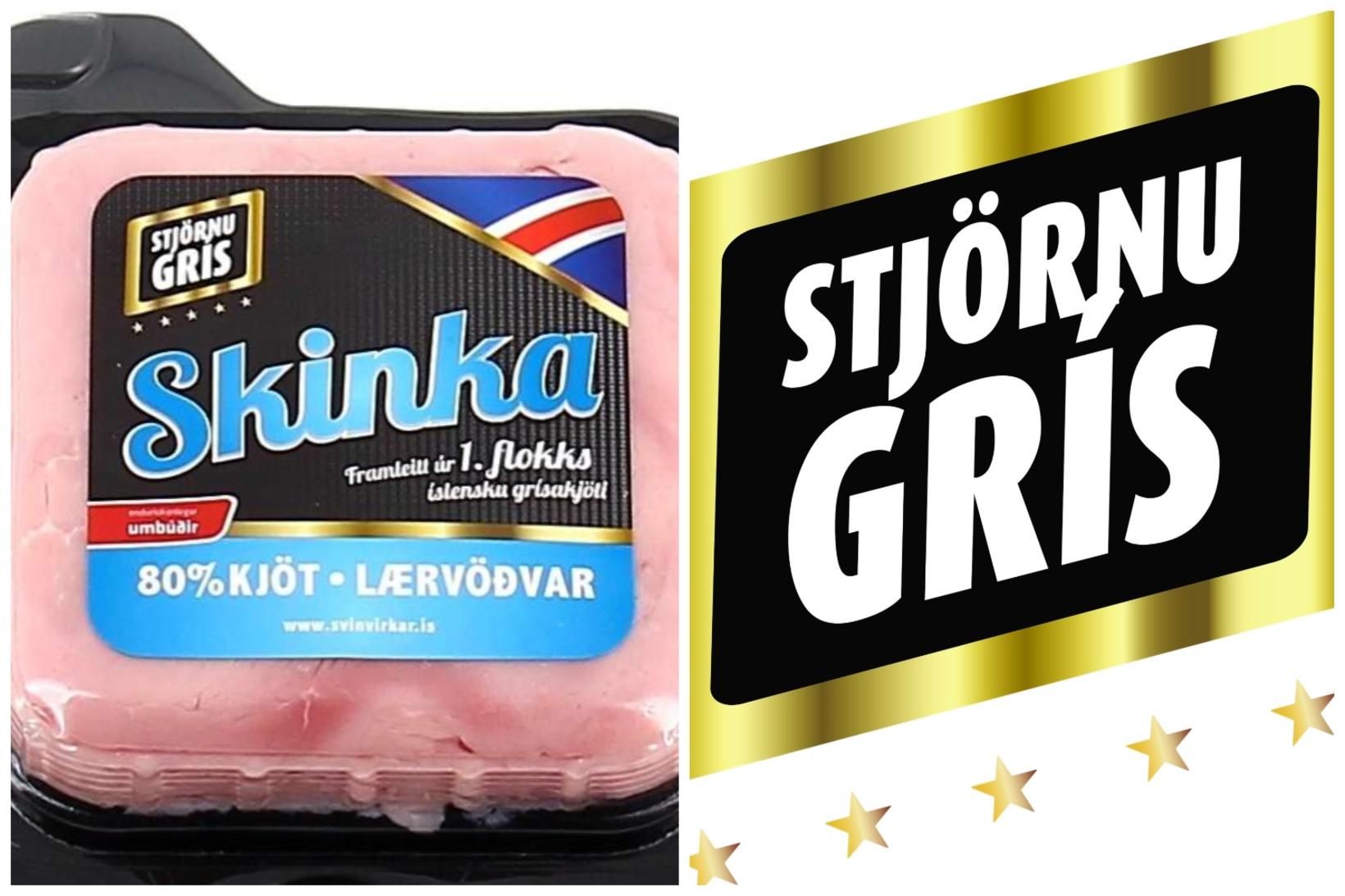
The Swedish Food Agency warns against the consumption of the following batches of ham of certain brands from Stjörnugrís due to suspicion of Listeria monocytogenes. Stjörnugrís hf. has decided, in consultation with MAST, to recall all ham as a precaution, preferably by March 18, 2024 and before that time. This is what Stjörnugrís hf. for safety reasons, although not all batches produced during the period were analyzed with Listeria.
Consumers who have products with best before dates of March 18, 2024 and before that time are asked not to consume it and discard it or return it to the stores where it was purchased.
the recall applies to all hams produced at Stjörnugrís with Best before the date of March 18 and earlier but in particular the following batches:
- Product name: Star pig Smoked ham
- Producer: Stjörnugrís hf.
- Best before 11.03.2024
- Batch number: 6012-24021
- Distribution: Grocery stores
- Product name: Star pig 80% ham
- Producer: Stjörnugrís hf.
- Best before 18.03.2024
- Batch number: 6002-24030
- Distribution: Grocery stores
- Product name: Ham 80%
- Producer: Stjörnugrís hf.
- Best before 15.03.2024
- Batch number: 6002-24032
- Distribution: Grocery stores
- Product name: Star pig ham 80
- Producer: Stjörnugrís hf.
- Best before 18.03.2024
- Batch number: 60022-4032
- Distribution: Grocery stores
- Product name: Breaded ham (Net, Bonus, Krónan and Kjötsels breaded ham)
- Producer: Stjörnugrís hf.
- Best before date: 11.03.24
- Lot number 60612-4023
- Distribution: Grocery stores


Consumers who have purchased the product are advised not to consume it, dispose of it or return it to the store where they bought it or directly to the company.
Advanced material
Posted in food contamination, Food Hazard, Food Hygiene, Food Inspections, Food Micro Blog, Food Microbiology, Food Microbiology Blog, Food Microbiology Testing, Food Pathogen, Food Quality, food recall, Food Safety, Food Safety Alert, Food Safety Management, Food Safety Regulations, Food Testing, Listeria, Listeria monocytogenes
USA – Outbreak Investigation of E. coli O103: Clover Sprouts (February 2020)
FDA, along with CDC and state and local partners, investigated an outbreak of 51 illnesses caused by E. coli O103 in Florida, Idaho, Iowa, Illinois, Missouri, New York, Texas, Utah, Virginia, and Wyoming linked to clover sprouts.
South Africa – Woolworths Pulls Peanut Butter Ice Cream Off Shelves Amid Aflatoxin Scare
In a move that has jarred consumers nationwide, Woolworths has announced a recall of its Peanut Butter Dairy Ice Cream, citing concerns over elevated levels of aflatoxin. This marks the latest in a series of peanut butter product recalls, with Woolworths previously asserting the safety of their range. The recall, which has rippled through households and sparked a broader conversation about food safety, is centered on the peanut butter ice cream variant; other peanut butter-infused products from Woolworths have been given a clean bill of health.
Malta – Warning over dried fish sold in packets – Salmonella

The Environmental Health Directorate warned on Tuesday that dried fish sold in packets under the BDMP brand should not be consumed since it may potentially be contaminated with Salmonella.
The warning refers to lot 65253 A having a best-before date of 01/09/2024.
Posted in food contamination, food handler, Food Hazard, Food Hygiene, Food Inspections, Food Micro Blog, Food Microbiology, Food Microbiology Blog, Food Microbiology Testing, Food Pathogen, Food Quality, food recall, Food Safety, Food Safety Alert, Food Safety Management, Food Safety Regulations, Food Testing, Salmonella
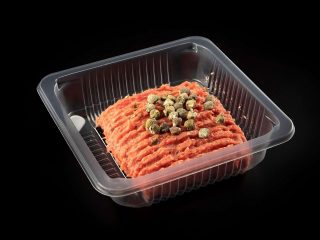
Luxembourg – American caper fillet from the Jean-Gotta brand – Listeria monocytogenes
The following product is recalled in Luxembourg:

| Name | American caper fillet |
| Brand | Jean-Gotta |
| Unit | 200g |
| Use-by date (DLC) | 02/26/2024 |
| Batch | 8440810 |
Danger: Possible presence of Listeria monocytogenes
Listeria monocytogenes can cause fever, headache and gastroenteritis. Vulnerable people such as the immunocompromised and elderly and young children may experience neurological symptoms due to meningitis. Pregnant women should also be particularly attentive to these symptoms.
Gastroenteritis can appear between a few hours and 3 days after consumption, while neurological symptoms can only appear after 3 months. People who have consumed these products and present these symptoms are invited to consult a doctor and report this consumption.
The product can be distributed by different points of sale in Luxembourg.
Information Source: Recall Notification
Posted in food contamination, food handler, Food Hazard, Food Hygiene, Food Inspections, Food Micro Blog, Food Microbiology, Food Microbiology Blog, Food Microbiology Testing, Food Pathogen, Food Quality, food recall, Food Safety, Food Safety Alert, Food Safety Management, Food Safety Regulations, Food Testing, Listeria, Listeria monocytogenes
Belgium – American prepared Fine herbs & capers from the Bel’Farm brand – Listeria monocytogenes

As a precautionary measure and in agreement with the AFSCA, Delitraiteur has decided to withdraw the product “ American prepared Fine Herbs & Capers ” from the Bel’Farm brand (bearing batch number 8440810 and DLC 02/26/24) from sale and is recalling it from consumers due to the possible presence of Listeria monocytogenes.
Delitraiteur asks its customers not to consume this product and to return it to the point of sale where it was purchased, where they will be refunded.
This recall action only concerns the aforementioned product, in very limited quantities, for the batch number communicated. No other product in the Bel’Farm range is affected.
Product Description :
Product Name: American Prepared Herbs & Capers
Brand: Bel’Farm
Expiry date (DLC): 02/26/2024
Lot number: 8440810
– Sales period: from 02/19/2024 to 02/23/2024
Type of packaging: Plastic tray
Weight: 200g
Sold via Delitraiteur.
For any further information , contact the Delitraiteur sales department on 067/705.302 or by e-mail info@delitraiteur.be
Posted in food contamination, food handler, Food Hazard, Food Hygiene, Food Inspections, Food Micro Blog, Food Microbiology, Food Microbiology Blog, Food Microbiology Testing, Food Pathogen, Food Quality, food recall, Food Safety, Food Safety Alert, Food Safety Management, Food Safety Regulations, Food Testing, Listeria, Listeria monocytogenes