Author Archives: KSW

USA – FDA Advises Restaurants and Retailers Not to Serve or Sell and Consumers Not to Eat Certain Shellfish from Oregon and Washington Potentially Contaminated with Paralytic Shellfish Toxins

FDA

June 5, 2024

Audience

  • Restaurants and food retailers in Arizona (AZ), California (CA), Colorado (CO), Hawaii (HI), Nevada (NV), New York (NY), Oregon (OR), and Washington (WA) that have recently purchased oysters and bay clams from growing areas in Netarts Bay and Tillamook Bay, OR harvested on or after 5/28/24, and all shellfish species from growing areas in Willapa Bay, WA: Stony Point, harvested between 5/26/24 and 5/30/24; Bay Center, harvested between 5/29/24 and 5/30/24; and Bruceport, harvested between 5/29/24 and 5/30/24.
  • Consumers in AZ, CA, CO, HI, NV, NY, OR, and WA who have recently purchased oysters and bay clams harvested from growing areas in Netarts Bay and Tillamook Bay, OR harvested on or after 5/28/24, and all shellfish species from growing areas in Willapa Bay, WA: Stony Point, harvested between 5/26/24 and 5/30/24; Bay Center, harvested between 5/29/24 and 5/30/24; and Bruceport, harvested between 5/29/24 and 5/30/24.

Product

Certain oysters and bay clams harvested from OR growing areas in Netarts Bay and Tillamook Bay, harvested on or after 5/28/24, and shellfish species from growing areas in Willapa Bay, WA: Stony Point, harvested between 5/26/24 and 5/30/24; Bay Center, harvested between 5/29/24 and 5/30/24; and Bruceport, harvested between 5/29/24 and 5/30/24. The shellfish were distributed to restaurants and retailers in AZ, CA, CO, HI, NV, NY, OR, and WA and may have been distributed to other states as well.

Purpose

The FDA is advising restaurants and food retailers not to serve or sell and to dispose of, and consumers not to eat, oysters and bay clams harvested from growing areas in Netarts Bay and Tillamook Bay, OR harvested on or after 5/28/24, and all shellfish species from growing areas in Willapa Bay, WA: Stony Point, harvested between 5/26/24 and 5/30/24; Bay Center, harvested between 5/29/24 and 5/30/24; and Bruceport, harvested between 5/29/24 and 5/30/24, and distributed to AZ, CA, CO, HI, NV, NY, OR, and WA because they may be contaminated with the toxins that cause paralytic shellfish poisoning (PSP).

Molluscan shellfish contaminated with natural toxins from the water in which they lived can cause consumer illness. Most of these toxins are produced by naturally occurring marine algae (phytoplankton). Molluscan shellfish consume the algae which causes the toxins to accumulate in the shellfish’s flesh. Typically, contamination occurs following blooms of the toxic algal species; however, toxin contamination is possible even when algal concentrations are low in certain instances. One of the recognized natural toxin poisoning syndromes that can occur from consuming contaminated molluscan shellfish is paralytic shellfish poisoning (PSP).

PSP is caused by neurotoxins also referred to as saxitoxins or paralytic shellfish toxins (PSTs). Shellfish can retain the toxin for different lengths of time. Some species cleanse themselves of toxins rapidly, whereas others are much slower to remove the toxins. This lengthens the period of time they pose a human health risk from consumption.

Food containing PSTs may look, smell, and taste normal. These toxins cannot be removed by cooking or freezing. Consumers of these products who are experiencing symptoms of illness should contact their healthcare provider and report their symptoms to their local Health Department.

Hong Kong – The Centre for Health Protection (CHP) of the Department of Health is today (June 4) investigating two epidemiologically linked food poisoning clusters

Gov HK

The first cluster involved a 6-year-old girl and a 10-year-old boy, who developed abdominal pain, diarrhoea, vomiting, and fever about 15 hours after having dinner at a restaurant in Tsuen Wan on May 31.

The other cluster involved two girls aged 6 and 8 respectively, who developed similar symptoms about 10 to 24 hours after consuming takeaway food purchased from the same restaurant at night on the same day.

All affected persons have sought medical advice and are in stable condition.

Initial investigations by the CHP revealed that the affected persons had consumed common food and the food concerned was spaghetti with meat sauce, potato wedges, corn kernels and jelly. The stool specimens of two affected persons were positive for Salmonella upon laboratory testing.

FDA – Outbreak Investigation of Salmonella: Cucumbers (June 2024)

FDA

Sample Product Image from the Outbreak Investigation of Salmonella Related to Cucumbers (June 2024)

Sample Product Image from the Outbreak Investigation of Salmonella Related to Cucumbers (June 2024)

Sample Product Image from the Outbreak Investigation of Salmonella Related to Cucumbers (June 2024)

Do not eat, sell, or serve recalled cucumbers distributed by Fresh Start Produce Sales, Inc. and distributed to certain states. FDA’s investigation is ongoing.

June 5, 2024

The FDA and CDC, in collaboration with state and local partners, are investigating a multistate outbreak of Salmonella Africana infections potentially linked to cucumbers.

Based on epidemiological information collected by CDC for the Salmonella Africana investigation, as of June 4, 162 people infected with the outbreak strain of Salmonella Africana have been reported from 25 states and the District of Columbia. Of the 65 people interviewed, 47 (72%) reported eating cucumbers.

CDC and FDA are also investigating an outbreak of Salmonella Braenderup infections, with 158 illnesses in 23 states. The two outbreaks share several similarities, including where and when illnesses occurred and the demographics of ill people. Investigators are working to determine whether the two outbreaks could be linked to the same food vehicle. Information will be provided on the source of the Salmonella Braenderup outbreak as it becomes available.

As part of the Salmonella Africana investigation, state partners in the Pennsylvania Department of Agriculture collected samples of cucumbers from several retail locations in their state. One sample supplied by Fresh Start Produce Sales, Inc., of Delray, Florida, tested positive for Salmonella. Additional analysis is ongoing to determine the specific strain of Salmonella that was detected on the cucumbers and if they are linked to an outbreak.

In response to the positive sample, Fresh Start Produce Sales, Inc. has recalled cucumbers grown in Florida. English and mini cucumbers are not included in this recall. Cucumbers distributed by Fresh Start Produce Sales, Inc. are from a variety of growers. The grower that likely supplied potentially contaminated cucumbers is no longer growing and harvesting cucumbers for the season.

The investigations are ongoing to determine the source(s) of contamination and whether these or other products are linked to illnesses. FDA will update this advisory should additional consumer safety information become available.


Map of Distribution for Recalled Fresh Start Cucumbers

Map of U.S. Distribution of Recalled Fresh Start Cucumbers - Outbreak Investigation of Salmonella: Cucumbers (June 2024)

Case Counts

See CDC Investigation Notice for Case Information for Salmonella Africana and Salmonella Braenderup

Product Distribution*: AL, FL, GA, IL, MD, NC, NJ, NY, OH, PA, SC, TN, VA, WV

*Distribution has been confirmed for states listed, but product could have been distributed further, reaching additional states.

Ireland – Recall of a batch of Hosyaushka Shelled Sunflower Seeds due to presence of Salmonella

FSAI

Alert Summary
Category 1: For Action
Alert Notification: 2024.24
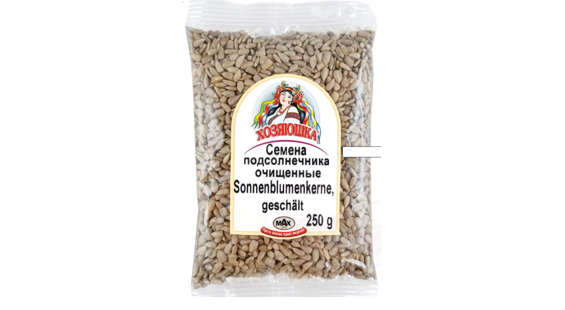
Product Identification: Hosyaushka Sonnenblumenkerne, geschält; shelled sunflower seeds; pack size: 250 g
Batch Code 229/23A; best before date: 30.04.2025
Country Of Origin: Bulgaria

Message:

The above batch of Hosyaushka Sonnenblumenkerne, geschält, shelled sunflower seeds, is being recalled due to the presence of Salmonella.  Recall notices will be displayed at point-of-sale.

Nature Of Danger:

People infected with Salmonella typically develop symptoms between 12 and 36 hours after infection, but this can range between 6 and 72 hours.  The most common symptom is diarrhoea, which can sometimes be bloody.  Other symptoms may include fever, headache and abdominal cramps.  The illness usually lasts 4 to 7 days. Diarrhoea can occasionally be severe enough to require hospital admission. The elderly, infants, and those with impaired immune systems are more likely to have a severe illness.

Action Required:

Manufacturers, wholesalers, distributors, caterers & retailers:

Retailers are requested to remove the affected batch from sale and display recall notices at point-of-sale.

Wholesalers/distributors are requested to contact their affected customers and recall the implicated batch and provide a point-of-sale recall notice to their retailer customers.

Consumers:

Consumers are advised not to eat the implicated batch.

USA – HomeoCare Laboratories Inc. Issues Voluntary Nationwide Recall of Homeopathic Stella Life Oral Care Spray Unflavored and Advanced Formula Peppermint Oral Care Rinse Due to Microbial Contamination

FDA

FOR IMMEDIATE RELEASE – Yonkers, NY, 06/05/2024 – HomeoCare Laboratories Inc., a manufacturer of homeopathic products, is voluntarily recalling two batches of Homeopathic StellaLife Oral Care Products listed in the table below manufactured in 2024 due to FDA findings of microbial contamination. This recall is to be performed at the consumer level.

Risk Statement: The following two (2) products listed below were found to contain higher than acceptable levels of TAMC (found in the StellaLife Advanced Formula Peppermint Vega Oral Care Rinse) and Bacillus sp (found in the StellaLife Vega Oral Spray, Unflavored).

While Bacillus is a common species found in the environment and are generally non-pathogenic, we understand the concerns regarding potential risks, especially among patients with oral disease, undergoing dental surgical procedures or with compromised immune systems.

In the immunocompromised population, there is a risk that use of the product could result in severe or life-threatening adverse events due to the introduction of bacteria to the disrupted oral mucosa, possibly leading to bacteremia and sepsis.

It is important to note that no adverse events related to these two (2) products have been reported to HomeoCare to date.

We take these findings seriously and are taking immediate action to address the situation. We have initiated a voluntary recall of the two (2) affected batches listed below and are implementing enhanced quality control measures to prevent recurrence. Our priority remains the safety and well-being of our consumers, and we are committed to transparency and accountability throughout this process.

These Homeopathic products are marketed to promote oral health, hydrate oral cavities and support healthy gums. The affected products were manufactured at HomeoCare Laboratories, shipped nationwide to our customers, and distributed through various dental practices. The recall includes the following products and lot numbers:

Production Date

Release Date

Customers

Product Name

NDC

Lot No.

Expiration Date

02/16/

2024

03/28/

2024

StellaLife Inc. StellaLife VEGA Oral Care, Spray Unflavored 69685-121-01 2552 02-2026
03/01/

2024

03/28/

2024

StellaLife Inc. StellaLife Advanced Formula Peppermint VEGA Oral Care Rinse 69685-143-16 2550 02-2026

Dental practices who have the recalled products should examine their inventory and cease dispensing and return any of the impacted lots to HomeoCare Laboratories.

Consumers that have products which are being recalled should stop using the products and return them to place of purchase or discard them. Consumers should contact their physician or health care provider if they have experienced any problems that may be related to using these products.

Germany – Thuringian Knacker 4x75g – Salmonella

Lebensmittelwarnung

Product name:

Thuringian Knacker 4x75g

Product images:

Thueringer_Knacker.jpg

4 Thuringian Knackers from Meininger Wurstspezialitäten aus Thüringen GmbH

Manufacturer (distributor):

Meininger Sausage Specialties from Thuringia GmbH An der Winde 13-14 98617 Meiningen

Reason for warning:

Detection of salmonella

Packaging Unit: 300g (4x75g)
Durability: 07.07.2024 / 15.07.2024
Production date: 14.05.2024
Lot identification: 982203
Additional Information:

As a precautionary measure, the company Meininger Wurstspezialitäten aus Thüringen GmbH is recalling the above-mentioned article from the affected batch in the interest of preventive consumer protection. Please

refer to the company’s attached consumer information.

Manufacturer’s homepage:

Germany – Sunflower seeds peeled, 250g (Art. 56259) – Salmonella

Lebensmittelwarnung

Alert type: Groceries
Date of first publication:

05.06.2024

Product name:

Sunflower seeds peeled, 250g (Art. 56259)

Product images:

Sunflower seeds.jpg

Pictured are shelled sunflower seeds in a transparent plastic packaging.

Manufacturer (distributor):

Monolith Mitte GmbH Robert-Bosch-Str. 8 33178 Borchen

Reason for warning:

Salmonella was detected in the product.

Packaging Unit: 250 g
Durability: 30.04.2025
Lot identification: 229/23A
Additional Information:

Please refer to the attached customer information of the Monolith Group.

Click to access Sonnenblumenkerne_Kundeninformation.pdf

Research – New Zealand – Simple steps to avoid life-threatening Listeriosis

MPI

New Zealand Food Safety wants people to take some practical steps to prevent a rare and life-threatening foodborne illness.

“While rare, every year people die from listeriosis – a disease caused by the bacterium Listeria – and the effects are tragic for their families,” says New Zealand Food Safety deputy director-general Vincent Arbuckle.

“Listeriosis can be prevented and there are simple steps people can take at home to avoid getting sick. So, today, we launch a campaign to help some of those most at risk – pregnant and older people – better understand the risks of listeriosis and what to do to decrease them.”

Listeriosis is a result of eating or drinking food that has high levels of Listeria, which is widespread in the environment.

Listeriosis is rare in New Zealand and cases are usually not connected, whereas cases in other countries are predominantly due to outbreaks.

In New Zealand, there were 4 deaths from listeriosis in 2021 and 6 in 2022, with 78 people hospitalised over those 2 years.

“Infections in healthy adults are unlikely to be severe, but listeriosis during pregnancy can cause miscarriage, premature labour, stillbirth, or disease in the newborn baby,” says Mr Arbuckle.

“As you age – and particularly over 65 – your immune system gets weaker. This means foods you safely ate in the past may no longer be safe for you to eat.

“Some people may not be aware of this. So, we’re using our campaign to highlight higher-risk foods while sharing some food-safety advice on how to make them safe to eat.”

See more at the link above

USA – FDA Advises Restaurants and Retailers Not to Serve or Sell and Consumers Not to Eat Certain Frozen, Raw, Half-shell Oysters from Republic of Korea Potentially Contaminated with Norovirus

FDA

What’s New

June 4, 2024

Recall noticesExternal Link Disclaimer have been posted related to JBR’s expanded recall of certain frozen half-shell oysters.

JBR (KR-15-SP) Tongyeong, Republic of Korea (ROK) is voluntarily recalling all frozen half-shell oysters harvested between 11/26/2023 and 2/14/2024 to ensure public health and safety in the U.S. due to the possible contamination with norovirus. The recalled oysters were processed by JBR (KR-15-SP) in Tongyeong, ROK between 11/27/2023 and 2/15/2024 as frozen half-shell oysters and include the following lot numbers: B231126, B231128, B231129, B231130, B231201, B231202, B231204, B231205, B231206, B231209, B231225, B231226, B231227, B240102, B240103, B240104, B240109, B240111, B240114, B240201, B240203, B240204, and B240214.

Retailers should not serve or sell, and consumers should not eat frozen half-shell oysters that were harvested between 11/26/2023 and 2/14/2024, processed by JBR between 11/27/2023 and 2/15/2024, and distributed to restaurants and retailers in Arizona, California, Colorado, Nevada, New Jersey, and Utah. Additional distribution may have occurred, and the states are continuing to conduct trace forward investigations. The FDA is assisting with and coordinating interstate notification efforts as a result of the states’ investigations.

Farm Raised Oysters Label from South Korea
Frozen Half Shell Oysters Label from South Korea

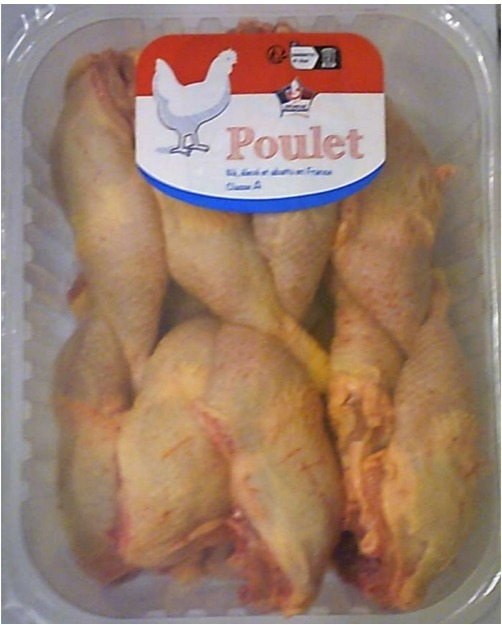
France – Yellow Leg Chicken Products – Listeria monocytogenes

Gov France

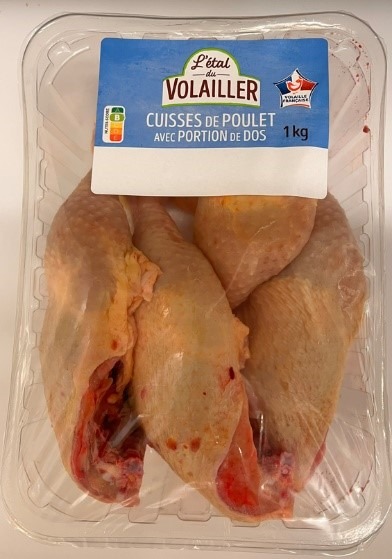
Yellow chicken legs with back portion 1kg

Gov France

Yellow chicken leg with back portion

Gov France

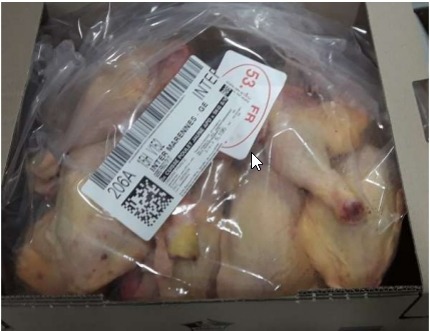
Yellow chicken leg with back portion

Gov France

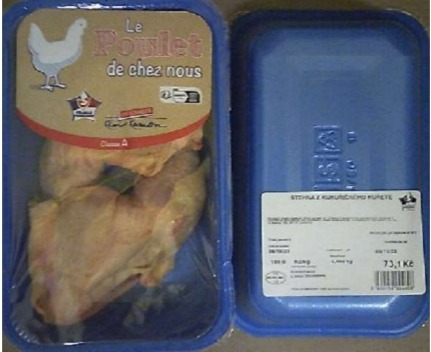
Yellow chicken leg with back portion

Gov France

Yellow chicken leg with back portion