Monthly Archives: August 2021

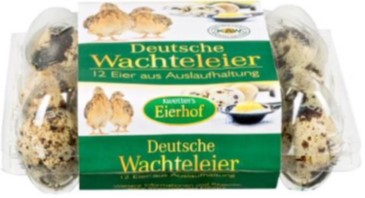
Germany – Kwetters German quail eggs free range 12-pack – Salmonella

LMW

Warning type: Food
Date of first publication: 08/07/2021
Product name:

Kwetters German quail eggs free range 12-pack

Product pictures:

Figure quail eggs.jpg

Company customer information

Manufacturer (distributor): Kwetters Eierhof GmbH Sales by Kaufland
Reason for warning:

Detection of salmonella

Packaging Unit: 12 pack
Durability: 08/12/2021, 08/15/2021, 08/19/2021, 08/22/2021, 08/26/2021, 08/29/2021
Additional Information:

see the company’s customer information

Contact to the responsible authorities:

Baden-Württemberg:poststelle@mlr.bwl.de

Bavaria:poststelle@lgl.bayern.de
Berlin:poststelle@senjustva.berlin.de
Brandenburg:Konsumenterschutz@Msgiv.Brandenburg.de
Bremen:Schnellwarnung@gesundheit.bremen.de
Hamburg:poststelle@justiz.hamburg.de
Hesse:Schnellwarnung@rpda.hessen.de
Mecklenburg-Western Pomerania:poststelle@lm.mv-regierung.de
Lower Saxony:poststelle@ml.niedersachsen.de
North Rhine-Westphalia:poststelle@mulnv.nrw.de
Rhineland-Palatinate:Poststelle.Referat22@lua.rlp.de
Saarland:poststelle-luv@lav.saarland.de
Saxony:poststelle@sms.sachsen.de
Saxony-Anhalt:poststelle@ms.sachsen-anhalt.de
Schleswig-Holstein:poststelle@jumi.landsh.de
Thuringia:LM-Ueberendung@tlv.thueringen.de
Press releases and information
title Attachment or web link
Customer information Kwetters Eierhof

Research – Antimicrobial Efficacy and Spectrum of Phosphorous-Fluorine Co-Doped TiO2 Nanoparticles on the Foodborne Pathogenic Bacteria Campylobacter jejuni, Salmonella Typhimurium, Enterohaemorrhagic E. coli, Yersinia enterocolitica, Shewanella putrefaciens, Listeria monocytogenes and Staphylococcus aureus

MDPI

Contamination of meats and meat products with foodborne pathogenic bacteria raises serious safety issues in the food industry. The antibacterial activities of phosphorous-fluorine co-doped TiO2 nanoparticles (PF-TiO2) were investigated against seven foodborne pathogenic bacteria: Campylobacter jejuniSalmonella Typhimurium, Enterohaemorrhagic E. coliYersinia enterocoliticaShewanella putrefaciensListeria monocytogenes and Staphylococcus aureus. PF-TiO2 NPs were synthesized hydrothermally at 250 °C for 1, 3, 6 or 12 h, and then tested at three different concentrations (500 μg/mL, 100 μg/mL, 20 μg/mL) for the inactivation of foodborne bacteria under UVA irradiation, daylight exposure or dark conditions. The antibacterial efficacies were compared after 30 min of exposure to light. Distinct differences in the antibacterial activities of the PF-TiO2 NPs, and the susceptibilities of tested foodborne pathogenic bacterium species were found. PF-TiO2/3 h and PF-TiO2/6 h showed the highest antibacterial activity by decreasing the living bacterial cell number from ~106 by ~5 log (L. monocytogenes), ~4 log (EHEC), ~3 log (Y. enterolcolitcaS. putrefaciens) and ~2.5 log (S. aureus), along with complete eradication of C. jejuni and S. Typhimurium. Efficacy of PF-TiO2/1 h and PF-TiO2/12 h NPs was lower, typically causing a ~2–4 log decrease in colony forming units depending on the tested bacterium while the effect of PF-TiO2/0 h was comparable to P25 TiO2, a commercial TiO2 with high photocatalytic activity. Our results show that PF-co-doping of TiO2 NPs enhanced the antibacterial action against foodborne pathogenic bacteria and are potential candidates for use in the food industry as active surface components, potentially contributing to the production of meats that are safe for consumption. View Full-Text

Research – Raw Meat-Based Pet Feeding and Food Safety: Netnography Study of Pet Owner Comments and Review of Manufacturers’ Information Provision

Journal of Food Protection

Feeding raw meat to domestic pets is a popular practice. Because of the potential food safety implications associated with handling raw meat, concerns about pet owner health have increased. For this study, a netnographic content analysis approach was used to analyze posts from ‘PetForums Community’ online archives, relating to ‘raw meat-based feeding’ and ‘food safety’ ( n =308). UK manufacturer/supplier websites ( n =33) were reviewed for provision of food safety information relating to raw meat-based pet feeding. The data were analyzed using qualitative thematic approach and quantitative methods. Pet owner forum comments indicated potential malpractices and indifference towards the possible food safety hazards when preparing raw meat-based pet food. Many were risk aware but indicated confusion regarding appropriate food safety practices. Although emotional concern about the safety of the pets and children was expressed, contracting a foodborne disease was not perceived as a personal risk. Additionally, the review identified that the majority (61%) of manufacturer/supplier websites failed to provide any food safety instructions or warnings to pet owners regarding raw meat-based pet food. Information was inconsistent and varied between sources. The most comprehensive sources of information were provided by manufacturers approved by the UK Pet Food Manufacturers’ Association. This is the first netnography study to explore pet owner online reports and the provision of food safety information, related to raw pet feeding. Findings suggest pet owners may not fully appreciate the potential risks associated with raw meat-based pet feeding. Consequently, there is a need for credible and consistent strategies to inform the pet owners about potential implications associated with feeding raw meat to pets, as well as about safe food handling practices.

Research – Antimicrobial Efficacy and Spectrum of Phosphorous-Fluorine Co-Doped TiO2 Nanoparticles on the Foodborne Pathogenic Bacteria Campylobacter jejuni, Salmonella Typhimurium, Enterohaemorrhagic E. coli, Yersinia enterocolitica, Shewanella putrefaciens, Listeria monocytogenes and Staphylococcus aureus

MDPI

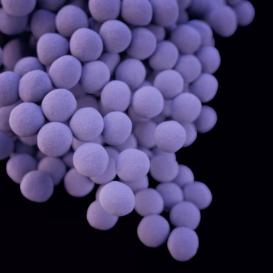
Yersinia p

Contamination of meats and meat products with foodborne pathogenic bacteria raises serious safety issues in the food industry. The antibacterial activities of phosphorous-fluorine co-doped TiO2 nanoparticles (PF-TiO2) were investigated against seven foodborne pathogenic bacteria: Campylobacter jejuniSalmonella Typhimurium, Enterohaemorrhagic E. coliYersinia enterocoliticaShewanella putrefaciens, Listeria monocytogenes and Staphylococcus aureus. PF-TiO2 NPs were synthesized hydrothermally at 250 °C for 1, 3, 6 or 12 h, and then tested at three different concentrations (500 μg/mL, 100 μg/mL, 20 μg/mL) for the inactivation of foodborne bacteria under UVA irradiation, daylight exposure or dark conditions. The antibacterial efficacies were compared after 30 min of exposure to light. Distinct differences in the antibacterial activities of the PF-TiO2 NPs, and the susceptibilities of tested foodborne pathogenic bacterium species were found. PF-TiO2/3 h and PF-TiO2/6 h showed the highest antibacterial activity by decreasing the living bacterial cell number from ~106 by ~5 log (L. monocytogenes), ~4 log (EHEC), ~3 log (Y. enterolcolitca, S. putrefaciens) and ~2.5 log (S. aureus), along with complete eradication of C. jejuni and S. Typhimurium. Efficacy of PF-TiO2/1 h and PF-TiO2/12 h NPs was lower, typically causing a ~2–4 log decrease in colony forming units depending on the tested bacterium while the effect of PF-TiO2/0 h was comparable to P25 TiO2, a commercial TiO2 with high photocatalytic activity. Our results show that PF-co-doping of TiO2 NPs enhanced the antibacterial action against foodborne pathogenic bacteria and are potential candidates for use in the food industry as active surface components, potentially contributing to the production of meats that are safe for consumption.

USA – Luigi Guffanti Taleggio Cheese Recalled For Possible Staphylococcus aureus

Food Poisoning Bulletin

Staph

One type of Luigi Guffanti Taleggio cheese is being recalled for possible Staphylococcus aureus contamination. The recalled product is Luigi Guffanti Cheese Taleggio Dop a Latte Crudo Incarto Verde. No illnesses have been reported to date in connection with the consumption of this product. The recalling company is Taste for Luxury.

UK – Over 300 cats die in the UK from illness that could be linked to toxic pet food – Mycotoxins ?

ABC News

At least 330 cats in the United Kingdom have died from a rare illness that could be linked to toxins in cat foods that have been recently recalled.

The condition, called feline pancytopenia, is when the number of red blood cells, white blood cells and platelets decreases rapidly and results in serious illness, according to the Royal Veterinary College (RVC) in London.

The RVC first raised the alarm about the spike in severe feline pancytopenia cases in late May. To date, the cause of the deaths is yet to be officially identified.

The FSA said in a July 16 update that the presence of mycotoxins was identified “in a small number of samples of recalled cat food tested to date.

USA – Core Investigation Table Update

FDA

USA – FDA begins testing cake mixes in search of specific product in E. coli outbreak

Food Safety News

They have not yet named any specific brands or flavors of cake mix related to an outbreak of E. coli infections, but federal officials have begun product testing in relation to the illnesses.

Sixteen people across 12 states have been confirmed as being infected, with seven requiring hospitalization, according to the Centers for Disease Control and Prevention. Illnesses began Feb. 26 with the most recent one beginning June 21. 

More patients will likely be identified, according to federal officials because of the long shelf life of cake mixes and the time lag between when a person becomes ill and when the illness is confirmed and reported to the CDC.

The Food and Drug Administration has been working with the CDC on the outbreak investigation and reported on Aug. 4 that the agency has begun product testing. The FDA has also initiated traceback efforts and onsite inspections. However no producer or specific products have been named by the FDA or CDC.

Italy – VACUUM HEAD CUP – Listeria monocytogenes

Salute

Brand : ARICCIA FOOD SRL

Name : VACUUM HEAD CUP

Reason for reporting : Recall due to microbiological risk

Publication date : 5 August 2021

Click to access C_17_PubblicazioneRichiami_1346_azione_itemAzione0_files_itemFiles0_fileAzione.pdf

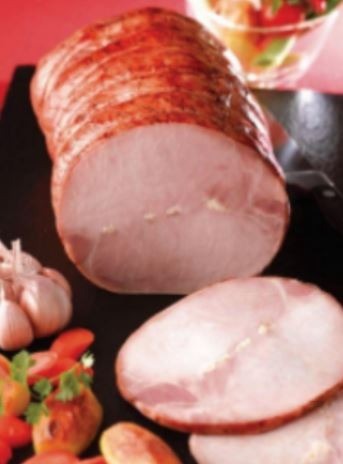
France – GOLDEN SUPERIOR COOKED ROASTER FLOWER OF SALT – Listeria monocytogenes

Gov france

Identifying information for the recalled product

  • Product category Food
  • Product sub-category Meats
  • Product brand name Unbranded
  • Names of models or references GOLDEN SUPERIOR COOKED ROASTER FLOWER OF SALT
  • Product identification
    GTIN Lot Dated
    3700133909894 998566 Use-by date between 08/27/2021 and 08/29/2021
  • Products List1.Poster_LISTERIA_lot_998566.pdfAttachment
  • Packaging variable 1.5kg piece
  • Storage temperature Product to be stored in the refrigerator
  • Health mark FR 35.022.001 CE
  • Geographical sales area Whole France
  • Distributors See list
  • List of points of saleTraceability_lot_998566.pdf

Practical information regarding the recall

  • Reason for recall Presence of listeria monocytogenes <10 cfu / g
  • Risks incurred by the consumer Listeria monocytogenes (causative agent of listeriosis)
  • Consumer behaviour Stop consuming
    Return the product to the point of sale
    Contact the point of sale
    Destroy the product
  • Sanitary recommendation People who have consumed the “products” mentioned above and who have fever, isolated or accompanied by headaches, and muscle aches, are invited to consult their doctor, notifying him of this consumption. Serious forms with neurological complications and maternal or foetal damage in pregnant women can also sometimes occur. Pregnant women as well as immunocompromised people and the elderly should pay special attention to these symptoms. Listeriosis is a disease that can be serious and can take up to eight weeks to incubate.
  • Contact number0660366396
  • Compensation modalities Repayment
  • End date of the recall procedure Friday, August 27, 2021