Monthly Archives: June 2021

Ukraine- Botulism case reported in Melitopol, Ukraine, Linked to smoked mackerel

Outbreak News Today

kswfoodworld

On June 21, 2021, a case of botulism – food poisoning was registered in Melitopol- a city in Zaporizhzhia Oblast of southeastern Ukraine, according to the city health department.

The patient is a 65-year-old man who bought cold-smoked mackerel in a retail chain and consumed it himself on June 18-19, 2021.

Ukraine – Dozens sickened after consuming sushi

Outbreak News Today

The Kharkiv Regional Center for Disease Control and Prevention has reported 89 people, including 19 children, have been hospitalized for food poisoning.

Two patients, registered on June 22, are residents of Lugansk, who were on a business trip in the city of Kharkov and ate sushi in the Yakitoria restaurant.

It is noted that according to the results of bacteriological examination of patients, 42 people, incl. two employees of the institution, the culture of the genus Salmonella is highlighted. Pathogenic staphylococcus was found in six workers, pathogenic E. coli was isolated in one, and opportunistic pathogens were isolated in six more.

Canada – Updated Food Recall Warning – Al-Rabih brand Halva / Halawa – Plain / Traditional recalled due to Salmonella

CFIA

Al-Rabih - Halva / Halawa – Plain / Traditional

Recall details

Ottawa, June 25, 2021 – The food recall warning issued on June 23, 2021 has been updated to include additional product information. This additional information was identified during the Canadian Food Inspection Agency’s (CFIA) food safety investigation.

Phoenicia Group Inc. is recalling Al-Rabih brand Halva / Halawa – Plain / Traditional from the marketplace due to possible Salmonella contamination. Consumers should not consume the recalled product described below.

Recalled product

Brand Product Size UPC Codes
Al-Rabih Halva / Halawa – Plain / Traditional 454 g 7 70338 10055 9 Lot #184 34520
Best before 01/DE/22

What you should do

If you think you became sick from consuming a recalled product, call your doctor.

Check to see if you have the recalled product in your home. Recalled products should be thrown out or returned to the store where they were purchased.

Food contaminated with Salmonella may not look or smell spoiled but can still make you sick. Young children, pregnant women, the elderly and people with weakened immune systems may contract serious and sometimes deadly infections. Healthy people may experience short-term symptoms such as fever, headache, vomiting, nausea, abdominal cramps and diarrhea. Long-term complications may include severe arthritis.

This recall was triggered by CFIA test results. The CFIA is conducting a food safety investigation, which may lead to the recall of other products. If other high-risk products are recalled, the CFIA will notify the public through updated Food Recall Warnings.

The CFIA is verifying that industry is removing the recalled product from the marketplace.

Illnesses

There have been no reported illnesses associated with the consumption of this product.

Product photos

Printer ready version of photos

  • Al-Rabih - Halva / Halawa – Plain / Traditional
  •  
  • Al-Rabih - Halva / Halawa – Plain / Traditional - date

Public enquiries and media

Public enquiries
Toll-free: 1-800-442-2342 (Canada and U.S.)
Telephone: 1-613-773-2342 (local or international)
Email: information@inspection.gc.ca
Media relations
Telephone: 613-773-6600
Email: cfia.media.acia@inspection.gc.ca

Canada – Food Recall Warning – Dole brand Fresh Packed Blueberries recalled due to Cyclospora

CFIA

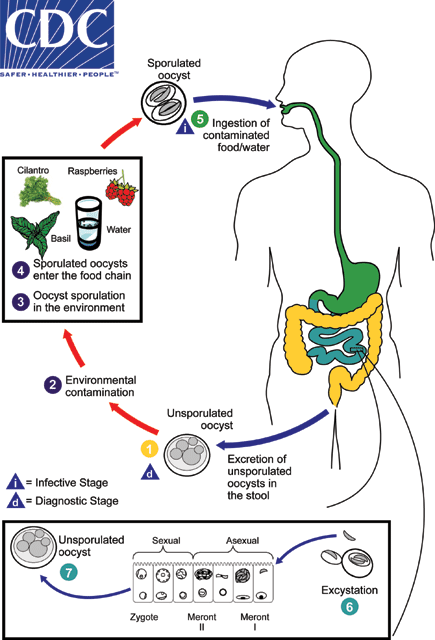
Cyclospora_LifeCycle201

Recall details

Ottawa, June 25, 2021 – Save-On-Foods LP is recalling Dole brand Fresh Packed Blueberries from the marketplace due to possible Cyclospora contamination. Consumers should not consume the recalled products described below.

Recalled products

Brand Product Size UPC Codes
Dole Fresh Packed Blueberries 170 g 0 71430 01150 8 14632
15032
15046
15646
15648
Dole Fresh Packed Blueberries 510 g 0 71430 01154 6 14632
14732
15032
15046
15232
15446
15432
15646
15648
Dole Fresh Packed Blueberries 1 pint 0 71430 01151 5 15032
15046
15132
15148
15146
15232
15332
15646
15648

What you should do

If you think you became sick from consuming a recalled product, call your doctor.

Check to see if you have the recalled products in your home. Recalled products should be thrown out or returned to the store where they were purchased.

Food contaminated with Cyclospora may not look or smell spoiled but can still make you sick. People infected with Cyclospora can experience a wide range of symptoms, including watery diarrhea, stomach cramps, and nausea. Some people do not get sick at all, while others suffer from a severe upset stomach. Few people get seriously ill.

Background

This recall was triggered by Canadian Food Inspection Agency (CFIA) test results. The CFIA is conducting a food safety investigation, which may lead to the recall of other products. If other high-risk products are recalled, the CFIA will notify the public through updated Food Recall Warnings.

The CFIA is verifying that industry is removing the recalled products from the marketplace.

Illnesses

There have been no reported illnesses associated with the consumption of these products.

Product photos

Printer ready version of photos

  • Dole - Fresh Packed Blueberries
  • Dole - Fresh Packed Blueberries - code

Public enquiries and media

Public enquiries
Toll-free: 1-800-442-2342 (Canada and U.S.)
Telephone: 1-613-773-2342 (local or international)
Email: information@inspection.gc.ca
Media relations
Telephone: 613-773-6600
Email: cfia.media.acia@inspection.gc.ca

UK – Happy Hounds Wales Ltd recalls frozen raw dog food products due to the presence of Salmonella

FSA

Happy Hounds Wales Ltd is recalling certain types of frozen raw dog food because of the presence of salmonella in the products.

Product details

Frozen Beef Mince 993
Pack size 1kg
Batch code 993
Best before 31/05/2022
Frozen Lamb & Beef 992/993
Pack size 1kg
Batch code 992/993
Best before 31/05/2022
Frozen Turkey and Beef 991/993
Pack size 1kg
Batch code 991/993
Best before 01/06/2022
Frozen Diced Heart
Pack size 1.5kg
Batch code 993
Best before 01/06/2022

Risk statement

The presence of Salmonella in the products listed above. Salmonella is a bacterium that can cause illness in humans and animals. The product could therefore carry a potential risk, because of the presence of salmonella, either through direct handling of the pet food, or indirectly, for example from pet feeding bowls, utensils or contact with the faeces of animals.

In humans, symptoms caused by salmonella usually include fever, diarrhoea and abdominal cramps. Infected animals may not necessarily display signs of illness, but symptoms can include diarrhoea.

Action taken by the company

Happy Hounds is recalling the above products. Point of sale notices will be displayed in all retail stores that are selling these products. These notices explain to customers why the products are being recalled and tell them what to do if they have bought the product.

Our advice to consumers

(pet owners): If you have bought any of the above products do not use them. Instead, return them to the store from where they were bought for a full refund.

When handling and serving raw pet food it is always advised to clean utensils and feeding bowls thoroughly after use. Consumers should wash their hands thoroughly after handling raw pet food, bowls, utensils or after contact with the faeces of animals. Raw pet food should be stored separately from any food (especially ready to eat foods). Care should be taken when defrosting to avoid cross-contamination of foods and surfaces.

Research – Shiga Toxin–Associated Hemolytic Uremic Syndrome in Adults, France, 2009–2017

CDC

We conducted a retrospective study on hemolytic uremic syndrome caused by Shiga toxin–producing Escherichia coli (STEC) in 96 adults enrolled in the cohort of the National Reference Center for Thrombotic Microangiopathies network in France during 2009–2017. Most infections were caused by STEC strains not belonging to the O157 or O104 serogroups. Thirty (31.3%) patients had multiple risk factors for thrombotic microangiopathy. In total, 61 (63.5%) patients required dialysis, 50 (52.1%) had a serious neurologic complication, 34 (35.4%) required mechanical ventilation, and 19 (19.8%) died during hospitalization. We used multivariate analysis to determine that the greatest risk factors for death were underlying immunodeficiency (hazard ratio 3.54) and severe neurologic events (hazard ratio 3.40). According to multivariate analysis and propensity score-matching, eculizumab treatment was not associated with survival. We found that underlying conditions, especially immunodeficiency, are strongly associated with decreased survival in adults who have hemolytic uremic syndrome caused by STEC.

Denmark – WGS project on Campylobacter gives insights in Denmark

Food Safety News

CDC Campy

The study showed that roughly half of human infections belong to genetic clusters, almost one third of clinical isolates match a chicken source, and most large clusters can be linked to poultry by WGS.

Researchers hope the knowledge and awareness raised will lead to a decrease in the Danish chicken-associated cases of campylobacteriosis in coming years.

Denmark had 5,389 cases in 2019 and 33 percent of conventional chicken meat samples were positive for Campylobacter at slaughter. One third of infections are estimated to be travel-related.

Typing-based surveillance of Campylobacter infections in 2019 enabled detection of large clusters and matched them to retail chicken isolates to react to outbreaks. Surveillance was also able to detect prolonged or reappearing outbreaks to help earlier interventions, according to the study published in the journal Eurosurveillance.

Research – Investigation of the Effectiveness of Disinfectants Used in Meat-Processing Facilities to Control Clostridium sporogenes and Clostridioides difficile Spores

MDPI

Spore-forming bacteria are a major concern for the food industry as they cause both spoilage and food safety issues. Moreover, as they are more resistant than vegetative cells, their removal from the food processing environment may be difficult to achieve. This study investigated the efficacy of the ten most commonly used disinfectant agents (assigned 1–10), used at the recommended concentrations in the meat industry, for their ability to eliminate Clostridium sporogenes and Clostridioides difficile spores. Test-tube based suspension assays suggested that disinfectants 2 (10% v/v preparation of a mixture of hydrogen peroxide (10–30%), acetic acid (1–10%) and peracetic acid (1–10%)), 7 (4% w/v preparation of a mixture of peroxymonosulphate (30–50%), sulphamic acid (1–10%) and troclosene sodium (1–10%)) and 10 (2% v/v preparation of a mixture of glutaraldehyde (10–30%), benzalkonium chloride (1–10%)) were the most effective formulations. D-values for these ranged from 2.1 to 8.4 min at 20 °C for the target spores. Based on these findings, it is recommended that these disinfectants are used to control Clostridium spores in the meat plant environment. View Full-Text

Research – Seventh external quality assessment scheme for Listeria monocytogenes typing

ECDC

Human listeriosis is a relatively rare but serious foodborne disease with an EU notification rate of 0.47 cases per 100 000 population in 2018 [3]. The number of human listeriosis cases in the EU increased between 2008 and 2016. In 2017-2018, the level of reported cases was stable.

Since 2007, ECDC has been responsible for the EU-wide surveillance of listeriosis, including facilitating detection, and investigation of foodborne outbreaks. Surveillance data, including basic typing parameters for the isolated pathogen, are reported by European Union/European Economic Area (EU/EEA) countries to The European Surveillance System (TESSy), including molecular typing data. This molecular surveillance system relies on the capacity of laboratories to provide comparable data to FWD-Net. In order to ensure the EQA is linked to the development of surveillance methods used by NPHRLs in the EU/EEA, EQAs 5 to 7 featured a molecular typing-based cluster analysis using either pulsed-field gel electrophoresis (PFGE) and/or whole-genome sequencing (WGS)-derived data.

The objectives of the EQA are to assess the quality and comparability of typing data reported by NPHRLs participating in FWD-Net. Test isolates for the EQA were selected to cover isolates currently relevant for public health in the EU and represent a broad range of clinically relevant types for invasive listeriosis. Two sets of 11 test isolates were selected for serotyping and molecular typing-based cluster analysis. Eighteen laboratories signed up and 17 completed the exercise, representing a decrease in participation from 20 laboratories (15%) for EQA-5, but the same level of participation as for EQA-6. The majority of participants (12/17; 71%) completed the full EQA scheme.

In total, 14 (82%) participants participated in the serotyping part. Molecular serogrouping results were provided by 13 of 15 (93%) participants. Three participants performed both conventional serotyping and molecular serogrouping. The performance of molecular serogrouping was highest, with 100% correct results. For the conventional method, 75% of the participants correctly serotyped all test isolates. One new participant mistyped five of the 11 isolates. Since the first EQA in 2012, a trend towards substituting conventional serotyping with molecular serogrouping has been observed.

Of the 17 laboratories participating in EQA-7, 15 (88%) performed molecular typing-based cluster analysis using a method of their choice. The purpose of the cluster analysis part of the EQA was to assess the NPHRL’s ability to identify a cluster of genetically closely related isolates, i.e. to correctly categorise the cluster test isolates regardless of the method used, not to follow a specific procedure.

The cluster of closely related isolates was pre-defined by the EQA provider using WGS-derived data. Therefore, as expected, the correct cluster delineation was difficult to obtain by the use of less discriminatory methods, e.g. PFGE. None of the three participants using PFGE did identify the correct cluster. Thirteen laboratories performed cluster analysis using WGS-derived data. Performance was high, with 100% of the participants correctly identifying the cluster of closely related isolates. An allele-based method was preferred since 84% (11/13) used core genome multilocus sequence type (cgMLST), compared with 16% (2/13) using single nucleotide polymorphism (SNP).

In EQA-7, the EQA provider introduced an additional part to the molecular typing-based cluster analysis: an assessment of four EQA provided genomes. This was designed to mimic an urgent outbreak situation, where sequence data may have been produced in other laboratories and the available sequences must be addressed despite, for example, possible poor quality. The majority of participants successfully identified the different characteristics in the modified genomes, and also correctly concluded one cluster isolate as being part of the cluster defined in the cluster analyses part of the EQA and one non-cluster genome as not being part of the cluster of closely related isolates.

In EQAs 5-7, participants were free to choose their preferred analytical method for the WGS-based cluster identification. The conclusion from EQA-5 was that cgMLST has higher consistency compared to SNP analysis. The conclusion was not as obvious in either EQA-6 or EQA-7, since only a few SNP analyses were reported in these schemes compared with six SNP analyses in EQA-5. One participant changed from SNP analysis to cgMLST and
identified the cluster correctly, unlike in EQA-6.

Research – A Systematic Review of Listeria Species and Listeria monocytogenes Prevalence, Persistence, and Diversity throughout the Fresh Produce Supply Chain

MDPI

Listeria monocytogenes is an increasing food safety concern throughout the produce supply chain as it has been linked to produce associated outbreaks and recalls. To our knowledge, this is the first systematic literature review to investigate Listeria species and L. monocytogenes prevalence, persistence, and diversity at each stage along the supply chain. This review identified 64 articles of 4863 candidate articles obtained from four Boolean search queries in six databases. Included studies examined naturally detected/isolated Listeria species and L. monocytogenes in fresh produce-related environments, and/or from past fresh produce associated outbreaks or from produce directly. Listeria species and L. monocytogenes were detected in each stage of the fresh produce supply chain. The greatest prevalence of Listeria species was observed in natural environments and outdoor production, with prevalence generally decreasing with each progression of the supply chain (e.g., packinghouse to distribution to retail). L. monocytogenes prevalence ranged from 61.1% to not detected (0.00%) across the entire supply chain for included studies. Listeria persistence and diversity were also investigated more in natural, production, and processing environments, compared to other supply chain environments (e.g., retail). Data gaps were identified for future produce safety research, for example, in the transportation and distribution center environment.