Monthly Archives: June 2021

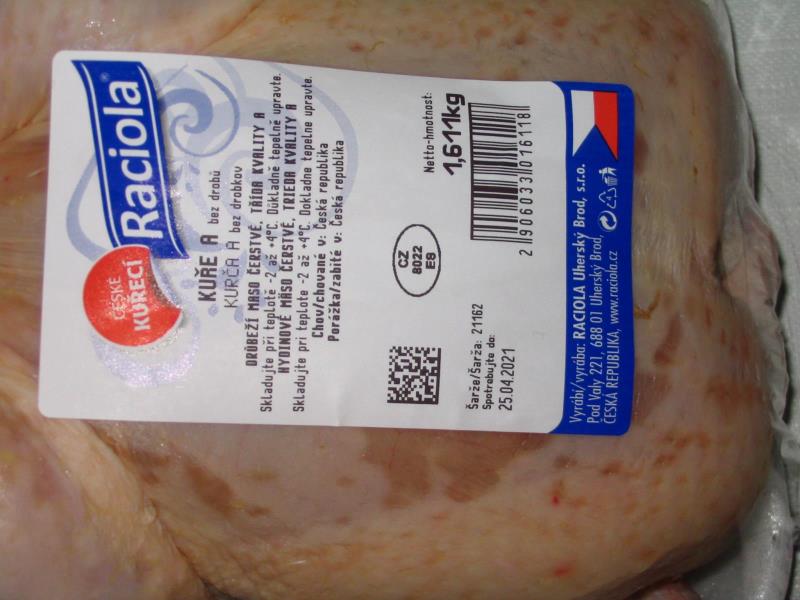
Czech Republic- Chilled chicken without offal B – Salmonella

Potravinynapranyri

Food group: Meat and meat products Packaged meat

Chilled chicken without offal B
Category: Dangerous food
Unsatisfactory parameter:

Salmonella enterica serum. Enteritidis

The pathogenic bacterium Salmonella enterica serum was detected in chilled chickens without offal Enteritidis , which can cause a condition called salmonellosis.

Expiration date: 4/25/2021
Packaging: Plastic foil
Producer: RACIOLA Uhersky Brod, sro
Country of origin:  Czechia
Date of sampling: 20. 4. 2021
Reference number: 21-000018-SVS-CZ
The sample was found by official inspection of the State Veterinary Administration.

Germany – Basak curry 100g – Salmonella

AGES

AGES informs about a recall of the company Macro Group Handels GmbH. The company initiated a recall of the product Basak Curry 100g on June 11th, 2021:

Food recall

Basak curry 100g
Recall reason Salmonella
Marketed by Macro Group Handels GmbH
Manufacturer Basak
Expiry Date 04.2023

Product recall: Basak Curry 100g

Vienna (OTS) – The article Basak Curry 100g contains salmonella and is therefore criticized as HARMFUL. We therefore ask you not to consume and return goods that have already been purchased.

The following best before dates are affected: Best before: 03.2023

The article Basak Curry 100g could contain foreign bodies and will therefore be rejected as HARMFUL. We therefore ask you not to consume and return goods that have already been purchased.

The following
best before dates are affected : Best before: 12.2022, 03.2023 and 04.2023 Inquiries

& contact:

Mücahit Bülük: TEL .: + 43 2162 65 708 21

Original broadcast

USA- Recalled: A Single Lot of Freshpet Select Small Dog – Salmonella

Petful

Maker: Freshpet, Inc.
Cause: Potential for salmonella
Announcement: FDA alert dated June 13, 2021 (archived here)
What was recalled: Freshpet Select Small Dog Bite Size Beef & Egg Recipe Dog Food, 1 lb., UPC # 627975012939, with sell by date of Oct. 30, 2021 and Lot Code 1421FBP0101

Only the dog food listed above — with the exact UPC, sell by date and lot code — is part of this recall, and no other Freshpet products are affected.

Research – Antimicrobial effect of tea polyphenols against foodborne pathogens

Journal of Food Protection

In recent years, science and technology have developed to a considerable level. However, food contamination by food-borne pathogens is still widespread in many countries around the world, and food safety is a major global public health issue. Therefore, novel preservatives that can guarantee safer food are high in demand. Contrary to artificial food preservatives, tea polyphenols (TP) are getting wide attention as food additives for being “green”, “safe” and “healthy”. The sources of TP are wide, and the purification technology is sophisticated. Compared with other natural antibacterial agents, its antibacterial effect is more stable. It is an excellent natural antibacterial agent. Here, this review systematically summarizes the important chemical components of TP and discusses their antibacterial mechanisms against various foodborne pathogens. In addition, the potential application areas of TP are also discussed. It can provide a theoretical basis for the in-depth study of TP.

Research- Monte Carlo Simulation Model for Predicting Salmonella Contamination of Chicken Liver as a Function of Serving Size for Use in Quantitative Microbial Risk Assessment

Journal of Food Protection

Salmonella kswfoodworld

The first step in quantitative microbial risk assessment (QMRA) is to determine distribution of pathogen contamination among servings of the food at some point in the farm-to-table chain. In the present study, distribution of Salmonella contamination among servings of chicken liver for use in QMRA was determined at meal preparation. A combination of five methods: 1) whole sample enrichment; 2) quantitative polymerase chain reaction; 3) cultural isolation; 4) serotyping; and 5) Monte Carlo simulation were used to determine Salmonella prevalence (P), number (N), and serotype for different serving sizes. In addition, epidemiological data were used to convert serotype data to virulence (V) values for use in QMRA. A Monte Carlo simulation model based in Excel and simulated with @Risk predicted Salmonella P, N, serotype, and V as a function of serving size from one (58 g) to eight (464 g) chicken livers. Salmonella P of chicken livers was 72.5% (58/80) per 58 g. Four serotypes were isolated from chicken livers: 1) Infantis (P = 28%, V = 4.5); 2) Enteritidis (P = 15%, V = 5); 3) Typhimirium (P = 15%, V = 4.8); and 4) Kentucky (P = 15%, V = 0.8). Median Salmonella N was 1.76 log per 58 g (range: 0 to 4.67 log/58 g) and was not affected ( P > 0.05) by serotype. The model predicted a non-linear increase ( P ≤ 0.05) of Salmonella P from 72.5% per 58 g to 100% per 464 g, minimum N from 0 log per 58 g to 1.28 log per 464 g, and median N from 1.76 log per 58 g to 3.22 log per 464 g. Regardless of serving size, predicted maximum N was 4.74 log, mean V was 3.9, and total N was 6.65 log per lot (10,000 chicken livers). The data acquired and model developed in this study fill an important data and modeling gap in QMRA for Salmonella and chicken liver.

Research – Determining bacterial load and water quality of tomato flume tanks in Florida packinghouses

Journal of Food Protection

Monitoring and maintenance of water quality in dump tanks or flume systems is crucial to prevent pathogen cross-contamination during postharvest washing of tomatoes, but there is limited information on how organic matter influences sanitizer efficacy in the water. The main objective of this study was to monitor water quality in flume tanks and evaluate the efficacy of postharvest washing of tomatoes in commercial packinghouses. Flume tank water samples (n=3) were collected on an hourly basis from three packinghouses in Florida and analyzed for pH, total dissolved solids (TDS), free chlorine, chemical oxygen demand (COD), oxidation-reduction potential (ORP), and turbidity. Additionally, three flume water samples were collected and tested for total aerobic plate count (APC), total coliforms (TC), and generic E. coli (EC). Fresh tomatoes (n=3), both before and after washing, were collected and analyzed for the same bacterial counts. Turbidity, COD, and TDS levels in flume water increased over time in all packinghouses. Correlations observed include COD and turbidity (r = 0.631), turbidity and TDS (r = 0.810), and ORP and chlorine (r = 0.660). APC for water samples had an average range of 0.0 to 4.7 log CFU/mL and TC average range of 0.0 to 4.7 log CFU/mL. All water samples were negative for generic E. coli . The average APC for pre-and post-flume tomatoes from the three packinghouses was 6.0 log CFU/tomato and ranged from 2.2 to 7.4 log CFU/tomato. The average TC count was <1.5 and 7.0 log CFU/tomato for pre-and post-wash tomatoes, respectively. There was no significant effect ( P >0.05) of postharvest washing on the microbiological qualities of tomatoes. Water quality in flume tanks deteriorated over time in all packinghouses during a typical operational day of 4-8 h.

Research – High Hydrostatic Pressure Treatment Ensures the Microbiological Safety of Human Milk Including Bacillus cereus and Preservation of Bioactive Proteins Including Lipase and Immuno-Proteins: A Narrative Review

MDPI

Breast milk is the nutritional reference for the child and especially for the preterm infant. Breast milk is better than donated breast milk (DHM), but if breast milk is not available, DHM is distributed by the Human Milk Bank (HMB). Raw Human Milk is better than HMB milk, but it may contain dangerous germs, so it is usually milk pasteurized by a Holder treatment (62.5 °C 30 min). However, Holder does not destroy all germs, and in particular, in 7% to 14%, the spores of Bacillus cereus are found, and it also destroys the microbiota, lipase BSSL and immune proteins. Another technique, High-Temperature Short Time (HTST 72 °C, 5–15 s), has been tried, which is imperfect, does not destroy Bacillus cereus, but degrades the lipase and partially the immune proteins. Therefore, techniques that do not treat by temperature have been proposed. For more than 25 years, high hydrostatic pressure has been tried with pressures from 100 to 800 MPa. Pressures above 400 MPa can alter the immune proteins without destroying the Bacillus cereus. We propose a High Hydrostatic Pressure (HHP) with four pressure cycles ranging from 50–150 MPa to promote Bacillus cereus germination and a 350 MPa Pressure that destroys 106 Bacillus cereus and retains 80–100% of lipase, lysozyme, lactoferrin and 64% of IgAs. Other HHP techniques are being tested. We propose a literature review of these techniques. View Full-Text

Research – Economic evaluation of whole genome sequencing for pathogen identification and surveillance – results of case studies in Europe and the Americas 2016 to 2019 separator

Eurosurveillance

Whole genome sequencing (WGS) is transforming the work of microbiological reference laboratories across the globe. Complete genomic sequences from an isolate or sample have the potential to improve infectious disease surveillance programmes and strengthen epidemiological investigations. Examples include the potential to identify outbreaks earlier through the added value of genome-based cluster detection, the tracking of strains with specific markers relevant for health (for instance antigenicity, virulence, transmissibility, resistance markers) and the monitoring of effectiveness of control measures (for instance vaccination, elimination programmes) [1]. Development of pathogen genomics and the tools, infrastructure and necessary analytics for WGS can be used across sectors (public health, veterinary health or food safety) and pathogen types (viruses, bacteria or parasites), providing potential for further integration of surveillance activities and thus for economies of scale [1,2].

However, in practice, a model currently favoured involves the introduction of WGS into individual pathogen-focused programmes, where the costs of implementing WGS in routine diagnostics and surveillance remain high in comparison to the mainly phenotypic testing currently in use [2]. To better understand the cost differential between conventional methods and WGS in the context of pathogen identification and surveillance, and to identify the main factors affecting the costs and benefits of WGS-based surveillance systems, we conducted an economic evaluation in eight reference laboratories in seven countries (Argentina, Canada, Germany, Italy, the Netherlands, the United States (US) and two institutes from the United Kingdom (UK)). In a second step, we wanted to understand whether the benefits derived from the additional information obtained through the sequencing of pathogens is likely to balance out the additional cost of WGS. For this purpose, we estimated for the example of salmonellosis the number of cases of illness that would need to be prevented each year through the use of WGS in order to ‘break even’ on costs, i.e. in order to make the use of WGS cost-neutral.

Research – MYCOBIOTA ISOLATION AND AFLATOXIN B1 CONTAMINATION IN FRESH AND STORED SESAME SEEDS FROM RAINFED AND IRRIGATED ZONES OF PUNJAB, PAKISTAN

Study was carried out to evaluate the incidence of mycobiota and contamination of AFB 1  in sesame seeds from rainfed and irrigated zones of the Punjab, Pakistan. For this purpose, 100 sesame seed samples were collected directly from the fields of major sesame-producing areas of the rainfed and irrigated zone. Samples were subjected to the Agar Plate Method for the isolation of mycobiota and thin-layer chromatography for AFB 1 contaminations. Then, seed samples were stored for 12 months. After 12 months, the seeds were again analyzed for mycobiota and AFB 1 contaminations for comparison. The result of the present study revealed that all samples were reported positive for fungal growth in fresh and stored conditions. Twenty-one fungal species belonging to ten different fungal genera were isolated. Aspergillus flavus was the leading contaminant found in fresh and stored sesame seeds from rainfed and irrigated zone followed by A. niger, Alternaria alternata and Fusarium oxysporum . Least reported fungi were Aspergillus ochraceus and Cladosporium oxysporum.  AFB 1 analysis revealed that 92% fresh and 99% stored samples were contaminated with AFB 1 . In the rainfed zone, 88% fresh and 100% stored samples were contaminated with AFB 1 with a mean concentration of 15.74ppb and 33.8ppb, respectively. Similarly, in the irrigated zone, 96% fresh and 98% stored samples were contaminated with AFB 1 with a mean concentration of 20.5ppb and 27.56ppb, respectively. 20% fresh and 100% stored samples from rainfed zone and 28% fresh and 60% stored samples from irrigated zone were tainted with AFB 1 levels above 20 ppb, not fit for human consumption as per maximum limit (20ppb) assigned by FDA and FAO. This is the first-ever report of mycobiota and AFB 1 contamination in sesame seeds from rainfed and irrigated zones of the Punjab, Pakistan. This baseline data will be considered as an initial step to tackle this significant problem.

Research – Application of peroxyacetic acid for decontamination of raw poultry products and comparison to other commonly used chemical antimicrobial interventions – A Review

Journal of Food Protection

Poultry remains one of the top food commodities responsible for foodborne illness in the U.S., despite poultry industry efforts since the inception of HACCP to reduce the burden of foodborne illness implicating poultry products. The appropriate use of antimicrobial compounds during processing of raw poultry can help minimize this risk. Currently, peroxyacetic acid (PAA) is the most popular antimicrobial in the poultry industry, displacing chlorine compounds and others. The aim of this review was to compare the effectiveness of PAA to that of other antimicrobials for the decontamination of raw poultry carcasses and parts. Twenty-six articles were found that compared PAA to over 20 different antimicrobials, applied as spray or immersion treatments for different exposure times and concentrations. The most common comparisons were to chlorine compounds (17 articles), to lactic acid (LA) compounds (5 articles) and to cetylpyridinium chloride (CPC, 6 articles). Studies measured effectiveness by reductions in native flora or inoculated bacteria, usually Salmonella or Campylobacter . PAA was found to be more effective than chlorine under most conditions studied. Effectiveness of PAA was higher or comparable to that of LA and CPC depending on product and treatment conditions. Overall, the results of primary literature studies support the popularity of PAA as an effective intervention against pathogenic bacteria during poultry processing.