Monthly Archives: November 2019

UK -Norovirus outbreak at Lego show in Bristol leaves over 40 people ill

NY POST

Eurofins

Image CDC

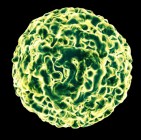
Dozens of people in the UK have been suffering from Norovirus-like symptoms after attending a huge Lego event in Bristol over the weekend.

The organisers of the Bristol Brick show say they are “devastated” and an investigation has been launched by the city’s health authorities.

Nearly 4,000 people visited the Action Indoor Sports centre to celebrate Lego, but after the event, more than 40 attendees started experiencing sickness and diarrhoea.

One Lego fan, who wished to remain anonymous, said he was not happy with the cleanliness of the venue.

He said: “The state of the place left a lot to be desired.”

“The food wasn’t great and over the weekend, the toilets weren’t well maintained, the basins didn’t work well and there was no hand sanitiser and that sort of thing.”
 

USA – Virus Outbreak Shuts Down 46 Colorado Schools, Is It Norovirus?

Forbes

Food Borne Illness - Norovirus -CDC Photo

Image CDC

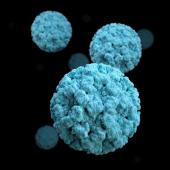
When the virus may be norovirus, you can’t just ignore-a-virus. That’s why over 22,000 students in Colorado will have no class.

Well, at least for today and tomorrow. Diana Sirko, PhD, the Superintendent of Schools for Mesa County Valley School District 51, has announced the closing of the entire school district through the end of this school week. That’s all 46 schools in District 51.

The reason is that hundreds of students and teachers have already gotten ill with vomiting and diarrhea. Although the cause has not yet been clearly identified yet, this sounds suspiciously like norovirus. Yes, norovirus, the virus that Aron Hall, DVM, MSPH, DACVPM, of the Centers for Disease Control and Prevention (CDC) has called the “perfect human pathogen.”

USA -E. coli HUS Outbreak: Forty Sick, CDC Says Avoid All Romaine From Salinas, CA

Food Poisoning Bulletin

The CDC just posted a food safety alert, telling consumers that in the wake of the newest E. coli HUS outbreak, they should avoid buying or eating all romaine lettuce from the Salinas, California growing region until more information is available. This is an echo of the same advice from the CDC last April, when another, deadly E. coli O157:H7 outbreak was linked to romaine. The advice in 2018 was to avoid all romaine lettuce until officials found the source.

This newest outbreak is growing by leaps and bounds. Now 40 people in 16 states are sick. That’s an increase of 23 more patients and 8 more states in just the last two days. Twenty-eight people have been hospitalized, which is a very high percentage of cases. Five people have developed hemolytic uremic syndrome (HUS), which is a type of kidney failure.

Forty Sick in E. coli HUS Outbreak: CDC Says Avoid All Romaine From Salinas, CA

Canada -Bonduelle brand salad products may be unsafe due to E. coli O157:H7

CFIA

Ottawa, November 22, 2019 – The Canadian Food Inspection Agency (CFIA) is warning the public not to consume the products described below due to E. coli O157:H7.

The following products have been sold in Ontario, Quebec and New Brunswick and may have been distributed in other provinces or territories.

Products

Brand Product Size UPC Codes
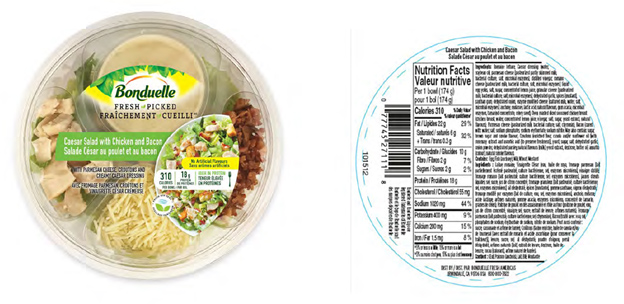
Bonduelle Caesar Salad with Chicken and Bacon 174 g 0 77745 27111 8 Use by:
10/29/2019
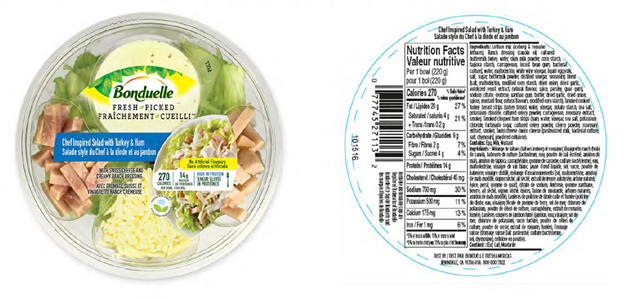
Bonduelle Chef Inspired Salad with Turkey & Ham 220 g 0 77745 27113 2 Use by:
10/31/2019
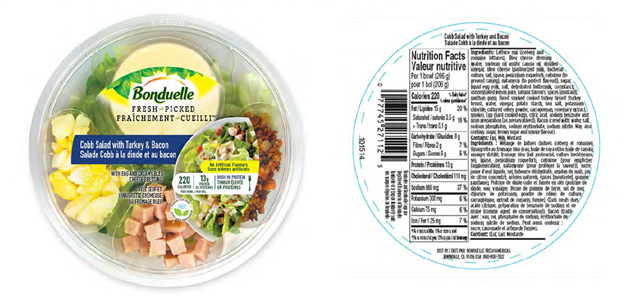
Bonduelle Cobb Salad with Turkey & Bacon 206 g 0 77745 27112 5 Use by:
10/31/2019
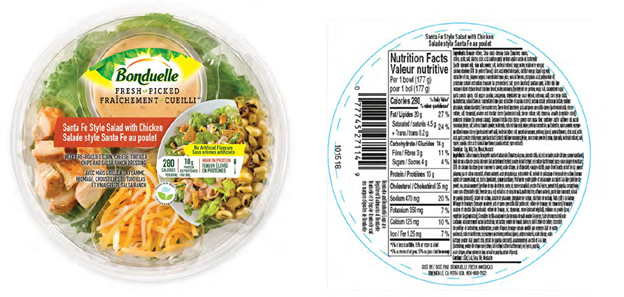
Bonduelle Santa Fe Style Salad with Chicken 177 g 0 77745 27114 9 Use by:
10/31/2019

Background

This warning was triggered by a recall in another country. The CFIA is conducting a food safety investigation, which may lead to the recall of these or other products. If products are recalled, the CFIA will notify the public through a Food Recall Warning.

Illnesses

There have been no reported illnesses associated with the consumption of these products in Canada. However, the Public Health Agency of Canada has issued guidance to Canadians with regard to all types of romaine lettuce from Salinas, California, please refer to the Public Health Notice for additional information.

Product photos

Printer ready version of photos

  • Bonduelle Caesar Salad with Chicken and Bacon
  • Bonduelle Chef Inspired Salad with Turkey & Ham
  • Bonduelle Cobb Salad with Turkey & Bacon
  • Bonduelle Santa Fe Style Salad with Chicken

Research -Influence of surface properties of produce and food contact surfaces on the efficacy of chlorine dioxide gas for the inactivation of foodborne pathogens

Science Direct

The objective of this study was to evaluate the influence of surface properties of produce and food contact surfaces on the antimicrobial effect of chlorine dioxide (ClO2) gas against Escherichia coli O157:H7, Salmonella Typhimurium, and Listeria monocytogenes. The hydrophobicity of the selected surfaces was evaluated by water contact angle measurements. White light scanning interferometry (WLSI) was used to acquire surface roughness values of each surface. Produce and food contact surfaces inoculated with foodborne pathogens were treated with 20 ppmv ClO2 gas for 5, 10, and 15 min. As treatment time increased, different levels of inactivation of the three pathogens were observed among the samples. Contact angles of produce and food contact surfaces were highly and negatively correlated with the log reduction of all three pathogens. There were generally weaker correlations between the roughness values of sample surfaces and microbial reduction compared to those between hydrophobicity and microbial reduction. The results of this study showed that surface hydrophobicity is a more important factor relative to bacterial inactivation by ClO2 gas from the surface than is surface roughness. Also, the existence of crevices with features of similar size to the pathogen cell was more important than the Ra and Rq values in the inactivation of pathogens.

Research – Population dynamics of Salmonella spp. and Shigella spp. in ready‐to‐eat Mediterranean vegetable salads

Wiley Online

Abstract

This study evaluated the behavior of Salmonella and Shigella (5–6 log CFU/g) in tomato–cucumber (TC) salad without additives (control), TC with 1.0% lemon juice and 0.5% salt, TC with 10% wt/wt tahini, coleslaw, and toum sauce at 4, 10, or 24°C for 5 days. At 4°C, both pathogens survived well in all salads, with a 0.2–1.6 log CFU/g reduction after 5 days (except for toum sauce with >3.5 log CFU/g reduction after 4 days). At 10°C, Salmonella in the different TC salads remained constant, whereas Shigella numbers significantly increased by 1.0–1.7 log CFU/g after 5 days. Yet, both pathogens significantly decreased by 1.2–1.4 log CFU/g in coleslaw after 5 days and by >3.5 log CFU/g in toum sauce after 3 days. At 24°C, Salmonella significantly increased in TC salad without additives by 1.4 log CFU/g after 5 days and were below the detection level in the other types of salad after 5 days. However, Shigella numbers significantly increased by 1.0 log CFU/g in TC with tahini, but they significantly declined by 1.9–2.9 log CFU/g in TC salads after 5 days, and the pathogen was not detected in coleslaw and toum sauce after 4 days.

Research -Processing plant and machinery sanitation and hygiene practices associate with Listeria monocytogenes occurrence in ready-to-eat fish products

Science Direct

Listeria monocytogenes causes the foodborne illness listeriosis, which exhibits high fatality among people in risk groups. The incidence of listeriosis has increased in Europe, which raises concerns about L. monocytogenes occurrence in foodstuffs. Ready-to-eat seafood products are considered particularly risky vehicles. Poor hygiene at processing facilities predisposes them to L. monocytogenes contamination, which can be controlled by stringent self-checking system measures. We examined the association of fish-processing plant operational and hygiene practices with the occurrence of L. monocytogenes in vacuum-packaged gravad (cold-salted) and cold-smoked salmon and rainbow trout products. Product sampling of 21 fish-processing plants was carried out, and operational procedures relating to L. monocytogenes control were surveyed using an in-depth risk assessment questionnaire. L. monocytogenes occurred only in sliced and mainly in gravad products of seven fish-processing plants. Shortages in preventive measures were discovered predominantly among the L. monocytogenes positive fish-processing plants. Using generalized linear modeling, we identified the following features associated with L. monocytogenes product contamination: the number of processing machines, deficiencies in the processing environment and machinery sanitation, and staff movement from areas of low toward high hygiene. Furthermore, performing frequent periodic thorough sanitation alongside everyday sanitation practices associated with a decreased risk of product contamination.

Research – Unusual Salmonella widespread in turkeys still sickening people- USA

CIDRAP

Though the investigation into a Salmonella Reading outbreak with several unusual features and linked to raw turkey products ended in April, the outbreak strain has become widespread in the turkey production industry, and cases continue to be reported, according to a new report today.

Public health officials from the US Centers for Disease Control and Prevention and health partners from several states and the District of Columbia fleshed out more details about the investigation and the unique outbreak in the latest issue of Morbidity and Mortality Weekly Report (MMWR). Given the lingering threat, they also urged the industry and consumers to continue taking steps to reduce contamination.

USA -Missa Bay, LLC Recalls Salad Products Due to Possible E. coli O157:H7 Contamination

FSIS USDA

WASHINGTON, Nov. 21, 2019 – Missa Bay, LLC, a Swedesboro, N.J. establishment, is recalling approximately 75,233  pounds of salad products that contain meat or poultry because the lettuce ingredient may be contaminated with E. coli O157:H7, the U.S. Department of Agriculture’s Food Safety and Inspection Service (FSIS) announced today.

The salad products items were produced from October 14, 2019 through October 16, 2019. The products subject to the recall can be found on the following spreadsheet. [View Labels (PDF only)]

The products subject to recall bear establishment number “EST. 18502B” inside the USDA mark of inspection. These items were shipped to distribution locations in Alabama, Connecticut, Florida, Georgia, Illinois, Indiana, Louisiana, Maine, Maryland, Massachusetts, Michigan, Minnesota, Mississippi, Missouri, New Jersey, New York, North Carolina, Ohio, Pennsylvania, South Carolina, Virginia and Wisconsin.

As part of a foodborne illness outbreak investigation, the Maryland Department of Health collected an unopened package of Ready Pac Bistro Chicken Raised Without Antibiotics Caesar Salad with FSIS EST number 18502B on the label. The state collected and tested individual ingredients in the salad and the lettuce tested positive for E. coli O157:H7. All products from the same lot of lettuce are included in the recall.

RASFF Alerts – Aflatoxin -Dried Figs – Shelled Peanuts – Roasted and Salted Pistachios – Groundnut Kernels – Corn – Chia Seeds

RASFF-Logo

RASFF – aflatoxins (B1 = 57; Tot. = 195 µg/kg – ppb) in dried figs from Spain, via the Netherlands in Belgium

RASFF – aflatoxins (B1 = 19.27; Tot. = 43.1 / B1 = 61.58; Tot. = 68.92 µg/kg – ppb) in dried figs from Turkey in Germany

RASFF – aflatoxins (B1 = 10.7; Tot. = 21.3 µg/kg – ppb) in dried figs from Turkey in Poland

RASFF – aflatoxins (B1 = 12.2; Tot. = 16.0 µg/kg – ppb) in dried figs from Turkey in Germany

RASFF – aflatoxins (B1 = 3.9 µg/kg – ppb) in shelled peanuts from the United States in Spain

RASFF -aflatoxins (B1 = 12.6 µg/kg – ppb) in roasted and salted pistachios in shell from Turkey in Germany

RASFF – aflatoxins in dried figs from Turkey in the UK

RASFF – aflatoxins (B1 = 3.9 µg/kg – ppb) in groundnut kernels from China in Greece

RASFF – aflatoxins (B1 = 26.3; Tot. = 67.8 µg/kg – ppb) in dried figs from Turkey in Germany

RASFF – aflatoxins (B1 = 11; Tot. = 12 µg/kg – ppb) in corn from Serbia in Slovenia

RASFF – aflatoxins (B1 = 7.3; Tot. = 9.2 µg/kg – ppb) in chia seeds from Paraguay in the Netherlands