Research – Resistant Salmonella infections linked to worse outcomes

CIDRAP

kswfoodworld Salmonella

Infections caused by Salmonella with any antibiotic resistance are associated with more severe clinical outcomes, including hospitalization and death, Centers for Disease Control and Prevention (CDC) researchers reported yesterday in Clinical Infectious Diseases.

Using epidemiologic data from the Foodborne Diseases Active Surveillance Network (FoodNet) and antimicrobial resistance data from the National Antimicrobial Resistance Monitoring System (NARMS), researchers from the CDC’s Division of Foodborne, Waterborne, and Environmental Diseases examined outcomes in patients with nontyphoidal Salmonella infections from 2004 through 2018. They compared outcomes for resistant Salmonella infections with those caused by non-resistant Salmonella before and after adjusting for age, state, race/ethnicity, international travel, outbreak association, and isolate serotype or source.
Research – Natural Antimicrobials: A Reservoir to Contrast Listeria monocytogenes

MDPI

Abstract

Natural environments possess a reservoir of compounds exerting antimicrobial activity that are forms of defence for some organisms against others. Recently, they have become more and more attractive in the food sector due to the increasing demand for natural compounds that have the capacity to protect food from pathogenic microorganisms. Among foodborne pathogens, Listeria monocytogenes can contaminate food during production, distribution, or storage, and its presence is especially detected in fresh, raw food and ready-to-eat products. The interest in this microorganism is related to listeriosis, a severe disease with a high mortality rate that can occur after its ingestion. Starting from this premise, the present review aims to investigate plant extract and fermented plant matrices, as well as the compounds or mixtures of compounds produced during microbial fermentation processes that have anti-listeria activity.

Australia – Food Industry Recall Protocol

FSANZ

The Food Industry Recall Protocol provides information on recalling food in Australia and guidance for food businesses on developing a written food recall plan. A food recall is action taken to remove from distribution, sale and consumption, food which is unsafe. This means food that may cause illness or other physical harm to a person consuming the food.

The three​ primary objectives of a food recall are to:
  • stop the distribution and sale of the product as soon as possible
  • inform the government, the food businesses that have received the recalled food and the public (consumer level recalls only) of the problem
  • effectively and efficiently remove unsafe product from the market place.

This Protocol helps food businesses plan for and respond to a need to recall potentially unsafe food by setting out:

  • the roles and responsibilities of food businesses and government during a food recall
  • the key steps in the food recall process
  • the legal requirements for food businesses in relation to food recalls
  • important elements of a food recall plan.

The Protocol also includes details on:

  • writing a food recall plan for your food business
  • contact details for FSANZ and state/territory food enforcement agencies
  • an explanation of how recalls are classified
  • flow diagram to assist with deciding if food should be recalled or withdrawn
  • examples of recall notifications.

Download the Food Industry Food Recall Protocol [PDF 1MB]

France – Turkey ham 150g – Listeria monocytogenes

Gov france

  • Product category Food
  • Product subcategory Meats
  • Product brand name The delights of the atlas
  • Model names or references Turkey ham 150g
  • Product identification
    GTIN Batch Date
    3264057113053 023257 Use-by date 11/13/2023
  • Start/end date of marketing From 09/15/2023 to 11/13/2023
  • Storage temperature Product to keep in the refrigerator
  • Geographical sales area Whole France
  • Distributors CBS grand Coeur, pro to pro distrib Illlkirch, Montelimar, north and south, domafrais, eurofromage, France Frais, scapest, auribault, sodeger, codifrais
  • List of points of sale List_of_customers.pdf

Research – Epidemiological Data Mining for Assisting with Foodborne Outbreak Investigation

MDPI

Abstract

Diseases caused by the consumption of food are a significant but avoidable public health issue, and identifying the source of contamination is a key step in an outbreak investigation to prevent foodborne illnesses. Historical foodborne outbreaks provide rich data on critical attributes such as outbreak factors, food vehicles, and etiologies, and an improved understanding of the relationships between these attributes could provide insights for developing effective food safety interventions. The purpose of this study was to identify hidden patterns underlying the relations between the critical attributes involved in historical foodborne outbreaks through data mining approaches. A statistical analysis was used to identify the associations between outbreak factors and food sources, and the factors that were strongly significant were selected as predictive factors for food vehicles. A multinomial prediction model was built based on factors selected for predicting “simple” foods (beef, dairy, and vegetables) as sources of outbreaks. In addition, the relations between the food vehicles and common etiologies were investigated through text mining approaches (support vector machines, logistic regression, random forest, and naïve Bayes). A support vector machine model was identified as the optimal model to predict etiologies from the occurrence of food vehicles. Association rules also indicated the specific food vehicles that have strong relations to the etiologies. Meanwhile, a food ingredient network describing the relationships between foods and ingredients was constructed and used with Monte Carlo simulation to predict possible ingredients from foods that cause an outbreak. The simulated results were confirmed with foods and ingredients that are already known to cause historical foodborne outbreaks. The method could provide insights into the prediction of the possible ingredient sources of contamination when given the name of a food. The results could provide insights into the early identification of food sources of contamination and assist in future outbreak investigations. The data-driven approach will provide a new perspective and strategies for discovering hidden knowledge from massive data.

India – Over 300 AMU women students taken to hospital after food poisoning

The Week

Aligarh (Uttar Pradesh), Oct 18 (PTI) More than 300 women students of the Aligarh Muslim University (AMU) were taken to a hospital on Wednesday morning with symptoms of food poisoning, authorities said. They started showing the symptoms after dinner at their hostel the previous night.
By the afternoon, almost all of them were discharged from the university’s Jawaharlal Nehru Medical College, they said.

As the news of the incident spread, district authorities rushed a team of health officials to take samples of food stored at the hostel’s dining area and kitchens.
District health officials and food inspectors have collected food samples from the hostel, an university official said.
An AMU spokesperson told PTI that a three-member committee has been set up to investigate the matter.

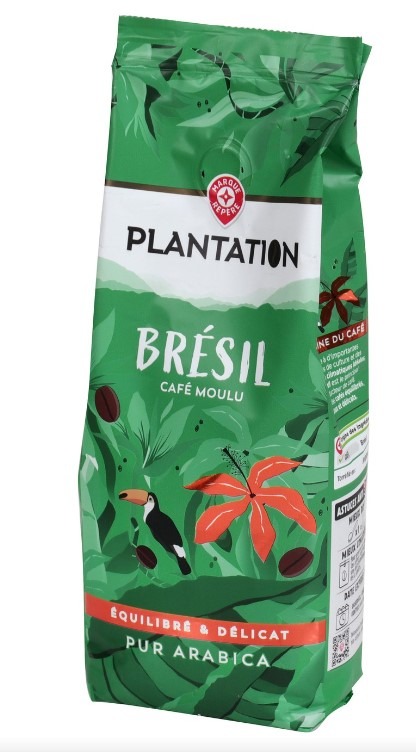
France – PURE GROUND ARABICA BRAZIL COFFEE – 250G – Mycotoxins -Ochratoxin A

Gov france

  • Product category Food
  • Product subcategory Cocoa, coffee and tea
  • Product brand name PLANTING
  • Model names or references PURE GROUND ARABICA BRAZIL COFFEE – 250G
  • Product identification
    GTIN Batch Date
    3564700618424 LB68232291 A 3233 HH:MM and LB68232291 A 3234 HH:MM Minimum durability date 08/16/2024
  • Packaging Bag 250 g
  • Start/end date of marketing From 08/25/2023 to 10/18/2023
  • Storage temperature Product to be stored at room temperature
  • Further information Only products bearing the additional code 04 following the barcode and the combination of markings framed in red are affected by the recall.
  • Geographical sales area Whole France
  • Distributors E. LECLERC

Netherlands – Safety warning Morbier (cheese) from Hoogvliet -STEC E.coli

NWVA

Safety warning Morbier (cheese) from Hoogvliet

Hoogvliet warns against Morbier (cheese). The product may contain STEC bacteria. Eating Morbier (cheese) can pose a health risk, especially in pregnant women, young children, the elderly and people with a weakened immune system. Don’t eat the cheese.
See the Hoogvliet website

Which product is it?

Product: Hoogvliet Morbier (cheese)
Barcode: 2398489xxxxxx
Best before (THT): 18-10-2023

Yours sincerely

The Dutch Food and Consumer Product Safety Authority

France – raw milk butter and cream – Listeria monocytogenes

Gov france

  • Product category Food
  • Product subcategory Milk and dairy products
  • Product brand name scea Caldayroux
  • Model names or references Raw whey cream butter
  • Product identification
    Batch
    All lots
  • Start/end date of marketing From 05/31/2023 to 09/13/2023
  • Storage temperature Product to keep in the refrigerator
  • Health mark 15-012-005
  • Geographical sales area Departments: CANTAL (15)
  • Distributors SAS AURILLAC DISTRIBUTION

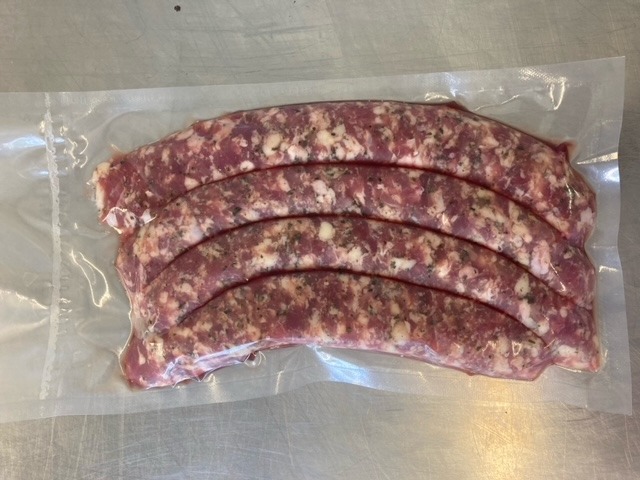
France – Duck Sausages – Salmonella

Gov france

  • Product category Food
  • Product subcategory Meats
  • Product brand name Farmers Gastronomes
  • Model names or references Duck Sausages
  • Product identification
    GTIN Batch Date
    0264234013179 S4023 Use-by date 09/10/2023
  • Packaging Under a vacuum
  • Start/end date of marketing From 02/10/2023 to 09/10/2023
  • Storage temperature Product to keep in the refrigerator
  • Health mark FR 16 347 001 EC
  • Geographical sales area South Charente-Dordogne
  • Distributors Ribérac Farmers Market La Roche Chalais Farmers Market Chalais Farmers Market