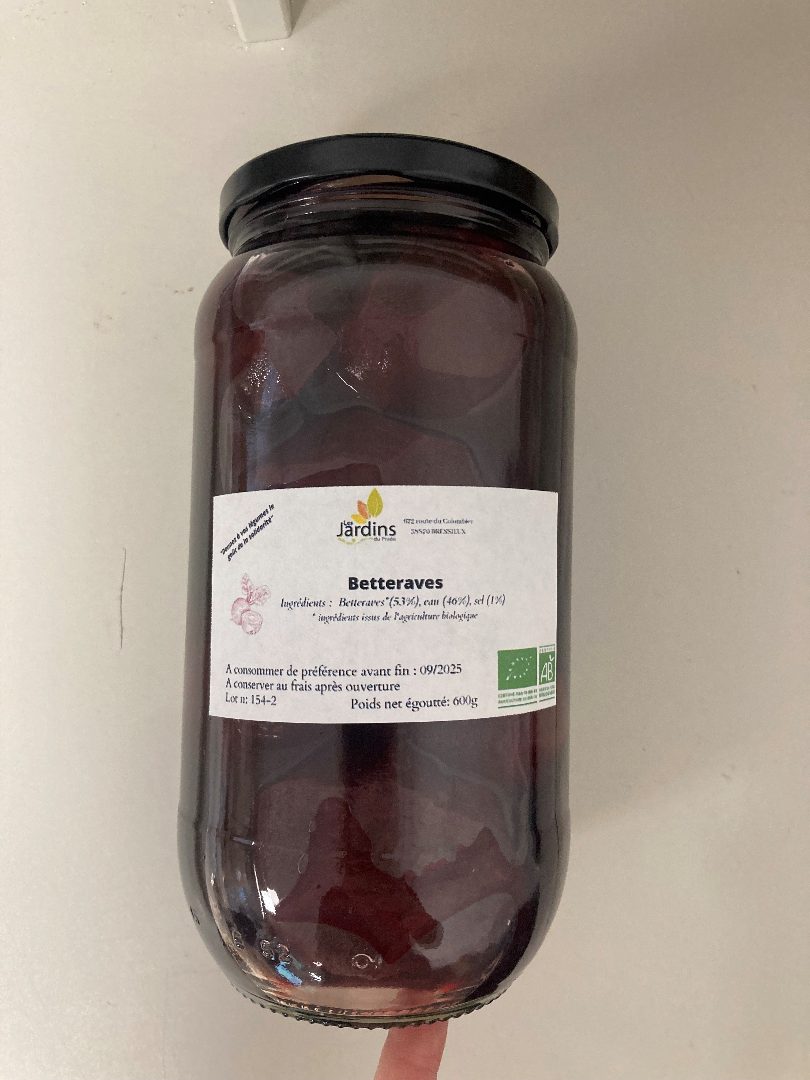
France – Sterilized beetroot in jar – Clostridium botulinum

Gov France

  • Product category Food
  • Product subcategory Fruits and vegetables
  • Product brand name The Prado Gardens
  • Model names or references Lot 154-2
  • Product identification
    Batch Date
    lot 154-2 Minimum durability date 09/30/2025
  • Packaging 600 g jar
  • Start/end date of marketing Until 10/11/2023
  • Storage temperature Product to be stored at room temperature
  • Further information RAS
  • Geographical sales area Department of Isère
  • Distributors Local producers’ store: Délices des champs in Saint-Siméon de Bressieux

Hong Kong – Liver-damaging Aflatoxins found in peanut butter, with two brands exceeding EU limit

The Standard HK

A Consumer Council’s test on 20 samples of peanut butter found that 60 percent of them contain aflatoxins, a substance that could damage liver function. The test also found the aflatoxin B1 levels of two samples exceeded the upper limit of European Union standards.

The consumer watchdog said the two samples found with aflatoxin B1 levels exceeding the EU limit are Fuyuan’s Peanut Butter and YOWE’s Peanut Butter Creamy.

The two samples contained aflatoxin B1 at levels of 4.27μg and 2.01μg respectively, which exceeded the EU limit of 2.0μg. The total aflatoxins level of Fuyuan’s Peanut Butter of 4.94μg also exceeded the EU limit of 4.0μg.

The watchdog warned that aflatoxins could cause acute and chronic poisoning in animals and humans, and could lead to acute liver damage, cirrhosis, cancer and even death.

It said it has referred the information of the relevant samples to the Centre for Food Safety for follow-up.

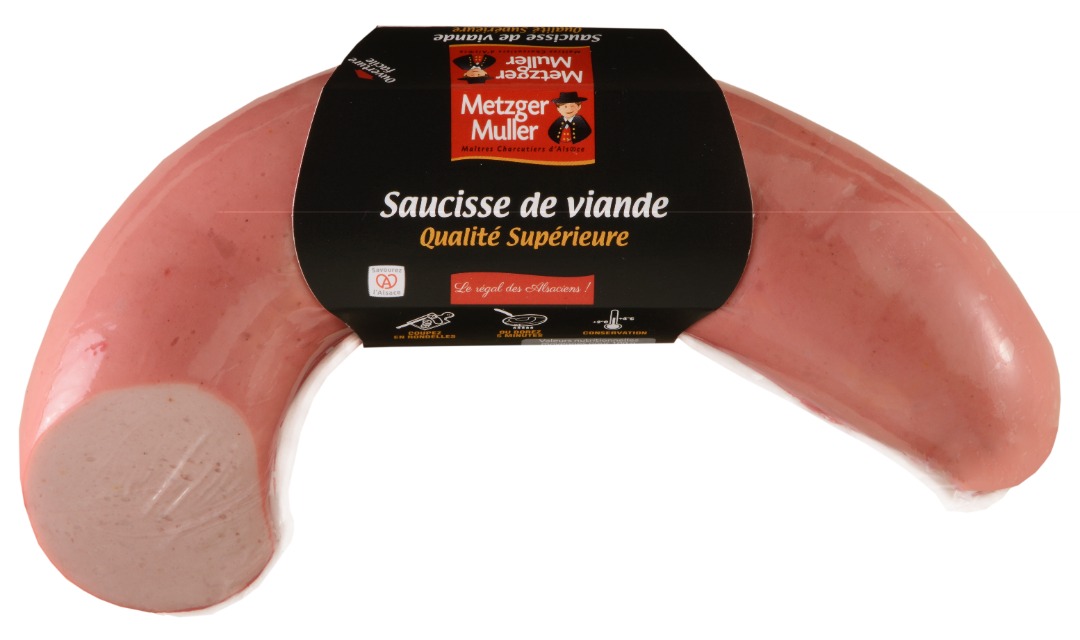
France – Meat sausage Casings Natural – Listeria monocytogenes

Gov France

  • Product category Food
  • Product subcategory Meats
  • Product brand name Metzger-Muller
  • Model names or references Meat sausage natural casings cut Meat sausage natural casings vacuum-packed 1/2
  • Product identification
    GTIN Batch Date
    3272120052000 13299076 Use-by date between 11/22/2023 and 12/03/2023
    3272120012004 13296092 Use-by date between 10/31/2023 and 11/05/2023
    3272120052000 13298121 Use-by date between 11/21/2023 and 12/02/2023
  • Packaging Vacuum and Bulk
  • Start/end date of marketing From 10/25/2023 to 11/03/2023
  • Storage temperature Product to keep in the refrigerator
  • Health mark FR 67-226-002 CE
  • Geographical sales area Whole France
  • Distributors AUCHAN CARREFOUR LECLERC CORA MATCH INTERMARCHE SUPER U
  • List of points of saleCUSTOMER_LIST.pdf

France – Cheese – Fenugreek raclette – Listeria monocytogenes

Gov France

  • Product category Food
  • Product subcategory Milk and dairy products
  • Product brand name Unbranded (sold at traditional stands)
  • Model names or references Fenugreek raclette sold at the traditional stand between 10/27/23 and 11/09/23
  • Product identification
    GTIN Batch
    0205415000000 Products sold between 10/27/23 and 11/09/23
  • Packaging Sold by the cut at the traditional cheese stand
  • Start/end date of marketing From 10/27/2023 to 11/09/2023
  • Storage temperature Product to keep in the refrigerator
  • Geographical sales area Poitiers Saint-Benoit
  • Distributors E.Leclerc Poitiers Saint-Benoit

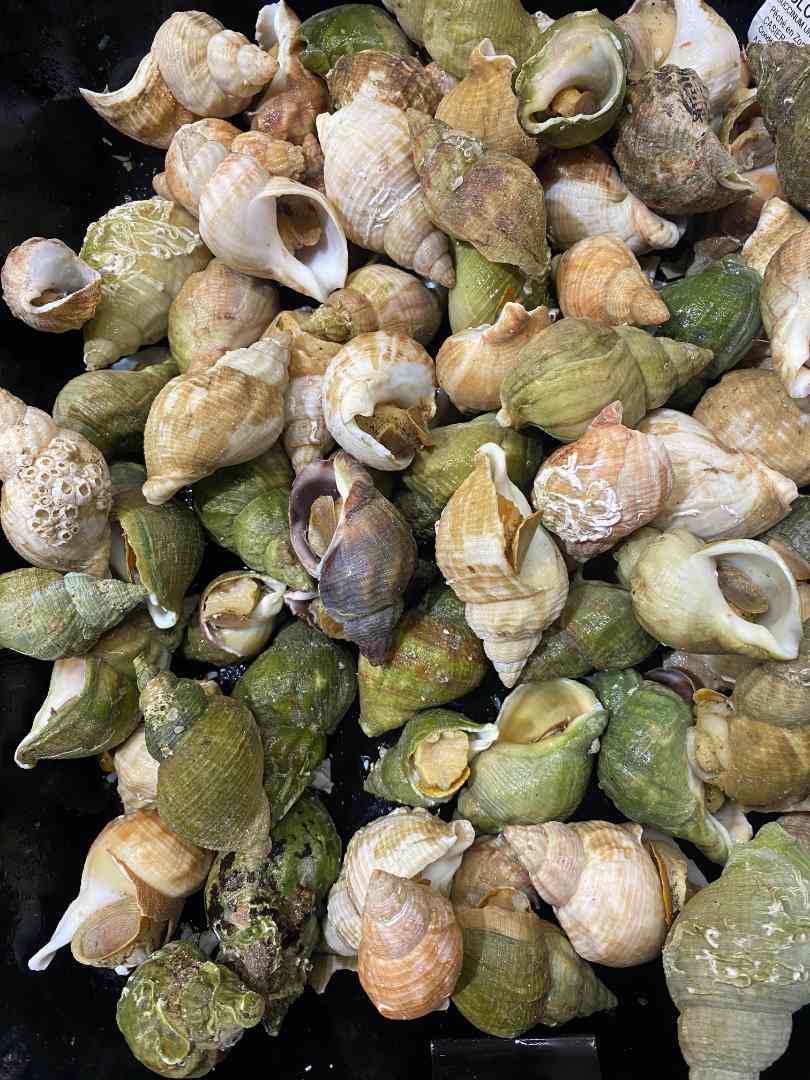
France – Cooked whelks – Listeria monocytogenes

Gov France

  • Product category Food
  • Product subcategory Fishing and aquaculture products
  • Product brand name E.LECLERC ATOUT SUD
  • Model names or references Cooked whelks
  • Product identification
    GTIN Batch Date
    0202461000000 Use-by date between 10/11/2023 and 13/11/2023
    0224716000000 Sold on the traditional shelf between 07/11 and 10/11/2023 inclusive
  • Start/end date of marketing From 07/11/2023 to 10/11/2023
  • Storage temperature Product to keep in the refrigerator
  • Geographical sales area E.LECLERC ATOUT SUD
  • Distributors E.LECLERC ATOUT SUD

Canada – Malichita brand Cantaloupes recalled due to Salmonella

Gov Canada

Malichita - Cantaloupe

Product

Cantaloupes

Issue Food – Microbial Contamination – Salmonella

What to do

Do not consume, use, sell, serve or distribute recalled products.

Distribution, Alberta, British Columbia ,New Brunswick

Newfoundland and Labrador, Nova Scotia, Ontario

Prince Edward Island, Quebec, Possibly other provinces and territories

Issue

The food recall warning issued on 2023-11-01 has been updated to include additional product information, marked by an asterisk (*), and additional distribution information. This additional information was identified during the Canadian Food Inspection Agency’s food safety investigation.

The affected product is being recalled from the marketplace due to possible Salmonella contamination.

What you should do

  • If you think you became sick from consuming a recalled product, contact your healthcare provider
  • Check to see if you have recalled products
  • Do not consume, serve, use, sell, or distribute recalled products
  • Recalled products should be thrown out or returned to the location where they were purchased
  • Consumers who are unsure if they have purchased the recalled product are advised to contact their retailer

Food contaminated with Salmonella may not look or smell spoiled but can still make you sick. Young children, pregnant women, the elderly and people with weakened immune systems may contract serious and sometimes deadly infections. Healthy people may experience short-term symptoms such as fever, headache, vomiting, nausea, abdominal cramps and diarrhea. Long-term complications may include severe arthritis.

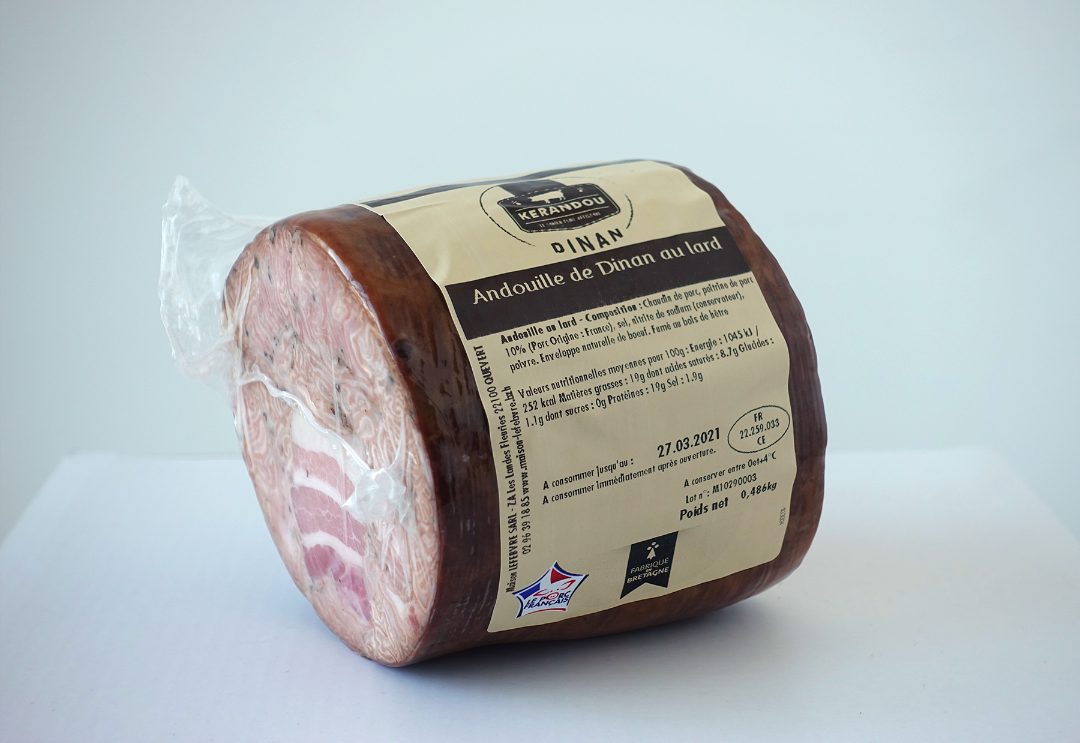
France – Dinan andouille with bacon – Listeria monocytogenes

Gov France

  • Product category Food
  • Product subcategory Others
  • Product brand name Kerandou
  • Model names or references Dinan andouille with bacon
  • Product identification
    Batch Date
    M33040016 Use-by date 01/31/2024
  • Start/end date of marketing From 07/11/2023 to 10/11/2023
  • Storage temperature Product to keep in the refrigerator
  • Health mark Fr 22 259 033 EC
  • Geographical sales area Departments: COTES-D’ARMOR (22), ILLE-ET-VILAINE (35)
  • Distributors Leclerc, Super U, Butchery

Turkey – Over 100 students hospitalized for food poisoning at Turkish state dorm

DUVAR English

Some 117 students living at the Turkish state dormitory in Isparta province were hospitalized due to food poisoning from the cafeteria dinner. The Isparta Governor’s Office has launched an investigation into the incident.

The governor’s report stated that 1,231 students were served dinner on Nov. 11 at the state-run dormitory. It also indicated that food samples from the dinner were taken for testing and that the Isparta attorney general’s office had initiated a judicial investigation in tandem with the Governor’s Office.

USA – Keep Risky Habits Out of the Kitchen this Thanksgiving

USDA

Here are seven dangerous habits USDA would like consumers to drop:

#1 Not washing your hands or kitchen surfaces before, during and after food prep: Handwashing is the first step to avoiding foodborne illness. Wash your hands for at least 20 seconds with soap and water before, during and after handling food.

  • Clean and sanitize any surfaces that have touched raw turkey and its juices and will later touch food, such as kitchen counters, sinks, stoves, tabletops, etc. Cleaning with soap and water physically removes the germs, and sanitizing kills any remaining. Many different sanitizers can be used: an easy homemade version is to make a solution of one tablespoon of liquid chlorine bleach per gallon of water, or you can use a commercial sanitizer or sanitizing wipe.
  • Thorough handwashing remains a concern for the USDA. The most recent USDA study shows that 87% of participants self-reported they washed their hands before starting to cook in the test kitchen. However, only 44% of participants were observed doing so before meal preparation. Additionally, handwashing was not attempted 83% of the time when it should have been done (after handling raw meat or touching contaminated surfaces). Throughout the study, 96% of handwashing attempts did not contain all necessary steps.

#2 Using the same cutting boards and utensils for raw and ready-to-eat foods: Cross-contamination is the spread of bacteria from raw meat and poultry onto ready-to-eat food, surfaces, and utensils. Avoid this by using separate cutting boards — one for raw meat and poultry and another for ready-to-eat foods like fruits and vegetables that will be served raw.

#3 Defrosting your turkey on the kitchen counter: Leaving any frozen package of meat or poultry for more than two hours on the counter at room temperature is dangerous. Even though the center of the package may still be frozen, the outer layer of the food is in the “Danger Zone” between 40 and 140 F — a temperature where foodborne bacteria multiply rapidly. You can safely thaw a turkey using the following methods:

  • Refrigerator Thawing: When thawing in a fridge, allow roughly 24 hours for every four to five pounds of turkey. After thawing, a turkey is safe in a refrigerator for one to two days.
  • Cold Water Thawing: When thawing in a cold-water bath, allow 30 minutes per pound and submerge the turkey in its original wrapping to avoid cross-contamination. Change the water every half hour until the turkey is thawed. Cook it immediately after thawing.

#4 Cooking your turkey overnight at a low temperature: It is not safe to cook any meat or poultry in an oven set lower than 325 F. At lower temperatures, meat stays in the Danger Zone for too long. Cook your turkey at 325 F or above and ensure all parts of the turkey reach a safe internal temperature of 165 F.

#5 Relying only on a pop-up temperature indicator: While the pop-up timers found in many turkeys tend to be fairly accurate, they only check the internal temperature in one spot when we recommend three. Always use a food thermometer to ensure your turkey has reached a safe internal temperature of 165 F in the thickest part of the breast, the innermost part of the wing, and the innermost part of the thigh to check its internal temperature.

#6 Stuffing your turkey the night before: USDA recommends against stuffing your turkey since this often leads to bacteria growth. If you plan to stuff your turkey, follow these steps:

  • Prepare the wet and dry ingredients for the stuffing separately from each other and refrigerate until ready to use. Mixing the dry and the wet ingredients produce an environment that bacteria can thrive in hours before being placed in the oven. Mix wet and dry ingredients just before filling the cavity of the turkey.
  • Stuff the turkey loosely — about 3/4 cup of stuffing per pound.
  • Never stuff a whole turkey and store in the refrigerator before cooking. Immediately place the stuffed, raw turkey in an oven set no lower than 325 F.
  • A stuffed turkey will take 50% longer to cook. Once it has finished cooking, place a food thermometer in the center of the stuffing to ensure it has reached a safe internal temperature of 165 F.

#7 Keeping leftovers for more than a week: Store leftovers in small shallow containers and put them in the refrigerator. Thanksgiving leftovers are safe to eat for up to four days when stored in the refrigerator. In the freezer, leftovers are safely frozen indefinitely but will keep the best quality for two to six months.

China – Norovirus sickens 74 students in Shandong

China Daily

Seventy-four students infected with norovirus at a middle school in Anqiu, Shandong province, experienced nausea, vomiting and diarrhea on Saturday, the city’s bureau of education and sports said on Monday night.

Norovirus is highly contagious and often food-borne. It is sometimes incorrectly referred to as “stomach flu” but is not related to the flu virus.

Hongyi Middle School organized medical treatment for the affected students and sent 14 to the hospital for observation and treatment.

Ten students remain hospitalized, four have been discharged, and the rest, who returned to school, no longer show symptoms.

After collecting and analyzing samples, the city’s disease control and prevention center concluded that the norovirus infection, caused the illnesses.

The school in Anqiu cleaned and disinfected its facilities to reduce the risk of transmission.