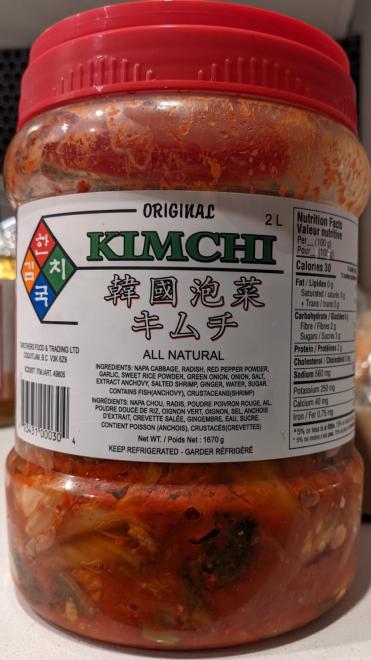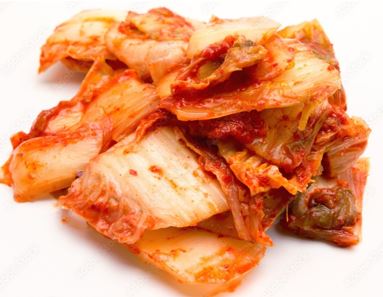
Canada – Public Health Notice: Outbreak of E. coli infections linked to Hankook (Korean characters only) brand Original Kimchi – E.coli O157

PHAC

Kimchi

The Public Health Agency of Canada (PHAC) is collaborating with provincial public health partners, the Canadian Food Inspection Agency (CFIA) and Health Canada to investigate an outbreak of E. coli O157 infections involving 2 provinces: Alberta and Saskatchewan.

Based on the investigation findings to date, the outbreak is linked to Hankook (Korean characters only) brand Original Kimchi. Many of the individuals who were sick reported having eaten Hankook (Korean characters only) brand Original Kimchi before their illnesses occurred.

The CFIA issued a food recall warning on January 28, for Hankook (Korean characters only) brand Original Kimchi sold in 2L containers with a net weight of 1670 g, UPC code 6 23431 00030 4, and best before date January 29, 2022. The recalled product was distributed in British Columbia, Alberta, Saskatchewan, and Manitoba.

For more information on the recalled product, please consult CFIA’s website. The CFIA is continuing its food safety investigation, which may lead to the recall of other products. If other products are recalled, the CFIA will notify the public through updated food recall warnings.

Do not eat, use, sell, or serve the recalled kimchi or any products made with the recalled kimchi. This advice applies to individuals, as well as retailers, distributors, manufacturers and food service establishments such as hotels, restaurants, cafeterias, hospitals and long-term care homes, across Canada.

This public health notice will be updated as the investigation evolves.

Investigation summary

As of January 28, there have been 14 laboratory-confirmed cases of E.coli O157 illness linked to this outbreak in the following provinces: Alberta (13) and Saskatchewan (1).

Individuals became sick between early December 2021 and early January 2022. No deaths or hospitalizations have been reported. Individuals who became ill are between 0 and 61 years of age. The majority of cases (64%) are female.

The CFIA issued a food recall warning on January 28 for certain Hankook (Korean characters only) brand Kimchi products. The recalled product wasdistributed in British Columbia, Alberta, Saskatchewan, and Manitoba.

The CFIA is continuing its food safety investigation, which may lead to the recall of other products. If other products are recalled, the CFIA will notify the public through updated food recall warnings.

Who is most at risk

E. coli O157 is more likely to cause severe illness than other strains of E. coli. Pregnant women, those with weakened immune systems, young children and older adults are most at risk for developing serious complications.

Most people who become ill from an E. coli infection will recover completely on their own. However, some people may have a more serious illness that requires hospital care or causes long-lasting health effects. In rare cases, some individuals may develop life-threatening complications, including stroke, kidney failure and seizures, which could result in death. It is possible for some people to be infected with the bacteria and to not get sick or show any symptoms, but to still be able to spread the infection to others.

What you should do to protect your health

The following advice applies to individuals, as well as retailers, distributors, manufacturers and food service establishments such as hotels, restaurants, cafeterias, hospitals and long-term care homes, across Canada:

  • Do not eat, use, sell or serve the recalled kimchi or any products made with the kimchi. Check to see if you have recalled food products at home. If you do, throw them out and wash your hands.
  • Clean and sanitize all surfaces and storage areas that recalled kimchi or any products made with the recalled kimchi may have come in contact with, including countertops, containers, utensils, freezers, and refrigerators.
  • If you have been diagnosed with an E. coli infection or any other gastrointestinal illness, do not cook food for other people.

Symptoms

People infected with E. coli can have a wide range of symptoms. Some do not get sick at all, though they can still spread the infection to others. Others may feel as though they have a bad case of upset stomach. In some cases, individuals become seriously ill and must be hospitalized.

The following symptoms can appear within one to ten days after contact with the bacteria:

  • nausea
  • vomiting
  • headache
  • mild fever
  • severe stomach cramps
  • watery or bloody diarrhea

Most symptoms end within five to ten days. There is no real treatment for E. coli infections, other than monitoring the illness, providing comfort, and preventing dehydration through proper hydration and nutrition. People who develop complications may need further treatment, such as dialysis for kidney failure. You should contact your health care provider if symptoms persist.

What the Government of Canada is doing

The Government of Canada is committed to protecting the health of Canadians from enteric disease outbreaks.

PHAC leads the human health investigation into an outbreak and is in regular contact with its federal, provincial and territorial partners to monitor the situation and to collaborate on steps to address an outbreak.

Health Canada provides food-related health risk assessments to determine whether the presence of a certain substance or microorganism poses a health risk to consumers.
CFIA conducts food safety investigations into the possible food source of an outbreak.

Epidemiological information

Figure 1 is an epidemiological curve for this outbreak, which shows the numbers of new cases by week. Outbreak investigators use this information to show when illnesses begin, when they peak, and when they trail off. It can take several weeks from the time a person becomes ill to when the illness is reported and testing confirms a link to the outbreak. Data are available for 14 cases.
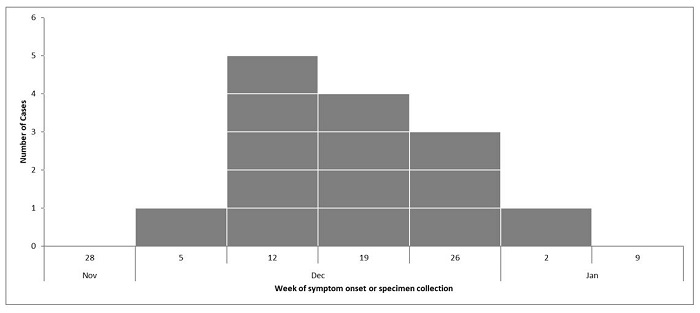
Figure 1. Number of people infected with E. coli O157:H7

France – Haddock 250 under modified atmosphere – Listeria monocytogenes

Gov france

Identification information of the recalled product

  • Product category Food
  • Product subcategory Fishery and aquaculture products
  • Product brand name Fournier son
  • Model names or references Haddock 250 under modified atmosphere
  • Identification of products
    GTIN Lot Dated
    3324031660918 2200701 Use-by date 02/12/2022
  • Packaging250g tray
  • Marketing start/end date From 10/01/2022 to 28/01/2022
  • Storage temperature Product to be stored in the refrigerator
  • Health mark FR 62 193 100 CE
  • Geographic area of ​​sale Whole France
  • Distributors Usign cooperative

Practical information regarding the recall

  • Reason for recall Listeria monocytogenes (causative agent of listeriosis)
  • Risks incurred by the consumer Listeria monocytogenes (causative agent of listeriosis)

France – MEDIUM HADDOCK 1 KG UNDER AT – Listeria monocytogenes

Gov france

Identification information of the recalled product

  • Product category Food
  • Product subcategory Fishery and aquaculture products
  • Product brand name Fournier son
  • Model names or references1000g tray
  • Identification of products
    GTIN Lot Dated
    3324031440855 2200701 Use-by date 02/12/2022
  • Marketing start/end date From 10/01/2022 to 28/01/2022
  • Storage temperature Product to be stored in the refrigerator
  • Health mark FR 62 193 100 CE
  • Geographic area of ​​sale Whole France
  • Distributors Cape tide, Promocash, Top Atlantic

Practical information regarding the recall

  • Reason for recall detection of Listeria monocytogenes
  • Risks incurred by the consumer Listeria monocytogenes (causative agent of listeriosis)

USA – FSIS Issues Public Health Alert for Ready-To-Eat Chicken Salad Products Due to Possible Listeria Contamination

FSIS USDA

WASHINGTON, Jan. 28, 2022 – The U.S. Department of Agriculture’s Food Safety and Inspection Service (FSIS) is issuing a public health alert due to concerns that ready-to-eat (RTE) chicken salad products produced by Simply Fresh Market, a Marietta, Ga. establishment, may be contaminated with Listeria monocytogenes. A recall was not requested because the known affected product is no longer available in commerce for consumers to purchase.

The RTE chicken salad with apples and walnuts items were produced on Jan. 17, 2022. The following product is subject to the public health alert [view label]:

  • 8-oz and 16-oz. deli hinged containers of “simply fresh MARKET CHICKEN SALAD Apples & Walnuts” with a sell by date of “1/25” printed on the label.

The products bear establishment number “EST. P47170” inside the USDA mark of inspection. These items were shipped to three local markets in Atlanta, Ga.

The problem was discovered when the company notified FSIS that product sampling reported positive Listeria monocytogenes results.

There have been no confirmed reports of adverse reactions due to consumption of these products. Anyone concerned about an illness should contact a health care provider.

Consumption of food contaminated with L. monocytogenes can cause listeriosis, a serious infection that primarily affects older adults, persons with weakened immune systems, and pregnant women and their newborns. Less commonly, persons outside these risk groups are affected.

Listeriosis can cause fever, muscle aches, headache, stiff neck, confusion, loss of balance and convulsions sometimes preceded by diarrhea or other gastrointestinal symptoms. An invasive infection spreads beyond the gastrointestinal tract. In pregnant women, the infection can cause miscarriages, stillbirths, premature delivery or life-threatening infection of the newborn. In addition, serious and sometimes fatal infections can occur in older adults and persons with weakened immune systems. Listeriosis is treated with antibiotics. Persons in the higher-risk categories who experience flu-like symptoms within two months after eating contaminated food should seek medical care and tell the health care provider about eating the contaminated food.

FSIS is concerned that some product may be in consumers’ refrigerators. Consumers who have purchased these products are urged not to consume them. These products should be thrown away or returned to the place of purchase.

Click to access PHA-Simply-Fresh-Label-1-28-22.pdf

Canada – Hankook (Korean characters only) brand Original Kimchi recalled due to E. coli O157:H7

CFIA

Hankook (Korean characters only) - Original Kimchi -1670 g

Summary

Product
Original Kimchi
Issue
Food » Microbial Contamination » E. Coli O157:H7
What to do

Do not consume the recalled product.

T-Brothers Food & Trading Ltd. is recalling Hankook (Korean characters only) brand Original Kimchi from the marketplace due to possible E. coli O157:H7 contamination.

The recalled product has been sold in British Columbia, Alberta, Saskatchewan and Manitoba.

What you should do

  • If you think you became sick from consuming a recalled product, call your doctor
  • Check to see if you have the recalled product in your home
  • Do not consume the recalled product
  • Recalled products should be thrown out or returned to the location where they were purchased

Food contaminated with E. coli O157:H7 may not look or smell spoiled but can still make you sick. Symptoms can include nausea, vomiting, mild to severe abdominal cramps and watery to bloody diarrhea. In severe cases of illness, some people may have seizures or strokes, need blood transfusions and kidney dialysis or live with permanent kidney damage. In severe cases of illness, people may die.

Research – Legionellosis: Diagnosis and Control in the Genomic Era

CDC

CDC legionella

Hundreds of books and textbook chapters, and thousands of journal review articles, have been published on Legionnaires’ disease and Legionella spp. bacteria over the past 45 years, making it important to decide whether this new and quite expensive compilation of reviews is worth acquiring (Figure). The field has become so specialized that even those who know one aspect of it may need a good review of other aspects to easily catch up on recent trends. The book contains chapters on the freshwater ecology of the bacterium; molecular and pathogenic aspects of virulence-associated bacterial secretion systems; very selected aspects of epidemiology; clinical aspects and treatment; laboratory diagnosis; and strain typing methods from serologic to whole-genome sequencing. Some chapters are more current than others. The most recent references for several chapters were published in 2016, and only 1 chapter cites references published in 2020. The book is lightly edited; some of the chapters contain overlapping material, but overall it has few typographical or spelling errors. Not all of the figures are properly labeled; for example, the figure legends in chapter 6 are reversed, and not all of the figure legends in chapter 3 fully explain the meanings of different colors and abbreviations.

I found that several of the chapters contained quite useful information that would be hard to find elsewhere, including a thorough review of L. pneumophila virulence secretory systems, as well as a review of the freshwater ecology of the bacterium, the clinical microbiology and clinical significance of Legionella spp. other than L. pneumophila, and regulatory and risk management strategies for control of the disease. Other readers, depending on their fields of interest and expertise, will find other chapters of particular interest. The chapter on non–whole-genome sequencing methods for strain typing for epidemiologic investigation is well done and could be of interest for those trying to dissect the older literature. Missing from the book, presumably by design, are a chapter reviewing in detail the ecology of the bacterium in the built environment, practical guidance on outbreak investigation, advanced techniques in epidemiologic source investigation, molecular and cellular pathogenesis other than secretion systems, and the molecular evolution of the bacterium, all of which can be found in other sources.

Is this book good value for money? Perhaps not for those who have a narrow interest in a specific field, because there are more up-to-date reviews on many of the topics in journal articles and some textbooks. For those who want to gain an overview of the topics covered in the book, some of which are more comprehensive than those found in textbooks or recent reviews, this may be a useful addition to their libraries.

Research – An Observational Study of the Impact of a Food Safety Intervention on Consumer Poultry Washing

Journal of Food Protection

Campylobacter kswfoodworld

This study tested the effectiveness of an educational intervention on consumer poultry washing using video observation of meal preparation with participants who self-reported washing poultry. Treatment group participants received three emails containing messages the U.S. Department of Agriculture has used on social media (video and infographics) related to poultry preparation, including advising against washing it. Participants were observed cooking chicken thighs (inoculated with traceable nonpathogenic Escherichia coli strain DH-5 alpha) and preparing a salad to determine whether they washed the chicken and the extent of cross-contamination to the salad and areas of the kitchen. After meal preparation, participants responded to an interview about food handling behaviors, including questions about the intervention for treatment group participants. Three hundred people participated in the study (158 control, 142 treatment). The intervention effectively encouraged participants not to wash chicken before cooking; 93% of treatment group participants did not wash the chicken compared to 39% of control group participants (P<0.0001). High levels of the tracer detected in the sink and on the salad lettuce suggest that microbes transferred to the sink from the chicken, packaging, or contaminated hands are a larger cause for concern than splashing contaminated chicken fluids onto the counter. Among chicken washers, lettuce from the prepared salad was contaminated at 26% for the control group and 30% for the treatment group. For nonwashers, lettuce was contaminated at 31% for the control group and 15% for the treatment group. Hand-facilitated cross-contamination is suspected to be a factor in explaining this cross-contamination. This study demonstrates the need to change the frame of “don’t wash your poultry” messaging to instead focus on preventing contamination of sinks and continuing to emphasize the importance of handwashing and cleaning and sanitizing surfaces.

Research – Novel Biocomposite Films Based on High Methoxyl Pectin Reinforced with Zeolite Y for Food Packaging Applications

MDPI

Pectin is a natural biopolymer with broad applications in the food industry and it is suitable to prepare edible films to prolong food shelf-life. However, the main limitation of pectin-based films is their poor mechanical and barrier properties. Zeolite Y is a hydrophobic clay that can be used as film reinforcement material to improve its physicochemical and mechanical properties. In this work, the influence of high methoxyl citrus and apple pectin on physicochemical properties of biopolymer films modified with zeolite Y (0.05–0.2 wt%) was investigated. The films were characterized by FTIR, TGA, WAXD, mechanical analysis, and water vapor permeability analysis, and a potential film application is presented. The WAXD and FTIR analysis demonstrated that the strongest interaction between pectin chains and zeolite Y occurred when citrus high methylated pectin was used. Adding 0.2 wt% of zeolite Y into citrus high methylated pectin matrix enhanced the tensile strength by 66%, thermal stability by 13%, and water vapor barrier by 54%. In addition, fruit shelf-life test was performed, where strawberries were sealed in film. It was shown that sealed strawberries maintained a better color and healthy appearance than the control treatment after 7 days at 10 °C. This study enabled the development of biocomposite films with improved properties for potential application in food packaging. View Full-Text

Research – Coliform and Escherichia coli contamination on external and internal surfaces of beef carcasses with and without tissue adhesion excision

Journal of Food Protection

Following removal of hides and viscera during beef processing, carcasses are inspected for tissue adhesions that can affect meat quality or harbor bacteria. Carcasses with pleural or abdominal adhesions may be diverted from the production line for manual excision, then returned to the line. No published data indicate whether adhesion excision is associated with bacterial contamination. Therefore, our objective was to determine the presence and concentration of generic Escherichia coli and non- E. coli coliforms from the internal and external surfaces of carcasses that were, or were not, diverted for adhesion excision. During nine processing days over a four-month period in a large commercial beef processing facility, 1,738 carcass sponge samples from 2,730 cm2 areas on both the internal and external surfaces of carcasses with and without tissue adhesions were collected. Coliforms and E. coli were cultured and enumerated using PetrifilmTM procedures, and data were analyzed with mixed models. Coliforms were present at higher concentrations than E. coli, and prevalence and mean log concentrations of both coliforms and E. coli were significantly higher for samples from the external than from the internal surfaces of carcasses.  However, differences in prevalence and concentration of coliforms between external and internal surfaces varied significantly based on whether carcasses did or did not have adhesions excised. The difference was greatest for coliforms present on the external (2.06 log CFU/100 cm2) versus the internal (0.93 log CFU/100 cm2) carcass surfaces without adhesions, while the difference in concentrations from the external (1.80 log CFU/100 cm2) and internal (1.31 log CFU/100 cm2) surfaces of carcasses with adhesions was not as large.  These results indicate that surveillance of carcass bacteria may be impacted by whether the external versus internal surfaces are sampled, and also on whether carcasses are diverted for excision of adhesions.

Research – Wild Boars as Reservoir of Highly Virulent Clone of Hybrid Shiga Toxigenic and Enterotoxigenic Escherichia coli Responsible for Edema Disease, France

CDC

Edema disease is an often fatal enterotoxemia caused by specific strains of Shiga toxin–producing Escherichia coli (STEC) that affect primarily healthy, rapidly growing nursery pigs. Recently, outbreaks of edema disease have also emerged in France in wild boars. Analysis of STEC strains isolated from wild boars during 2013–2019 showed that they belonged to the serotype O139:H1 and were positive for both Stx2e and F18 fimbriae. However, in contrast to classical STEC O139:H1 strains circulating in pigs, they also possessed enterotoxin genes sta1 and stb, typical of enterotoxigenic E. coli. In addition, the strains contained a unique accessory genome composition and did not harbor antimicrobial-resistance genes, in contrast to domestic pig isolates. These data thus reveal that the emergence of edema disease in wild boars was caused by atypical hybrid of STEC and enterotoxigenic E. coli O139:H1, which so far has been restricted to the wildlife environment.