The number of foodborne outbreaks in Norway has remained steady but fewer people were sick in 2021 compared to the year before.
A total of 25 foodborne outbreaks were announced this past year, which is on a par with 23 in 2020 but down compared to 46 in 2019 and 52 in 2018.
Overall, 327 people fell sick in the 25 outbreaks in 2021 with a range of three to 30 patients per outbreak. The 23 outbreaks in 2020 affected 495 people.
Data comes from a report that gives an overview of outbreaks and related illnesses reported to the Norwegian Institute of Public Health (FHI) in 2021.
Consumer safety concerns over established fresh produce washing methods, combined with demand for organic and clean label food, has led to the exploration of novel methods of produce sanitization. Essential oils (EOs), extracted from commonly found plants have potential as clean label sanitizers, as they are naturally derived and act as antimicrobials as well as antioxidants. In this review, the antimicrobial abilities of EOs are explored in the following categories: individually and in-combination, as emulsions, combined with existing chemical and physical preservation methods, incorporated into films and coatings, and in vapor phase. We examine combining EOs with one another, with EO components, with surfactants, or with other preservatives or preservation methods to increase sanitizing efficacy. Components of major EOs are also identified, chemical mechanisms are discussed, and potential for antibacterial resistance and effect on organoleptic properties is examined. Studies reveal that EOs can serve as equivalent or better sanitizing agents than chlorine; nevertheless, concentrations must be kept low to avoid adverse sensory effects. For this reason, it is crucial that future studies address the maximum permissible EO concentrations, which do not negatively affect sensory properties. This review should be beneficial to food scientists or industry personnel interested in sanitization and preservation of foods, including fresh produce with EOs.
Staphylococcus aureus (S. aureus) has a strong tolerance to high salt stress. It is a major reason as to why the contamination of S. aureus in salted food cannot be eradicated. To elucidate its response and survival mechanisms, changes in the morphology, biofilm formation, virulence, transcriptome, and metabolome of S. aureus were investigated. IsaA positively regulates and participates in the formation of biofilm. Virulence was downregulated to reduce the depletion of nonessential cellular functions. Inositol phosphate metabolism was downregulated to reduce the conversion of functional molecules. The MtsABC transport system was downregulated to reduce ion transport and signaling. Aminoacyl-tRNA biosynthesis was upregulated to improve cellular homeostasis. The betaine biosynthesis pathway was upregulated to protect the active structure of proteins and nucleic acids. Within a 10% NaCl concentration, the L-proline content was upregulated to increase osmotic stability. In addition, 20 hub genes were identified through an interaction analysis. The findings provide theoretical support for the prevention and control of salt-tolerant bacteria in salted foods. View Full-Text
Listeriosis outbreaks are frequently associated with consumption of fresh, soft Hispanic-style cheeses.
What is added by this report?
In early 2021, a multistate outbreak of listeriosis involving 13 cases in four states occurred, resulting in 12 hospitalizations and one death. The outbreak was linked to Hispanic-style cheese within 19 days of cluster detection. Rapid food testing by regulatory agencies in response to the investigation identified the implicated cheese.
What are the implications for public health practice?
To prevent severe health outcomes among persons at increased risk for listeriosis, public health agencies should improve communications, including implementing new methods of dissemination to emphasize the risk from eating fresh, soft Hispanic-style cheeses, even those made with pasteurized milk.
Listeriosis is a serious infection usually caused by eating food contaminated with the bacterium Listeria monocytogenes. An estimated 1,600 persons become ill with listeriosis each year, among whom approximately 260 die. Persons at higher risk for listeriosis include pregnant persons and their newborns, adults aged ≥65 years, and persons with weakened immune systems. Persons with invasive listeriosis usually report symptoms starting 1–4 weeks after eating food contaminated with L. monocytogenes; however, some persons who become infected have reported symptoms starting as late as 70 days after exposure or as early as the same day of exposure (1). On January 29, 2021, PulseNet, the national molecular subtyping surveillance network coordinated by CDC, identified a multistate cluster of three L. monocytogenes infections: two from Maryland and one from Connecticut (2). CDC, the Food and Drug Administration (FDA), and state and local partners began an investigation on February 1, 2021. A total of 13 outbreak-related cases were eventually identified from four states. All patients reported Hispanic ethnicity; 12 patients were hospitalized, and one died. Rapid food testing and record collection by regulatory agencies enabled investigators to identify a brand of queso fresco made with pasteurized milk as the likely source of the outbreak, leading to an initial product recall on February 19, 2021. Fresh, soft Hispanic-style cheeses made with pasteurized milk are a well-documented source of listeriosis outbreaks. These cheeses can be contaminated with L. monocytogenes unless stringent hygienic controls are implemented, and the processing environment is monitored for contamination (3). U.S. public health agencies should establish or improve communications, including new methods of disseminating information that also effectively reach Hispanic populations, to emphasize the risk from eating fresh, soft Hispanic-style cheeses, even those made with pasteurized milk.
The BEAM (Bacteria, Enterics, Amoeba, and Mycotics) Dashboard is an interactive tool to access and visualize data from the System for Enteric Disease Response, Investigation, and Coordination (SEDRIC). The BEAM Dashboard provides timely data on pathogen trends and serotype details to inform work to prevent illnesses from food and animal contact. Currently, the dashboard focuses on data for Salmonella bacteria, but it will eventually include additional pathogens, antimicrobial resistance data, and epidemiologic data from outbreak investigations.
Known as a family of toxins produced by certain fungi, aflatoxins have been established to be highly harmful to human beings.
Of late they have also been linked to the high cases of cancer. The best-known one is Aspergillus flavus, that attacks crops such as maize, pulses and groundnuts while in the field and in storage when they are not dried and stored properly.
Aflatoxins also lower the body’s immunity and cause permanent and irreversible stunting in children. And in cases of acute poisoning, they can lead to instant death. But in cases of long-time exposure, they are known to provoke liver cancer.
A study conducted in February this year by James Kibugu, of the Kenya Agricultural and Livestock Research Organisation (Kalro) and four others shows that these poisonous chemicals are becoming a major burden on Kenya’s health care system.
But Kenya could reduce the cancer burden if food safety standards are strictly enforced.
Kibugu’s paper published in the African Journal of Food, Agriculture, Nutrition and Development notes that common cereals like maize and wheat have total aflatoxin levels higher than Kenyan, USA, and EU standards.
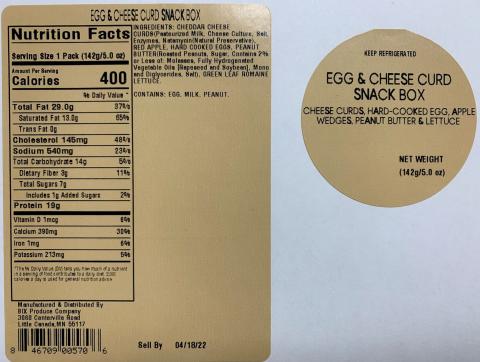
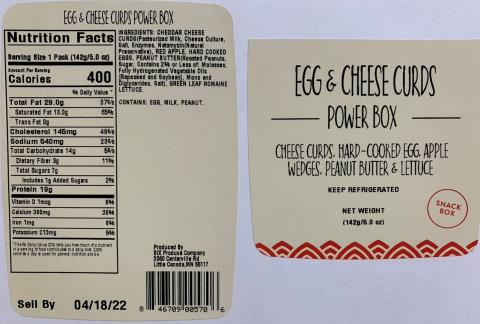
Bix Produce Company of Little Canada, MN, is recalling its 5 ounce packages of “Egg and Cheese Curds Power Box” and “Egg and Cheese Curds snack box” because they have the potential to be contaminated with Salmonella, an organism which can cause serious and sometimes fatal infections in young children, frail or elderly people, and others with weakened immune systems. Healthy persons infected with Salmonella often experience fever, diarrhea (which may be bloody), nausea, vomiting and abdominal pain. In rare circumstances, infection with Salmonella can result in the organism getting into the bloodstream and producing more severe illnesses such as arterial infections (i.e., infected aneurysms), endocarditis and arthritis.
The recalled products have a 7-days shelf life and were distributed regionally in retail settings.
Brand
Product
Pack Size
UPC
Use By Dates Range
Included States
Jack&Olive
Egg and Cheese Curds Power Box
5 oz.
8 46709 00570 6
04/18/2022-05/31/2022
MN, WI, IA, SD, ND
Created Fresh!
Egg and Cheese Curds Snack Box
5 oz.
8 46709 00570 6
04/18/2022-05/31/2022
MN, WI, IA, SD, ND
The product comes in a 5 ounce, clear plastic package marked with a “Sell By” date ranging from 04/18/22 to 05/31/2022 printed on the bottom of the individual packages.
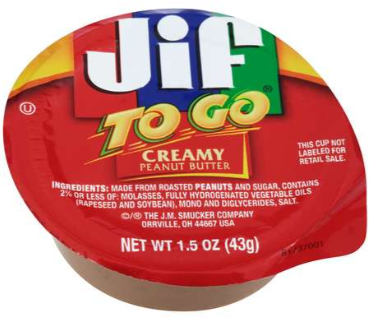
Bix Produce Company initiated this recall because it contains the Jif Creamy Peanut Butter To Go 1.5 oz. cup that has been recalled by JM Smucker Co.
Consumers who have purchased 5 ounce packages of either item are urged to not consume and immediately discard them or return them to the place of purchase for a full refund. Consumers with questions may contact the company at 1-651-478-8000.
The FDA, along with CDC and state and local partners, are investigating a multistate outbreak of Salmonella Senftenberg infections linked to certain Jif brand peanut butter products produced at the J.M. Smucker Company facility in Lexington, Kentucky.
J.M. Smucker Company has voluntarily recalled certain Jif brand peanut butter products that have the lot codes described below. Photo examples are included below.
FDA has posted a list of additional recalls being conducted by companies that have used the recalled Jif peanut butter as an ingredient in the manufacturing of a new product (e.g., chocolate products) or in repackaging the product (e.g., snack cups). This list will be updated as the agency receives notification of new recalls.
As of May 25, 2022, CDC reports that of the 10 people interviewed, 10 (100%) reported eating peanut butter prior to becoming ill. Nine people reported brand information, and all nine (100%) reported eating different varieties of Jif brand peanut butter.
FDA’s investigation is ongoing and more information will be provided as it becomes available.
Recommendation
Consumers, restaurants, and retailers should not eat, sell, or serve any recalled Jif brand peanut butter, including recalled products that contain the recalled Jif peanut butter. Consumers should also avoid feeding recalled peanut butter to pets or other animals, including wild birds.
For Consumers
Follow these steps:
Check if you have Jif peanut butter in your home.
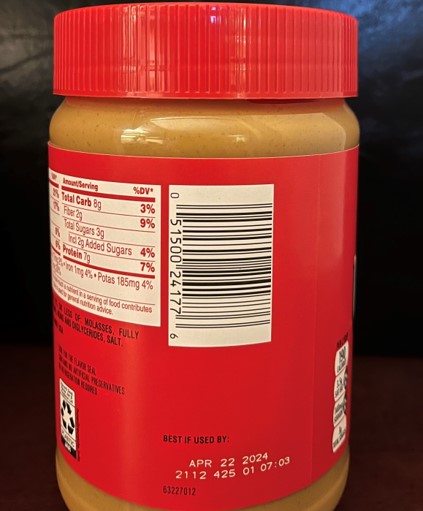
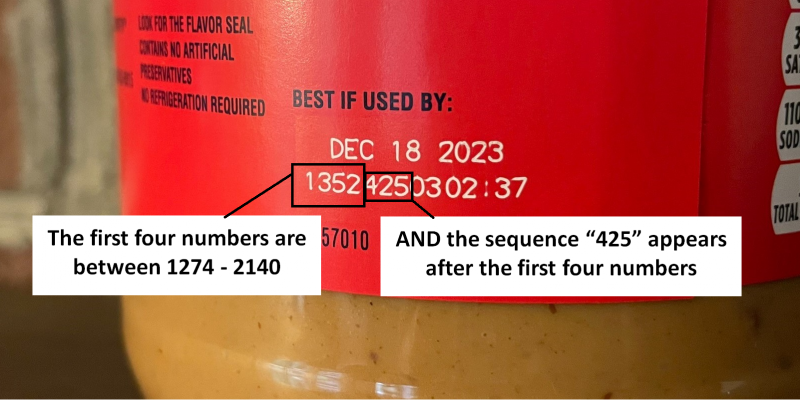
Locate the lot code on the back of the jar, under the Best If Used By Date (the lot code may be next to the Best If Used By Date for cups or squeeze pouches).
In the lot code, if the first four digits are between 1274 and 2140, and if the next three numbers after that are ‘425’, this product has been recalled and you should not consume this product. An example is below.
If you are unsure what to do with your recalled product, you can call or email J.M. Smucker Company for more information:
FDA recommends that if you have used the recalled Jif brand peanut butter that have lot code numbers 1274425 through 2140425 and the first seven digits end with 425, you should wash and sanitize surfaces and utensils that could have touched the peanut butter. If you or someone in your household ate this peanut butter and have symptoms of salmonellosis, please contact your healthcare provider.
For Retailers, Re-packers, and Manufacturers
In addition to the steps above, FDA recommends referring to the firm’s recall press for the UPC codes and other retailer information. Do not sell or serve recalled peanut butter or products containing recalled peanut butter.
Product Images
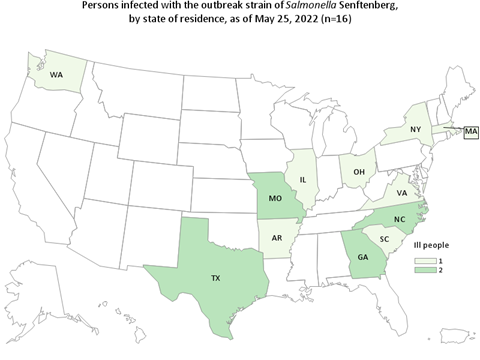
Case Count Map Provided by CDC
Case Counts
Total Illnesses: 16
Hospitalizations: 2
Deaths: 0
Last Illness Onset: May 2, 2022
States with Cases: AR (1), GA (2), IL (1), MA (1), MO (2), OH (1), NC (2), NY (1), SC (1), TX (2), VA (1), WA (1)
Product Distribution: Nationwide and International (see below)
QUEBEC CITY, May 26, 2022 /CNW Telbec/ – The Ministry of Agriculture, Fisheries and Food (MAPAQ), in collaboration with the Food Inspection Division of the City of Montreal and the company Nita Tout Garni , located at 5687 suite B, Avenue du Parc in Montreal, advises the public not to consume the product indicated in the table below, because it has not been packaged in such a way as to ensure its safety.
Product name
Format
Affected batch
Gravlax
Unitary
Units sold until May 26, 2022
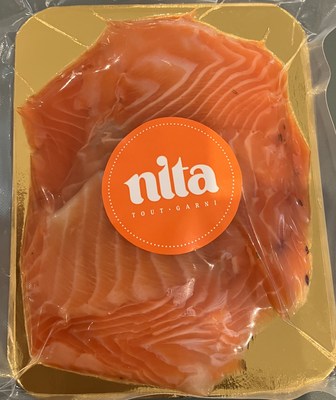
The product that is the subject of this warning was offered for sale until May 26, 2022, and only at the establishment mentioned above. The product was placed on a golden carton covered with transparent plastic wrap and offered refrigerated. Its label bears the mention “Nita Tout Garni”.
The operator is voluntarily recalling the product in question. It has agreed with MAPAQ and the Food Inspection Division of the City of Montreal to issue this warning as a precautionary measure. In addition, people who have this product in their possession are advised not to consume it. They must return it to the establishment where they bought it or throw it away. Even if the affected product shows no signs of tampering or suspicious odors, its consumption may represent a health risk. It should be noted that no case of illness associated with the consumption of this food has been reported to MAPAQ to date.