Category Archives: water microbiology

USA – Florida Vibrio vulnificus tally this year tops 2019

Outbreak News Today

KSWFOODWORLD

Florida state health officials have reported more Vibrio vulnificus cases and deaths than this year than was reported in 2019, according to the latest data.

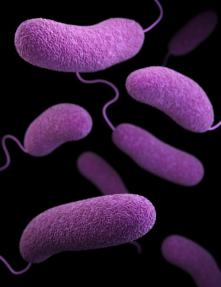
Vibrio vulnificus can cause disease in those who eat contaminated seafood or have an open wound that is exposed to warm seawater containing the bacteria. Ingestion of Vibrio vulnificus can cause vomiting, diarrhea and abdominal pain. Vibrio vulnificus can also cause an infection of the skin when open wounds are exposed to warm seawater; these infections may lead to skin breakdown and ulcers.

Research – Effect of Ploidy on Vibrio parahaemolyticus and Vibrio vulnificus Levels in Cultured Oysters

Journal of Food Protection

Vibrio parahaemolyticus and Vibrio vulnificus are naturally occurring human pathogenic bacteria commonly found in estuarine environments where oysters are cultured. The use of triploid oysters has increased due to their rapid growth rate and because they maintain a high quality throughout the year. Previous work suggested levels of Vibrio spp. may be lower in triploid oysters than diploid oysters. Therefore, this study aimed to determine whether there is a difference in the abundances of V. parahaemolyticus and V. vulnificus between half-sibling diploid and triploid American oysters (Crassostrea virginica). In four trials, 100 individual oysters (either iced or temperature abused) were analyzed for V. parahaemolyticus and V. vulnificus by using direct plating followed by colony hybridization. Mean levels of V. parahaemolyticus in iced and abused diploid oysters were 3.55 and 4.21 log CFU/g, respectively. Mean levels in iced and abused triploid oysters were 3.49 and 4.27 log CFU/g, respectively. Mean levels of V. vulnificus in iced and abused diploid oysters were 3.53 and 4.56 log CFU/g, respectively. Mean levels in iced and abused triploid oysters were 3.54 and 4.55 log CFU/g, respectively. The differences in Vibrio spp. abundances between diploid and triploid oysters was not significant (P > 0.05). However, the differences across treatments were significant (P < 0.05), with the exception of V. parahaemolyticus levels in trial 3 (P = 0.83). Variation between individual oysters was also observed, with 12 of 808 measurements being outside of the 95th percentile. This phenomenon of occasional statistical outliers (“hot” or “cold” oysters) has been previously described and supports the appropriateness of composite sampling to account for inherent animal variability. In summary, the data indicate that abundances of V. parahaemolyticus and V. vulnificus are not dependent on the ploidy of cultured oysters but vary with the type of handling.

HIGHLIGHTS
  • Vibrio spp. abundances in oysters are not dependent on ploidy.
  • Vibrio spp. abundances in oysters are dependent on handling treatment.
  • Identification of occasional “hot” or “cold” oysters supports composite sampling.

USA – Cryptosporidiosis Outbreak Linked to Raw Milk from Maine Farm

Maine Gov

crypto

Maine Center for Disease Control and Prevention (Maine CDC) has identified an outbreak of cryptosporidiosis in individuals who consumed unpasteurized/raw milk from Roux Farm in Shapleigh, Maine, within the last two months. Epidemiologists identified at least four individuals who became ill and tested positive for cryptosporidiosis. Anyone who consumed raw milk (regular or any flavor) from Roux Farm produced before October 18, 2020, may be at elevated risk of cryptosporidiosis. Raw milk from the farm was sold through a variety of stores in the state.

Advisory (PDF)

Iceland – Monitoring of drinking water 2017-2019

MAST

During the monitoring of drinking water 2017-2019, faecal bacteria were detected in water from nine water utilities out of 49. The nine utilities serve over 1% of the population. In one case, there was a serious deviation, as a mistake resulted in contaminated water being let into the distribution system. In other utilities, the pollution was not high.

Matvælastofnun has compiled an overview of monitoring of drinking water in 2017, 2018 and 2019. The overview is based on data from the municipal health inspectorate, which monitors water supplies and covers utilities that serve 500 inhabitants or more. There are 49 utilities and they serve over 95% of the population.

Click to access skyrsla-eftirlit-neysluvatn-2017-2019.pdf

USA – 32 Union College students sickened by diarrheal illness – Giardia

Houston Chronicle

Giardia

At least 32 students at an upstate New York college have been diagnosed with a diarrheal illness commonly linked to contaminated lakes, streams and wells.

The Union College students tested positive for giardiasis, while other students showed symptoms of the intestinal disease, Fran’Cee Brown-McClure, the college’s vice president for student affairs and dean of students, wrote in an email to students Friday. Students who live both on campus and off campus became ill.

The Schenectady school reported the first cases of the illness on Oct. 14. School officials said they are working with the local health department to try to determine the source of the disease, which is caused by the giardia parasite.

RASFF Alert – Coliforms – Natural Mineral Water

European Food Alerts

RASFF

presence of coliforms (7.8 x 10¹ [5.5 x 10¹; 1.1x 10²] /250ml) in natural mineral water from Belarus in Lithuania

New Zealand – E. coli detected in Waitaki

ODT

Private bore owners are being urged to get their water tested regularly, following E.coli being found in the Waitaki District.

The Otago Regional Council’s state of the environment monitoring bores detected elevated levels of E. coli in two locations on the lower Waitaki Plains.

The bore owners were immediately notified alongside the Southern District Health Board and Waitaki District Council.

The regional council said the results were a reminder for anyone using a private bore for drinking water to have it regularly tested and to ensure the bore head was well secured.

Water users should treat water with chlorination, ozonation, boiling, or adequate filtration, or access an alternative water source if they were uncertain about its safety.

E. coli is a subset of faecal bacteria. Any water that contains E. coli above drinking water standards is considered unsuitable to drink without treatment.

Anyone concerned about health risks should contact their GP, or call Healthline on 0800 611 116 for free advice from trained registered nurses.

Canada – N.B. declares outbreak of shellfish bacteria causing gastrointestinal illness – Vibrio parahaemolyticus

Global News CA

Food Illness - Vibrio

Image CDC

New Brunswick health officials have declared an outbreak of vibrio parahaemolyticus, a bacteria found in shellfish that causes gastrointestinal illness in humans.

The province says nine cases of vibrio have been confirmed. The average for New Brunswick is typically only two to three cases a year.

“I am advising all New Brunswickers to ensure that they obtain shellfish and other seafood from a licensed establishment or harvest shellfish from fishing zones which are currently open by Fisheries and Oceans Canada,” said N.B. chief of health Dr. Jennifer Russell in a news release.

Scotland – Drinking Water Quality in Scotland 2019 Private Water Supplies

EXECUTIVE SUMMARY
The Drinking Water Quality Regulator for Scotland (DWQR) ensures that local authorities are meeting their regulatory duties in regard to the quality of private water supplies. DWQR also regulates the quality of water supplied by Scottish Water. The role of DWQR was created by the Water Industry (Scotland) Act 2002 (“the Act”), which gives the Regulator powers to obtain information. This report fulfils the requirement under the Act that the DWQR publishes a report
on the exercise of the Regulator’s functions during the previous year. This report relates to the calendar year 2019 and is for private water supplies. A similar report on the quality of water supplied by Scottish Water was published on Monday 10 August 2020. Private water supplies (PWS) are drinking water supplies that are not the responsibility of Scottish Water but of their owners and users. PWS regulations are enforced by local authorities. The regulations were revised in October 2017, bringing into force The Water Intended for
Human Consumption (Private Supplies) (Scotland) Regulations 2017 (“the 2017 regulations”). These cover large domestic or commercial supplies. Smaller household PWS (referred to as Type B supplies) continue to be governed by The Private Water Supplies (Scotland) Regulations 2006 (“the 2006 regulations”).

Research – Predicting Cholera Risk in Yemen

Earth Observatory

CDC Vibrio

Image CDC

This story is adapted from our recent feature, Of Mosquitoes and Models: Tracking Disease by Satellite.

In 2017, Yemen experienced one of its worst cholera outbreaks on record. Following heavy rains, flooding, and mass movement of the population due to civil unrest, more than one million people were suspected of contracting cholera and at least 2,000 died. A few scientists saw it coming, and they are now working to make sure people are prepared for future cholera outbreaks in Yemen and around the world.

Cholera is a waterborne bacterial infection that can spread quickly through a population. The disease is primarily contracted by consuming water or food contaminated with the cholera bacteria, Vibrio cholerae. It causes uncontrollable diarrhea that, if left untreated, can result in dehydration or death.

A team of NASA-funded researchers has been using satellite and ground-based data to forecast the risk of cholera in Yemen and other countries. The map above shows the forecasted risk of cholera in Yemen from August 10 to September 6, 2020. It was created with the Cholera Prediction Modeling System, which incorporates NASA precipitation data, air temperature data from NASA’s MERRA-2 reanalysis product, and population data. The number of cholera cases could increase in coming weeks, influenced by heavy rains that usually fall in August, though researchers predict the outbreaks should be limited to a few hotspots unless there is a large population displacement.