Category Archives: water microbiology

India – Five instances of food poisoning in Kozhikode in less than a month

The Hindu

Health Department issues advisory on checking quality of drinking water sources. (Cholera)

At least five incidents of suspected food poisoning have occurred in Kozhikode district in less than a month, prompting the Health Department to issue an advisory on checking the quality of drinking water sources.

Fifteen girl students of a private entrance coaching centre at Perumanna were admitted to hospital after they had stomach upset and other symptoms on October 25.

Two-and-a-half-year-old Mohammed Yamin of Narikkuni died on November 13, just a couple of days after he had food at a wedding event. A dozen children and some elders too fell ill.

Hundreds sought medical treatment at Puthoor in Vadakara on November 15 after they had food at another wedding event in the previous days. Those who had idli and sambar from two temples at Mukkom complained of uneasiness, and 22 people sought treatment on November 19.

Fourteen students of a hostel at Pantheerankavu sought treatment at the Government Medical College Hospital, Kozhikode, after they had breakfast on November 20.

Another instance of food poisoning was averted in the nick of time when an alert food safety inspector detected pseudomonas bacteria in eggs scheduled to be distributed at a school at Payyadimeethal near Pantheerankavu on November 10.

Spain – Legionellosis outbreak reported in Montmeló and Montornès del Vallès

Outbreak News Today

Legionella_Plate_01

Health officials in Spain are reporting a legionellosis outbreak in the municipalities of Montmeló and Montornès del Vallès in the Vallès Oriental region.

To date, 26 cases have been detected. The cases have started symptoms between November 5 and 15. And, of the 26 cases, 10 did not require hospital admission, 2 cases required admission but have already been discharged and 14 cases are still hospitalized.

Those affected are 19 men and 7 women between 37 and 92 years old. And all the cases have had exposure in the municipalities of Montmeló or Montornès del Vallès.

Australia – Raw Pacific oysters produced in Coffin Bay, SA – Vibrio parahaemolyticus

FSANZ

​Date published: 19 November 2021

Product information

SA Health has issued an emergency order to recall raw Pacific oysters (Magallana gigas) produced in Coffin Bay, SA, including fresh and frozen products.

The oysters have been available for sale direct from farms, seafood outlets, grocery stores and supermarkets in SA, NSW, ACT, QLD, VIC, NT and WA.

Date markings

All production dates from and including 4 September 2021 up to and including 16 November 2021.

Raw Pacific oyster

Problem

The recall is due to microbial (Vibrio parahaemolyticus) contamination.

Food safety hazard

Food products contaminated with (Vibrio parahaemolyticus) may cause illness if consumed.

Country of origin

Australia

What to do​

Consumers are advised not to eat raw Pacific oysters ​from Coffin Bay, including fresh and frozen products. Any consumers concerned about their health should seek medical advice. Consumers should dispose of the oysters or return the oysters to the place of purchase for a full refund.

For further information please contact:

SA Health
(08) 8226 7100
healthfood@sa.gov.au
 The FSANZ webpage for the incident associated with this recall can be viewed​ ​here.
​​Related links:

Ireland – Councillor hopeful north Kerry boil water notice could be lifted this week – Cryptosporidium

water contamination

Radio Kerry

A Kerry county councillor says it’s hoped a boil water notice affecting 3,500 people for over a month could be lifted later this week.

On October 11th, the HSE issued a boil water notice for people supplied by the Ardfert North/Ballyheigue scheme, following the detection of cryptosporidium.

Irish Water is currently installing a UV system, which is now being commissioned before the matter is referred back to the HSE.

Malaysia – Cholera In Selangor, Careful When Drinking Water, KKM Says

TRP

Food Illness

The Health Ministry (KKM) has given out warnings to the public over the weekend on the dangers of cholera after the Petaling Health District discovered one case.

Selangor State Health Department mentioned that the case was reported on 21 October 2021, involving a 56-year-old patient.

The public is urged to:

  • drink treated or boiled water.
  • practice personal hygiene and always wash their hands.
  • do not eat raw or uncooked food. (sorry sushi lovers)

One is advised to seek immediate medical attention if they’ve experienced diarrhea.

Further investigations have been conducted thoroughly however we have not been able to identify the cause of the infection and no new cases have been received so far. Therefore, in line with the MOH’s recommendation, the Selangor State Health Department would like to emphasize that cholera can spread quickly and can cause death if not treated immediately.

South Australia – Vibrio parahaemolyticus infections linked to eating raw oysters in South Australia

Outbreak News Today

KSWFOODWORLD

Vulnerable South Australians are reminded to avoid eating uncooked oysters after dozens of food-related illnesses linked to the consumption of raw oysters were reported in the past two months.

South Australia (SA Health’s) Acting Director of Food and Controlled Drugs Branch, Joanne Cammans, said 36 cases of Vibrio parahaemolyticus infections linked to eating raw oysters have been notified since September 2021, compared to no cases in 2020 and eight cases in 2019.

Ireland – Upgrade works completed on North Kerry treatment plant under boil water notice

Radio Kerry

Upgrade works have been carried out on a North Kerry treatment plant, which serves an area that’s been under a boil water notice for four weeks.

The notice for the Ardfert North (Ballyheigue) Public Water Supply was put in place on October 11th due to the detection of cryptosporidium in the public water supply.

Irish Water says 3,500 people are impacted by this boil water notice, which remains in place.

Research- Cooccurrence of Five Pathogenic Legionella spp. and Two Free-Living Amoebae Species in a Complete Drinking Water System and Cooling Towers

MDPI

Pathogenic Legionella species grow optimally inside free-living amoebae to concentrations that increase risks to those who are exposed. The aim of this study was to screen a complete drinking water system and cooling towers for the occurrence of Acanthamoeba spp. and Naegleria fowleri and their cooccurrence with Legionella pneumophilaLegionella anisaLegionella micdadeiLegionella bozemanii, and Legionella longbeachae. A total of 42 large-volume water samples, including 12 from the reservoir (water source), 24 from two buildings (influents to the buildings and exposure sites (taps)), and six cooling towers were collected and analyzed using droplet digital PCR (ddPCR). N. fowleri cooccurred with L. micdadei in 76 (32/42) of the water samples. In the building water system, the concentrations of N. fowleri and L. micdadei ranged from 1.5 to 1.6 Log10 gene copies (GC)/100 mL, but the concentrations of species increased in the cooling towers. The data obtained in this study illustrate the ecology of pathogenic Legionella species in taps and cooling towers. Investigating Legionella’s ecology in drinking and industrial waters will hopefully lead to better control of these pathogenic species in drinking water supply systems and cooling towers. View Full-Text

Ireland – Boil water notice issued for thousands in Co Longford – Cryptosporidium

Irish Times

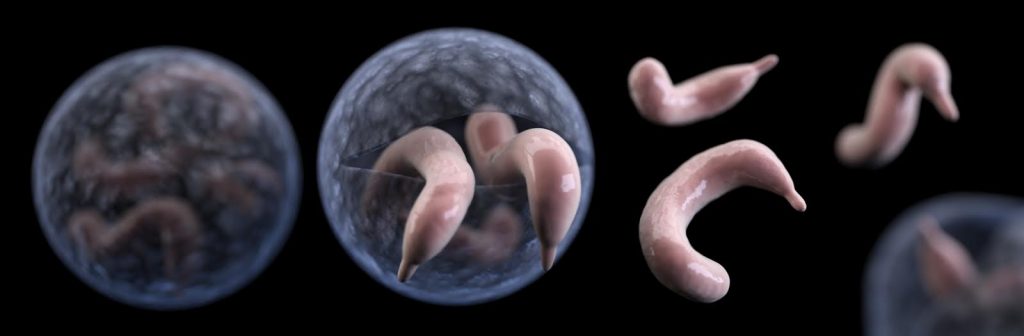
crypt

Almost half of the population of Co Longford is subject to a boil water notice which was issued on Thursday.

It comes after the cryptosporidium barrier at a treatment plant was compromised following a deterioration in the raw water quality of the lake source, Irish Water said.

Following consultation with the HSE, Irish Water and Longford County Council decided to issue a boil water notice for the area supplied by the Longford Central Public Water Supply to protect public health.

The population impacted by this notice is approximately 17,500 people. The areas affected include all customers in Longford Town, Newtown Forbes, Balinalee, part of Edgeworthstown, part of Drumlish, part of Killashee and surrounding areas.

Experts from Irish Water and Longford County Council are assessing the situation with a view to having the notice lifted as quickly as possible. In the meantime, all customers of this supply are advised to boil water before use until further notice.

Ireland – WARNING: Boil Water Notice issued to protect 4,000 people in Carrick-on-Suir – Cryptosporidium

Tipperary Live

Irish Water and Tipperary County Council have issued a Boil Water Notice for households, businesses and other customers supplied by the Carrick-on-Suir (Lingaun) Public Water Supply following the detection of cryptosporidium in the water supply.

The Boil Water Notice, announced this evening, was imposed to protect approximately 4,000 people served by this water supply following advice received from the Health Service Executive and it will .

Vulnerable customers who have concerns can contact our customer care team on 1800 278 278.

For customers who wish to check if their property is on the Boil Water Notice themselves, please go to the following link on the Irish Water website: https://www.water.ie/?map= supply-and-service-updates, enter the property’s Eircode and you will then see if your property is on the Boil Water Notice.

Water must be boiled for:

Drinking;
Drinks made with water;
Preparation of salads and similar foods, which are not cooked prior to eating;
Brushing of teeth;
Making of ice – discard ice cubes in fridges and freezers and filtered water in fridges. Make ice from cooled boiled water.
What actions should be taken:

Use water prepared for drinking when preparing foods that will not be cooked (e.g. washing salads);
Water can be used for personal hygiene, bathing and flushing of toilets but not for brushing teeth or gargling;
Boil water by bringing to a vigorous, rolling boil (e.g. with an automatic kettle) and allow to cool. Cover and store in a refrigerator or cold place. Water from the hot tap is not safe to drink. Domestic water filters will not render water safe to drink;
Caution should be taken when bathing children to ensure that they do not swallow the bathing water;
Prepare infant feeds with water that has been brought to the boil once and cooled. Do not use water that has been re-boiled several times. If bottled water is used for the preparation of infant feeds it should be boiled once and cooled. If you are using bottled water for preparing baby food, be aware that some natural mineral water may have high sodium content. The legal limit for sodium in drinking water is 200mg per litre. Check the label on the bottled water to make sure the sodium or `Na’ is not greater than 200mg per litre. If it is, then it is advisable to use a different type of bottled water. If no other water is available, then use this water for as short a time as possible. It is important to keep babies hydrated.
Great care should be taken with boiled water to avoid burns and scalds as accidents can easily happen, especially with children.

Updates will be available on our Water Supply Updates section on water.ie including a map of the affected area, on Twitter @IWCare and via our customer care helpline, open 24/7 on 1800 278 278. Customers are advised to set their location on water.ie to view updates specific to their water supply. Further information in relation to the boil water notice is available from https://www.water.ie/water- supply/water-quality/boil- water-notice/

Irish Water continues to work at this time with our Local Authority partners, contractors and others to safeguard the health and well-being of both staff and the public and to ensure the continuity of critical drinking water and wastewater services. Irish Water would like to remind people to follow the HSE COVID-19 advice and ensure frequent handwashing.