Category Archives: Vibrio

Canada – B.C. shellfish warnings issued by the Centre of Disease Control – Vibrio parahaemolyticus

City News

Marlith - Domic Acid ASP Toxin KSWFoodworld

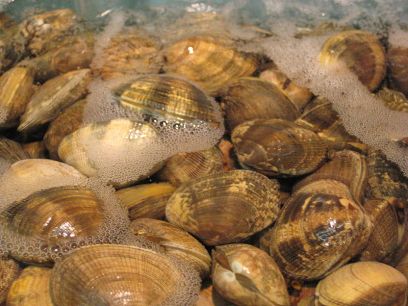
Before digging for clams or harvesting mussels along province’s coast, the BC Centre for Disease Control is warning about a spike in illness associated with shellfish consumption in recent days.

Five people have been sick with V. parahaemolyticus (vibriosis) in the last two weeks, according to the BCCDC.

Symptoms of the foodborne illness associated with shellfish consumption include nausea, diarrhea, and vomiting.

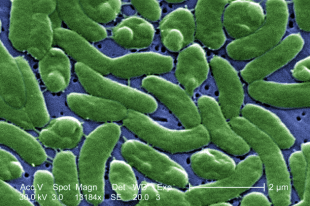
The vibrio bacteria is naturally occurring in the ocean, and grows in molluscan shellfish such as clams, oysters, and mussels. Small amounts are not uncommon, but with warmer water, the bacteria can multiply rapidly. Experts say the recent heatwave created a perfect storm for more infections related to those eating shellfish.

The largest outbreak of vibriosis in B.C. history occurred in 2015, when 62 persons became ill. There are concerns if people don’t follow the latest warnings, this year could also be record-breaking.

Sweden – Sweden reports 13 Vibrio infections this July

Outbreak News Today

Vibrio_vulnificus_01

The Swedish Public Health Agency, or Folkhalsomyndigheten, reported today 13 cases of the more serious form of vibrio infection, all in July.

The cases have been reported from the coastal areas in Götaland and Svealand and, as in previous years, mostly men have fallen ill and the majority of cases are older than 65 years.

USA – Oysters recalled amid Washington’s largest ever Vibrio outbreak

Food Safety News

KSWFOODWORLD

Washington state has initiated a recall of live oysters harvested from the Samish Bay growing area in the Puget Sound area. The recall is in response to multiple cases of Vibrio parahaemolyticus illnesses associated with oysters harvested in the area. 

The outbreak has already surpassed the highest number of cases ever recorded by the state for the month of July, according to the state’s Health Department. Distribution details are incomplete but it is known that some of the oysters have gone to Asian and Canadian buyers as well as customers in the United States.

A recent heat wave, coupled with very low tides at mid-day, are likely to blame for the increased rate of illness, which is associated with eating raw or undercooked shellfish, especially oysters that are contaminated with Vibrio. 

The extremely low tides are part of an 18.6-year tide cycle, which means there will be more to come for a period of time during the cycle.

USA – High heat, low tide likely triggering spike in shellfish-linked infections – Vibrio

DOH WA

Food Illness

News Release

For immediate release: July 16, 2021   (21-170)Spanish

Media contact: Teresa McCallion, Communications, 360-701-7991

High heat, low tide likely triggering spike in shellfish-linked infections

OLYMPIA – An outbreak of vibriosis in Washington has already surpassed the highest number of cases ever recorded by the state for the month of July. Recent high temperatures and low tides in Washington State are likely to blame for the increased rate of illness, which is associated with eating raw or undercooked shellfish, especially oysters that are contaminated with Vibrio.

Found naturally in the environment, Vibrio bacteria thrive in warm temperatures. When midday low tides coincide with warm weather, Vibrio bacteria can grow quickly, increasing risk of illness among people who eat raw or undercooked oysters.

Vibriosis symptoms include diarrhea, abdominal cramps, nausea, vomiting, headache, fever, and chills. The illness usually occurs 4 hours to 4 days after eating contaminated shellfish, with mild or moderate symptoms that typically run its course in 2 to 3 days. Most people get sick within one day of consuming raw or undercooked shellfish.

People with weakened immune systems or liver disease are at higher risk for Vibrio infections. These people, and anyone who wants to avoid illness, should eat only thoroughly cooked shellfish.

“Another effect of the recent heat wave is the perfect storm of conditions for Vibrio infections. It’s important that when enjoying shellfish, we follow simple steps to stay healthy,” said Todd Phillips, Director of the Office of Environmental Health and Safety.

The Three Cs can prevent illness from Vibrio.

  • Cook at 145° F for 15 seconds to destroy Vibrio bacteria.
  • Check the DOH Shellfish Safety Map before heading to the beach to harvest shellfish recreationally. Shellfish gathered from open and approved areas should be harvested as the tide goes out.
  • Chill quickly. Bring a cooler with ice with you when harvesting shellfish recreationally or purchasing for a store or seafood stand (or have them packed on ice). Oysters should be put on ice or refrigerated as soon as possible.

When preparing shellfish, people should wash hands frequently and not return cooked shellfish to the plate or cutting board where raw shellfish was prepared.

Visit the DOH Vibriosis web page for more information.

The DOH website is your source for a healthy dose of informationFind us on Facebook and follow us on Twitter. Sign up for the DOH blog, Public Health Connection.

Nigeria – Cholera Outbreak

HPS

20 July 2021

Article: 55/2905

The Nigeria Centre for Disease Control reports continued transmission of cholera in the country, with 14,343-suspected cases, including 325 deaths, reported by 16 Nigerian states from 1 January through to 27 June 2021.

Travellers to the region are advised to only consume safe food and water. Food and drink to be wary of include untreated water, ice, shellfish, salads, unwashed fruit and vegetables. Travellers are also advised that good personal hygiene is essential, particularly frequent hand washing.

A vaccine is available to protect against cholera, but as the risk to most travellers is very low, it is only recommended for:

  • volunteers, aid workers and medical personnel in disaster relief situations where cholera outbreaks are likely
  • those travelling to work in slums or refugee camps, areas affected by natural disasters, or countries experiencing cholera outbreaks and where care with food and water is difficult or not possible

Further information relating to cholera can be found on the TRAVAX (for health professionals) and fitfortravel (for the general public) websites.

Click to access 1d3271f656ea9bd07f3c9885a0b5a26c.pdf

India – Cholera outbreak: 16 of 24 water samples found non-potable in Panchkula

The Tribune

Of the 24 water samples collected from Abheypur and Budhanpur villages, 16 were found to have coliform bacteria, meaning “non-potable”.

The samples were analysed at a government laboratory in Ramgarh. Four other samples collected from Sector 16 (one sample), Rajiv Colony (two) and Indira Colony (one) were found to be fit for drinking. So far, 55 samples have been collected and sent to the Ramgarh laboratory for analysis.

Of the 55 water samples, the report of 28 (16 found non-potable and 12 potable) have been received, while that of 27 is still awaited. Of the 35 stool samples, 23 have been found positive for vibrio cholera. Meanwhile, the number of patients infected with cholera reached 440 today. As many as 72 (30 adults and 42 children) are still under treatment at the Civil Hospital in Sector 6.

Research – Sachet water consumption as a risk factor for cholera in urban settings: Findings from a case control study in Kinshasa, Democratic Republic of the Congo during the 2017–2018 outbreak

PLOS One

Food Illness

Cholera is a diarrheal disease caused by ingestion of the Vibrio cholerae bacterium. Outbreaks in urban areas are becoming increasingly frequent in Sub-Saharan Africa. Risk factors for cholera have been studied in rural settings but not sufficiently in urban areas. Understanding context-specific risk factors is key for successful outbreak response. During a cholera outbreak in Kinshasa, the Democratic Republic of the Congo we were able to identify a previously unknown behavioural risk factor of particular relevance in urban settings–the consumption of drinking water from plastic sachets. Water sachets are sold on the streets of all major cities in Sub-Saharan Africa. It requires biting off an edge and sucking out the water, and we think that external contamination of these sachets was an important transmission route in the Kinshasa outbreak. Water sachets are predominantly consumed by socio-economically disadvantaged groups who lack piped water supply in their homes and have poor access to sanitary infrastructure. This makes our findings particularly relevant because these are the very populations who are at increased risk of getting and transmitting cholera. Health messaging and response measures should include consumption of water sachets as a potential risk factor during future cholera outbreaks in urban low-resource settings.

USA – Florida reports four Vibrio deaths year-to-date

Outbreak News Today

Food Illness

Through June 18, Florida state health officials have reported ten Vibrio vulnificus infections, including four deaths, according to the latest data update.

Cases were reported in Escambia (2), Lee (2), Santa Rosa (2), Hernando, Hillsborough, Manatee and Polk counties and death were recorded in Escambia, Lee, Manatee and Polk counties.

Last year, the Florida Department of Health recorded 36 Vibrio vulnificus cases and seven deaths.

Vibrio vulnificus can cause disease in those who eat contaminated seafood or have an open wound that is exposed to warm seawater containing the bacteria. Ingestion of Vibrio vulnificus can cause vomiting, diarrhea and abdominal pain. Vibrio vulnificus can also cause an infection of the skin when open wounds are exposed to warm seawater; these infections may lead to skin breakdown and ulcers.

RASSF Alert – Vibrio parahaemolyticus -Frozen Whole Giant Tiger Shrimps

RASFF

Vibrio parahaemolyticus in frozen whole giant tiger shrimps (Penaeus monodon) from Bangladesh in France.

Czech Republic – CAFIA warns against shrimps which can cause poisoning – Vibrio parahaemolyiticus

SZPI

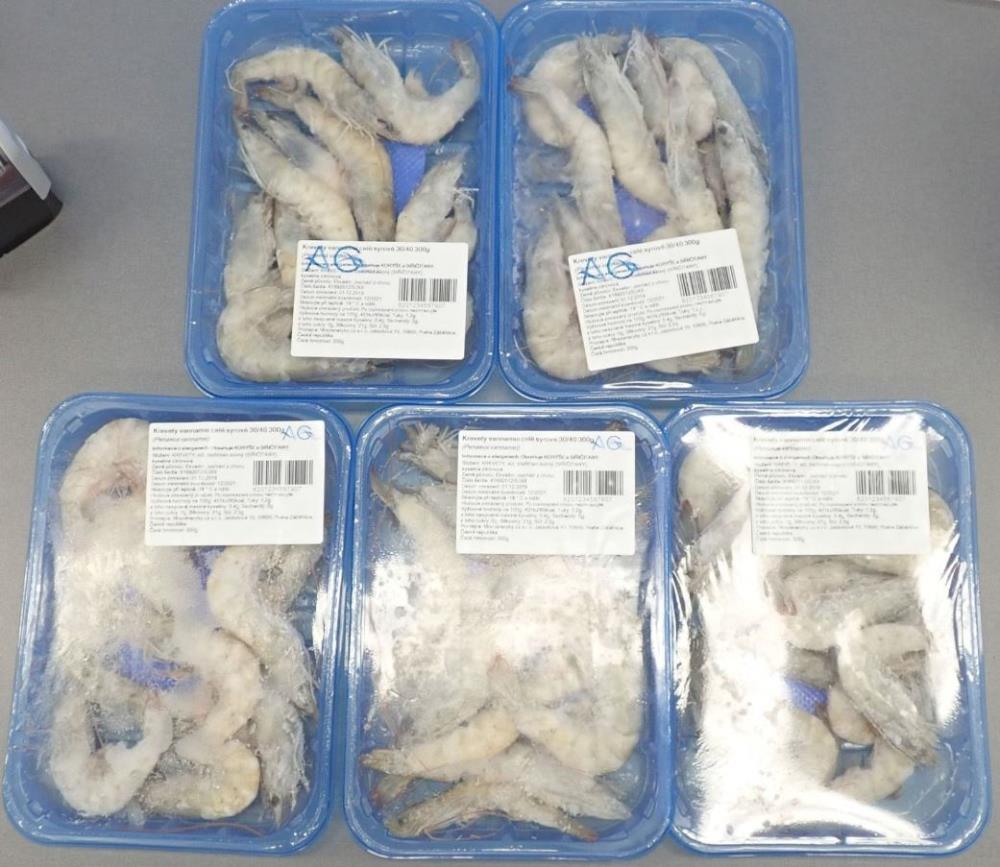
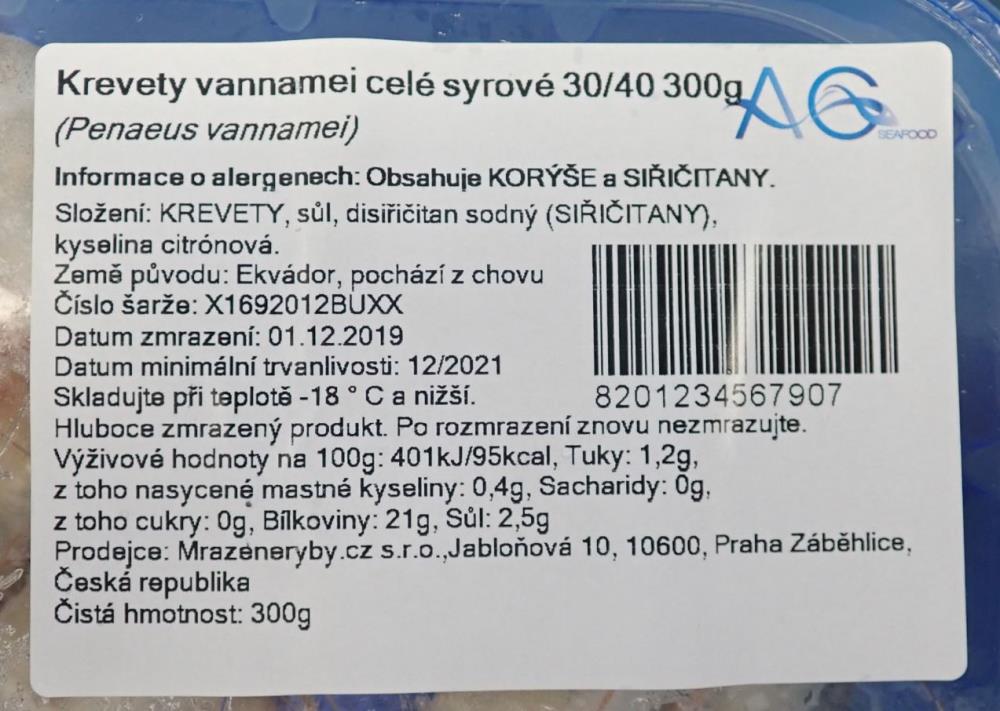
The Czech Agriculture and Food Inspection Authority (CAFIA) warns consumers against consumption of foodstuff Krevety vannamei celé syrové 30/40 (Shrimps – whole and raw), deeply frozen product, packaged à 300 g, lot number: X1692012BUXX, best before date by: 12/2021, country of origin: Ecuador, seller: mrazeneryby.cz s.r.o., Jabloňová 10, 10600, Praha Záběhlice, CR.

Laboratory analysis confirmed presence of bacteria Vibrio paraheamolyticus in the foodstuff in question. This bacteria may cause poisoning manifesting itself by very serious digestive complications. With regard to the mentioned facts, the foodstuff is unsuitable for human consumption and the inspectors ordered immediate withdrawal from the retail network.

The inspectors took the sample at the premises of company mrazeneryby.cz s.r.o., Breitcetlova 6, 198 00 Praha 14 – Černý Most. As regards this shop, the inspectors had already detected sale of other lot of frozen shrimps with expired use by date, which was the reason why that foodstuff had been banned on the spot.

From the reason of the detected violation of legislation, CAFIA will initiate an administrative procedure on imposition of a fine with the operator of the shop.

CAFIA strongly recommends all consumers who may have the food lot in question at home that they do not eat it.

Article by: Mgr. Pavel Kopřiva – CAFIA Spokesperson, phone:+420 542 426 633 

1st June 2021

1 shrimp_2.jpg
2 shrimp_1.jpg