Category Archives: Uncategorized

Ireland – Listeriosis in Ireland, 2018

HPSC

Key Facts
 Twenty-two listeriosis cases were notified in 2018, the highest number since
the disease became notifiable in 2004
 All cases had recognised risk factors for listeriosis, with largest increase
occurring among the elderly
 No clusters of listeriosis were identified
 No source was confirmed for any individual case
 Referral of isolates for typing at NSSLRL enables detection of clusters and
monitoring of trends in the strains that cause listeriosis in Ireland

Research – Stainless Steel Sinks & Taps Linked to Legionnaires’ Disease

Legionella Control

CDC legionella

Image CDC

Recent research looking at the growth of Legionella bacteria on stainless steel sinks and taps has shown that under certain conditions, the use of this popular metal can increase the health risks associated with the potentially life-threatening Legionnaires’ disease.

Stainless steel sinks are a popular choice in kitchens throughout the UK… however, research has indicated it may not be the wisest choice when considering the associated risks presented by the potentially deadly Legionella bacteria.

The same applies to stainless steel taps – also a popular choice for many understandable reasons.

Ireland – Giardiasis in Ireland, 2018

HPSC

Key Facts
 Reported incidence of giardiasis in Ireland in 2018 is 5.7 per 100,000, similar to the
reported incidence at EU level
 Increase in recent yearsbelieved to be largely due to recent changes in laboratory
practice
 The ratio to male to female cases is 1.4:1
 More than two thirds of cases were reported to be acquired in Ireland, a change to our
historical understanding of giardiasis as a travel-acquired infection
 It is likely there is still under-ascertainment of giardiasis cases in several HSE-areas.
 Much remains to be done in Ireland and across Europe to better understand the
epidemiology and determinants of this disease


USA – Another Manhattan Legionnaires Disease Outbreak?

Outbreak News Today

CDC legionella

Image CDC


The New York City Health Department is testing the water at Manhattan Plaza, 400 West 43rd Street, after two building residents were diagnosed with Legionnaires’ disease.  According Department of Health Commissioner Barbot, “The New York City Health Department is working with building management to test the water in your building because two tenants have been reported sick with Legionnaires’ disease within the past 12 months.”

People can contract Legionnaires’ disease by breathing in water vapor or aspirating water that has been contaminated with legionella bacteria.

USA – Salmonella Braenderup Infections Associated with the Green Mill Hennepin County– April 2019

Food Poison Journal

On April 19, 2019, the Minnesota Department of Health (MDH) Public Health Laboratory (PHL) determined that two clinical Salmonella Braenderup isolates submitted through routine surveillance had indistinguishable pulsed-field gel electrophoresis (PFGE) patterns (Minnesota designation BR134). Initial interviews with these cases revealed that both had eaten food from the Green Mill in Bloomington in the week before their illness onset. City of Bloomington Environmental Health Division (CBEH) was notified, and an investigation was initiated.

USA – Red Robin in Westminster Colorado link in E. coli O157 Outbreak

Food Poison Journal

Three individuals, including one adult and two children, tested positive for the bacteria E. coli O157:H7 with all persons having reported eating at the Red Robin restaurant located at 799 W. 146th Ave in Westminster, Colorado. Tri-County Health Department inspected the restaurant on July 9, 2019, after receiving information about the outbreak from the Colorado Department of Public Health and Environment. Two of the three individuals infected were hospitalized, and the investigation is ongoing.

USA – San Diego County Fair E. coli Outbreak Has Now Sickened 10

Food Poisoning Bulletin

The E. coli outbreak at the San Diego County Fair has now sickened 10 people, according to the San Diego Health & Human Services Agency. There is one more probable case that has not yet been confirmed. Three people have been hospitalized, and one 2-year-old child has died.

Officials have still not found the source of the pathogen. All of the children who are sick visited the animal areas, petting zoo, or had other animal contact at the fair. County Environmental health re-inspected food facilities that were visited by the children and found no link to the cases.

Unfortunately, E. coli outbreaks linked to animal attractions at fairs, petting zoos, and farm tourist attractions are nothing new. Almost every year children are sickened after visiting these venues

USA – Roadhouse 100 Restaurant linked to Hepatitis A problem

Food Poison Journal

According to press reports an employee who handles food at the Roadhouse 100 restaurant on Missouri Highway 100 in the unincorporated community of Gray Summit was diagnosed with hepatitis A, officials with the Missouri Department of Health and Senior Services said Tuesday. Anyone who ate at Roadhouse 100 between June 23 and July 5 is advised to receive the hepatitis A vaccination within 14 days to prevent illness.

The incident is being investigated by the Franklin County Health Department.

Ireland- Campylobacter Incidence Data

HPSC

Campylobacter 2018

USA – Outbreak of E. coli Infections Linked to Flour – Outbreak is Over.

CDC

Recalls and Advice to Consumers, Restaurants, and Retailers
Illustration of a clipboard with check marks on it.
At A Glance


Photo of flour.

Several brands and types of flour were recalled because they may be contaminated with E. coli. Consumers should not use recalled products.

Consumers should not use any of the recalled flour. Throw it out.

  • If you stored flour in another container without the packaging and don’t remember the brand or “use by” date, throw it away.
  • Thoroughly wash the container before using it again.

Eating raw dough can make you sick.

  • Any flour or raw eggs used to make dough or batter might be contaminated with harmful germs.
  • Bake or cook food made with raw dough or batter before eating it. Follow the recipe or instructions on the package. Do not use recalled flour in cooking or baking.
  • Do not taste raw dough or batter. Even tasting a small amount could make you sick.

Clean up thoroughly after baking.

  • Wash any bowls, utensils, and other surfaces that were used when baking with warm water and soap.
  • Wash your hands with water and soap before and after baking.

Contact your healthcare provider if you think you may have become ill from eating raw dough.

Restaurants and other retailers should not use, sell, or serve any of the recalled flour.

  • If you stored flour in another container without the packaging and don’t remember the brand or “use by” date, throw it away.
  • Restaurants and retailers should thoroughly wash flour storage containers before using them again.

Restaurants and other retailers should always be safe with raw dough.

  • Do not give customers raw dough to play with or eat. It is not safe to eat or play with raw dough, whether made from recalled flour or any other flour.
  • Bake or cook food made with raw dough or batter before serving or selling it. Follow the recipe or instructions on the package. Do not use recalled flour in cooking or baking.
  • As of July 11, 2019, this outbreak appears to be over.
  • A total of 21 people infected with the outbreak strain of E. coli O26 were reported from 9 states.
    • Illnesses started on dates ranging from December 11, 2018, to May 21, 2019.
    • Three hospitalizations and no deaths were reported.
  • Epidemiologic and laboratory evidence, supported by product distribution records, indicated flour was the likely source of this outbreak.
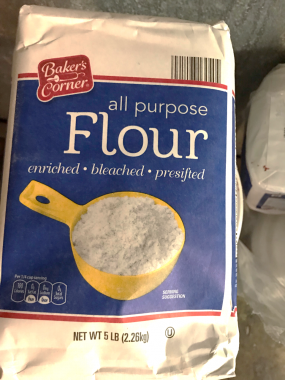
  • Several products were recalled because they may be contaminated with E. coli. Those products include 5-lb. bags of Baker’s Corner All Purpose Flour sold at ALDI, some 5-lb. bags of King Arthur Unbleached All-Purpose Flour, certain 5-lb. bags of Pillsbury Best Bread Flour, and several brands of cookie and brownie mix produced by Brand Castle. For more information about these recalls, visit the FDA websiteexternal icon.