Category Archives: Uncategorized

USA – Outbreak Investigation of E. coli Linked to Ground Bison from Northfork Bison Distributions, July 2019 – E.coli O121 – E.coli O103

FDA

July 16, 2019

The U.S. Food and Drug Administration (FDA), along with the Centers for Disease Control and Prevention (CDC), state and local partners in the U.S., and with the support of the Canadian Food Inspection Agency (CFIA), are investigating a multistate outbreak of E. coli O121 and E. coli O103 illnesses likely linked to ground bison supplied by Northfork Bison Distributions Inc. of Saint-Leonard, Québec, Canada.

The FDA and CDC analyzed traceback and epidemiological information to determine that ground bison supplied by Northfork Bison Distributions Inc. is the likely cause of the illnesses.

FDA regulates bison meat because the authority is not assigned specifically to the United States Department of Agriculture’s (USDA) Food Safety and Inspection Service (FSIS) in the Federal Meat Inspection Act (FMIA).

Recommendation

Buffalo Burger Canadian Bison Meat

Distributors, retailers and restaurants should not distribute, use or serve ground bison (including bison burgers) recalled by Northfork Bison Distributions Inc.

As of July 16, 2019, Northfork Bison Distributions Inc. is voluntarily recalling its ground bison, referred to as Bison Ground, and its ground bison patties, referred to as Bison Burgers and/or Buffalo Burgers, produced between February 22, 2019, and April 30, 2019.

Consumers should not eat products prepared using recalled ground bison (including bison burgers) sold under the Northfork Bison label including Bison Burgers sold to retailers in 4 x 4-ounce packages with expiration dates through October 8, 2020.

Northfork Bison Distributions Inc. has been quick to initiate a voluntary recall and has been forthcoming with information to aid in the investigation. The investigation is ongoing and updates will be provided when available.

USA – Another State with Cyclospora?

Food Poison Journal Cyclospora_LifeCycle201

Northern Virginia Area Investigating an Increase in Intestinal Illness Associated with Cyclospora

Health Districts in the Region Seeking the Cause of Cyclosporiasis Increase

The health districts in northern Virginia are notifying the public that there has been a significant increase in the number of reported cyclosporiasis cases since mid-June 2019. To date there are 15 cyclosporiasis cases reported in the Northern Region of Virginia, up from eight at this time last year. Additionally, more than 40 people from two large businesses in the area have reported gastrointestinal illness, and are under investigation for suspected cyclosporiasis. A food or water source of this outbreak has not yet been identified, and the investigation is ongoing.

USA – Growers Express Expands Voluntary Recall of Select Fresh Vegetable Products Due to Potential Contamination of Listeria monocytogenes

FSA

Company Announcement

Growers Express takes issues of food safety seriously and in an abundance of caution and in the interest of protecting consumers is expanding the list of select fresh vegetable products affected by a voluntary recall that was issued on July 1, 2019. After further testing of an additional product lot from the suspected source of the recall, a single retail sample was found to be positive for Listeria monocytogenes. The company has expanded the list of recalled products to include certain specific fresh Brussels sprouts, fresh cauliflower florets and fresh green beans products with the “best by” or “pack dates” identified in the link above.

The products originated from a Growers Express production facility in Biddeford, Maine and were distributed to the states of Massachusetts and Maine. Growers Express is no longer sourcing vegetables from the suspected cause of the contamination. There are no reported illnesses to date.

USA – Pita Pal Foods, LP Recalls Various Hummus and Dips Due to Possible Health Risk – Listeria moocyotgenes

FSA

Company Announcement

Pita Pal Foods, LP of Houston, TX has issued a voluntary recall of certain hummus products made between May 30, 2019 and June 25, 2019, due to concerns over Listeria monocytogenes, which was identified at the manufacturing facility (not in finished product) during an FDA inspection.

Listeria monocytogenes is an organism that can cause serious and sometimes fatal infections in young children, frail or elderly people, and others with weakened immune systems. Healthy individuals may suffer only short-term symptoms such as high fever, severe headaches, stiffness, nausea, abdominal pain and diarrhea. Listeria infection can cause miscarriages and stillbirths among pregnant women. No illnesses have been reported to date for these products. The company is issuing this recall out of an abundance of caution.

The products have been distributed nationwide and to United Arab Emirates. Consumers who have purchased products listed below with these use by dates are urged to return them to the place of purchase for a full refund. Consumers with questions may contact the company at 832-803-9295 or email products@pitapal.com.

USA – Outbreak Investigation of Salmonella Infantis Linked to Del Monte Vegetable Trays, Spring 2019

FDA

July 12, 2019

The Food and Drug Administration (FDA) and state partners investigated an outbreak of Salmonella Infantis with cases reported in Wisconsin and Minnesota.

The FDA inspected the Del Monte facility that produced vegetable trays that the Wisconsin Department of Health Services linked to an outbreak of salmonellosis. The facility was in Kankakee, Illinois. The FDA also investigated distribution and supplier information for produce used in the vegetable trays. These investigation activities did not identify a single source or potential point of contamination for this outbreak.

Recommendation

It is not likely that the trays the Wisconsin Department of Health Services warned against eating on May 21are still on the market or still in people’s homes.

USA – Cyclospora at Italian American Community Center, Union College and Prime Life Restaurant

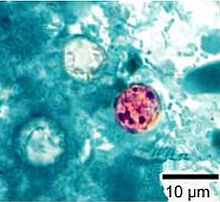
Food Poison Journal 220px-Cyclospora_cayetanensis_stained

The New York State Department of Health, working collaboratively with the Albany County Department of Health, Montgomery County Public Health, Saratoga County Public Health and Schenectady County Public Health Services, is investigating reports of multiple cases of Cyclosporiasis.

USA – Florida reports 10 Vibrio vulnificus cases year-to-date

Outbreak News Today

CDC Vibrio

Image CDC


Florida state health officials have reported 10 confirmed Vibrio vulnificus cases through July 12, according to the latest data.

Cases have been confirmed in the following counties: Broward, Charlotte, Hillsborough, Manatee, Osceola, Palm Beach, Pasco and Pinellas (3).

No deaths have been reported.

In 2018, health officials saw 42 confirmed cases and nine fatalities.

People can get infected with Vibrio vulnificus when they eat raw shellfish, particularly oysters. The bacterium is frequently isolated from oysters and other shellfish in warm coastal waters during the summer months. Since it is naturally found in warm marine waters, people with open wounds can be exposed to Vibrio vulnificus through direct contact with seawater. There is no evidence of person-to-person transmission of Vibrio vulnificus.

Vibrio vulnificus can cause disease in those who eat contaminated seafood or have an open wound that is exposed to warm seawater containing the bacteria. Ingestion of Vibrio vulnificus can cause vomiting, diarrhea and abdominal pain. Vibrio vulnificus can also cause an infection of the skin when open wounds are exposed to warm seawater; these infections may lead to skin breakdown and ulcers.

Iceland – E. coli O26 cluster rises to 17 cases, Linked to Efstidalur II farm

Outbreak News Today

In a follow-up on a recent report, Iceland health officials reported an additional E. coli infection in a one and a half year old child Friday, bringing the total cases in the cluster to 17.

A cluster of infections due to verotoxin producing Enterohemorrhagic Escherichia coli (EHEC) O26:H11 has been linked to the tourist attraction Efstidalur II, a farm and restaurant near Laugarvatn, about 55 miles from Reykjavik in the south of Iceland.

Ireland – Recall of Andromi Toba de Casa meat product due to the Presence of Salmonella

FSAI

Summary
Category 1: For Action
Alert Notification: 2019.29
Product: Andromi Toba de Casa
Batch Code: Lot 17, variety of weights (~500g) Use By Date: 04/08/2019
Country Of Origin: Romania

Message:

Recall of Andromi Toba de Casa 500g (use by date 04/09/2019) due to the presence of Salmonella. This product is sold in Polonez stores throughout Ireland. Point-of-sale recall notices will be displayed in stores where the products are sold.

Nature Of Danger:

People infected with Salmonella typically develop symptoms between 12 and 36 hours after infection, but this can range between 6 and 72 hours.  The most common symptom is diarrhoea, which can sometimes be bloody.  Other symptoms may include fever, headache and abdominal cramps.  The illness usually lasts 4 to 7 days. Diarrhoea can occasionally be severe enough to require hospital admission. The elderly, infants, and those with impaired immune systems are more likely to have a severe illness. 

Action Required:

Manufacturers, wholesalers, distributors, caterers & retailers:

Businesses that have sold the implicated batch directly to consumers must display a point-of-sale recall notice

Consumers:

Consumers are advised not to eat the implicated batch.  If you have eaten the implicated batch and feel unwell, please contact your physician

Toba de Casa Polonez Salmonella

Netherlands – Disease burden of food-related pathogens in the Netherlands, 2018

RIVM

Disease burden of food-related pathogens in the Netherlands,
2018
The Ministry of VWS has requested RIVM to present an annual update on
the number of illnesses, disease burden and cost-of-illness caused by 14
enteric pathogens. These pathogens can be transmitted by food, the
environment, animals and humans. The disease burden is expressed in
DALYs (Disability Adjusted Life Years), a metric integrating morbidity
and mortality into one unit. Furthermore, the cost-of-illness (COI)
related to the 14 food-related pathogens was estimated and expressed
in euros. The COI estimate includes healthcare costs, the costs for the
patient and / or his family, such as travel expenses, as well as costs in
other sectors, for example due to productivity losses. The total disease
burden caused by the 14 pathogens in 2018 was similar to 2017 (both
11,000 DALYs). The share of foodborne transmission in this estimated
burden was comparable with earlier years, mounting to 4,300 DALYs in
2018 (2017: 4,200 DALYs). The total COI caused by the 14 pathogens
increased slightly from 397 M€ in 2017 to 426 M€ in 2018. The foodrelated COI was 171 M€ in 2018, which is slightly higher than in 2017
(i.e. 163 M€). The differences in DALYs and COI between 2017 and 2018
are largely due to fluctuations in the number of infections that occur per
pathogen, the burden of disease they cause and the varying costs per
infection.
The research presented in this report results in more insight in the
number of incident cases of foodborne diseases and the associated
disease burden and costs-of-illness. It enables researchers and policymakers to monitor trends in time for these 14 pathogens.