Category Archives: Uncategorized

Research – Removal of Salmonella enterica serovar Typhimurium and Cronobacter sakazakii biofilms from food contact surfaces through enzymatic catalysis

Wiley Online

Bacterial biofilms are highly difficult to control, hence significant economic resources have been allocated to develop strategies to eradicate them. This study evaluated the effect of an enzymatic treatment to be used as a cleaning product to control the presence of biofilms. Two different materials used in the food industry, polystyrene and stainless steel, were tested using Salmonella Typhimuirum and Cronobacter sakazakii. Biofilm formation was carried out by inoculating the surfaces with a standardized concentration of 4 log (CFU cm−2) and incubated for 48 hr with renewal of nutrients. The biofilm formation and subsequent enzymatic treatment were quantified using fluorescence microscopy and the conventional culture method. The enzymatic treatment showed significant reductions of 2–3 log (CFU cm−2) in biofilm cells, which was attributed to the degradation of the extracellular matrix and the further detachment of both microorganisms. The maximum biofilm detachment obtained with the preventive formula was 46.67%; however, this percentage could be increased by applying an aggressive treatment or by adding a subsequent disinfection step that would eliminate adhered microbial cells. Further, the enzymatic cleaning treatment could be exploited as a potent technology to control bacterial adherence and biofilm formation in the food industry.

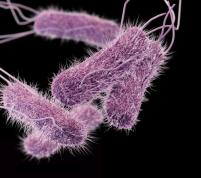
Research – Shigella Bacteremia, Georgia, USA, 2002–2012

CDC

Abstract

Shigella commonly causes gastroenteritis but rarely spreads to the blood. During 2002–2012, we identified 11,262 Shigella infections through population-based active surveillance in Georgia; 72 (0.64%) were isolated from blood. Bacteremia was associated with age >18 years, black race, and S. flexneri. More than half of patients with bacteremia were HIV-infected.

Research – Effects of edible coating containing Williopsis saturnus var. saturnus on fungal growth and aflatoxin production by Aspergillus flavus in peanuts

Wiley Online

Abstract

Production of aflatoxin by Aspergillus flavus in peanuts is both a health hazard and major problem. This study investigated the ability of a whey protein concentrate (WPC)‐based edible coating containing Williopsis saturnus var. saturnus to prevent growth of Aflavus and aflatoxin production in peanuts. WPC with/without Wsaturnus (7 log colony‐forming unit [CFU]/g) or Wsaturnus alone was sprayed on peanuts inoculated with Aflavus (3 log CFU/g) and stored for 84 days at 25°C. Application of coating with Wsaturnus reduced both growth of Aflavus and aflatoxin level by 82 and 69.5% compared with the control, respectively. Thiobarbituric acid values were around 60% lower in peanuts coated with WPC compared with the control. Sensory and chemical properties of peanuts were not significantly affected by coating treatment (p < .05). Based on results, coating with Wsaturnus appears useful in preventing both growth of Aflavus and aflatoxin production in peanuts.

Practical Applications

Improved WPC based coating containing W. saturnus can be applied on surface of roasted peanuts to prevent growth of A. flavus and aflatoxin production.

Australia – Sriracha Hot Chilli Sauce 17oz and 28oz – Recall – Lactic Acid Bacteria

FSANZ

26 December 2019

Product information

Kienfat Trading Pty Ltd is conducting a recall of Sriracha Hot Chilli Sauce 17oz and 28oz. The product has been available for sale at Coles, Woolworths, IGA’s, independent’s and Asian grocery stores nationally.

Date markings

Best Before MAR 2021

Problem

The recall is due to lactic acid build up causing certain bottles to “bloat” and continue to ferment.

Food safety hazard

Product may splatter on to property or persons on opening.

Country of origin

United States

What to do​

Do not open bottles that feel bloated and return the products to the place of purchase for a full refund.

For further information please contact:

Kienfat Trading Pty Ltd

​0412 012 362

Related links:

Norway – Shigella outbreak sickens eight, Linked to imported sugar peas from Kenya

Outbreak News Today

The Institute of Public Health in Norway is reporting a Shigella sonnei outbreak that has sickened at least eight people in several counties across the country.

sugarsnaps

In early December 2019, several people became ill with gastrointestinal symptoms after eating in a canteen in Oslo. The bacterium Shigella sonnei was found in samples from 5 of the patients. The local outbreak was investigated in collaboration with the infection control superior and the Food Safety Authority in Oslo. Imported sugars from Kenya were likely sources of infection.

RASFF Alerts – Aflatoxin – Groundnuts – Hazelnut Kernels – Pistachios – Brazil Nuts – Dried Figs

RASFF-Logo

RASFF – aflatoxins (B1 = 11; Tot. = 11 µg/kg – ppb) in shelled groundnuts from the United States in the Netherlands

RASFF – aflatoxins (B1 = 55; Tot. = 69 µg/kg – ppb) in groundnuts from Egypt in the Netherlands

RASFF – aflatoxins (B1 = 12; Tot. = 13 µg/kg – ppb) in groundnuts from the United States in Denmark

RASFF – aflatoxins (Tot. = 91.2 µg/kg – ppb) in hazelnut kernels from Turkey in the UK

RASFF – aflatoxins (B1 = 20; Tot. = 21 µg/kg – ppb) in pistachios from Turkey in the Netherlands

RASFF – aflatoxins (B1 = 6.8; Tot. = 6.8 / B1 = 16; Tot. = 18 µg/kg – ppb) in groundnuts from the United States in the Netherlands

RASFF – aflatoxins (B1 = 4.1; Tot. = 4.1 / B1 = 10; Tot. = 13 µg/kg – ppb) in groundnuts from the United States in the Netherlands

RASFF – aflatoxins (B1 = 80; Tot. = 92 µg/kg – ppb) in groundnuts from the United States in the Netherlands

RASFF – aflatoxins (B1 = 11; Tot. = 13 µg/kg – ppb) in groundnuts from Argentina in the Netherlands

RASFF – aflatoxins (B1 = 36.6; Tot. = 77.2 µg/kg – ppb) in organic Brazil nuts from Bolivia, via the Netherlands in Germany

RASFF – aflatoxins (B1 = 23.96; Tot. = 26.42 µg/kg – ppb) in dried figs from Turkey in Germany

RASFF – aflatoxins (B1 = 9.6; Tot. = 11 µg/kg – ppb) in groundnuts in powder from Paraguay in Portugal

RASFF Alerts – Salmonella – Sari Kiz – Turkey Pita Meat – Sesame Seeds – Poultry Meat – Halal Chicken – Black Pepper – Minced Turkey Meat – Chicken Wings – Chicken Drumsticks

RASFF-Logo

RASFF – Salmonella (presence /25g) in sari kiz from the Netherlands in the Netherlands

RASFF – Salmonella (present /25g) in frozen turkey pita meat from Belgium, with raw material from Germany in Belgium

RASFF – Salmonella (presence /25g) in sesame seeds from Uganda in the Netherlands

RASFF – Salmonella enterica ser. Kottbus (presence /25g) in chilled poultry meat from Poland in Bulgaria

RASFF – Salmonella enterica ser. Infantis (presence /25g) in frozen halal chicken from Poland in Norway

RASFF – Salmonella (in 3 out of 5 samples /25g) in black pepper from Brazil in Spain

RASFF – Salmonella (presence /25g) in sesame seeds from India in the Netherlands

RASFF – Salmonella enterica ser. Enteritidis (presence /25g) and Salmonella enterica ser. Infantis (presence /25g) in frozen halal chicken from Poland in Norway

RASFF – Salmonella enterica ser. Bovismorbificans, Salmonella enterica ser. Corvallis and Salmonella enterica ser. München in frozen minced turkey breast from Spain in Italy

RASFF – Salmonella (presence /25g) in sesame seeds from India in Spain

RASFF – Salmonella enterica ser. Enteritidis (presence /25g) and Salmonella enterica ser. Typhimurium (presence /25g) in chilled chicken wings from Poland in Poland

RASFF – Salmonella enterica ser. Typhimurium (presence /25g) in organic chicken drumsticks from Belgium in the Netherlands

Australia – Daly Potato Company — Bacon and Dijon Gourmet Potato Salad 400g

Product Safety Australia

Photograph of Gourmet Potato Salad

Identifying features

Use by date
8 January 2020
Other
APN/EAN 9315309001063

What are the defects?

The recall is due to potential microbial contamination (Listeria monocytogenes).

What are the hazards?

Listeria may cause illness in pregnant women and their unborn babies, the elderly and people with low immune systems.

What should consumers do?

Any consumers concerned about their health should seek medical advice and should return the product to the place of purchase for a full refund.

For further information, please contact Daly Potato Company by phone on 0428 960 603 or at www.dalypotatoco.com.au

Traders who sold this product

Woolworths ACT, NSW, Tas, Vic
Coles Tas

Where the product was sold
Australian Capital Territory
New South Wales
Tasmania
Victoria
Dates available for sale
  • 20 December 2019 – 24 December 2019

Recall advertisements and supporting documentation

USA – Dierbergs Kitchen Egg Products Recalled For Possible Listeria monocytogenes

Food Poisoning Bulletin

Dierbergs Kitchen egg products are being recalled for possible Listeria monocytogenes contamination because they were made with eggs from Almark Foods. Those Almark hard-cooked eggs are associated with a Listeria monocytogenes outbreak and have been recalled by Almark, and that recall has been expanded. The recall notice states, “No illnesses are linked to Dierberg products to date, but the epidemiological investigation is ongoing.

The recalled products include salads and remoulade. They were sold in all Dierbergs Markets retail locations in eastern and central Missouri and Western Illinois.

The recalled products are all Dierbergs Kitchen brand. They include Kosher Potato Salad, Creamy Red Potato Salad, Deviled Egg Salad, Remoulade, Togo Grilled Chicken Cobb Salad, and Classic Ham & Turkey Chef Salad in various sizes. You can see the package sizes, best by dates, and UPC numbers for these products at the FDA web site.

USA – Investigation of Scombrotoxin Fish Poisoning Linked to Yellowfin/Ahi Tuna, Fall 2019

FDA

Case Counts

Total Illnesses: 50
Hospitalizations: 1
Deaths: 0
Last illness onset: November 24, 2019
States with Cases: DE (6), MA (2), MD (4), MN (2), NJ (2), NY (6), OH (11), PA (6), RI (3), VT (7), WV (1)

December 26, 2019

FDA has determined that recalls of yellowfin tuna supplied by Truong Phu Xanh Co., LTD have not effectively removed  potentially harmful products from the market. FDA recommends that importers, suppliers, distributors, restaurants, and retailers who purchased tuna from one of the importers listed should confirm that it was not tuna supplied by Truong Phu Xanh Co., LTD with a production date in 2019.  If it was it should be destroyed or discarded. These firms are being named to effectuate the removal of product from the market due to the reporting of additional illnesses linked to product from Truong Phu Xanh Co., LTD. The following companies imported tuna from Truong Phu Xanh Co., LTD:

  • Mical Seafood Inc. (Davie, FL)
  • Northern Fisheries LTD. (Little Compton, RI)
  • Alfa International Seafood Inc. (Medley, FL)
  • Aquabest Seafood LLC (Miami, FL)
  • Gamma Seafood Corporation (Medley, FL)
  • J. DeLuca Fish Company, Inc. (San Pedro, CA)
  •  Sym-Pac International Inc. (Corona, CA)
  • Worldwide Seafood Products LLC (Perth Amboy, NJ)

Recommendations

Yellowfin tuna from Truong Phu Xanh Co., LTD with a production date in 2019 should not be consumed because it may have the potential to cause scombrotoxin fish poisoning. Tuna from this supplier could have been sold thawed or frozen; and could have been sold as ground tuna meat, poke cubes, steaks, or loins; this product could still be within its shelf life.­­ Anyone who received tuna from this supplier should not sell, serve, or consume it and should discard it. If you purchased tuna from one of the importers listed above you should confirm that it was not tuna supplied by Truong Phu Xanh Co., LTD with a production date in 2019.

Scombrotoxin fish poisoning occurs when fish is not properly chilled or preserved and begins to spoil, resulting in increased histamine levels. Histamine cannot be destroyed by freezing or cooking.

Importers, Suppliers, and Distributors:

Importers, suppliers, and distributors should not use and should discard or destroy any yellowfin tuna imported from Truong Phu Xanh Co., LTD with a production date in 2019.

Restaurants and Retailers:

Restaurants and retailers should contact their suppliers to confirm the source of their yellowfin tuna because not all product was distributed in packaging that identifies Truong Phu Xanh Co., LTD. Yellowfin tuna imported from this company with a production date in 2019 should not be used, served, repacked, or sold; and should be discarded.

Consumers:

While restaurants and retailers should have removed yellowfin tuna with a production date in 2019 from the Vietnamese supplier Truong Phu Xanh Co., LTD, consumers should ask if the yellowfin tuna being served or sold was imported from the Vietnamese supplier Truong Phu Xanh Co., LTD and has a production date in 2019.