Category Archives: Uncategorized

Canada – Carnivora frozen pet food patties recalled over E. coli concerns

CTV News

CDC E.coli

Image CDC


TORONTO — Health Canada has recalled Carnivora Fresh Frozen Patties for Dogs and Cats due to a possible E. coli contamination that could be spread after handling the pet food.

The recall affects six varieties of the Carnivora brand raw pet food sold between January 13, 2020 to June, 2020. Approximately 1,803 units of the affected product were in Canada.

Health Canada says the recalled pet food may be contaminated with E. coli and consumer are at risk of cross contamination and illness after handling the pet food.

Viet Nam – 22 die of food poisoning in first five months, authority to inspect food safety

SGGP News

According to the administration’s report at a meeting “ Prevention of food poisoning from company kitchens” in Ho Chi Minh City yesterday, the country has recorded 48 food poisoning cases killing 22 people infecting 872 people and driving 824 people into hospitals.
Food poisoning cases are caused by Microorganism (with 8.7 percent), by natural toxic ( with 28.4 percent), by chemicals ( with 4.2 percent) and unidentified causes( 28.7 percent).
In addition to concern of unsafe food in kitchen in industrial parks and export processing zones in Ho Chi Minh City, unsafe food in schools is the most concern.


France – Product recall: L’ATELIER V brand chickpea hummus 150G

Oulah

wow, product recall, product recall, consumption, consumer, danger, health, product safety

Lack of high pressure treatment which prevents good preservation of the product over time

PROPOSED SOLUTION

If you have this product, you are asked not to consume it and to return it to the point of sale where it was purchased. To do this, simply contact the reception of your store to obtain a refund for your purchase.

FURTHER INFORMATION

▸ Barcode
3760253460026

▸ Lot
014700001

▸ DDM
07/25/2020

▸ Contact customer service
For all questions, NATURALIA invites you to inquire with its Customer Service at the following toll free number: 0800 034 035, free call and service.

▸ Source
https://naturalia.fr/

France – Product recall: Carrefour brand Smoked Atlantic bacon 90g – Listeria monocytogenes

Oulah

wow, product recall, product recall, consumption, consumer, danger, health, product safety

Presence of Listeria monocytogenes

PROPOSED SOLUTION

People who hold this product are asked not to consume it and to return it to the point of sale where it was purchased for reimbursement.

People who have consumed this product and who have a fever, isolated or accompanied by headaches, are invited to consult their doctor by reporting this consumption.
Pregnant women should be especially attentive to these symptoms, as well as the immunocompromised and the elderly. These symptoms may suggest listeriosis, a disease which can be serious and which can take up to eight weeks to incubate.

FURTHER INFORMATION

▸ Barcode
3,270 190 208 181

▸
Tray format of 90 g

▸ Lot / DLC
• Lot 10117271 / DLC: 02/07/2020
• Lot 10117272 / DLC: 02/07/2020
• Lot 10117295 / DLC: 02/07/2020
• Lot 10117296 / DLC: 02/07/2020
• Lot 10117653 / DLC:
07/03/2020 • Lot 10117723 / DLC: 03/07/2020
• Lot 10117739 / DLC: 03/07/2020
• Lot 10117773 / DLC: 03/07/2020
• Lot 10118261 / DLC: 06 / 07/2020
• Lot 10118263 / DLC:
07/06/2020 • Lot 10118277 / DLC: 06/07/2020
• Lot 10118620 / DLC: 07/07/2020
• Lot 10118688 / DLC: 07/07/2020
• Lot 10118703 / DLC: 07/07/2020

▸ Health stamp
FR 29 232 500 CE

▸ Contact consumer service
For any additional information, you can contact Carrefour consumer service by dialing the following number 09 69 39 7000 (Non-premium rate call from a landline) from Monday to Friday from 8:30 am to 7:00 pm.

▸ Source
https://www.carrefour.fr/

Research – Reusing chicken litter shows benefits against Salmonella

Feed Stuffs


Broiler chickens raised for meat need millions of tons of litter, or bedding material, each year. Reusing chicken litter can save costs, but the practice has some health and safety concerns, according to an announcement from the American Society of Agronomy.

A new study shows that the environment in reused poultry litter can deter growth of pathogens like salmonella.

Research – Campylobacter infection major cause of child stunting

Medical Express

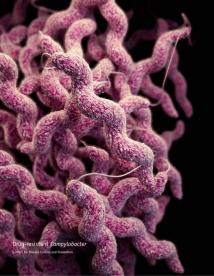
campy2

Image CDC

Gastrointestinal infection with Campylobacter plays a major role in the stunting of children in urban Bangladesh, say the authors of a new study.

The bacteria Campylobacter, which people get from contaminated food and drinks, can lead to severe diarrhoea. Infections of Campylobacter in children under the age of two years are especially frequent in developing countries. According to a WHO factsheet, Campylobacter diarrhoea’s duration and possible complications makes it highly important from a socio-economic perspective.

Stunting may result in neurodevelopmental delays and metabolic disorders later in life. It is a major global health challenge particularly in South Asia where 35 percent of all children are stunted. Worldwide, approximately 144 million children are stunted, according to the UN Children’s Fund.

Research -The European Union control strategy for Campylobacter spp. in the broiler meat chain

Wiley Online

Campylobacter is the most common cause of bacterial gastroenteritis worldwide and the most frequently reported foodborne pathogen in the European Union (EU). While campylobacteriosis is generally self‐limiting, some patients could develop severe sequelae. The predominant source of infection is poultry. This review addresses the most relevant factors influencing the prevalence and contamination level of Campylobacter spp. in the poultry chain continuum. The emphasis was put on the novel control strategy for Campylobacter that is based on evidence‐based risk assessment and the introduction of process hygiene criterion intended for monitoring the prevalence and counts of Campylobacter spp. on broiler carcasses at slaughter level. The reduction of Campylobacter spp. in the poultry meat chain in the EU can only be achieved with an integrated meat safety assurance approach. This includes primary interventions at the level of the poultry farm, implementation of effective control measures at slaughterhouses, and fostering awareness campaigns aimed at consumers.


UK – Tesco’s chicken Campylobacter results above FSA target

Food Safety News


The mega-supermarket chain Tesco has reported 9 percent of chickens tested in the first quarter this year had the highest level of Campylobacter contamination.

This is above the Food Standards Agency (FSA) target of 7 percent and Tesco’s own benchmark of 5 percent of birds with more than 1,000 colony forming units per gram (cfu/g) of Campylobacter.

Tesco data shows 9 percent of 132 samples from January to March had the top level of contamination. It is double the percentage reported in the previous quarter.

“The safety and quality of the food we sell remains our top priority. The results this quarter were affected by a reduced sample size compared to previous tests, and we believe we’ll see levels return to within our expected range in future,” said a Tesco spokesperson.

Another large retailer Asda has not yet provided 1Q figures for 2020 and did not respond to a request for comment.

China – Over 100 Kids in Henan Hospitalized for Suspected Food Poisoning

Sixth Tone

More than 100 students in central China’s Henan province were rushed to the hospital Wednesday afternoon to be treated for suspected food poisoning, The Beijing News reported.

Several students from multiple schools in Yucheng County had complained of stomachaches and diarrhea just after lunch, at around 12:30 p.m., according to local authorities. The hospitalized children are from three towns, though the number of schools affected remains unclear.

While a majority of the children have been discharged from hospitals, five are still receiving treatment, local officials said.

Korea – ‘Special bank will manage, distribute food poisoning bacteria’

Korea Biomed

The Ministry of Food and Drug Safety said that its food poisoning bacteria resource center has been designated as a bank specializing in managing the pathogen.

It is the first food poisoning bacteria bank. The nation has six specialized banks dealing with pathogen resources in the areas of viruses and zoonotic diseases.

With the latest designation, the new bank will preserve, manage, and distribute the food poisoning bacteria that are separated from food as a national resource.