Archives
-
Join 346 other subscribers
KSWFoodWorld
Blog Stats
- 438,623 Views
Category Archives: STEC
Research – Determinants of Sporadic Shiga Toxin-Producing Escherichia coli (STEC) Infection in Denmark, 2018–2020: A Matched Case–Control Study
Infections with Shiga toxin-producing Escherichia coli (STEC) are increasing in Denmark and elsewhere. STEC is also the most frequent cause of haemolytic uraemic syndrome (HUS) in Danish children. Most cases are considered sporadic, while approximately one-third can be attributed to a known source of infection. Hence, we examined sources of sporadic STEC infection in Denmark. From January 2018 to December 2020, we conducted a prospective nationwide case–control study among Danish adults and children. Cases with confirmed positive STEC infection were notified infections within the national laboratory surveillance system. Control persons were randomly selected from the Danish Civil Registration System, individually matched in age in 5-year bands and sex. Participants were invited by an electronic letter to complete either an adult or child questionnaire online. Univariate and adjusted matched odds ratios were computed for adults and children using conditional logistic regression. The study recruited 1583 STEC cases and 6228 controls. A total of 658 cases (42%) and 2155 controls (35%) were included in the analysis. Depending on age, univariate analysis adjusted for socio-demographic determinants showed that the consumption of boiled beef (mOR = 2.2, 95% confidence interval (CI): 1.6–3.1) and fried minced beef (mOR = 1.6, CI: 1.2–2.1), drinking raw (unpasteurized) milk (mOR = 11, CI 1.1–110), eating grilled food (mOR = 9.8, CI: 5.6–17) and having a household member using diapers (mOR = 2.1, CI: 1.4–3.2) were determinants of sporadic STEC infection. Further multivariate adjusted analysis resulted in the same determinants. This study confirms that beef is an overall important risk factor for STEC infection in Denmark. We also present evidence that a proportion of sporadic STEC infections in Denmark are determined by age-specific eating habits, environmental exposures and household structure, rather than being exclusively food-related. These findings are relevant for targeted public health actions and guidelines.

Research – Impact of Biotic and Abiotic Factors on Listeria monocytogenes, Salmonella enterica, and Enterohemorrhagic Escherichia coli in Agricultural Soil Extracts
Abstract
Outbreaks of Enterohemorrhagic Escherichia coli (EHEC), Salmonella enterica, and Listeria monocytogenes linked to fresh produce consumption pose significant food safety concerns. These pathogens can contaminate pre-harvest produce through various routes, including contaminated water. Soil physicochemical properties and flooding can influence pathogen survival in soils. We investigated survival of EHEC, S. enterica, and L. monocytogenes in soil extracts designed to represent soils with stagnant water. We hypothesized pathogen survival would be influenced by soil extract nutrient levels and the presence of native microbes. A chemical analysis revealed higher levels of total nitrogen, phosphorus, and carbon in high-nutrient soil extracts compared to low-nutrient extracts. Pathogen survival was enhanced in high-nutrient, sterile soil extracts, while the presence of native microbes reduced pathogen numbers. A microbiome analysis showed greater diversity in low-nutrient soil extracts, with distinct microbial compositions between extract types. Our findings highlight the importance of soil nutrient composition and microbial dynamics in influencing pathogen behavior. Given key soil parameters, a long short-term memory model (LSTM) effectively predicted pathogen survival. Integrating these factors can aid in developing predictive models for pathogen persistence in agricultural systems. Overall, our study contributes to understanding the complex interplay in agricultural ecosystems, facilitating informed decision-making for crop production and food safety enhancement.
USA – Research – FDA Releases Summary Report on Fresh Herbs Sampling Assignment
Today, the U.S. Food and Drug Administration (FDA) released findings from a sampling assignment that collected and tested both domestic and imported fresh basil, cilantro, and parsley. The assignment sought to estimate the prevalence of Cyclospora cayetanensis, Salmonella spp., and Shiga toxin-producing Escherichia coli (STEC) in these herbs as part of the FDA’s ongoing effort to help proactively ensure food safety.
From September 2017 to September 2021, the FDA collected and tested a total of 1,383 samples of fresh basil, cilantro, and parsley. The agency detected Salmonella spp. in 17 out of 1,358 samples, detected C. cayetanensis in 18 out of 812 samples, and detected STEC in 1 out of 1,350 samples. The FDA worked closely with the firm to quickly remove the contaminated products from the market. The sampling assignment took longer than anticipated, due to a nine month pause during the COVID-19 pandemic.
Fresh herbs contaminated with Salmonella spp., C. cayetanensis, and STEC can present a significant public health risk. From FY2000 through FY2016, cilantro was potentially linked to at least three outbreaks in the U.S. And since 2017, the U.S. has experienced at least six additional outbreaks involving basil, cilantro, and parsley. More than 1,200 illnesses and 80 hospitalizations were tied to these outbreaks. Thus, the FDA determined that sampling may help the agency assess the prevalence of pathogens in the commodities and identify common factors among contaminated samples, with the goal of helping to protect consumers.
Given the findings of the assignment, the FDA encourages industry to ensure its compliance with the agency’s Produce Safety Rule, Preventive Controls for Human Food Rule, and FSMA Final Rule on Requirements for Additional Traceability Records for Certain Foods, as applicable. Importers of fresh herbs should ensure their compliance with the agency’s Foreign Supplier Verification Programs Rule.
This sampling assignment was the agency’s first largescale field activity to focus on fresh basil, cilantro, and parsley. This data will help the agency develop guidance and update program priorities, including future sampling assignments and the prioritization of surveillance inspections. The FDA will continue to sample these fresh herbs for pathogens as warranted to protect consumers.
UK – Update on reporting of non-O157 STEC infections and an outbreak of Shiga toxin-producing E. coli (STEC) O145 in the UK, February 2024
In December 2023 the UK Health Security Agency (UKHSA) reported (1) unseasonably high levels of Shiga toxin-producing Escherichia coli other than serogroup O157 (non-O157 STEC) case notifications during October to December of that year. Since then, reporting has returned to levels comparable with previous years. Investigations into the drivers of that unseasonal increase in reports of non-O157 STEC continue, as well as into individual outbreaks of STEC that were reported in the December 2023 report.
The investigations into the concurrent foodborne STEC O145: H28 outbreak associated with unpasteurised cheese – being undertaken by UKHSA, the Local Authority (LA) Environmental Health Team, Public Health Scotland (PHS), Food Standards Agency (FSA), Food Standards Scotland (FSS) and the Animal Plant Health Agency (APHA) – are nearly completed.
In total 36 confirmed cases and 1 probable case have been reported across England (n=29) and Scotland (n=8) since late July 2023, with most cases falling ill in November 2023. The last reported primary case had a symptom onset date of 23 December 2023 (see figure below).
Based on epidemiological, food chain and microbiological investigations, the vehicle was identified as an unpasteurised cheese produced in North West England. The food business concerned carried out a product withdrawal and recall on 24 December 2023 (2) and updated on 27 December 2023 (3) which ensured all recalled products were removed from sale in a timely manner.
Subsequent work between the food business, the LA Environmental Health team and the FSA allowed refinement of the product withdrawal and recall notice to include only the batches likely associated with illness, which resulted in a further update of the product withdrawal and recall by the food business on 9 February 2024 (4).
The FSA and FSS both published updated Product Recall Information Notices (PRIN’s) on 24 (2) and 27 December (3), and again on 9 February (4), with supporting news stories to amplify messaging about each of the product recalls.
RASFF Alert- STEC E.coli – Lamb
Shiga toxin-producing E. coli in meat from lamb from New Zealand in Germany
Posted in food contamination, food handler, Food Hazard, Food Hygiene, Food Inspections, Food Micro Blog, Food Microbiology, Food Microbiology Blog, Food Microbiology Testing, Food Pathogen, Food Quality, food recall, Food Safety, Food Safety Alert, Food Safety Management, Food Safety Regulations, Food Testing, STEC, STEC E.coli
USA – Hamburger E. coli O157 Outbreak sickens 13 with 1 death in Montana
The Flathead City-County Health Department (FCCHD), the Montana Department of Public Health and Human Services (DPHHS), and other local health departments, are working together to investigate an E.coli O157:H7 outbreak originating in Flathead County.
To date, the investigation has identified at least 13 individuals associated with the outbreak. Many of the cases experienced moderate to severe symptoms, and one death has occurred. Preliminary investigative findings indicate that ground beef containing the E.coli bacteria may be the exposure of concern. State partners continue to test clinical and food samples for laboratory confirmation.mp
France -Abondance AOP – STEC E.coli O26:H11

Product Category
Food
Product subcategory
Milk and dairy products
Product brand name
Itinerary of our regions
Model names or references
Abondance AOP 200g
Product identification
GTIN Batch Date
3250391408818 A4157003261 Minimum durability date 02/08/2024
3250391408818 A4164003374 Minimum durability date 08/15/2024
3250391408818 A4158000761 Minimum durability date 08/15/2024
Packaging
Self-service packaging
Start/End of marketing date
From 06/14/2024 to 07/12/2024
Storage temperature
Product to be kept in the refrigerator
Health mark
FR 74.011.060 CE
Geographic area of sale
Whole France
Distributors
Intermarche
Posted in E.coli O26, E.coli O26 :H11, food contamination, food handler, Food Hazard, Food Hygiene, Food Inspections, Food Micro Blog, Food Microbiology, Food Microbiology Blog, Food Microbiology Research, Food Microbiology Testing, Food Pathogen, Food Quality, food recall, Food Safety, Food Safety Alert, Food Safety Management, Food Safety Regulations, STEC, STEC E.coli
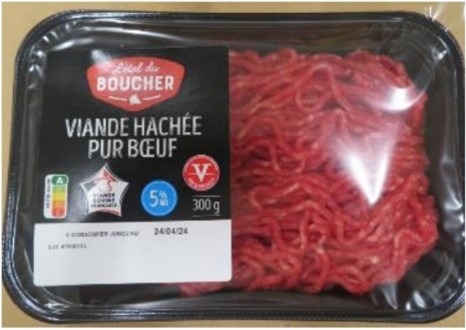
France – Pure ground beef 5% fat – STEC E.coli

Product Category
Food
Product subcategory
Meats
Product brand name
The Butcher’s Stall
Model names or references
Pure ground beef 5% fat
Product identification
GTIN Batch Date
4056489513902 41850122 Expiry date 12/07/2024
Packaging
300g tray
Start/End of marketing date
From 04/07/2024 to 12/07/2024
Storage temperature
Product to be kept in the refrigerator
Health mark
FR 42 094 002 CE
Geographic area of sale
see list of stores in PJ
Distributors
some Lidl supermarkets see list of stores attached
Posted in food contamination, food handler, Food Hazard, Food Hygiene, Food Inspections, Food Micro Blog, Food Microbiology, Food Microbiology Research, Food Microbiology Testing, Food Pathogen, Food Quality, food recall, Food Safety, Food Safety Alert, Food Safety Management, Food Safety Regulations, Food Testing, STEC, STEC E.coli
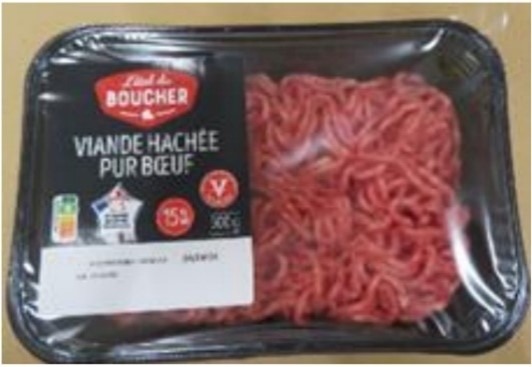
France – Pure ground beef 15% fat- STEC E.coli

Product Category
Food
Product subcategory
Meats
Product brand name
The Butcher’s Stall
Model names or references
Pure ground beef 15% fat
Product identification
GTIN Batch Date
20928681 41850277 Expiry date 12/07/2024
Packaging
500g tray
Start/End of marketing date
From 04/07/2024 to 12/07/2024
Storage temperature
Product to be kept in the refrigerator
Health mark
FR 42 094 002 CE
Geographic area of sale
See list of stores in PJ
Distributors
some Lidl supermarkets see list of stores attached
Posted in food contamination, food handler, Food Hazard, Food Hygiene, Food Inspections, Food Micro Blog, Food Microbiology, Food Microbiology Blog, Food Microbiology Testing, Food Pathogen, Food Quality, food recall, Food Safety, Food Safety Alert, Food Safety Management, Food Safety Regulations, Food Testing, STEC, STEC E.coli
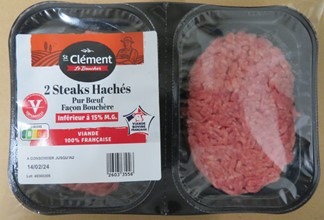
FRANCE – Meat Products – STEC E.coli
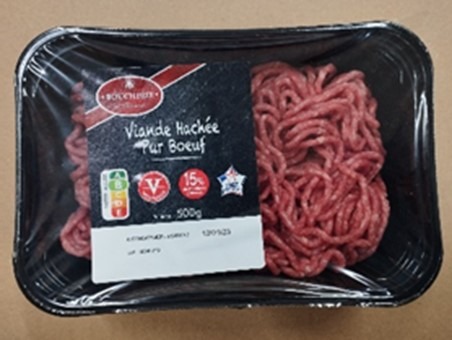
PURE BEEF GROUND MEAT 15% FAT – 500G

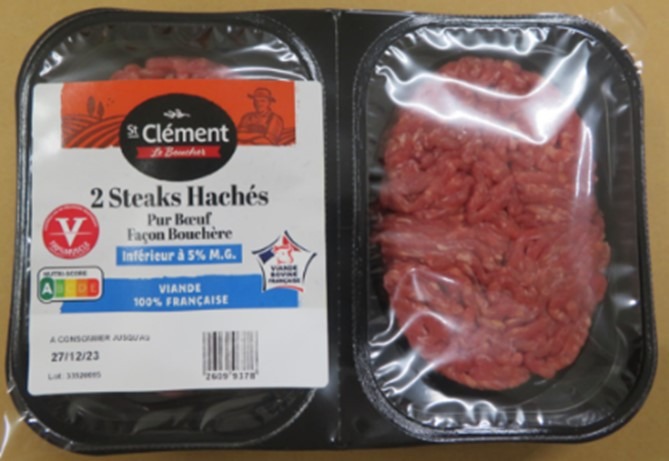
2 BUTCHER STYLE PURE BEEF MINCED STEAKS 5% FAT

2 BUTCHER STYLE PURE BEEF MINCED STEAKS 15% FAT – 2X125G

PURE BEEF GROUND MEAT 5% FAT – 300G


Posted in E.coli, food contamination, food handler, Food Hazard, Food Hygiene, Food Inspections, Food Micro Blog, Food Microbiology, Food Microbiology Blog, Food Microbiology Testing, Food Pathogen, Food Quality, food recall, Food Safety, Food Safety Alert, Food Safety Management, Food Testing, STEC, STEC E.coli