Category Archives: STEC

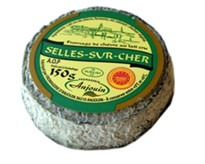
France – Cheese – SADDLES ON CHER AOP – STEC E.coli O26 and O103

Gov france

  • Product category Food
  • Product subcategory Milk and dairy products
  • Product brand name Anjouin Cheese Factory
  • Model names or references SADDLES ON CHER AOP 150G
  • Identification of products
    GTIN Batch Date
    0003301170007002 S220T2 Date of minimum durability 07/10/2023
    0003301170007002 S222T2 Date of minimum durability 10/10/2023
  • Packaging By the cup 150G
  • Marketing start/end date From 08/21/2023 to 08/25/2023
  • Storage temperature Product to be stored in the refrigerator
  • Health mark EN 36.004.001 EC
  • Geographic area of ​​sale Whole France
  • Distributor AUCHAN CREM CENTER SYSTEME U ABC PEYRAUD ODEON BUISSON FRANCE FRESH PRO A PRO LA FERME D’ALEXANDRE VALSERINE APS PROLAICENTRE CARREFOUR CARTRY FROMAPAC PONT D’AIN

CDC Research – Reoccurring Escherichia coli O157:H7 Strain Linked to Leafy Greens–Associated Outbreaks, 2016–2019

CDC

Abstract

Genomic characterization of an Escherichia coli O157:H7 strain linked to leafy greens–associated outbreaks dates its emergence to late 2015. One clade has notable accessory genomic content and a previously described mutation putatively associated with increased arsenic tolerance. This strain is a reoccurring, emerging, or persistent strain causing illness over an extended period.

Escherichia coli O157:H7 is estimated to cause ≈63,000 domestically acquired foodborne illnesses and 20 deaths in the United States each year (1). E. coli O157:H7 infections are typically associated with abdominal cramps, bloody diarrhea, and vomiting; however, a rare but serious condition called hemolytic uremic syndrome can develop, resulting in anemia and acute renal failure. Healthy cattle serve as the main reservoir for E. coli O157:H7, and contaminated food, water, and environmental sources, as well as contact with animals, have been the source of outbreaks of E. coli O157:H7 infections.

More recently, contaminated leafy greens have been recognized as a major source of E. coli O157:H7 illnesses and outbreaks. In foodborne illness attribution estimates for 2020 based on outbreak data, 58.1% of E. coli O157:H7 illnesses were attributed to vegetable row crops, a category that includes leafy greens (https://www.cdc.gov/foodsafety/ifsac/annual-reports.html). During 2009–2018, a total of 32 confirmed or suspected outbreaks of E. coli O157:H7 infections linked to contaminated leafy greens occurred in the United States and Canada (5).

A large E. coli outbreak in late 2019, hereafter referred to as outbreak A, caused 167 cases, hospitalized 85 persons from 27 states, and was associated with the consumption of romaine lettuce from Salinas Valley, California, USA (https://www.cdc.gov/ecoli/2019/o157h7-11-19/index.html). We characterized isolates from outbreak A and highly related isolates by using a variety of molecular methods.

Research – Effectiveness of Ultra-High Irradiance Blue Light-Emitting Diodes in Inactivating Escherichia coli O157:H7 on Dry Stainless Steel and Cast-Iron Surfaces

MDPI

Abstract

The use of blue light-emitting diodes (LEDs) is emerging as a promising dry decontamination method. In the present study, LEDs emitting ultra-high irradiance (UHI) density at 405 nm (842 mW/cm2) and 460 nm (615 mW/cm2) were used to deliver high-intensity photoinactivation treatments ranging from 221 to 1107 J/cm2. The efficacy of these treatments to inactivate E. coli O157:H7 dry cells was evaluated on clean and soiled stainless steel and cast-iron surfaces. On clean metal surfaces, the 405 and 460 nm LED treatment with a 221 J/cm2 dose resulted in E. coli reductions ranging from 2.0 to 4.1 log CFU/cm2. Increasing the treatment energy dose to 665 J/cm2 caused further significant reductions (>8 log CFU/cm2) in the E. coli population. LED treatments triggered a significant production of intracellular reactive oxygen species (ROS) in E. coli cells, as well as a significant temperature increase on metal surfaces. In the presence of organic matter, intracellular ROS generation in E. coli cells dropped significantly, and treatments with higher energy doses (>700 J/cm2) were required to uphold antimicrobial effectiveness. The mechanism of the bactericidal effect of UHI blue LED treatments is likely to be a combination of photothermal and photochemical effects. This study showed that LEDs emitting monochromatic blue light at UHI levels may serve as a viable and time-effective method for surface decontamination in dry food processing environments.

RASFF Alert – STEC E.coli- Minced Bovine Meat

RASFF

STEC (stx+;eae+) in minced bovine meat from Belgium in Poland

France – 5% FRESH PURE BEEF GROUND STEAKS – STEC E.coli O103

Gov france

  • Product category Food
  • Product subcategory Meats
  • Product brand name CARREFOUR The Market
  • Model names or references 5% FRESH PURE BEEF GROUND STEAKS
  • Identification of products
    GTIN Batch Date
    3245413750648 71502305 Use-by date 08/08/2023
  • Packaging 6 X 100g
  • Marketing start/end date From 01/08/2023 to 08/08/2023
  • Storage temperature Product to be stored in the refrigerator
  • Health mark FR 49 099 002 EC
  • Geographic area of ​​sale Departments: CALVADOS (14), EURE (27), INDRE-ET-LOIRE (37), ORNE (61), SARTHE (72), SEINE-MARITIME (76)
  • Distributors Only 8 Carrefour Market stores concerned (see attached document)
  • List of points of sale List_of_stores_involved_Grind_steaks.pdf

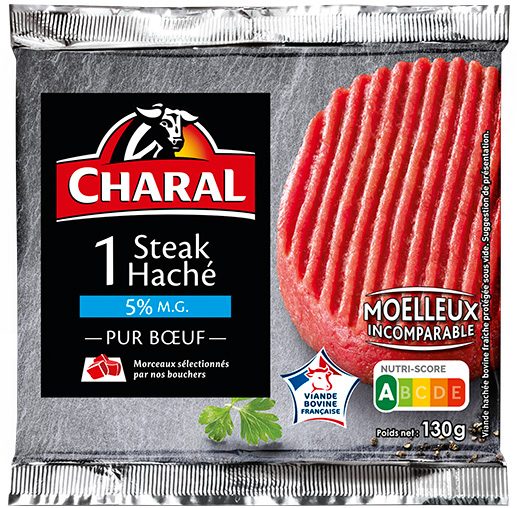
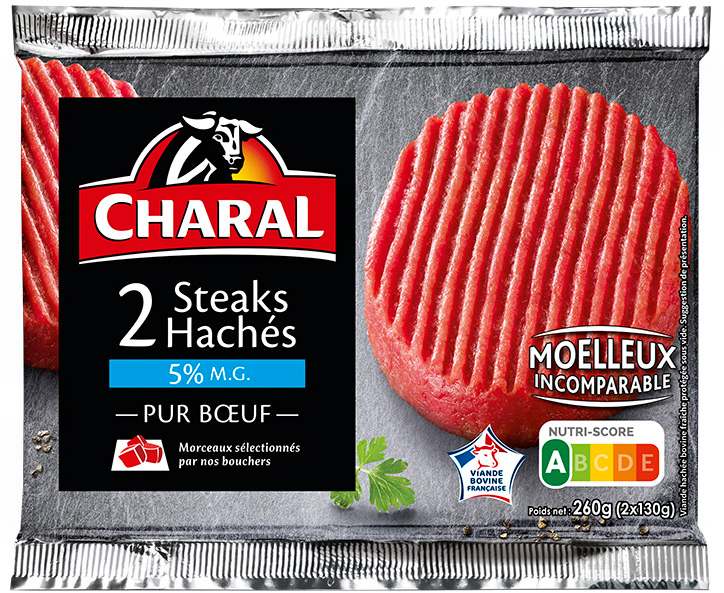
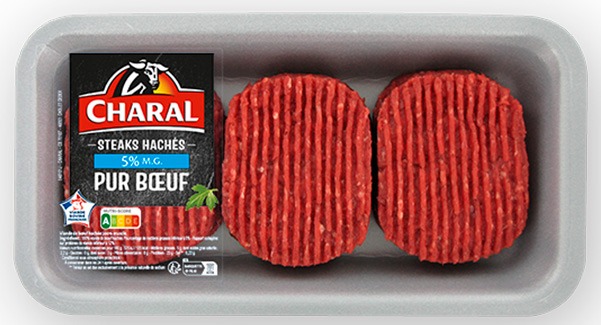
France – Fresh minced steaks 5% fat – STEC E.coli O103

Gov france

Identification information of the recalled product

  • Product category Food
  • Product subcategory Meats
  • Product brand name Charal
  • Model names or references Ground beef weekly pack 5% 130g X 1 Ground beef weekly pack 5% 130g X 2 Ground beef under atm 5% 100g X 6
  • Identification of products
    GTIN Batch Date
    3181232220071 71502305 Use-by date 08/14/2023
    3181232220286 71502305 Use-by date 08/14/2023
    3181232120128 71502305 Use-by date 08/09/2023
    3181232120128 71502305 Use-by date 08/08/2023
  • Marketing start/end date From 02/08/2023 to 14/08/2023
  • Storage temperature Product to be stored in the refrigerator
  • Health mark FR.49.099.002 EC
  • Geographic area of ​​sale Whole France
  • Distributors AUCHAN, CARREFOUR, CASINO, DIAPAR, FRANCAP, FRANPRIX LEADER PRICE, INTERMARCHE, LECLERC, MATCH, MONOPRIX, SIMPLY MARKET, SYSTEM U, SEGUREL, ANTONA DISTRIBUTION FEES

Spain sees E. coli and Listeria infections rise in 2022

Food Safety News

Spain recorded an increase in E. coli and Listeria infections in 2022, according to recently released figures.

In 2022, 633 Shiga toxin-producing E. coli (STEC) infections were reported, as well as eight imported cases. This includes 620 confirmed and 13 probable cases. The number rose from 426 cases in 2021.

The highest incidences in 2022 were observed in children younger than 5 years of age, being higher in girls than in boys, according to data from the National Epidemiological Surveillance Network (RENAVE).

A total of 134 hospitalizations were reported and six people developed hemolytic uremic syndrome (HUS). HUS is a severe complication associated with E. coli infections that causes kidney failure. Four of these were younger than the age of 3, one was 10 years old, and the other was an 84-year-old adult.

Three deaths were recorded: one child younger than 3 years old who had HUS, and two adults aged 65 and 93.

For imported cases, two were younger than 10 years of age, and the rest were aged between 22 and 60.

Information on serogroup causing infection was available in 80 cases of which 67 corresponded to O157. One was O107, another was O128 and 11 were recorded as non-O157.

USA – CDC isolates specific strain of E. coli that is of great concern O157

Food Safety News

The Centers for Disease Control and Prevention has identified a strain of E. coli bacteria that it considers persistent and causing illnesses over a long period.

An article in the September issue of the publication Emerging Infectious Diseases describes a strain of E. coli O157:H7 that caused a large outbreak in late 2019. The outbreak included 167 patients and hospitalized 85 people from 27 states. The outbreak was associated with consuming romaine lettuce from Salinas Valley, CA.

“Researchers at CDC sought to characterize E. coli from this outbreak and other closely related strains. This strain is estimated to have emerged in late 2015, causing multiple outbreaks from 2016-2019,” according to the article.

“An additional outbreak associated with this strain was detected in late 2020 after the conclusion of this study in which a reported 40 infections occurred in 19 states; 20 people were hospitalized, and four developed hemolytic uremic syndrome. CDC defined this strain as a reoccurring, emerging, or persistent strain causing illness over an extended time.”

Italy- Formaggella della Val di Scalve – STEC E.coli

Salute

Brand : Scalve Social Dairy Soc. Agr. Coop.

Denomination : Formaggella della Val di Scalve

Reason for reporting : Recall due to microbiological risk

Publication date : 16 August 2023

Documentation

Documentation

RASFF Alert- STEC E.coli – Beef Meat

RASFF

STEC in taurus meat from Brazil, at the border in the Netherlands and Belgium