Category Archives: STEC E.coli

USA – IDHP final report on Jackson County Shiga-toxin E. Coli / HUS cases

Food Safety News

The Iowa Department of Public Health (IDPH) has completed a final report on last May’s Shiga-toxin E. coli outbreak in a Jackson County childcare facility.  Pursuant to Iowa Open Records law, IDPH has shared its findings with Food Safety News

The onset of the E. coli illnesses occurred from May 6 to May 22.  IDPH and Jackson County Public Health learned, through the reportable disease system, of a Jackson County child suffering from Shiga-toxin E. coli.

“Local public health spoke to the healthcare provider and the case’s family to get information for IDPH’s Shiga-toxin investigation form,” according to the final report. “JCPH learned the child attended local childcare and placed the child under an exclusion order to exclude the child from childcare until resolution of diarrhea and two consecutive tested negative for Shiga-toxin E. coli.”
Research – Biofilms are a concern across the entire food supply chain

Food Safety News

kswfoodworld biofilm

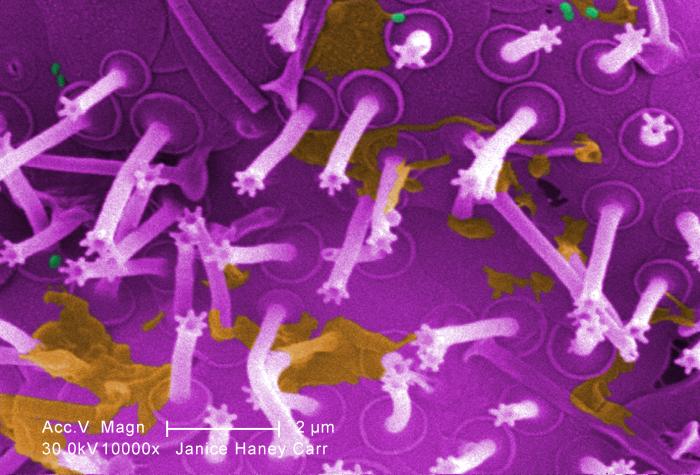
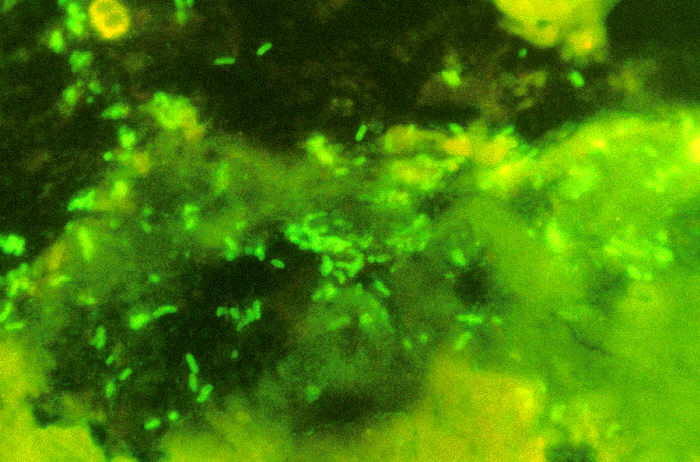
Biofilm, which is a cluster of pathogens encased in a protective matrix, is a common enemy across diverse food manufacturing industries.

From dairy, produce, meat, poultry, ready-to-eat deli foods and other products, biofilm is a concern at the farm level and at processing and manufacturing plants.

The protective layers generated by pathogens that create the biofilm, known as extracellular polymeric substances (EPS), resist sanitation efforts and are adept at spreading in moist environments, through a process known as “seeding dispersal.” According to Sterilex Industries, which offers products to treat biofilms and the pathogens they harbor, seeding dispersal is similar to a dandelion releasing seeds to encourage species growth.

Although forming biofilm is a natural process that pathogens — including those commonly leading to foodborne illness outbreaks, such as Shiga-toxin producing E. coli, Listeria monocytogenes and Salmonella — use to survive, industry food safety plans and government regulations don’t necessarily focus on biofilm and how to eradicate it.

RASFF Alerts – STEC E.coli – Puff Pastry – Tuna Salad – Romaine Lettuce

RASFF

Verotoxin-producing E. coli in fresh puff pastry from Austria in Germany

RASFF

Shigatoxin-producing Escherichia coli (stx1+, stx2 + /25g) in tuna salad from the Netherlands in Belgium

RASFF

Shigatoxin-producing Escherichia coli (stx1 +, stx2 + /25g) in romaine lettuce from the Netherlands in Belgium

USA – 5 E. Coli cases confirmed from the Georgia National Fair

41NBC

Five children have been diagnosed with E. Coli connected to the fair. Georgia Department of Public Health says it’s trying to figure out the source of where the bacteria came from.

“Our epidemiologists immediately started looking through our syndromic surveillance, which is just a database that medical providers just dump information into, and you can query certain symptoms,” said Carle Coley, an Environmental Health Director with Georgia DPH. “Once they began to query those symptoms, within 30 minutes we were able to find other cases across the state.”

Georgia DPH put out a survey Thursday and has received 800 responses so far. The investigation should only take a few weeks if it continues to get responses to their survey.

Even if you did not get sick after the fair, DPH is asking you to fill out their survey here: https://sendss.state.ga.us/sendss/!dynamicsurvey.surveypublicprompt?pQATemplateId=14259.

Research – Occurrence of the seven most common serotypes of Shiga toxin-producing Escherichia coli in beef cuts produced in meat-processing plants in the state of São Paulo, Brazil

JFP

Healthy cattle are considered the main reservoir of Shiga toxin-producing Escherichia coli (STEC) strains, so in some places in the world, products derived from beef are the most common source for disease outbreaks caused by these bacteria. Therefore, in order to guarantee that the beef produced by our slaughterhouses is safe, there is a need for continuous monitoring of these bacteria. In this study, 215 beef cuts were evaluated, including chilled vacuum-packed striploins (151 samples), rib eyes (30 samples), and knuckles (34 samples), from March to June, 2018. These meat samples were collected from the slaughter of unconfined cattle, being arbitrarily collected from eight meat-processing companies in São Paulo state, Brazil. Each sample was examined for the presence of STEC toxin type ( stx 1 and/or stx 2 genes) and also the E. coli attaching-and-effacing ( eae ) gene, which were determined by a multiplex PCR assay. Here we show that the major seven STEC strains (O serogroups O26, O45, O103, O111, O121, O145, and O157) are not detected in any of the analyzed beef cut samples; however, three of them presented the virulence eae gene. Therefore, the absence of STEC strains in the beef samples may be an indication of the low prevalence of this pathogen in the cattle herd on the farm, associated with good hygiene and handling practices adopted by the meat industry.

RASFF Alert – STEC E.coli – Valencay Cheese – Camenbert

RASFF

E.COLI producers STEC in Valencay cheese from France in Italy

RASFF

Shiga toxin-producing Escherichia coli in Camenbert from France in Germany

USA – E. coli outbreak linked to the Georgia National Fair in Perry Georgia

Food Poison Journal

The Associated Press reports tonight that Georgia state health officials are investigating whether E. coli (presumably, E. coli O157:H7) was spread at the Georgia National Fair held earlier this month.

The Georgia Department of Public Health said it has confirmed four cases of the illness among children who were at the event in Perry from Oct. 7 to Oct. 17, news outlets reported. Three of them are now hospitalized.

Hokanson said they’ve created an online survey that they hope will help them pinpoint the cause of the problem. Anyone who went to the fair can fill it out — even if they did not get sick after the event. State epidemiologists are working to determine what could have caused the outbreak by comparing activities between those who became sick and those who did not.

Research – The Persistence of Bacterial Pathogens in Surface Water and Its Impact on Global Food Safety

MDPI

Water is vital to agriculture. It is essential that the water used for the production of fresh produce commodities be safe. Microbial pathogens are able to survive for extended periods of time in water. It is critical to understand their biology and ecology in this ecosystem in order to develop better mitigation strategies for farmers who grow these food crops. In this review the prevalence, persistence and ecology of four major foodborne pathogens, Shiga toxin-producing Escherichia coli (STEC), SalmonellaCampylobacter and closely related Arcobacter, and Listeria monocytogenes, in water are discussed. These pathogens have been linked to fresh produce outbreaks, some with devastating consequences, where, in a few cases, the contamination event has been traced to water used for crop production or post-harvest activities. In addition, antimicrobial resistance, methods improvements, including the role of genomics in aiding in the understanding of these pathogens, are discussed. Finally, global initiatives to improve our knowledge base of these pathogens around the world are touched upon.

Research – An assessment of the microbiological quality and safety of unpasteurised milk cheese for sale in England during 2019 – 2020

Journal of Food Protection

Cheese made with unpasteurised milk has been associated with outbreaks of illness. However, there are limited data on the prevalence of shiga-toxin producing E. coli (STEC) in these products, and a lack of clarity over the significance of E. coli as general indicators of hygiene in raw milk cheeses. The aim of this study was to provide further data to address both of these issues as well as assessing the overall microbiological quality of raw milk cheeses available to consumers in England. A total of 629 samples of cheese were collected from retailers, catering premises and manufacturers throughout England. The majority (80%) were made using cow’s milk with 14% made from sheep’s milk and 5% from goat’s milk. Samples were from 18 different countries of origin, with the majority originating from either the UK (40%) or France (35%). When interpreted against EU microbiological criteria and UK guidance, 82% were considered to be of satisfactory microbiological quality, 5% were borderline and 12% were unsatisfactory. Four samples (0.6%) were potentially injurious to health due to the isolation of STEC from one, >10 4 cfu/g of coagulase positive staphylococci in two and >100 cfu/g of Listeria monocytogenes in the fourth sample. Indicator E. coli and Listeria species were detected more frequently in soft compared to hard cheese. Higher levels of indicator E. coli were significantly associated with a greater likelihood of detecting shiga toxin genes ( stx 1 and/or stx 2).

Research – Characterization of Escherichia coli from Edible Insect Species: Detection of Shiga Toxin-Producing Isolate

MDPI

ecoli

Insects as novel foods are gaining popularity in Europe. Regulation (EU) 2015/2283 laid the framework for the application process to market food insects in member states, but potential hazards are still being evaluated. The aim of this study was to investigate samples of edible insect species for the presence of antimicrobial-resistant and Shiga toxin-producing Escherichia coli (STEC). Twenty-one E. coli isolates, recovered from samples of five different edible insect species, were subjected to antimicrobial susceptibility testing, PCR-based phylotyping, and macrorestriction analysis. The presence of genes associated with antimicrobial resistance or virulence, including stx1stx2, and eae, was investigated by PCR. All isolates were subjected to genome sequencing, multilocus sequence typing, and serotype prediction. The isolates belonged either to phylogenetic group A, comprising mostly commensal E. coli, or group B1. One O178:H7 isolate, recovered from a Zophobas atratus sample, was identified as a STEC. A single isolate was resistant to tetracyclines and carried the tet(B) gene. Overall, this study shows that STEC can be present in edible insects, representing a potential health hazard. In contrast, the low resistance rate among the isolates indicates a low risk for the transmission of antimicrobial-resistant E. coli to consumers. View Full-Text