Shigatoxin-producing Escherichia coli in salad vegetable mix from the Netherlands in Germany
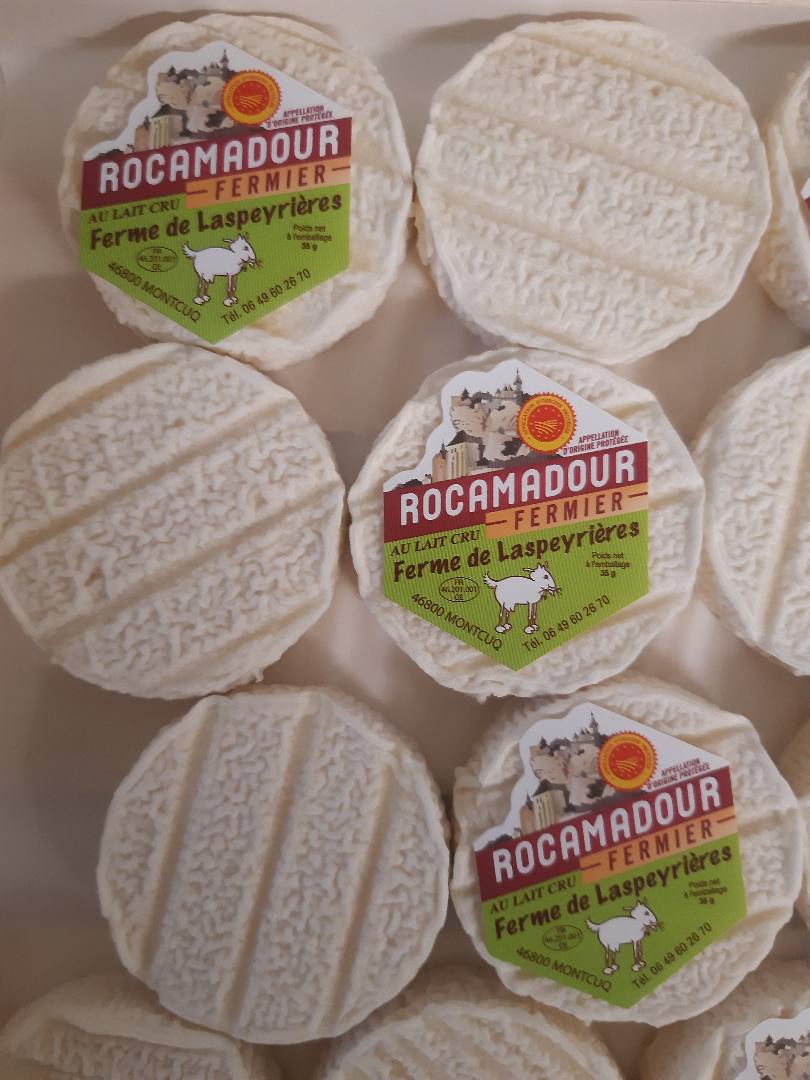
Shigatoxin-producing Escherichia coli (STEC) in goat cheese from France in Germany and Italy

Shigatoxin-producing Escherichia coli in salad vegetable mix from the Netherlands in Germany
Shigatoxin-producing Escherichia coli (STEC) in goat cheese from France in Germany and Italy
Posted in food contamination, food handler, Food Hazard, Food Hygiene, Food Inspections, Food Micro Blog, Food Microbiology, Food Microbiology Blog, Food Microbiology Testing, Food Pathogen, Food Quality, food recall, Food Safety, Food Safety Alert, Food Safety Management, Food Safety Regulations, Food Testing, RASFF, Shigatoxin, STEC, STEC E.coli
The County of San Diego Health and Human Services Agency (HHSA) is reporting an outbreak of 13 confirmed or probable cases of Shiga-toxin-producing E. Coli (STEC) linked to dining at Miguel’s Cocina 4S Ranch location in San Diego.
HHSA Epidemiology Program and the County Department of Environmental Health and Quality are investigating the cluster of E. coli infections. Ages range from 6 to 87 years of age.
The ill persons or their families reported eating at the Miquel’s 4S Ranch location from Oct. 6 to Oct. 18 and had symptoms from Oct. 13 to Oct. 19. Seven cases were hospitalized with at least one case developing the more severe complication of the infection called hemolytic uremic syndrome.
The specific food items that were sources of the E. coli bacteria at the restaurant are under investigation. The restaurant is cooperating and working closely with the County. This morning its management voluntarily decided to close until the source can be identified.
“People who visited the restaurant and are feeling ill should see their doctor as soon as possible,” said Wilma J. Wooten, M.D., M.P.H., County public health officer. “We want them to get tested and have the results sent to the local health department. Those most at risk from infection are children, adults 65 and older and people with weakened immune systems.”
Recall of Debaenst
Products: Different types of beef, minced meat and minced meat preparations from the Jules’ Butchery brand
Nature of the problem: presence of STEC bacteria
In agreement with the FASFC, Debaenst is withdrawing various types of beef, minced meat and minced meat preparations from the Jules’ Butchery brand from sale and is recalling it from consumers due to the presence of STEC bacteria.
Debaenst asks its customers not to consume this product and to return it to the point of sale where it was purchased. Products made will be refunded at checkout.
Product description
– Name of products:
Beef: gepelde biefstuk – vermalste biefstuk – (gemarineerde)dunne lende – zesrib – (gemarineerde) side a l’os – (gemarineerde)rundbrochette – pepersteak – rundstoofvlees extra mager – pure fillet –
Preparations of minced meat: chipolata – boerenchipolata – bereid varkens- en kalfsgehakt – runds- en varkensgehakt gekruid – gehakte biefstuk – italiaanse burger – gehakt broodje – varkens- en rundsworst glutenvrij – boerenbraadworst zonder ajuin – varkens-rundsworst – spaghettigehakt – barbecuewors t – hamburger rund varken glutenvrij – bereide hamburger – slavink – chefburger – bereid varkens- en kalfsgehakt – bereid puur varkensgehakt – varkens- en rundsgehakt glutenvrij – kaassteak –
Derived products: prepare met ui – vichtse prepare – prepare met kappertjes – prepare van de chef – bereide gehakte biefstuk
– Brand: Jules’ butchery
– Best before date (DLC) (“Consume by”):
peeled steak, tenderized steak, thin loin, six ribs, rib on the bone (marinated): 10/18/23 until to 10/23/203
minced meat preparations: 10/19/23 until 10/24/23
– Lot number(s): 2023283632
– Sales period: from 10/13/2023 until 10/19/2023
– Nature of packaging: variable
– Weight: variable
The product was distributed by:
AD Delhaize VICHTE BOSSTRAAT 20 8570 VICHTE
For any further information , contact:
Mr Defoirdt or Mrs Loosveldt 056 777 457
Posted in afsca, food recall, product recall, Recall, STEC, STEC E.coli

| Batch | Date | |
|---|---|---|
| RGB23279 | Use-by date 10/16/2023 | |
| RGB23282 | Use-by date 10/19/2023 | |
| RGB23283 | Use-by date 10/20/2023 | |
| RGB23284 | Use-by date 10/21/2023 | |
Posted in food contamination, food handler, Food Hazard, Food Hygiene, Food Inspections, Food Micro Blog, Food Microbiology, Food Microbiology Blog, Food Microbiology Testing, Food Pathogen, Food Quality, food recall, Food Safety, Food Safety Alert, Food Safety Management, Food Safety Regulations, Food Testing, STEC, STEC E.coli
| Lot | Date | |
|---|---|---|
| 0610 | Recommended consumption date 06/11/2023 | |
Posted in food contamination, food handler, Food Hazard, Food Hygiene, Food Inspections, Food Micro Blog, Food Microbiology, Food Microbiology Blog, Food Microbiology Testing, Food Pathogen, Food Quality, food recall, Food Safety, Food Safety Alert, Food Safety Management, Food Safety Regulations, Food Testing, STEC, STEC E.coli
Human health surveillance and its relationship to foodborne illness is essential for informing
the strategic direction that New Zealand Food Safety (NZFS) takes and regulatory measures
it puts in place to minimise foodborne illness in New Zealand and overseas consumers. The
annual ESR foodborne disease reports are critical, allowing NZFS to monitor trends in
foodborne illness in New Zealand by describing in a consistent manner evidence from case
notifications, case enquiries, outbreak investigations, and other epidemiological studies of
human enteric disease.
This report is the latest in a series providing a consistent source of data annually to monitor
trends in foodborne illness in New Zealand. The series can be found here.
When reading these reports, it is necessary to bear in mind that notified cases of illness
represent only a subset of all the cases that occur in New Zealand each year.
• Many sick individuals do not visit a GP or otherwise come to the attention of the
health system.
• Multiple factors (e.g., change in sensitivity of testing methods, proportion of human
faecal specimens being tested) affect the notification rates on top of any underlying
changes to disease incidence happening in New Zealand. Some cases notified in
New Zealand are due to exposure to a pathogen or toxin while they were overseas.
Most cases of foodborne diseases in New Zealand are sporadic, which makes attribution to a
source or event difficult. In contrast, outbreaks offer a better opportunity to identify the source
and most of the 271 outbreaks (253 cases) of potential foodborne disease in 2022 were
associated with commercial food operators and only five outbreaks in 2022 were associated
with food prepared in consumer’s homes. Despite robust investigation, some outbreaks
reported as “foodborne with an unidentified food source” could also be attributed to other
routes of transmission, such as water, animal contact, or person to person contact.
Listeriosis is perhaps the only disease fully attributable to consumption of contaminated food.
Campylobacteriosis, yersiniosis, infection by shiga toxin-producing E. coli (STEC), and
salmonellosis remain the predominant notified foodborne illnesses. Notification rates per
100,000 population are generally stable, being highest for very young children (0 to 4 years
age group) and for elderly people (70+ years)
The New England Journal of Medicine
You need to create a free account to read this document.
Verotoxin-producing Escherichia coli in raw goat milk cheese from France in Germany
Shiga toxin producing Escherichia coli (STEC) in morbier from France in Belgium, Czech Republic, Estonia, Finland, France, Germany, Luxembourg, Netherlands, Poland, Slovakia, Sweden, United States.
Posted in food contamination, food handler, Food Hazard, Food Hygiene, Food Inspections, Food Micro Blog, Food Microbiology, Food Microbiology Blog, Food Microbiology Testing, Food Pathogen, Food Quality, food recall, Food Safety, Food Safety Management, Food Safety Regulations, Food Testing, RASFF, Raw Milk, raw milk cheese, Raw Milk Goats Cheese, STEC, STEC E.coli
For the last two decades, the human infection frequency of Escherichia coli O157 (O157) in Scotland has been 2.5-fold higher than in England and Wales. Results from national cattle surveys conducted in Scotland and England and Wales in 2014/2015 were combined with data on reported human clinical cases from the same time frame to determine if strain differences in national populations of O157 in cattle could be associated with higher human infection rates in Scotland. Shiga toxin subtype (Stx) and phage type (PT) were examined within and between host (cattle vs human) and nation (Scotland vs England and Wales). For a subset of the strains, whole genome sequencing (WGS) provided further insights into geographical and host association. All three major O157 lineages (I, II, I/II) and most sub-lineages (Ia, Ib, Ic, IIa, IIb, IIc) were represented in cattle and humans in both nations. While the relative contribution of different reservoir hosts to human infection is unknown, WGS analysis indicated that the majority of O157 diversity in human cases was captured by isolates from cattle. Despite comparable cattle O157 prevalence between nations, strain types were localized. PT21/28 (sub-lineage Ic, Stx2a+) was significantly more prevalent in Scottish cattle [odds ratio (OR) 8.7 (2.3–33.7; P<0.001] and humans [OR 2.2 (1.5–3.2); P<0.001]. In England and Wales, cattle had a significantly higher association with sub-lineage IIa strains [PT54, Stx2c; OR 5.6 (1.27–33.3); P=0.011] while humans were significantly more closely associated with sub-lineage IIb [PT8, Stx1 and Stx2c; OR 29 (4.9–1161); P<0.001]. Therefore, cattle farms in Scotland were more likely to harbour Stx2a+O157 strains compared to farms in E and W (P<0.001). There was evidence of limited cattle strain migration between nations and clinical isolates from one nation were more similar to cattle isolates from the same nation, with sub-lineage Ic (mainly PT21/28) exhibiting clear national association and evidence of local transmission in Scotland. While we propose the higher rate of O157 clinical cases in Scotland, compared to England and Wales, is a consequence of the nationally higher level of Stx2a+O157 strains in Scottish cattle, we discuss the multiple additional factors that may also contribute to the different infection rates between these nations.

 FoodWorld