Archives
-
Join 341 other subscribers
KSWFoodWorld
Blog Stats
- 427,529 Views
Category Archives: Spores
Research – Short Wave Ultraviolet Light (UV-C) Effectiveness in the Inactivation of Bacterial Spores Inoculated in Turbid Suspensions and in Cloudy Apple Juice
Liquid foods might present interferences in their optical properties that can reduce the effectiveness of short-wave ultraviolet radiation (UV-C) treatments used for sterilization purposes. The effect of turbidity as UV-C interference factor against the inactivation of bacterial spores was analysed by using phosphate-buffered saline solutions (PBS) of different turbidity values (2000, 2500, and 3000 NTU) which were adjusted with the addition of apple fibre. These suspensions were inoculated with spores of Bacillus subtilis and Alicyclobacillus acidoterrestris. While higher UV-C doses increased the inactivation rates of spores, these were reduced when turbidity values increased; a dose of 28.7 J/mL allowed inactivation rates of B. subtilis spores of 3.96 Log in a 2000-NTU suspension compared with 2.81 Log achieved in the 3000-NTU one. Spores of B. subtilis were more UV-C-resistant than A. acidoterrestris. Cloudy apple juice inoculated with A. acidoterrestris spores was processed by UV-C at different doses in a single pass and with recirculation of the matrix through the reactor. Inactivation increased significantly with recirculation, surpassing 5 Log after 125 J/mL compared with 0.13 Log inactivation after a single-pass treatment at the same UV-C dose. UV-C treatments with recirculation affected the optical properties (absorption coefficient at 254 nm and turbidity) of juice and increased browning as UV-C doses became higher.
Singapore – Recall of “Crab Brand” Black Pepper Seed Due to Presence of Bacillus cereus Exceeding Permitted Level
Posted in Bacteria, bacterial contamination, Bacterial Spores, food contamination, food handler, Food Hygiene, Food Inspections, Food Micro Blog, Food Microbiology, Food Microbiology Blog, Food Microbiology Testing, Food Pathogen, Food Poisoning, food recall, Food Safety, Food Safety Alert, Food Testing, Food Toxin, Spores, Uncategorized
Research – Outbreaks, Germination, and Inactivation of Bacillus cereus in Food Products: A Review
ABSTRACT
Bacillus cereus has been reported as a foodborne pathogen worldwide. Although food processing technologies to inactivate the pathogen have been developed for decades, foodborne outbreaks related to B. cereus have occurred. In the present review, foodborne outbreaks, germination, inactivation, and detection of B. cereus are discussed, along with inactivation mechanisms. B. cereus outbreaks from 2003 to 2016 are reported based on food commodity, number of cases, and consequent illnesses. Germination before sporicidal treatments is highlighted as an effective way to inactivate B. cereus, because the resistance of the pathogen increases significantly following sporulation. Several germinants used for B. cereus are listed, and their efficacies are compared. Finally, recently used interventions with sporicidal mechanisms are identified, and rapid detection methods that have been developed are discussed. Combining two or more interventions, known as the hurdle technology concept, is suggested to maximize the sporicidal effect. Further study is needed to ensure food safety and to understand germination mechanisms and sporicidal resistance of B. cereus.
HIGHLIGHTS
- Bacillus cereus has been associated with several foodborne outbreaks.
- Several germinants have been used to induce Bacillus cereus germination.
- Resistance of Bacillus cereus may depend on the germination method.
- Sporicidal effect of interventions can be maximized by hurdle technology.
RASFF Alert – Clostridium Sulphite Reducer – Organic Canned White Sausages
Clostridium sulphite reducer (2.8x10E7 CFU/g) in organic canned white sausages from Germany in Germany
Posted in Bacteria, bacterial contamination, Clostridium perfringens, Clostridium Sulphite Reducer, food bourne outbreak, food contamination, Food Hygiene, Food Illness, Food Inspections, Food Micro Blog, Food Microbiology, Food Microbiology Blog, Food Poisoning, food recall, Food Safety, Food Safety Alert, Food Temperature Abuse, Food Testing, Food Toxin, foodborne outbreak, foodbourne outbreak, microbial contamination, Microbiology, Spores, SRC
Research – Sporeforming Bacteria Associated with Dairy Powders Can be Found in Bacteriological Grade Agar-Agar Supply
Thermophilic sporeforming bacteria are found ubiquitously in natural environments and therefore are present in a number of agricultural food products. Spores produced by these bacteria can survive harsh environmental conditions encountered during food processing and have been implicated in food spoilage. During research efforts to develop a standardized method for enumerating spores in dairy powders, the dairy powder associated thermophilic sporeformer Anoxybacillus flavithermus was discovered growing in un-inoculated control plates of Tryptic Soy agar (TSA) supplemented with 1% w/v starch, after incubation at thermophilic (55°C) growth temperatures. This paper reports the investigation into the source of this thermophilic sporeformer in TSA medium components and characterization of the bacterial isolates collected. Aqueous solutions of Tryptic Soy broth (TSB) powder from four suppliers and four agar-agar powders (two manufacturing lots from one supplier; Agar A_1 and Agar A_2, and two from separate suppliers; Agar B and Agar C) were subjected to two different autoclave cycle times (121°C for 15 min or 121°C for 30 min) and then prepared as TSA. After incubation at 55°C for 48h, bacterial growth was only observed in media prepared from both lots of Agar A agar-agar powder, and only when they were subjected to a 15 min autoclave cycle, implicating these powders as a source of the sporeformer contamination. Genetic characterization of 49 isolates obtained indicated the presence of five unique rpoB allelic types (ATs) of the thermophilic sporeformer, Geobacillus spp . in agar-agar powder from Agar A. These results not only highlight the importance of microbiological controls, but also alert researchers to the potential for survival of thermophilic sporeformers such as Anoxybacillus and Geobacillus in microbiological media used for detection and enumeration of these same thermophilic sporeformers in products like dairy powders.
Research – Optimization on antimicrobial effects of surfactin against Bacillus cereus spore
Abstract :The purpose of this study was to establish a three-variable bactericidal model of temperature, time, and concentration to determine the optimal conditions for Bacillus cereus spore inactivation by surfactin. In order to obtain the binary regression equation of the inactivated spore model, a total of 17 simulations were performed using response surface methodology. The experimental results showed that the three factors each had a discernible but non-equal impact on the inactivation response value. Multiple regression analysis of experimental results using Design-Expert software yielded as the following equation: Optimal inactivation of spores was achieved by treatment with surfactin at a concentration of 4 mg/ml for 40 h at 53 °C, with the response value reaching 1.8. The spores were treated with surfactin under these conditions; the microstructural changes of spores were observed by scanning electron microscopy. We found that the structures of the outer wall of the spores were damaged, while the spores in the control sample showed no visible damage.
Research- Foodborne illness? DNA-barcoded microbial spores can trace origin of objects
Researchers have developed synthetic microbial spores that can be safely introduced onto objects and surfaces at a point of origin, such as a field or manufacturing plant, and be detected and identified months later. The approach can help determine the source of foodborne illnesses.
Research – Effectiveness of Nitrogen Dioxide Fumigation for Microbial Control on Stored Almonds
ABSTRACT
Quality of stored almonds is compromised by insect infestations and microbial contamination. Nitric oxide (NO) is a potent fumigant for postharvest pest control on fresh and stored products. NO fumigation must be conducted under ultralow oxygen conditions, and it always produces nitrogen dioxide (NO2), depending on the O2 level in the fumigation chamber. NO and NO2 have proven antimicrobial effects but have not been tested for efficacy against microbes in almonds. We evaluated, in this study, fumigation of unpasteurized almonds with NO2 at different levels for inhibition of bacteria and fungi. Almonds were fumigated with 0.1, 0.3, or 1.0% NO under ambient O2 to generate 0.1, 0.3, or 1.0% NO2 conditions; the fumigation treatments lasted 1 or 3 days at 25°C. GreenLight rapid enumeration tests on diluted wash-off almond samples from NO2 fumigation treatments showed either greatly reduced microbial loads or complete control of microorganisms, depending on NO2 concentration and treatment duration. NO2 fumigation was more effective against fungi than against bacteria. These results suggest that postharvest NO fumigation with proper levels of NO and NO2 can be used for insect and microorganism control on stored almonds.
HIGHLIGHTS
- NO2 fumigation was effective in controlling both bacteria and fungi on almonds.
- Complete control of bacteria and fungi was achieved in 1-day fumigation with 1.0% NO2.
- Postharvest NO+NO2 fumigation has potential to control insects and microorganisms on almonds.
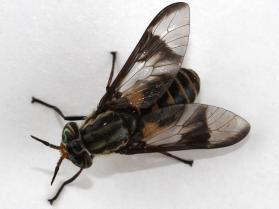
Research – Fungal diversity and frequency carried by housefly (Musca domestica L.) and their relation with stored grains in rural areas of Pakistan
Abstract
Housefly (Musca domestica L.) contaminates food by transferring microbes. Fungi carried by houseflies cause postharvest losses by food spoilage produce mycotoxins and spread various infectious diseases in human beings and animals. This study was planned to determine the diversity and frequency of fungal species carried by houseflies and their relation with stored grains. Houseflies in the vicinity of stored wheat and rice grains were collected from the rural areas of four districts of Pakistan. Overall, 897, 631, and 687 fungal species were isolated from houseflies, rice, and wheat grains, respectively. Aspergillus and Fusarium species followed by Alternaria and Penicillium species were found dominant in houseflies, rice, and wheat grains. Correlation analyses revealed a significant association between most of the fungal species isolated from houseflies, wheat, and rice grains. The study concludes that a strong correlation of fungi exists between stored grains and houseflies around the unhygienic storage places.
Practical applications
It is highly important to understand the role of houseflies in spreading various fungal species to stored grains, particularly in our persisting rural grain storage system. Our study is first of its kind in which we have studied the correlation of fungal diversity and abundance between houseflies, wheat, and rice grains stored in the same vicinity/place/house. Our findings show a strong correlation in fungal diversity and abundance, isolated from flies and stored grains. This study demonstrates the role of houseflies in the dispersal of various fungal species to contaminate the stored grains. Therefore, appropriate measures should be taken to control the houseflies or their entrance to store houses. There is a strong need to give awareness and improve the grain storage system in houses, especially in rural areas, by food regulating authorities.
Research – Pathogen Tracking Data Base – Clostridium perfringens spores
Investigation of foodborne diseases requires the capture and analysis of time-sensitive information on microbial pathogens that is derived from multiple analytical methods and sources. The web-based Pathogen-annotated Tracking Resource Network (PATRN) system (www.patrn.net) was developed to address the data aggregation, analysis, and communication needs important to the global food safety community for the investigation of foodborne disease. PATRN incorporates a standard vocabulary for describing isolate metadata and provides a representational schema for a prototypic data exchange standard using a novel data loading wizard for aggregation of assay and attribution information. PATRN currently houses expert-curated, high-quality “foundational datasets” consisting of published experimental results from conventional assays and next generation analysis platforms for isolates of Escherichia coli, Listeria monocytogenes, and Salmonella, Shigella, Vibrio and Cronobacter species. A suite of computational tools for data mining, clustering, and graphical representation is available. Within PATRN, the public curated data repository is complemented by a secure private workspace for user-driven analyses, and for sharing data among collaborators. To demonstrate the data curation, loading wizard features, and analytical capabilities of PATRN, three use-case scenarios are presented. Use-case scenario one is a comparison of the distribution and prevalence of plasmid-encoded virulence factor genes among 249 Cronobacter strains with similar attributes to that of nine Cronobacter isolates from recent cases obtained between March and October, 2010–2011. To highlight PATRN’s data management and trend finding tools, analysis of datasets, stored in PATRN as part of an ongoing surveillance project to identify the predominant molecular serogroups among Cronobacter sakazakii isolates observed in the USA is shown. Use-case scenario two demonstrates the secure workspace available for private users to upload and analyze sensitive data, and for collating cross-platform datasets to identify and validate congruent datapoints. SNP datasets from WGS assemblies and pan-genome microarrays are analyzed in a combinatorial fashion to determine relatedness of 33 Salmonella enterica strains to six strains collected as part of an outbreak investigation. Use-case scenario three utilizes published surveillance results that describe the incidence and sources of O157:H7 E. coli isolates associated with a produce pre-harvest surveillance study that occurred during 2002–2006. In summary, PATRN is a web-based integrated platform containing tools for the management, analysis and visualization of data about foodborne pathogens.
The contamination of enterotoxigenic Clostridium perfringens spores on food contact surfaces posses a serious concern to food industry due to their high resistance to various preservation methods typically applied to control foodborne pathogens. In this study, we aimed to develop an strategy to inactivate C. perfringens spores on stainless steel (SS) surfaces by inducing spore germination and killing of germinated spores with commonly used disinfectants. The mixture of l-Asparagine and KCl (AK) induced maximum spore germination for all tested C. perfringens food poisoning (FP) and non-foodborne (NFB) isolates. Incubation temperature had a major impact on C. perfringens spore germination, with 40 °C induced higher germination than room temperature (RT) (20 ± 2 °C). In spore suspension, the implementation of AK-induced germination step prior to treatment with disinfectants significantly (p < 0.05) enhanced the inactivation of spores of FP strain SM101. However, under similar conditions, no significant spore inactivation was observed with NFB strain NB16. Interestingly, while the spores of FP isolates were able to germinate with AK upon their adhesion to SS chips, no significant germination was observed with spores of NFB isolates. Consequently, the incorporation of AK-induced germination step prior to decontamination of SS chips with disinfectants significantly (p < 0.05) inactivated the spores of FP isolates. Collectively, our current results showed that triggering spore germination considerably increased sporicidal activity of the commonly used disinfectants against C. perfringens FP spores attached to SS chips. These findings should help in developing an effective strategy to inactivate C. perfringens spores adhered to food contact surfaces.

