Category Archives: Salmonella

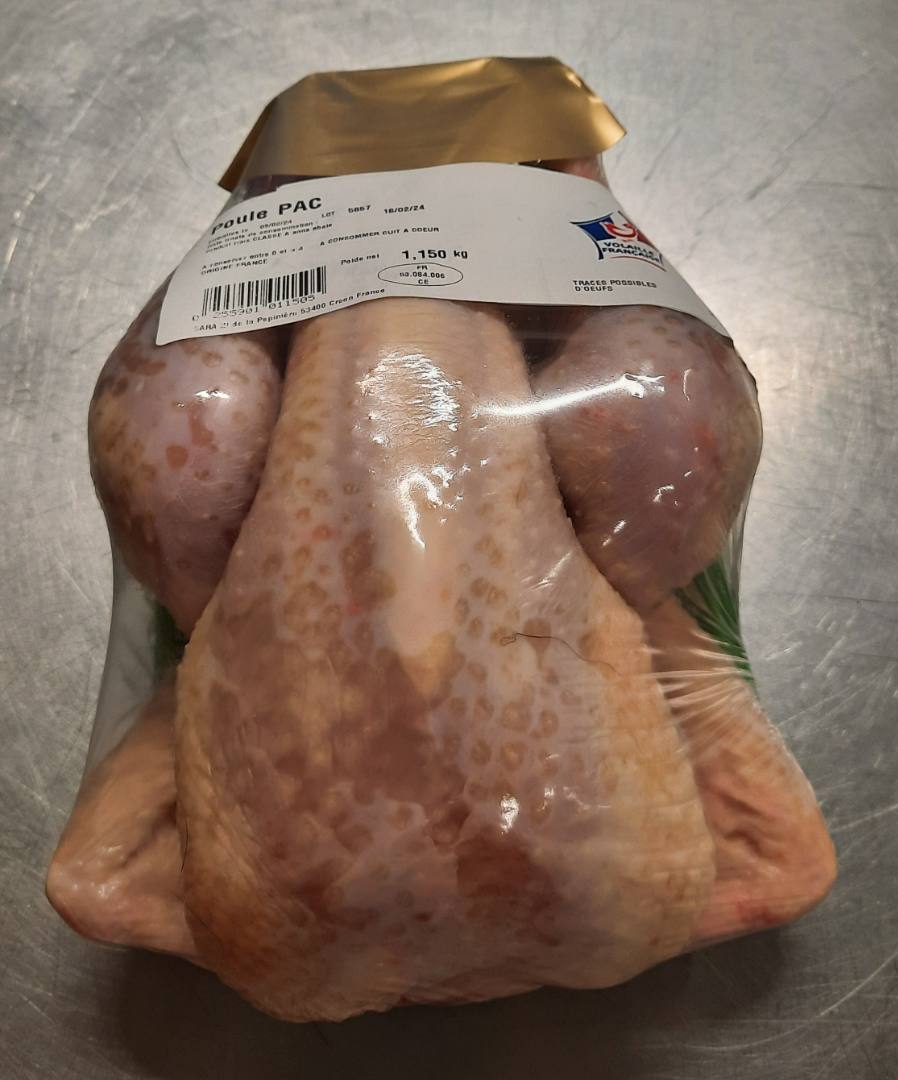
France – whole hens, legs, fillet and wings – Salmonella

Gov France

Product category
Food
Product subcategory
Meats
Product brand name
unbranded
Model names or references
batch: 00005825
Product identification
Batch Date
00005825 Use-by date 02/11/2024
00005825 Use-by date 02/09/2024
00005825 Use-by date 02/04/2024
00005825 Use-by date 05/02/2024
00005825 Use-by date 06/02/2024
00005825 Use-by date 02/02/2024
00005825 Use-by date 02/08/2024
00005825 Use-by date 07/26/2025
Start/end date of marketing
From 01/29/2024 to 02/07/2024
Storage temperature
Product to keep in the refrigerator
Health mark
FR 53-084-006CE
Further information
Products to store in the freezer
Geographical sales area
Whole France
Distributors
wholesaler, caterer, prepared meal preparer

Italy – SALAME NAPOLI – Salmonella

Salute

Brand : /

Name : SALAME NAPOLI

Reason for reporting : Recall due to microbiological risk

Publication date : 9 February 2024

Documentation

Documentation

Research – Multistate nontyphoidal Salmonella and Shiga toxin-producing Escherichia coli outbreaks linked to international travel—United States, 2017–2020

Cambridge.org

Abstract

Enteric bacterial infections are common among people who travel internationally. During 2017–2020, the Centers for Disease Control and Prevention investigated 41 multistate outbreaks of nontyphoidal Salmonella and Shiga toxin-producing Escherichia coli linked to international travel. Resistance to one or more antimicrobial agents was detected in at least 10% of isolates in 16 of 30 (53%) nontyphoidal Salmonella outbreaks and 8 of 11 (73%) Shiga toxin-producing E. coli outbreaks evaluated by the National Antimicrobial Resistance Monitoring System. At least 10% of the isolates in 14 nontyphoidal Salmonella outbreaks conferred resistance to one or more of the clinically significant antimicrobials used in human medicine. This report describes the epidemiology and antimicrobial resistance patterns of these travel-associated multistate outbreaks. Investigating illnesses among returned travellers and collaboration with international partners could result in the implementation of public health interventions to improve hygiene practices and food safety standards and to prevent illness and spread of multidrug-resistant organisms domestically and internationally.

RASFF Alert- Salmonella – Polish Poultry Products – Sesame Seeds – Beef Trimmings – Helva with Pistachios – Duck Breast Fillet –

RASFF

Presence of Salmonella in onion powder from India in Spain

RASFF

Salmonella Enteritidis in beef trimmings from Netherlands. in Sweden

RASFF

Salmonella Havana in Helva with pistachios from Türkiye, via Germany in France and Switzerland

RASFF

Salmonella typhimurium in Turkey thigh fillet from Poland in Latvia and Estonia

RASFF

Salmonella spp in sesame seeds from Nigeria in Greece

RASFF

Salmonella Newport in Duck breast fillet from Poland in Estonia and Finland

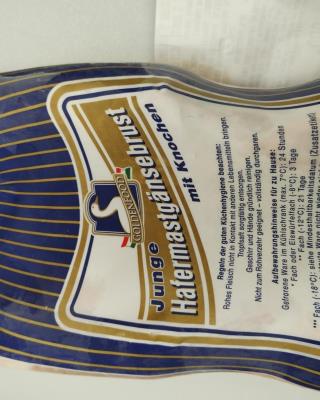
Czech Republic – SKIN BONE GOOSE BREAST – Salmonella

Potravinynapranyri

Illustrative photo #1

Place of inspection:
Chrudim ( Slovak National Uprising 1081, 53705 Chrudim )
ID: 25110161
Food group: Meat and meat products Packaged meat

SKIN BONE GOOSE BREAST
Category: Dangerous foods
Invalid parameter:

Salmonella

The presence of pathogenic bacteria Salmonella Agona and Salmonella Newport , which can cause a disease called salmonellosis, was detected in the food  .

The SZPI has already informed about this product in a press release dated 1/16/2024  Warning for consumers: two batches of poultry meat from abroad with salmonella in the market network.

Best before date: 30/09/2025
Packaging: plastic packaging
Quantity of the product in the package: 900 g
Manufacturer: TRANSIT-FOOD KFT, H4362 NYÍRGELSE, DEBRECENI UT 1,
Date of sample collection: 1/11/2023
Reference number: 24-000068-SZPI-CZ
The sample was detected by the official control of the State Agricultural and Food Inspection.

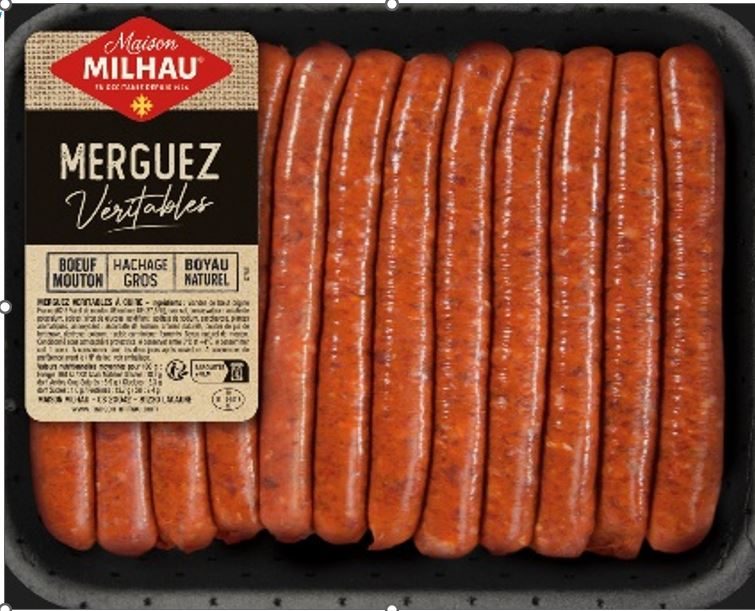
France – REAL MERGUEZ – Salmonella

Gov France

Product category
Food
Product subcategory
Meats
Product brand name
MILHAU HOUSE
Model names or references
300g, 600g trays and traditional shelf
Product identification
GTIN Batch Date
3289012419315 031400 / 030404 Use-by date 02/14/2024
3289010001130 030401 / 031401 Use-by date 02/11/2024
3289010001147 030401 Use-by date 02/11/2024
Start/end date of marketing
From 01/30/2024 to 02/05/2024
Storage temperature
Product to keep in the refrigerator
Health mark
FR 81.124.012 CE
Geographical sales area
Whole France
Distributors
GMS

USA – Bellevue Ihop linked to Salmonella Outbreak

Food Poison Journal

Seattle & King County Public Health announced that three individuals fell ill due to a Salmonella outbreak linked to the IHOP restaurant located at 14747 NE 20th St, Bellevue, WA. The illnesses occurred between October 23 and December 23, 2023, and two people required hospitalization. No deaths were reported. This investigation is now completed.

Laboratory testing confirmed all three cases as Salmonella infections. Further testing revealed that all three cases were infected with the same strain of Salmonella, as determined by genetic fingerprinting (whole genome sequencing or WGS) at the Washington State Public Health Laboratory.

Research – Characteristics of Gastroenteritis Outbreaks Investigated in Singapore: 2018–2021

MDPI

Abstract

There is a need to study the characteristics of outbreaks via Singapore’s outbreak surveillance system to understand and identify the gaps in food safety for targeted policy interventions due to the increasing trend in gastroenteritis outbreaks and consequential increase in foodborne-related deaths and economic burden on public health systems worldwide. A total of 171 gastroenteritis outbreaks were investigated in Singapore from January 2018 to December 2021. This study analyzed the annual trend of investigated gastroenteritis outbreaks, the proportion of outbreaks by implicated sources of food, and the proportion of the type of pathogens identified from human cases, food samples, and environmental swabs collected from outbreak investigations. Among the foodborne gastroenteritis outbreaks (n = 121) investigated in Singapore, approximately 42.1% of the outbreaks had food prepared by caterers, 14.9% by restaurants, and 12.4% had food prepared by in-house kitchens. Clostridium perfringens and Salmonella were the most common causative pathogens in foodborne outbreaks throughout the analysis period. The food samples and environmental swabs collected were mostly detected for Bacillus cereus. Norovirus was the most common causative pathogen in non-foodborne outbreaks and was mainly attributable to preschools. This highlights the importance of monitoring and educating the catering industry and preschools to prevent future outbreaks.

Research – Tomato juice’s antimicrobial properties can kill Salmonella

Science Daily

Tomato juice can kill Salmonella Typhi and other bacteria that can harm people’s digestive and urinary tract health, according to research published this week in Microbiology Spectrum, a journal of the American Society for Microbiology. Salmonella Typhi is a deadly human-specific pathogen that causes typhoid fever.

“Our main goal in this study was to find out if tomato and tomato juice can kill enteric pathogens, including Salmonella Typhi, and if so, what qualities they have that make them work,” said principal study investigator Jeongmin Song, Ph.D., Associate Professor, Department of Microbiology & Immunology, Cornell University.

Research – The Survival of Salmonella enterica Strains in Ready-to-Eat Fruit Purees under Different Storage Temperatures

MDPI

Salmonella enterica, known for its resilience to acidic environments, has been linked to foodborne outbreaks of illness from fruit derivatives. This study aimed to assess the survival of five serovars of Salmonella enterica subsp. enterica in various fruit purees subjected to different storage temperatures. Among the studied serovars, S. enteritidis exhibited the most significant population decrease in all fruit purees. In contrast, S. Agona, S. Gaminara, S. Michigan, and S. Montevideo survived in peach puree at 4 °C for at least 3 days, and S. Agona, S. Gaminara, and S. Montevideo maintained their initial levels in pear puree under the same time/temperature conditions. However, none of the strains were detectable in plum and black currant purees after 2 days at 4, 15, or 25 °C. These findings highlight variations in the behaviour of S. enterica serovars within different fruit purees. Likewise, low-temperature conditions prolonged the survival of the tested strains in all fruit purees analysed.