Category Archives: Salmonella

Information – Common Symptoms of All of the Food Poisoning Pathogens

Food Poisoning Bulletin

Food poisoning outbreaks occur every year in the United States. These outbreaks can be caused by bacteria such as E. coli, Salmonella, Listeria Monocytogenes, Clostridium botulinum, Campylobacter, Shigella, Staphylococcus aureus, Brucella, Vibrio, and Bacillus cereus; and viruses such as norovirus and hepatitis A. At least 48,000,000 Americans are sickened with food poisoning every year. Do you know the common symptoms of all of the food poisoning pathogens? Follow the link above to find out.


Research – Survival of Salmonella in Various Wild Animal Faeces That May Contaminate Produce.

NCBI

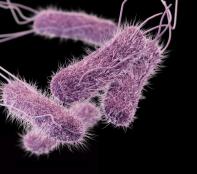
Salmonellaa

Image CDC


ABSTRACT:

Heightened concerns about wildlife on produce farms and possible introduction of pathogens to the food supply have resulted in required actions following intrusion events. The purpose of this study was to evaluate the survival of Salmonella in feces from cattle and various wild animals (feral pigs, waterfowl, deer, and raccoons) in California, Delaware, Florida, and Ohio. Feces were inoculated with rifampin-resistant Salmonella enterica cocktails that included six serotypes: Typhimurium, Montevideo, Anatum, Javiana, Braenderup, and Newport (104 to 106 CFU/g). Fecal samples were stored at ambient temperature. Populations were enumerated for up to 1 year (364 days) by spread plating onto tryptic soy agar supplemented with rifampin. When no colonies were detected, samples were enriched. Colonies were banked on various sampling days based on availability of serotyping in each state. During the 364-day storage period, Salmonella populations decreased to ≤2.0 log CFU/g by day 84 in pig, waterfowl, and raccoon feces from all states. Salmonella populations in cattle and deer feces were 3.3 to 6.1 log CFU/g on day 336 or 364; however, in Ohio Salmonella was not detected after 120 days. Salmonella serotypes Anatum, Braenderup, and Javiana were the predominant serotypes throughout the storage period in all animal feces and states. Determination of appropriate risk mitigation strategies following animal intrusions can improve our understanding of pathogen survival in animal feces.

Research – Why health experts aren’t warning about Coronavirus in food

Wbay

Chicken with Salmonella can make you sick. So can romaine lettuce with E. coli and buffets with lurking Norovirus. So why aren’t health officials warning people about eating food contaminated with the new Coronavirus?

The answer has to do with the varying paths organisms take to make people sick.

Respiratory viruses like the new Coronavirus generally attach to cells in places like the lungs. Germs like Norovirus and Salmonella can survive the acid in stomachs, then multiply after attaching to cells inside people’s guts.

“Specializing in what tissues to attach to is typically part of the disease’s strategy to cause illness,” according to the U.S. Centers for Disease Control and Prevention.

The CDC and other experts note that the virus is new and still being studied. But they say there’s no evidence yet that COVID-19 sickens people through their digestive systems, though the virus has been detected in the faeces of infected people.

How these germs spread also differs.

Respiratory viruses like the flu and the new Coronavirus spread mainly through person-to-person contact and air droplets from coughing, sneezing or other flying saliva.

France – Salmonella – Roasted fillet of MASTER COQ turkey, thinly sliced ​​turkey FULL FLAVOR, Turkey breasts of MASTER COQ turkey, CARREFOUR turkey legs

AFSCA

Following a notification via the RASFF system (European rapid alert system Food and Feed), the AFSCA is withdrawing from the sale the following products: roasted turkey fillet MAITRE COQ, minced FULL FLAVOR turkey, cutlets of turkey MAITRE COQ, CARREFOUR turkey legs and reminds them of consumers due to the possible presence of Salmonella.


USA – Mountain Rose Herbs Recall on “Organic Kudzu Root Herbal Supplement” Due to Salmonella

Food Poisoning News

Mountain Rose Herbs Recall on “Organic Kudzu Root Herbal Supplement” Due to Salmonella

Mountain Rose Herbs, located in Eugene, Oregon, is issuing a recall on all sizes of the companies “Organic Kudzu Root Herbal Supplement” due to the presence of Salmonella which was found through routine quality testing procedures. The recalled Organic Kudzu Root Herbal Supplement, which is used in traditional Chinese medicine because of its antioxidant properties, is packed in clear plastic or poly-woven bags, weighing in ranges of 4 ounces to 50 pounds. The two lots of Organic Kudzu Root Herbal Supplements that are affected in the recall are Lot #24247-X and Lot #24247.

To check and see if the product purchased in a part of the recall for Salmonella contamination, the lot number is located on the bottom corner of the label.

RASFF Alerts – Salmonella – Chilled Chicken Fillets – Sesame Seeds – Chicken Legs – Chicken Meat – Frozen Chicken and Turkey Kebab – Rice Flour

RASFF-Logo

RASFF – Salmonella enterica ser. Enteritidis (3 out of 5 samples /25g) in chilled chicken fillets from Poland in Poland

RASFF – Salmonella enterica ser. Benin (presence /25g), Salmonella enterica ser. Chester (presence /25g) and Salmonella enterica ser. Elisabethville (presence /25g) in sesame seeds from Nigeria in Greece

RASFF – Salmonella enterica ser. Jalisco (in 2 out of 5 samples /25g) in sesame seeds from Sudan in Greece

RASFF – Salmonella enterica ser. Gaminara (presence /25g) and Salmonella enterica ser. Livingstone (presence /25g) in sesame seeds from Sudan in Greece

RASFF – Salmonella (presence /25g) in frozen chicken legs from Poland in Bulgaria

RASFF – Salmonella enterica ser. Amager (presence /25g) and Salmonella enterica ser. Livingstone (presence /25g) in sesame seeds from Sudan in Greece

RASFF – Salmonella (presence /25g) and Salmonella enterica ser. Adelaide (presence /25g) in sesame seeds from Sudan, via the United Arab Emirates in Greece

RASFF – Salmonella (presence /25g) in frozen chicken meat from Poland in Italy

RASFF – Salmonella enterica ser. Livingstone (in 1 out of 5 samples /25g) and Salmonella enterica ser. Utrecht (in 1 out of 5 samples /25g) in sesame seeds from Sudan in Greece

RASFF – Salmonella (presence /25g), Salmonella enterica ser. Gaminara (presence /25g), Salmonella enterica ser. Putten (presence /25g) and Salmonella enterica ser. Singapore (presence /25g) in sesame seeds from Sudan, via the United Arab Emirates in Greece

RASFF – Salmonella enterica ser. Infantis (presence /25g) in frozen chicken and turkey kebab from Slovenia in Italy

RASFF – Salmonella (presence /25g), Salmonella enterica ser. Charity (presence /25g), Salmonella enterica ser. Karamoja (presence /25g) and Salmonella enterica ser. Minnesota (presence /25g) in sesame seeds from Sudan in Greece

RASFF – Salmonella enterica ser. Menston gr. C (in 1 out of 5 samples /25g) in sesame seeds from Nigeria in Greece

RASFF – Salmonella (presence /25g), Salmonella enterica ser. Braenderup (presence /25g), Salmonella enterica ser. Karamoja (presence /25g) and Salmonella enterica ser. Reading (presence /25g) in sesame seeds from Sudan in Greece

RASFF – Salmonella enterica ser. Infantis (presence /25g) in frozen chicken fillets from Poland in Bulgaria

RASFF – Salmonella (presence /25g) in hulled sesame seeds from India in Poland

RASFF – Salmonella enterica ser. Infantis (presence /25g) in frozen kebab from Slovenia in Italy

RASFF – Salmonella (presence /25g) in rice flour from Italy in Germany

RASFF Alert – Animal Feed – Salmonella – Fish Meal

RASFF-Logo

RASFF – Salmonella enterica ser. Livingstone (presence /25g) in fishmeal from the United States in Greece

USA – Salmonella outbreak traced to food ordered online

Food Safety News kswfoodworld Salmonella

Ten people were sickened by Salmonella from chicken legs in a Chinese city after eating food ordered online in mid-2018, according to a new report.

Researchers said the investigation highlights the role of online food delivery platforms as a new mode of foodborne disease transmission. Collaboration between public health agencies and online food delivery platforms is essential for timely intervention and to limit the scale of outbreaks.

From late June to early July 2018, 10 cases of diarrheal disease were reported at two hospitals in the Nanshan District of Shenzhen, China. This outbreak was suspected to be foodborne and was notified to the Shenzhen Center for Disease Control and Prevention (Shenzhen CDC), according to the study published in Emerging Infectious Diseases.

All 10 patients were university students who had diarrhea and fever. Seven of them also reported nausea and vomiting. Cases were from six different colleges of the same university but lived in different dormitories and did not know each other.

Research – Salmonella enterica Elicits and Is Restricted by Nitric Oxide and Reactive Oxygen Species on Tomato

Frontiers in Microbiology

The enteric pathogen Salmonella enterica can interact with parts of the plant immune system despite not being a phytopathogen. Previous transcriptomic profiling of S. enterica associating with tomato suggested that Salmonella was responding to oxidative and nitrosative stress in the plant niche. We aimed to investigate whether Salmonella was eliciting generation of reactive oxygen species (ROS) and nitric oxide (NO), two components of the microbe-associated molecular pattern (MAMP)-triggered immunity (MTI) of plants. We also sought to determine whether this interaction had any measurable effects on Salmonella colonization of plants. Biochemical, gene expression and on-plant challenge assays of tomato vegetative and fruit organs were conducted to assess the elicitation of ROS and NO in response to Salmonella Newport association. The counter bacterial response and the effect of NO and ROS on Salmonella colonization was also investigated. We detected H2O2 in leaves and fruit following challenge with live S. Newport (p < 0.05). Conversely, NO was detected on leaves but not on fruit in response to S. Newport (p < 0.05). We found no evidence of plant defense attenuation by live S. Newport. Bacterial gene expression of S. Newport associating with leaves and fruit were indicative of adaptation to biotic stress in the plant niche. The nitrosative stress response genes hmpA and yoaG were significantly up-regulated in S. Newport on leaves and fruit tissue compared to tissue scavenged of NO or ROS (p < 0.05). Chemical modulation of these molecules in the plant had a restrictive effect on bacterial populations. Significantly higher S. Newport titers were retrieved from H2O2 scavenged leaves and fruit surfaces compared to controls (p < 0.05). Similarly, S. Newport counts recovered from NO-scavenged leaves, but not fruit, were higher compared to control (p < 0.05), and significantly lower on leaves pre-elicited to produce endogenous NO. We present evidence of Salmonella elicitation of ROS and NO in tomato, which appear to have a restricting effect on the pathogen. Moreover, bacterial recognition of ROS and NO stress was detected. This work shows that tomato has mechanisms to restrict Salmonella populations and ROS and NO detoxification may play an important role in Salmonella adaptation to the plant niche.

Research – Careful with the Salmonella if you eat rattlesnake meat

Barf blog

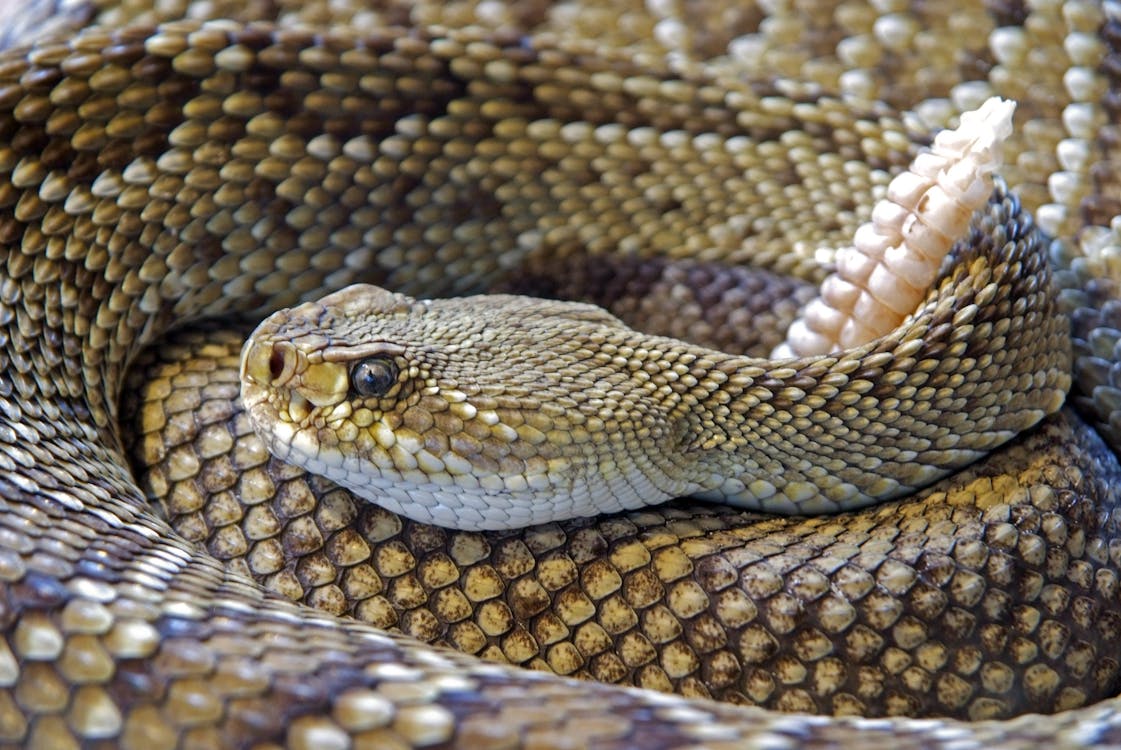
Diamond Back Rattle Snake

Pixabay

Ingestion of rattlesnake meat has been previously studied in populations residing in the United States- Mexico border region. Few case reports have shown a link between consuming rattlesnake meat with Salmonella bacteremia. We are describing a unique case of Salmonella IE in a patient ingesting rattlesnake meat. This case presents an opportunity for physicians to recognize rare sources of IE by looking deep into cultural exposures and practices.