Category Archives: Salmonella

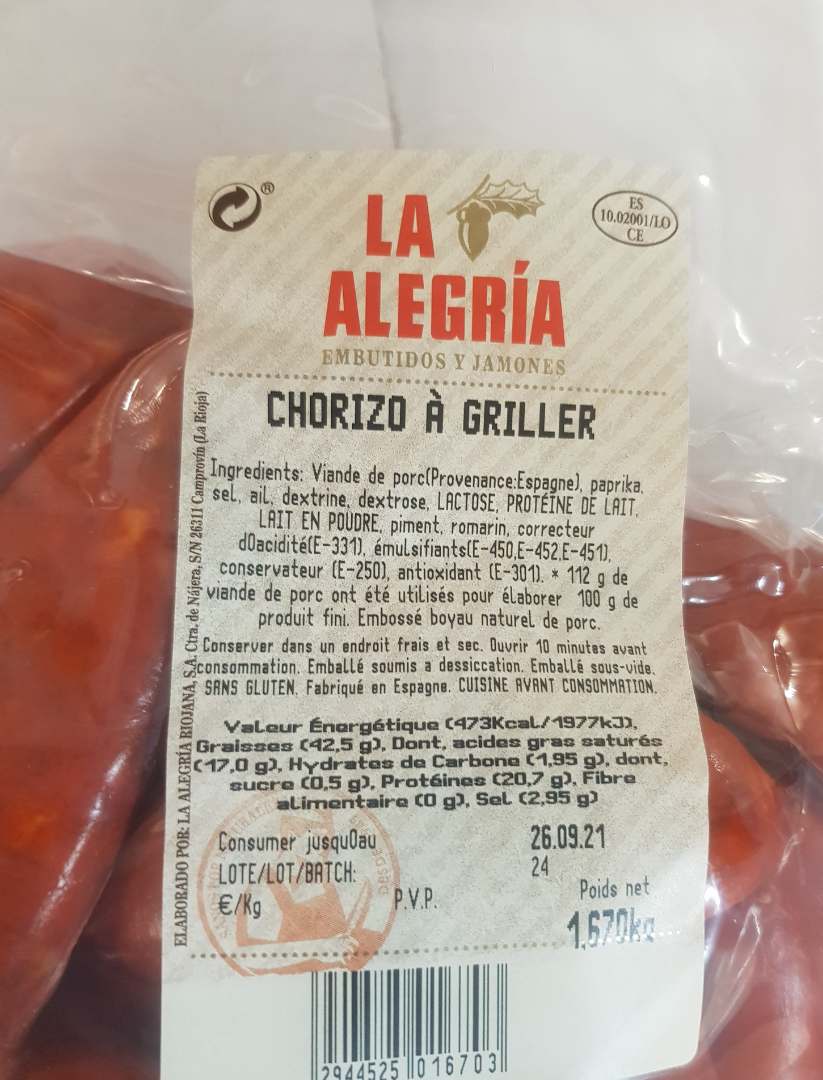
France – SWEET GRILLED CHORIZO – Salmonella

Gov france

Identifying information for the recalled product

  • Product category Food
  • Product sub-category Meats
  • Product brand name LA ALEGRIA
  • Names of models or references SWEET GRILLED CHORIZO
  • Product identification
    Lot Dated
    Supplier batch 15 Use-by date 07/21/2021
  • Packaging1.5KG vacuum bags
  • Start date / End of marketing From 04/30/2021 to 07/06/2021
  • Storage temperature Product to be stored in the refrigerator
  • Geographical sales area Regions: Auvergne-Rhône-Alpes, Occitanie, Provence-Alpes-Côte d’Azur
  • Distributors U Express – Intermarché – Independent
  • List of points of saleCustomer_List_La_Algeria.pdf

Practical information regarding the recall

  • Reason for recall Traces of Salmonella
  • Risks incurred by the consumer Salmonella spp (causative agent of salmonellosis)
  • Consumer behavior Stop consuming
    Stop using the product
    Return the product to the point of sale
  • Sanitary recommendation Food poisoning caused by salmonella results in sudden onset gastrointestinal disorders (diarrhea, vomiting) often accompanied by fever and headaches which generally occur 6 to 72 hours after consumption of the contaminated products. These symptoms may be more pronounced in young children, pregnant women, immunocompromised individuals and the elderly. People who have consumed these products and who present these symptoms are invited to consult their doctor, notifying him of this consumption. In the absence of symptoms within 7 days after consuming the affected products, there is no need to worry and consult a doctor. If the product must be cooked before consumption:
  • Compensation modalities Refund
  • End date of the recall procedure Tuesday, July 27, 2021

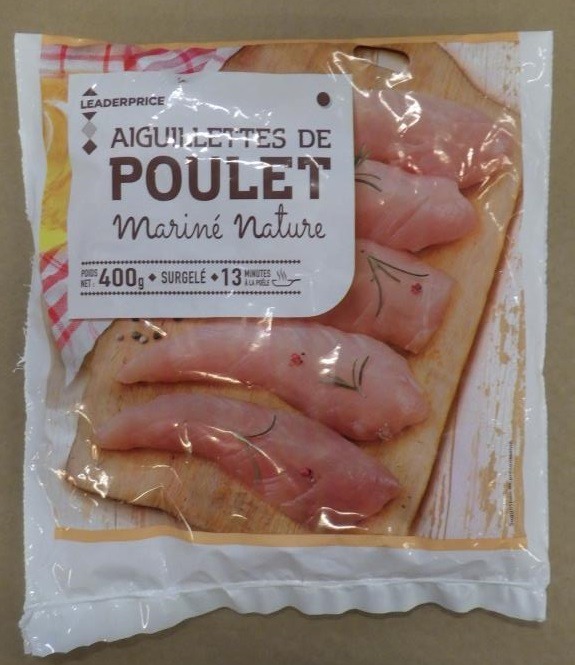
France – Frozen plain marinated chicken filet -Salmonella

Gov france

Identifying information for the recalled product

  • Product category Food
  • Product sub-category Meats
  • Product brand name LEADER PRICE
  • Names of models or references400g
  • Product identification
    GTIN Lot Dated
    3263856754412 21118034 1 112 15:46 Date of minimum durability 08/01/2022
  • Packaging Plastic bag.
  • Storage temperature Product to be stored in the freezer
  • Health mark FR 76351092 CE
  • Geographical sales area Whole France
  • Distributors Leader Price and Leader Price distribution networks.

Practical information regarding the recall

  • Reason for recall Salmonella detection.
  • Risks incurred by the consumer Salmonella spp (causative agent of salmonellosis)
  • Consumer behavior Stop consuming
    Stop using the product
    Return the product to the point of sale
  • Sanitary recommendation Food poisoning caused by salmonella results in sudden onset gastrointestinal disorders (diarrhea, vomiting) often accompanied by fever and headaches which generally occur 6 to 72 hours after consumption of the contaminated products. These symptoms may be more pronounced in young children, pregnant women, immunocompromised individuals and the elderly. People who have consumed these products and who present these symptoms are invited to consult their doctor, notifying him of this consumption. In the absence of symptoms within 7 days after consuming the affected products, there is no need to worry and consult a doctor. If the product must be cooked before consumption:
  • Compensation modalities Refund
  • End date of the recall procedure Saturday, July 24, 2021

RASFF Alerts – Salmonella – Polish Chicken – Polish Beef – Chicken Fillet – Sliced Smoked Ham – Kipfilet – Beef -Black Pepper – Minced Meat Preparation – Sesame Seeds – Chorizo – Sunflower Seed Halva

RASFF

Salmonella in frozen chicken fillet from the Netherlands in Greece

RASFF

Salmonella (present /25g) in sliced smoked raw ham from Germany in Germany and France

RASFF

Salmonella in kipfilet from the Netherlands in Germany, Ireland, UK , Netherlands and N.Ireland

RASFF

Salmonella Mbandaka in beef from Poland in Germany

RASFF

PRESENCIA DE SALMONELLA SPP. EN PIMIENTA DE BRASIL // PRESENCE OF SALMONELLA SPP. IN BRAZILIAN PEPPER

in Spain

RASFF

Samonella , pimienta negra, Brasil // Salmonella in black pepper from Brazil in Spain

RASFF

Salmonella Derby in minced meat preparation from Poland in Slovakia

RASFF

Salmonella Enteritidis in chicken from Poland in Slovakia and Czech Republic

RASFF

Salmonella spp. in chilled chicken elements from Poland in the UK, France and Netherlands

RASFF

Presence of Salmonella in sesame seeds from India in Poland

RASFF

Salmonella Enteritidis and Salmonella group O:7 in official samples of chicken neck skins from Poland in Estonia and Rumania

RASFF

Salmonella spp detected in Chorizo produced in Spain in France

RASFF

Salmonella Enteritidis in frozen chicken kebab from Poland in the Czech Republic

RASFF

Salmonella Enteritidis in official samples of chicken neck skins from Poland in France, Poland, Rumania and the UK

RASFF

Salmonella (group O:8 in 1 out of 5 samples /25g) and Salmonella enterica ser. Infantis (in 4 out of 5 samples /25g) in chilled chicken meat from Poland in the Czech Republic, Germany, Latvia and Poland

RASFF

Salmonella Agona in sunflower seed halva from Lithuania, via Germany in Finland

RASFF Alerts – Animal Feed – Salmonella – Fish Meal – MSM Chicken – MDM Rabbit – Pig Ear Dog Chews

RASFF

Salmonella typhimurium in dog chews (pig ears) from Germany in Iceland.

RASFF

Salmonella in frozen mechanically separated (MSM) chicken meat cat 3 from the Netherlands in Belgium

RASFF

Salmonella in rabbit mechanically deboned meat (MDM) cat 3 from Denmark in Belgium

RASFF

Salmonella in fish meal from Morocco in Spain

Research – The serious and long-term effects of foodborne illness

MSU

Campylobacter kswfoodworld

Many people think if they eat something “bad” they might spend some uncomfortable time in the restroom then go on with their lives in a day or two. Actually, foodborne illness can lead to chronic disease, permanent disability and even death. Here are some of the lesser-known facts about the long term effects of food borne pathogens.

Reactive arthritis, a type of joint inflammation that affects the knees, ankles or feet can develop after being exposed to Campylobacter jejuni  or Salmonella. Reactive arthritis usually lasts fewer than 6 months, but this condition may recur or become chronic arthritis. Campylobacter is found in raw and undercooked poultry, unpasteurized milk and contaminated water. Salmonella is also found in eggs, undercooked meat and poultry, and can be transferred to other foods through feces. Campylobacter infection afflicts millions of Americans annually and hospitalizes more than 10,000. Campylobacter is associated with Guillain-Barré syndrome (GBS). GBS patients can become permanently disabled and paralyzed; many require hospital care. Campylobacter also can trigger arthritis, heart infections and blood infections.

Foodborne illnesses caused by bacteria also increase the risk of developing irritable bowel syndrome (IBS). IBS is a disorder of unknown cause that is associated with abdominal pain, bloating, and diarrhea or constipation or both. There is no cure for IBS.

Children are the most likely to be infected and have the most serious complications from E. coli O157:H7. They can develop hemolytic uremic syndrome (HUS), HUS can lead to death, or in some cases t long-term or permanent health problems, including end-stage kidney disease, neurological complications, and insulin-dependent diabetes. Adults who had recovered from E. coli O157:H7 infections had increased risks of high blood pressure, kidney problems and cardiovascular disease. E. Coli is found in undercooked ground beef, unpasteurized (raw) milk and juice, soft cheeses made from raw milk, and raw fruits and vegetables (such as sprouts). It can also be found in contaminated water and feces of infected people.

Listeria monocytogenes infects thousands of Americans every year and has been associated with infections of the brain and spinal cord, resulting in serious neurological dysfunctions or death. Most reported cases occur in children under the age of 4, and about 1 in 5 people afflicted die as a result of the infection. In pregnant women, listeriosis can cause miscarriage, premature birth or stillbirth.

Listeriosis survivors often are left with serious neurological dysfunctions, including seizures, paralysis and impaired ability to see, hear, swallow or speak. Severe cases often result in partial to total impairment and can require life-long residential care with no possibility of work. Listeria is found in ready-to-eat deli meats and hot dogs, refrigerated pâtés or meat spreads, unpasteurized (raw) milk and dairy products, soft cheese made with unpasteurized milk, such as queso fresco, feta, brie, camembert, refrigerated smoked seafood and raw sprouts.

The long-term effects of foodborne disease are still not fully understood. New findings unfold as research is performed, but until then, taking foodborne illness seriously can go a long way in protecting health. This is another instance where prevention truly is the best medicine.

USA – Outbreak Investigation of Salmonella: Jule’s Cashew Brie (April 2021) – Outbreak Over

FDA

he FDA, along with CDC, state and local partners, investigated a multistate outbreak of Salmonella infections linked to the consumption of Jule’s Cashew Brie, a vegan, or plant-based cheese alternative. On April 23, 2021, Jule’s Foods of Carlsbad, California, conducted a voluntary recall of all varieties of Jule’s Foods products.

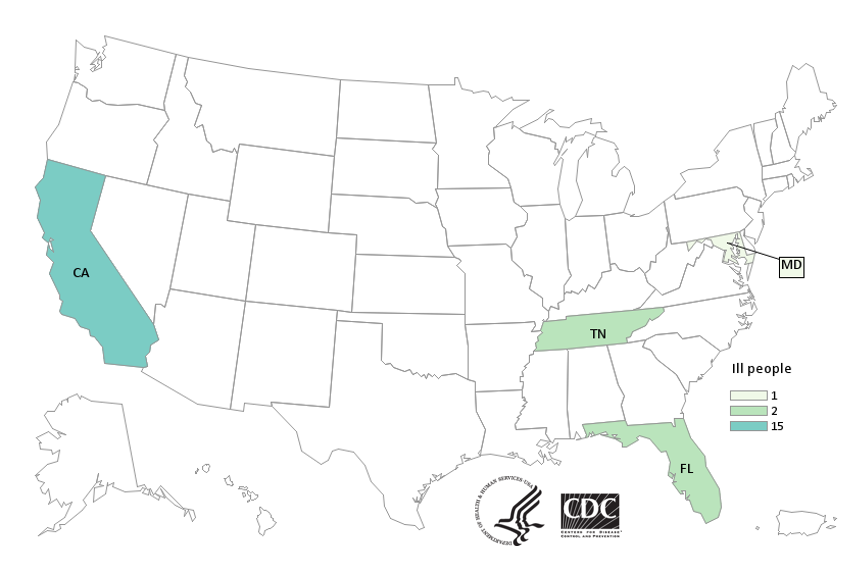
As of July 7, 2021, CDC announced that the outbreak is over. There are a total of 20 illnesses in four states. Two additional strains of SalmonellaSalmonella Typhimurium and Salmonella Chester, have been linked to this outbreak. The illnesses of Salmonella Chester have the same genetic fingerprint as Salmonella found in a sample of Jule’s Cashew Brie collected by the California Department of Public Health (CDPH).

Illnesses of Salmonella Duisburg and Salmonella Urbana have been previously reported and are linked to this outbreak. Other strains of Salmonella have been identified in raw and finished product samples and environmental samples but have not been linked to illnesses.

Based on FDA traceback investigation and sample results, the cashews used by Jule’s Foods have been identified as the likely source of contamination in the Jule’s Cashew Brie products. The FDA worked with the cashew supplier to ensure that potentially contaminated product was removed from the market and that the supplier implemented corrective actions.

Recommendation

CDC announced that the outbreak is over. There are no recommendations for consumers, restaurants, or retailers.


Product Images

Outbreak Investigation of Salmonella Duisburg Jule's Brie

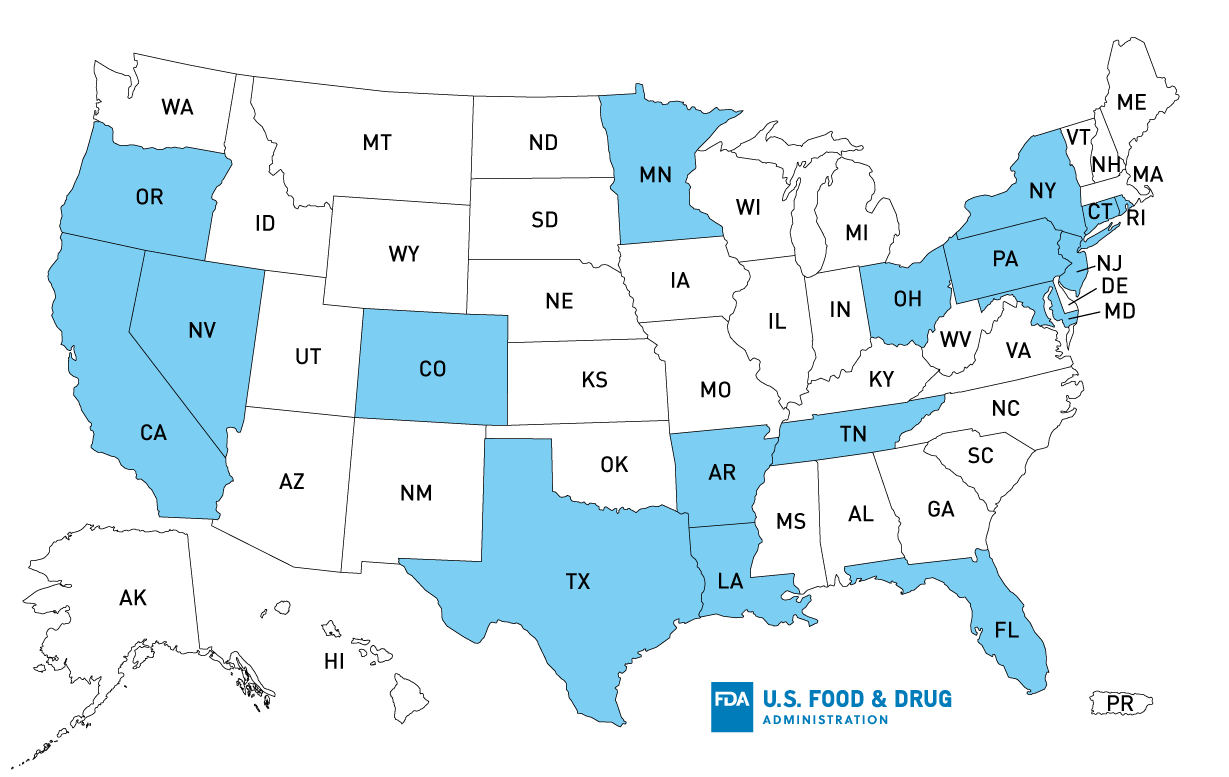
Map of U.S. Distribution of Recalled Jule’s Foods Products

Outbreak Investigation of Salmonella Duisburg - Cashew Brie Products - Map of U.S. Distribution (04-23-2021)

Case Count Map Provided by CDC

Outbreak Investigation of Salmonella in Cashew Brie Products - CDC Case Count Map (July 7, 2021)

Case Counts

Total Illnesses: 20
Hospitalizations: 5
Deaths: 0
Last Illness Onset: May 9, 2021
States with Cases: CA (15), FL (2), MD (1), TN (2)
Product Distribution*: Arkansas, California, Colorado, Connecticut, Florida, Louisiana, Maryland, Minnesota, Nevada, New York, New Jersey, Ohio, Oregon, Pennsylvania, Rhode Island, Tennessee, Texas
*Distribution has been confirmed for states listed, but product could have been distributed further, reaching additional states

Spain – Salmonella sickens six in Spain; outbreaks decline in Andalucía

Food Safety News

Public health officials in a Spanish region have reported six confirmed Salmonella infections.

Surveys and epidemiological work by Castilla y León Public Health have shown the outbreak could have been caused by the consumption of tortillas in two establishments in Soria. A Spanish tortilla also called a Spanish omelet can contain herbs, spices, potatoes, and eggs.

The product was cooked at one of these sites and part of it was transferred, once prepared, to the second.

Two children and four adults are affected. The two young people went to the Santa Bárbara Hospital and were then transferred to Burgos University Hospital, where they were admitted to the pediatric Intensive Care Unit (ICU).

Finland – Salmonella outbreak affects 450 in Jyväskylä, Linked to imported lettuce

Outbreak News Today

In a follow-up on the salmonella outbreak in the Jyväskylä region of Finland, the City of Jyväskylä said imported lettuce served in day care centres has been confirmed as the source of an outbreak of salmonella bacterial infections that affected about 450 children and day care centre staff.

The salad contained domestic cucumber, peas and foreign iceberg lettuce. Domestically-produced cucumbers and peas were also suspected to be the cause of the outbreak, but the city said tests had revealed no connection between these products and the salmonella infections.

The most likely source of Salmonella is iceberg lettuce, which came to Finland from Germany via Sweden.

UK – Raw Pet Food company recalls five products following Salmonella contamination

Vet Times

A pet food manufacturer has recalled several of its product lines containing duck after they were discovered to be contaminated with Salmonella.

The Food Standards Agency (FSA) has announced that raw pet food company Natural Instinct has recalled five of its products.

Full refund

Advice published by the FSA says: “If you have bought any of the affected products do not use them.

“Instead, return them to the store from where they were bought for a full refund. When handling and serving raw pet food it is always advised to clean utensils and feeding bowls thoroughly after use.

“Consumers should wash hands thoroughly after handling raw pet food, bowls, utensils or after contact with the faeces of animals.

“Raw pet food should be stored separately from any food, especially ready to eat foods. Care should be taken when defrosting to avoid cross-contamination of foods and surfaces.”

Affected products

The affected products are:

  • Working Dog Duck – 1kg and 2 × 500g
  • Pure Duck – 1kg and 2 × 500g
  • Working Dog Puppy – 1kg and 2 × 500g
  • Duck Carcass – Pack of 2
  • Duck Necks – Pack of 6

Netherlands -Safety warning Boni chicken breast, chicken cubes and chicken tenderloins natural and seasoned (attention) – Salmonella

NVWA

Safety warning Boni chicken fillet, chicken cubes and chicken tenderloins natural and seasoned

As a precaution, Boni gets fresh chicken fillet, chicken cubes and chicken tenderloins from the stores. The chicken may contain salmonella. Eating a product with this bacterium is a danger to public health and can especially pose a risk for people with a low resistance, such as the sick, pregnant women, the elderly and young children.

Which products are involved?

  • All chicken fillet with a best before date of 04-07 and 06-07
  • Chicken tenderloins natural and seasoned with a best before date of 06-07
  • Chicken cubes with a TGT date of 03-07

Sincerely

The Dutch Food and Consumer Product Safety Authority