Category Archives: Salmonella

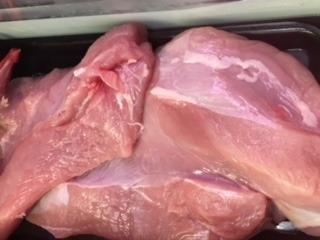
France – Turkey cutlet, trad department – Salmonella

Gov france

Identifying information for the recalled product

  • Product category Food
  • Product sub-category Meats
  • Product brand name unbranded
  • Names of models or references turkey cutlet
  • Product identification
    Lot
    0341091777
  • Packaging unpacked product
  • Start date / End of marketing From 06/15/2021 to 06/17/2021
  • Storage temperature Product to be stored in the refrigerator
  • Further information Supplier SNV (Volabraye), sachet whole turkey fillet 1.5 kg
  • Geographical sales area Whole France
  • Distributors intermarket

Practical information regarding the recall

  • Reason for recall Following the test results, abnormal presence of salmonella and salmonella typhimurium serotyping which may lead to gastrointestinal disorders with fever
  • Risks incurred by the consumer Other risk
  • Consumer behavior Stop consuming
    Stop using the product
    Destroy the product
  • Compensation modalities Exchange
  • End date of the recall procedure Monday, July 12, 2021

France – Product recall: Pédelhez brand Chipo Merguez x12 – Salmonella

Oulah

ENCOUNTERED PROBLEM

Presence of salmonella

PROPOSED SOLUTION

People who may have this product are asked not to consume it and to return it to the point of sale where it was purchased.

Foodborne illness caused by salmonella results in gastrointestinal disturbances, diarrhea, vomiting and abdominal pain, often accompanied by fever; these symptoms may be more severe in young children, immunocompromised individuals and the elderly. The incubation period can range from 6 to 72 hours.
People who have consumed the products mentioned below and who have these symptoms are invited to consult their doctor, notifying him of this consumption.

FURTHER INFORMATION

▸ Names of models or references
Tray of 6 chipolatas and 6 Merguez


▸ Barcode
3437770078620
3437770078620


▸ Lot
21181000 (shipping lot 210181-210182-210183)
21180000 (shipping lot 210180-21018)


▸ DLC – DDM
07/13/2021
07/12/2021


▸ Packaging
Plastic container Under protective atmosphere


▸ Start date / End of marketing
From 06/30/2021 to 07/06/2021


▸ Health mark
FR66172001CE


▸ Geographical sales area
ALPES-MARITIMES (06), BOUCHES-DU-RHONE (13), GIRONDE (33), HERAULT (34), PYRENEES-ORIENTALES (66), SEINE-ET-MARNE (77), VAUCLUSE (84) ), VAL-D’OISE (95)


Auchan and Carrefour distributors, direct stores, wholesalers


▸ Consumer service contact
0468921111


▸ Source
SAS Les Tastes du Sud

Ireland – Recall of a Batch of Koldunai Gimtines Dumplings with Meat due to the Presence of Salmonella

FSAI

Summary
Category 1:
For Action

Alert Notification:
2021.47

Product:
Koldùnai Gimtinès dumplings with meat; pack size: 1000g

Batch Code:
Best before: 13.05.2022

Country Of Origin:
Lithuania

Message:
The above batch of Koldùnai Gimtinès dumplings with meat is being recalled due to the presence of Salmonella. Point-of-sale recall notices will be displayed in stores supplied with the implicated batch.

Nature Of Danger:
People infected with Salmonella typically develop symptoms between 12 and 36 hours after infection, but this can range between 6 and 72 hours. The most common symptom is diarrhoea, which can sometimes be bloody. Other symptoms may include fever, headache and abdominal cramps. The illness usually lasts 4 to 7 days. Diarrhoea can occasionally be severe enough to require hospital admission. The elderly, infants, and those with impaired immune systems are more likely to have a severe illness.

Action Required:
Manufacturers, wholesalers, distributors, caterers & retailers:
Retailers are requested to remove the implicated batch from sale and to display a point-of-sale recall notice in stores where the affected batch was sold.

Consumers:
Consumers are advised not to eat the implicated batch.

Dumplings

Switzerland – Public warning: presence of Salmonella in mustard seeds and spice blends

BLV

Bern, 06.07.2021 – The Dutch authorities have informed the Federal Office for Food Safety and Veterinary Affairs (FSVO), via the Rapid Alert System for Food and Feed (RASFF), of the presence of salmonella in a mustard seed delivery. These have been used in Switzerland in various products that the FSVO recommends not to consume, as a health risk cannot be excluded. The outlets concerned immediately removed the implicated items from their shelves and ordered a recall.

How can these products be dangerous?

Salmonella are bacteria (called “zoonotic agents”) that are pathogenic to humans and animals. In humans, they can trigger gastrointestinal upset with fever, as well as vomiting, diarrhea and abdominal pain within 6 to 72 hours after consumption. People who have consumed a contaminated product are advised to consult a doctor in the event of the appearance of the aforementioned symptoms.

Which products are affected?

Here are the 5 incriminated articles:

Item, brand: “Yellow mustard”, 70 g, JC Fridlin 1775

Batch number: L066736A                

Date of minimum durability: 02.2025         

On sale at: Jelmoli, Zurich

Article: “Senf gelb ganz”, Herboristeria (Ebikon)

Packaging: 100 g paper bags         

Lot number: 22302-1                            

Date of minimum durability: December 2023 to June 2024  

On sale in various pharmacies and drugstores in German-speaking Switzerland

Item, brand: “LeChef Grill Burger”, 43 g

Article No: 1062.919

Date of minimum durability: 05.2023         

On sale at: Migros

Item, brand: “White mustard, grains”, 50 g, Migros

Article No: 1062.861

Date of minimum durability: 01.2024         

On sale at: Migros

Article, brand: “Sultans Fancy Rub”, “Gewürzhändlerei zum scharfen Sultan”

Packaging: sachets of 82 g + doses of 42 g  

Lot number: L066685                  

Date of minimum durability: 05.2024         

On sale in markets and in the online store

What should affected consumers do?

FSVO recommends not to consume these products and to eliminate them.

Address for sending questions

Consumers:
Federal Office for Food Safety and Veterinary Affairs (
FSVO ) Infodesk: Tel. +41 58 463 30 33; info@blv.admin.ch

Journalists:
Federal Office for Food Safety and Veterinary Affairs (FSVO)
Media service: Tel. +41 58 463 78 98; media@blv.admin.ch


India – FSSAI issues alert for Salmonella in oregano from Chile; seeks recall

FNB News

The apex food regulator of the country, FSSAI, has issued an alert on detection of salmonella in dried oregano from Chile. The FSSAI has issued a notice in this regard after receiving an alert from the International Food Safety Authorities Network (INFOSAN).

The notice says, “An alert was received from the International Food Safety Authorities Network – INFOSAN with regard to detection of salmonella in Sweden in dried oregano from Chile.”

The notice added that the ‘implicated’ product was also imported into India by Keya Foods International Pvt. Ltd and has been distributed within India.

The alert was generated after a lab testing was conducted in May and June this year by an European laboratory Eurofins.

The FSSAI has also asked the state food authorities to ensure total recall of the product from the market to ensure food safety.

“With possibility of this product reaching consumers through online sales or by other means and considering the health risk which may be posed by consumption of the said product due to contamination of salmonella sp, all state food authorities are advised to take necessary action including complete recall of the product from market,” reads the notice.

Also, the FSSAI has appealed to the consumers/general public not to consume the product and return it, if purchased.

The listed batch of the product oregano in question was from Feb 2020 to April 2021.

Denmark – Salmonella and banana chips

DVFA

The Whole Company Food A / S is recalling products containing banana chips due to the risk of salmonella. Updated on 05.07.2021 with new point of sale and new product.

Recalled Foods , Published: July 5, 2021

Modified July 5, 2021

What foods:
Banana Chips
Net Weight: 200g
Barcode: 5710183054510
Batch number: 8008853
Best before date: 09/24/2021

Net Weight: 250g
Barcode: 5710183054176
Batch number: 8008635
Best before date: 09/16/2021

Net Weight: 300g
Barcode: 5710183003488
Batch number: 8008730
Best before date: 09/16/2021

Net Weight: 500g
Barcode: 5710183003129
Batch number: 8009103
Shelf life: 20.10.2021

Hawaii mix
Net weight: 400g
Barcode: 5710183003341
Batch number: 8008732
Shelf life: 16.09.2021

Sweet and Salt
Net weight: 800g
Bar code: 5710183003822
Batch number: 8008955
Shelf life: 02.07.2021

Sold in:
Grocery stores throughout the country and online stores.

Which foods:
Banana chips
Net weight: 125g
Bar code: 0200024014186
Batch number: 8008634
Shelf life: 16.09.2021

Net weight: 150g
Bar code: 0200024015635
Batch number: 8009035
Shelf life: 14.10.2021

Sold in:
Tiger stores nationwide.

Company recalling:
The Whole Company Food A / S, Unionsvej 4, 4600 Køge

Cause:
There is a risk of salmonella in the products.

Risk:
There is a risk of infection with salmonella. The symptoms are i.a. diarrhea, nausea, abdominal pain, fever and vomiting.

Advice for consumers: The Danish
Veterinary and Food Administration advises consumers to deliver the product back to the store where it was purchased or to discard it.

Canada – Updated Food Recall Warning – Al-Rabih brand Halva / Halawa – with pistachios recalled due to Salmonella

CFIA

Al-Rabih Pistachio Halva/Halawa, 454 gram - Front

Recall details

Ottawa, July 5, 2021 – The food recall warning issued on June 25, 2021 has been updated to include additional product information. This additional information was identified during the Canadian Food Inspection Agency’s (CFIA) food safety investigation.

Phoenicia Group Inc. is recalling Al-Rabih brand Halva / Halawa – with pistachios from the marketplace due to possible Salmonella contamination. Consumers should not consume the recalled product described below.

Recalled product

Brand Product Size UPC Codes
Al-Rabih Halva / Halawa – with pistachios 454 g 7 70338 10057 3 Lot #184 34920
Best before 01/DE/22
Al-Rabih Halva / Halawa – with pistachios 907 g 7 70338 10056 6 Lot #98 19620
Best before 22/JN/25

What you should do

If you think you became sick from consuming a recalled product, call your doctor.

Check to see if you have the recalled product in your home. Recalled products should be thrown out or returned to the store where they were purchased.

Background

This recall was triggered by CFIA test results. The CFIA is conducting a food safety investigation, which may lead to the recall of other products. If other high-risk products are recalled, the CFIA will notify the public through updated Food Recall Warnings.

The CFIA is verifying that industry is removing the recalled product from the marketplace.

Illnesses

There have been no reported illnesses associated with the consumption of this product.

France – Product recall: AGIS COLLECTION D’ASIE brand chicken bo bun – Salmonella

Oulah

ENCOUNTERED PROBLEM

Presence of salmonella

PROPOSED SOLUTION

People who may have this product are asked not to consume it and to return it to the point of sale where it was purchased.

Foodborne illness caused by salmonella results in gastrointestinal disturbances, diarrhea, vomiting and abdominal pain, often accompanied by fever; these symptoms may be more severe in young children, immunocompromised individuals and the elderly. The incubation period can range from 6 to 72 hours.
People who have consumed the products mentioned below and who have these symptoms are invited to consult their doctor, notifying him of this consumption.

FURTHER INFORMATION

▸ Names of models or references


▸ Barcode
3366760046052


▸ Lot
179


▸ DLC – DDM
07/09/21


350g packaging


▸ Start / end date of marketing
This product was marketed in the packaged fresh section from 06/29/2021.


▸ Consumer service contact
For any further information, please contact 04 90 80 99 99 (Monday to Friday: 8 am-6pm)


▸ Source
https://www.intermarche.com/

Hawaii – DEPARTMENT OF HEALTH WARNS PUBLIC NOT TO DRINK RAW MILK

HHG

DOH embargoes unpasteurized goat milk
from various pet store supply and food retailers

HONOLULU – Hawai‘i Department of Health Food Safety Branch inspectors are visiting pet supply stores and food retailers throughout the state and issuing cease and desist notices to those engaged in the illegal sale of unpasteurized goat milk.

An embargo on raw milk products, which are not safe for human consumption, is now in effect. Pet stores or any other retailer that has raw milk in their possession must remove the product from sale immediately and destroy or return the product to their supplier. Failure to do so may result in seizure and fines of up to $10,000 per day.

As of July 1, there were nearly 20 O‘ahu pet stores that were selling the unpasteurized goat milk product. The health department is continuing its inspections today.

Under Hawai‘i law, only Grade A pasteurized milk and milk products may be sold to the final consumer or to restaurants.

“The goat milk is being advertised as ‘pet food,’ but the sale of any form of raw fluid milk is a risk to public health because it is easily diverted for human consumption,” said Peter Oshiro, chief of the Food Safety Branch. “There are many in our community that mistakenly believe that drinking raw milk is healthy, but this is simply untrue.”

Drinking unpasteurized milk is unsafe because it may result in serious illnesses, hospitalizations and even death. Raw milk has the potential to carry and transmit dangerous pathogens including E. Coli, Salmonella, and a host of other bacteria that can cause disease. It is especially dangerous for our keiki, kupuna, or those with weakened immune systems to drink raw milk because they may not be able to fend off these pathogens as a normal healthy individual would.

Drinking raw milk is particularly dangerous because children infected through consumption of raw milk can spread disease through fecal-oral means and cause a serious disease outbreak among other children with whom they come into contact. Raw milk consumption by a few individuals has the potential to negatively impact our community at large by causing an outbreak of disease.

The Food Safety Branch protects and promotes the health of Hawai‘i residents and visitors through education of food industry workers and regulation of food establishments statewide. The branch conducts routine health inspections of food establishments where food products are prepared, manufactured, distributed, or sold. The branch also investigates the sources of foodborne illnesses and potential adulteration; and is charged with the prevention or mitigation of foodborne outbreaks. Health inspectors work with business owners, food service workers, and the food industry to ensure safe food preparation practices and sanitary conditions.

# # #

PDF: Department of Health warns public not to drink raw milk – unpasteurized goat milk product embargoed

Vietnam Research – Microbiological safety of ready-to-eat foods in hospital and university canteens in Hanoi, Vietnam

Journal of Food Protection

The aim of this study is to analyze and document the microbiological safety and quality of ready-to-eat foods in hospital and university canteens in Hanoi, Vietnam. A total of 420 ready-to-eat food products from 21 canteens were sampled in July 2018 and May 2019. The ratio of samples exceeding the unsatisfactory level for Total Plate Count (TPC) was 31%. Escherichia coli, Listeria and Staphylococcus aureus were detected in 35 (8.3%), 99 (24%), 46 (11%) samples, with 3%, 10% and 0% exceeding the unsatisfactory level, respectively. The Total Plate Count (TPC), Listeria, Bacillus cereus, E. coli, S. aureus ranged from below detection limit to 5×10 9 , 4.6×10 5 , 6.2×10 3 , 3.4×10 3 , 7.6×10 3 CFU/g, respectively. Listeria monocytogenes was isolated from 3/420 samples (0.7%). In addition, there were 21 out of 410 samples (5%) contaminated with Salmonella. Overall, our data indicate frequent problems with the microbiological quality and safety of these canteen foods in Hanoi, and provide a baseline measurement that will allow environmental health officers and food microbiologists to develop targeted intervention strategies to reduce the economical and public health risk associated with these foods.