Category Archives: Salmonella

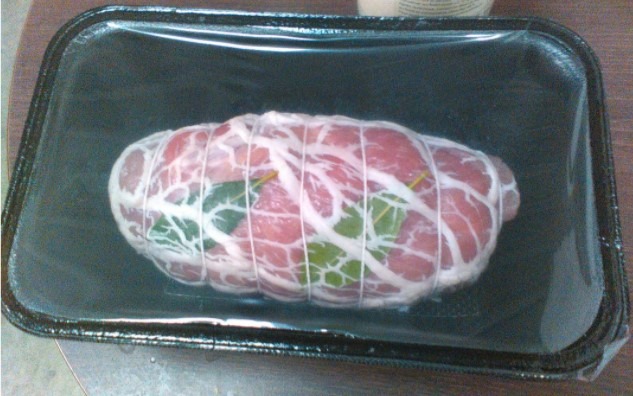
France – Stuffed Pork Roast – Salmonella

Gov france

Identifying information for the recalled product

  • Product category Food
  • Product sub-category Meats
  • Product brand name Without Brand
  • Names of models or references Tray of a stuffed roast pork (approx. 800 g weight)
  • Product identification
    Lot Dated
    21355-8810 Use-by date 12/29/2021
  • Packaging Black tray of approximately 800 g
  • Start date / End of marketing From 12/22/2021 to 12/27/2021
  • Storage temperature Product to be stored in the refrigerator
  • Health mark FR 13.097.003 CE
  • Geographical sales area Whole France
  • Distributors Fresh (Chaponnay, Draguignan, Houtaud, Belley, Bonneville, Auch, Annemasse, Beauzelle, Nemours, Bayeux, Ambérieu en Bugey, Montargis, Etoile sur Rhône). My Market (St Cloud). Intermarché (Malissol). Savoyard Market (St Alban)

Practical information regarding the recall

  • Reason for recall Salmonella detection
  • Risks incurred by the consumer Salmonella spp (causative agent of salmonellosis)

Research – Comparisons of Non-thermal Decontamination Methods to Improve the Safety for Raw Beef Consumption

Journal of Food Protection

The object of this study was to examine non-thermal treatments to reduce foodborne pathogens in raw beef. Foodborne-illness pathogens were inoculated in the raw beef. Death rates of foodborne illness pathogens were evaluated by non-thermal decontamination methods(high pressure processing at 500MPa[HPP] for 2min, 5min, and 7min; UV LED radiation at 405nm[UV LED] for 2h, 6h, and 24h; hypochlorous acid water at 100ppm[HAW] for 1min, 3min, and 5min; 2.5% lactic acid[LA] for 1min, 3min, and 5min; modified atmosphere that replaced O2 to CO2 [MAP] for 24h and 48​​h; bio-gel[BG] application for 24h and 48h. Quality characteristics were measured after applying the practical non-thermal decontamination methods. After the treatment of HPP for 7min, inactivity rates were 4.4-6.7Log CFU/g for E. coli, Salmonella, and L. monocytogenes and 1.7Log CFU/g for S. aureus (p <0.05). After the treatment with UV LED for 24h, the reduced cell counts were 0.5, 0.7, and 0.3Log CFU/g for E. coli , Salmonella , and S. aureus, respectively(p <0.05), but no significant reduction for L. monocytogenes. When the beef was treated with HAW was treated for 5min, 0.6Log CFU/g of E. coli, 0.5Log CFU/g of Salmonella, 0.4Log CFU/g of S. aureus , and 0.5Log CFU/g of L. monocytogenes were inactivated. After the beef was treated with LA for 5min, 1.8Log CFU/g of E. coli, 3.0Log CFU/g of Salmonella, 1.3Log CFU/g of S. aureus, and 1.9Log CFU/g of L. monocytogenes were inactivated. MAP for 48h caused the inactivation of 0.3Log CFU/g of E. coli, 0.1Log CFU/g of Salmonella. After treatment of BG for 48h, 0.3Log CFU/g of E. coli and 0.4Log CFU/g of Salmonella were significantly decreased(p <0.05). HPP cooked the beef after 2min of treatment. HAW and BG changed the surface color of the beef, LA reduced the pH of beef (p<0.05). However, UV LED did not cause any changes in the beef quality properties. These results indicates that UV LED can improve the food safety of raw beef.

Canada – Various prepared meals sold by certain Osaka and T&T Supermarkets in British Columbia recalled due to Salmonella

CFIA

Summary

Product
Various prepared meals
Issue
Food » Microbial Contamination » Salmonella
What to do

Do not consume the recalled products

Issue

T&T Supermarket Inc. is recalling various prepared meals from the marketplace due to possible Salmonella contamination.

The recalled products have been sold at the following stores in British Columbia:

  • Osaka Supermarket, 1000-3700 No. 3 Road, Richmond, BC
  • T&T Supermarket, 147-4800 Kingsway, Burnaby, BC
  • T&T Supermarket, MAJ1-8311 Lansdowne Road, Richmond, BC
  • T&T Supermarket, 100-19705 Fraser Hwy, Langley, BC

What you should do

  • If you think you became sick from consuming a recalled product, call your doctor
  • Check to see if you have the recalled products in your home
  • Do not consume the recalled products
  • Recalled products should be thrown out or returned to the location where they were purchased

Food contaminated with Salmonella may not look or smell spoiled but can still make you sick. Young children, pregnant women, the elderly and people with weakened immune systems may contract serious and sometimes deadly infections. Healthy people may experience short-term symptoms such as fever, headache, vomiting, nausea, abdominal cramps and diarrhea. Long-term complications may include severe arthritis.

Research – Salmonella Serotypes Associated with Illnesses after Thanksgiving Holiday, United States, 1998–2018

CDC

Abstract

We sought to determine which Salmonella serotypes cause illness related to the Thanksgiving holiday in the United States and to foods disproportionately eaten then (e.g., turkey). Using routine surveillance for 1998–2018 and a case-crossover design, we found serotype Reading to be most strongly associated with Thanksgiving.

Thanksgiving, celebrated annually in the United States on the fourth Thursday of November, often brings together family and friends who eat specific traditional foods, such as mashed potatoes, cranberry sauce, and pumpkin pie; the most prominent food eaten is turkey (1). In 2017, ≈45 million turkeys were produced for Thanksgiving, ≈18% of annual production (2). Turkey is popular across regions, races, sexes, and generations; 88% of persons in the United States report eating turkey during their Thanksgiving meal (1,3,4).

Foodborne Salmonella infections cause substantial illness and death in the United States: an estimated 1 million cases, 20,000 hospitalizations, and 400 deaths occur annually (5). Typical illness consists of diarrhea, fever, and abdominal pain lasting 3–7 days; only a minority of persons seek health care. Incubation typically ranges from 6 hours to 6 days (5). Salmonella outbreaks caused by serotypes Hadar and Saint Paul have been most commonly attributed to turkey, and serotypes Enteritidis, Heidelberg, and Typhimurium have been frequent causes of turkey-associated outbreaks (6). During 2015‒2020, Reading and Hadar were the serotypes most often isolated from turkeys (7); less is known about which serotypes cause turkey-associated sporadic Salmonella infections. We aimed to determine which Salmonella serotypes cause sporadic enteric infections after the Thanksgiving holiday and are most likely related to foods disproportionately eaten then, particularly turkey.

USA- Raw Pet Food Recalled due to Salmonella

Food Poison Journal

Woody’s Pet Food Deli of Minneapolis, MN is recalling Raw Cornish Hen pet food “With Supplements” sticker due to a Salmonella health risk.

The product was distributed in the company’s retail stores in Minneapolis, Saint Paul, and Woodbury, Minnesota.

Salmonella can affect animals eating the product and there is risk to humans from handling contaminated products, especially if they have not thoroughly washed their hands after having contact with the products or any surfaces exposed to these products.

Research – Understanding and predicting food safety risks posed by wild birds

Centre For Produce Safety

Summary

Click to access SHARIAT_%20FINAL.pdf

Co-existence of fresh produce with animal agriculture has come under increased scrutiny, given multiple recent outbreaks where pathogen strains on produce have been linked to livestock. An important consideration in this co-existence is understanding how pathogens are vectored from animals and their environments to fresh produce. This proposal centers on understanding the risks posed by wild birds and how their fecal pathogen content is influenced by nearby animal agriculture. Previous studies examining wild birds have been focused in the western US, where ‘cattle is king’ in terms of animal agriculture. The southeast has a $4 billion fresh produce and nut industry and, while also having beef and dairy cattle, in this region, ‘poultry is king.’ Campylobacter and Salmonella are the top bacterial causes of foodborne illness in the US, are frequently isolated from food animals, and have been linked to outbreaks in fresh produce. This study will examine the role of poultry and cattle in influencing the pathogens deposited onto fresh produce by wild birds. Mapping and modeling technologies will be implemented to develop risk profiles resulting from links between integrated/proximal animal agriculture and wild bird feces containing viable pathogens that are deposited on produce foliage. High-resolution molecular tools will be used to generate pathogen population profiles and, alongside genomic analyses, will be used to attribute pathogen source to zoonotic reservoirs associated with animal agriculture.

Technical Abstract

There is abundant evidence that wildlife often carries potential foodborne pathogenic bacteria. Indeed, wildlife sources have been associated with several outbreaks, leading to calls to remove natural habitats from farms to discourage wildlife visits. Thus, it was surprising that a recent study found that the likelihood of produce contamination actually increased, rather than decreased, in leafy greens fields where natural habitats had been removed (31). Consistent with this, we found that wild bird feces collected from broccoli were more likely to carry Campylobacter when those fields were surrounded by intensified livestock and crop production, rather than more-natural habitats (52). Pathogens were associated with invasive starlings and house sparrows, known to frequent feedlots and other high-density livestock areas, but also with many native birds (e.g., American robins) that also are associated with pastures and cropping fields. Altogether, work to-date suggests three interacting links between wild bird-associated food safety problems: (i) intensive livestock production that provides a pathogen reservoir, (ii) heavily farmed landscapes that support large numbers of invasive birds, and (iii) simple on-farm habitats that draw livestock-associated birds to a particular field. However, thus far these links have been drawn from circumstantial, rather than direct, evidence of pathogen movement. This limits the ability of fresh produce growers to definitively assess food safety risks associated based on local and regional land-use patterns, or to manipulate on-farm habitats to mediate these risks.

Fortunately, recent advances in pathogen tracking, using fine-scale genetic differences in pathogen genomes, is providing a means to directly separate different animal agriculture, wildlife, and environmental pathogen sources. For example, Salmonella Typhimurium isolates have been attributed to different zoonotic sources based on their genome sequences (59). PI Shariat has been a leader in using next-generation sequencing approaches to assess pathogen populations, having developed CRISPR-SeroSeq as a tool to produce high-resolution population profiles of Salmonella serotypes. Here, we propose to definitively establish links between livestock/poultry pathogen reservoirs and pathogens in bird feces on produce foliage growing in the field. We will also examine how likely pathogens in bird feces are to move from deposition points to surrounding produce and plants. We propose two primary research objectives focusing on bird fecal samples collected directly from the fields of our cooperating growers: In Obj. 1 we will assess the risk posed by wild bird feces on fresh produce plants and the influence of proximal animal agriculture on pathogen presence in wild bird feces. In Obj. 2, we will determine the diversity, not just the dominant species or serotype, of Campylobacter and Salmonella in bird feces and perform fine-scale tracking and source attribution using whole genome sequencing. Both of these research objectives will be directly paired with outreach products/strategies that move our findings directly to the hands of growers, processors, and others in the industry that critically need this information. Altogether, we seek to provide produce growers with the science-based knowledge and tools to assess the risk that wild birds pose to food safety on their farms, based on farm-specific local and landscape farming practices.

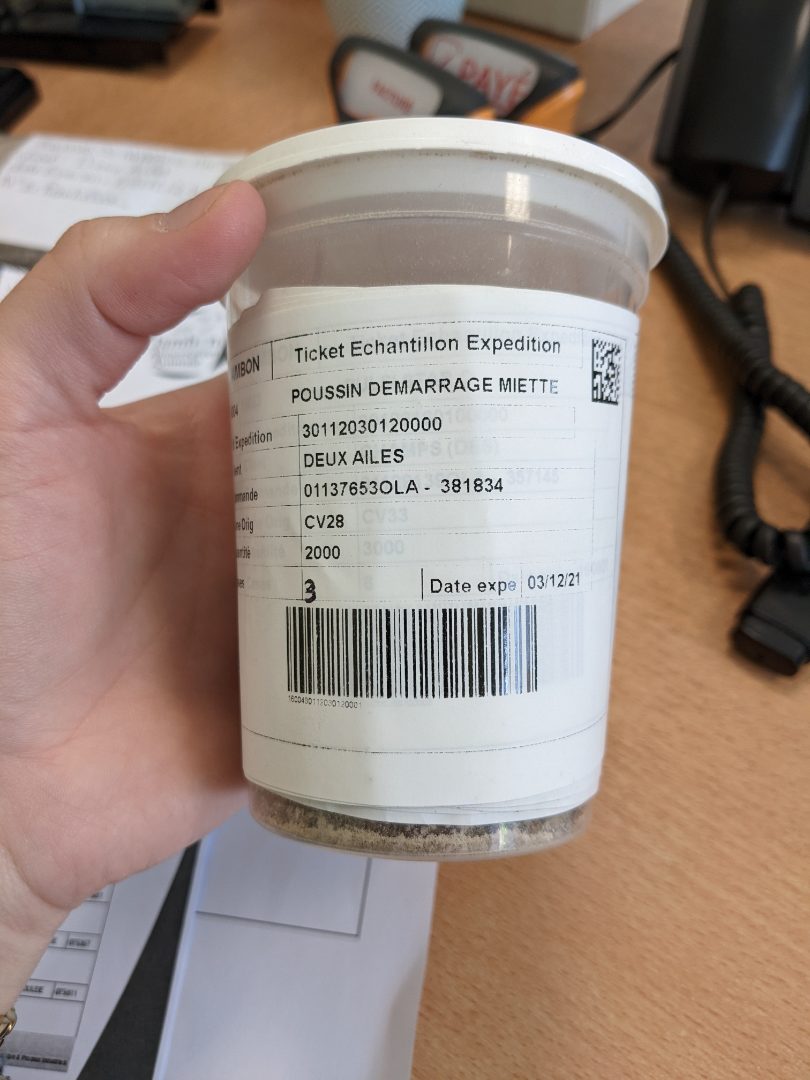
France – Poussin démarrage miette -Salmonella

Gov france

Identifying information for the recalled product

  • Product category Food
  • Product sub-category Food for farm animals
  • Product brand name Unbranded
  • Names of models or references Crumb boot chick
  • Product identification
    Lot Date
    301110501100

    /301111201100

    /301120201500/

    301121001000

    Recommended

    consumption date 06/01/2022

  • Products List affected_customers.pdf Attachment
  • Packaging Bulk 2 or 3 Tons
  • Start date / End of marketing From 03/11/2021 to 12/10/2021
  • Storage temperature Product to be stored at room temperature
  • Geographical sales area Whole France
  • Distributors poultry farmers

Practical information regarding the recall

  • Reason for recall Detection of a Salmonella Typhimurium on a raw material (standard soybean meal) composing the food likely to be contaminated
  • Risks incurred by the consumer Salmonella spp (causative agent of salmonellosis)

Italy – Sausage – Salmonella

Salute

Brand : Salumificio Bonalumi srl

Name : Sausage

Reason for reporting : Recall due to microbiological risk

Publication date : 24 December 2021

Click to access C_17_PubblicazioneRichiami_1619_azione_itemAzione0_files_itemFiles0_fileAzione.pdf

Germany – Smoked gourmet goose breast – Salmonella

LMW

Goose Breast.jpg

Warning type:

Food

Date of first publication:

December 23, 2021

Product name:

Smoked gourmet goose breast – top quality

Product pictures:

Manufacturer

Manufacturer (distributor):

Klaas + Pitsch Fleisch- & Wurstwaren GmbH Industriestr. 51 57258 Freudenberg Sales via real and Metro

Reason for warning:

In the course of a self-monitoring test, Salmonella spp. positive / 25g detected.

Packaging Unit:

60 g, cut

Durability:

Best before date 05/01/2022 and 13/01/2022

Lot marking:

Lots L439 and L540

Further information:

For further information, please refer to the attached press release / the attached recall letter.

RASFF Alerts – Salmonella – Polish Chicken Products – Black Pepper – Turkey – Beef – Pork Meat – Talinum triangulare and Gnetum africana – Mussels

RASFF

Salmonella (S.Enteritidis) in fresh chicken thigh meat from Poland in Lithuania

RASFF

Salmonella in Talinum triangulare and Gnetum africana from Cameroon in Finland

RASFF

Salmonella in Brazilian black pepper in the Netherlands

RASFF

Salmonella enterica ser. Enteritidis in chilled poultry meat from Poland in Slovakia

RASFF

Salmonella Newport, Salmonella Poona, Salmonella Infantis, Salmonella Reading 0:5- and Salmonella Rubislaw in black pepper from Brazil in Germany

RASFF

Salmonella Newport in chilled chicken meat from Poland in the Czech Republic and Netherlands

RASFF

Salmonella enterica ser. Infantis (detected /25g) in chilled chicken breast fillets from Poland in Italy

RASFF

Salmonella in black pepper from Brazil in the Netherlands

RASFF

Salmonella Rubislaw, Salmonella Freetown, Salmonella Kiambu, Salmonella Newport, Salmonella Poona and Salmonella Sandiego O:5- in black pepper from Brazil in Germany

RASFF

Salmonella Minnesota, Salmonella Oranienburg, Salmonella Morehead and Salmonella Saphra in black pepper from Brazil in Germany

RASFF

Salmonella spp. in turkey carcasses from Poland in Cyprus

RASFF

Salmonella Braenderup, Salmonella Dreetown and Salmonella Abaetetuba in black pepper from Brazil in Germany

RASFF

Salmonella typhimurium in beef from Estonia in Finland

RASFF

Salmonella enterica ser. Enteritidis (in 2 out of 5 samples /25g) in chilled chicken breast fillets from Poland in Sweden

RASFF

Salmonella spp. in cozze “Mitilo Spagna” prodotto da Co.Pe.MO Soc. Coop. – Ancona from Italy in Italy

RASFF

Salmonella Javiana, Salmonella Newport, Salmonella Poona and Salmonella Abaetetuba in black pepper from Brazil in Germany

RASFF

Salmonella in pork meat from Germany in Finland

RASFF

Salmonella enterica ser. Enteritidis (in 1 out of 5 samples /25g) in frozen meat from chickens reared in Czech Republic and slaughtered in Poland

RASFF

Salmonella spp. in chilled chicken breast from Poland in France in the Netherlands and UK