Delhaize asks its customers not to consume and to bring the products below back to the store.
In collaboration with the FASFC, Delhaize has decided to withdraw these products from the market and to recall them from consumers due to the presence of Salmonella.
Product description: Product
category: Chicken chipolata Name: COQARDENNE Brand: Delhaize EAN code: 2205455000000 Batches and expiry dates: 485394 – 07/12/2022 485862 – 07/13/2022 485598 – 07/14/2022 marketing: from 5-07-2022 to 12-07-2022 inclusive
Every day, Delhaize performs hundreds of internal quality controls to guarantee the quality and food safety of its products at all times.
In the meantime, Delhaize has already taken all affected products off the shelves and tightened checks on the product and the supplier. Customers who have purchased this product are asked not to consume it. Customers have the option of returning the product in question to the point of sale where they purchased it. Reimbursement for each affected item is guaranteed. Other products of the same assortment are not affected and can therefore be consumed in complete safety. Delhaize would like to apologize for the inconvenience caused.
Advice and information for consumers:
What if you have already purchased the product?
Do not consume the product and return it to your Delhaize store. The products will be refunded to you.
For further information, customers can contact our Customer Service on the free number 0800/95 713.
Beg & Barker, Billo’s Best Friend, and Green Coast Pets
Product Description:
Chicken dog treats
Company Announcement
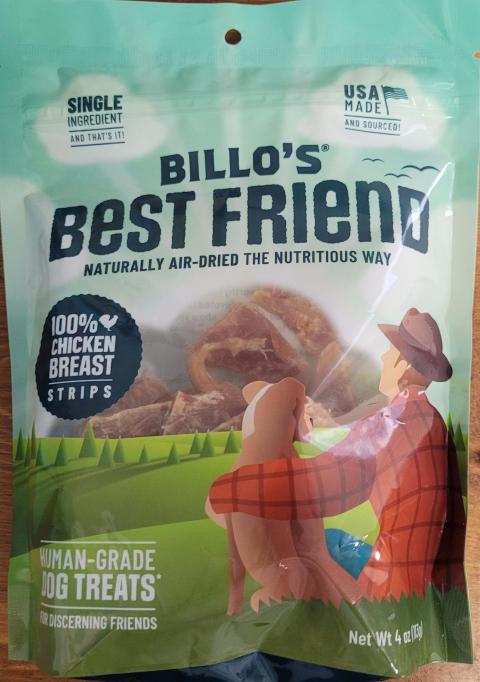
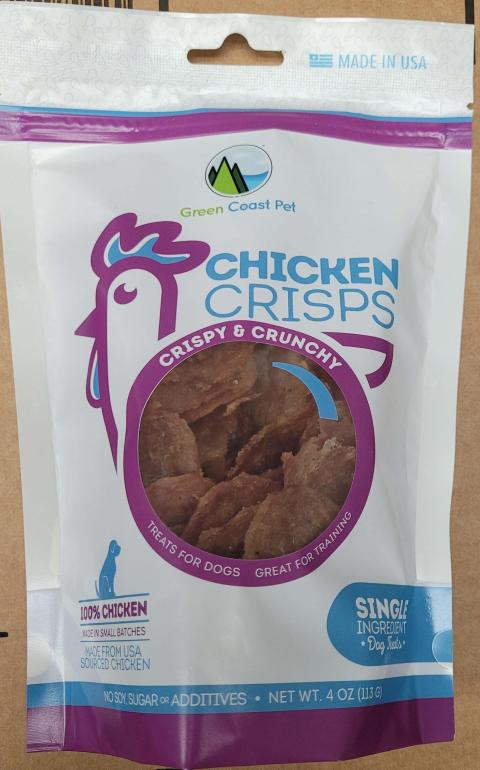
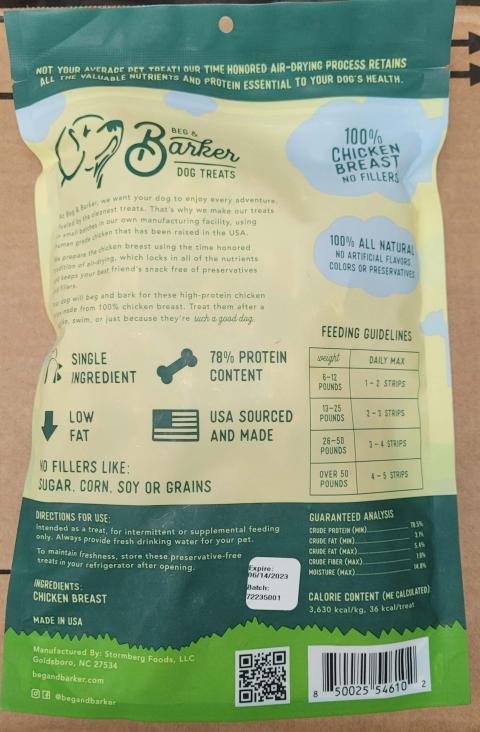
Stormberg Foods is recalling various sizes and batches of our Beg & Barker Chicken Breast Strips Dog Treat, Billo’s Best Friend Chicken Breast Strips Dog Treat, and Green Coast Pets Chicken Crisps Dog Treat products due to a potential contamination of Salmonella. On July 6, 2022, the firm was notified by the North Carolina Department of Agriculture & Consumer Services (NCDA & CS) that a sample they collected tested positive for Salmonella spp.
Salmonella can affect pets eating the products and there is risk to humans from handling contaminated pet products, especially if they have not thoroughly washed their hands after having contact with the products or any surfaces exposed to these products.
Healthy people infected with Salmonella should monitor themselves for some or all of the following symptoms: nausea, vomiting, diarrhea or bloody diarrhea, abdominal cramping and fever. Rarely, Salmonella can result in more serious ailments, including arterial infections, endocarditis, arthritis, muscle pain, eye irritation, and urinary tract symptoms. Consumers exhibiting these signs after having contact with these products should contact their healthcare providers.
Pets with Salmonella infections may be lethargic and have diarrhea or bloody diarrhea, fever, and vomiting. Some pets will have only decreased appetite, fever and abdominal pain. Infected but otherwise healthy pets can be carriers and infect other animals or humans. If your pet has consumed the recalled products and has these symptoms, please contact your veterinarian.
Stormberg Foods and NCDA & CS are continuing their investigation into the cause of the problem.
No illnesses have been reported to date.
Products affected are:
Product
Size
UPC
Batch No.
Exp Dates
Beg & Barker Chicken Breast Strips
1 oz
8 50025 54628 7
All batch numbers
06/06/23 to 06/23/23
Beg & Barker Chicken Breast Strips
4 oz
8 50025 54611 9
All batch numbers
06/06/23 to 06/23/23
Beg & Barker Chicken Breast Strips
10 oz
8 50025 54610 2
All batch numbers
06/06/23 to 06/23/23
Billo’s Best Friend Chicken Breast Strips
4 oz
8 50025 54682 9
All batch numbers
06/06/23 to 06/23/23
Green Coast Pets Chicken Crisps
4 oz
8 60001 92832 7
All batch numbers
06/06/23 to 06/23/23
Green Coast Pets Chicken Crisps
8 oz
8 60001 92833 4
All batch numbers
06/06/23 to 06/23/23
See product images for verification of products being recalled. Coding information may be found on the back of each package to the left or right of the UPC code.
The products were distributed between June 8, 2022 and June 22, 2022. These products were packaged in branded plastic bags in carboard master cases and shipped primarily to warehouses located in CA, MN, NC and RI. Products are then shipped nationwide to retail facilities and consumers via the internet.
Consumers who have purchased these products and/or have pets who have become ill are urged to notify stormbergship@gmail.com immediately with all product information for return or proper disposal information. Consumers with questions may contact the customer services department via (919) 947-6011, Monday – Saturday 3:00am – 9:00 pm EST or email 24h/day.
This recall is being made with the knowledge of the Food and Drug Administration.
Matvælastofnun warns against consuming one batch of curry Hot madras curry that Lagsmaður ehf. imports due to suspected salmonella infection. The company has recalled the product with the help of the health inspectorate HEF.
Matvælastofnun became aware of the recall through RASFF’s European Rapid Alert System for Hazardous Foods and Feed.
The contaminated raw materials that forced Barry Callebaut to halt chocolate production in Belgium came from Hungary.
One batch of lecithin was unloaded at the Wieze factory on June 25. Barry Callebaut confirmed Salmonella Tennessee has been identified in the lecithin system of the factory and in samples of the delivered material. This batch came from a lecithin manufacturer in Hungary and was transported by a third party. The lecithin involved is only used at this site.
On June 27, Barry Callebaut detected a Salmonella positive on a production lot manufactured in Wieze and lecithin was identified as the source of the contamination on June 29.
Lecithin is used in all chocolate production lines in Wieze, so the company decided to stop the lines and to block all chocolate products manufactured from June 25 to 29, except for cocoa production which is not linked to the lecithin circuit.
On July 1, Barry Callebaut confirmed that, based on its internal investigation, no affected products had entered the retail food chain. No implicated chocolate has been exported by the company outside Europe.
Salad and other fresh produce were collected in England from retail and catering during 2020-21 and were tested for Salmonella, Shiga-toxin producing Escherichia coli (STEC), Listeria , Bacillus cereus , and generic E. coli. Of the 604 samples collected , 57% were from retail and 43% from catering: 61% were either salad leaves or salad leaves mixed with other products. Equal numbers of samples were prepacked or loose and 50% were refrigerated at the time of sampling. Combining results for all microbiological parameters, 84% were interpreted as satisfactory, 12% as borderline and 4% as unsatisfactory. One sample (prepacked leaves, cucumber and tomato from a caterer) was categorised as unacceptable/potentially injurious due to detection of STEC O76, no STEC from human infections in the UK matched this isolate. No Salmonella enterica were detected but L. monocytogenes was recovered from 11 samples, one at 20 CFU/g the remainder at <20 CFU/g. B. cereus was detected at borderline levels (10 3 – <10 5 CFU/g) in 9% of samples and at an unsatisfactory level (>10 5 CFU/g) in one. E. coli were detected in 3% of samples at borderline (20 – <10 2 CFU/g) and in 4% at unsatisfactory (>10 2 CFU/g) levels. There was a significant association between the detection of L. monocytogenes and borderline/unsatisfactory levels of E. coli . There were no generic risks detected in association with the higher levels of B. cereus, STEC or Listeria but elevated levels of E. coli were predominantly confined to loose products from the UK and collected from caterers in the summer or autumn of 2021. Amongst the L. monocytogenes isolates, only one matched that from human cases and was recovered from a prepacked mixed salad from a catering business in 2021. This isolate was the same strain as that responsible for a multi country outbreak (2015-18) associated with Hungarian-produced frozen sweetcorn: no link to the outbreak food-chain was established.
The number of foodborne infections climbed in Sweden in 2021 compared to the year before but most are still below pre-Coronavirus pandemic levels.
The report by the National Veterinary Institute (SVA), Folkhälsomyndigheten (the Public Health Agency of Sweden), Livsmedelsverket (the Swedish Food Agency) and Jordbruksverket (Swedish Board of Agriculture) showed a rise for Campylobacter, Salmonella, Listeria, E. coli and Yersinia infections.
Disease surveillance relies on patients seeking care and fewer people have done this during the pandemic. This is believed to be related to patients with symptoms choosing to not seek care and a true reduction in disease incidence because of changes in general hygiene such as increased handwashing, physical distancing and reduced travel because of COVID-19-related recommendations, according to the agencies.
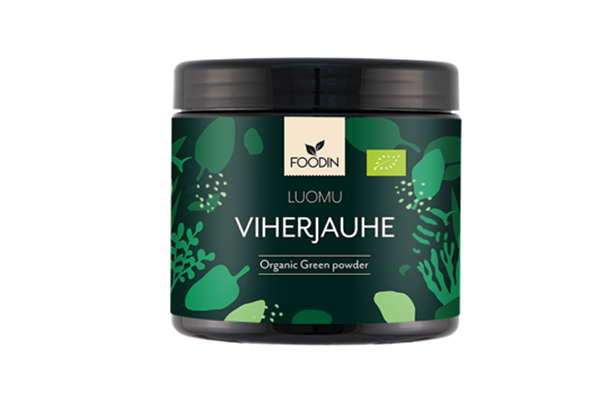
Foodin Oy has announced that it has made a recall that concerns one batch of the product Green Powder, Organic, 200g (EAN 6430055210743). The recall only applies to the batch with batch number L310322 and a best before date of 31 July 2023.
The company has found salmonella in the self-monitoring sample of the batch in question. The manufacturer notes that no consumers are known to have become ill.
The product batch has been on sale since the beginning of April in retail stores and health product stores.
More information and instructions for consumers on Foodin Oy’s website. More information: Foodin Oy, Kuluttajapalvelu, +358 40 648 6670, info@foodin.fi
The matter is being handled at the Food Agency by Chief Inspector Mika Varjonen, tel. 050 38 68 416, firstname.surname@ruokavirasto.fi .