Category Archives: Research

Research – A Severe Gastroenteritis Outbreak of Salmonella enterica Serovar Enteritidis Linked to Contaminated Egg Fried Rice, China, 2021

Frontiers in Microbiology

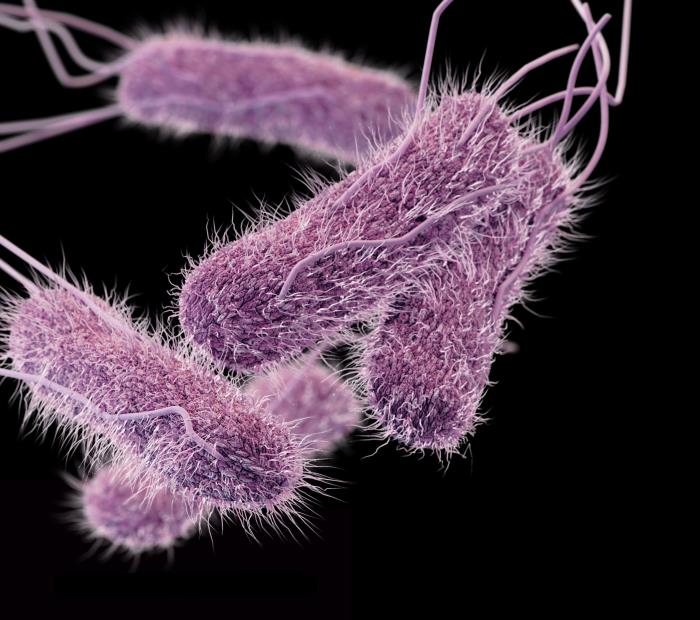
Salmonella contamination of eggs and egg shells has been identified as a public health problem worldwide. Here, we reported an outbreak of severe gastrointestinal symptoms caused by Salmonella enterica serovar Enteritidis (S. enteritidis) in China. We evaluated the outbreak by using epidemiological surveys, routine laboratory testing methods, and whole genome sequencing (WGS). This outbreak occurred in a canteen in Beijing, during March 9–11, 2021, 225 of the 324 diners who have eaten at the canteen showed gastrointestinal symptoms. The outbreak had characteristical epidemiological and clinical features. It caused a very high attack rate (69.4%) in a short incubation time. All patients developed diarrhea and high fever, accompanied by abdominal pain (62.3%), nausea (50.4%), and vomiting (62.7%). The average frequency of diarrhea was 12.4 times/day, and the highest frequency of diarrhea was as high as 50 times/day. The average fever temperature was 39.4°C, and the highest fever temperature was 42°C. Twenty strains of S. enteritidis were recovered, including 19 from the patients samples, and one from remained egg fried rice. Antibiotic susceptibility test showed that the 20 outbreak strains all had the same resistance pattern. PFGE results demonstrated that all 20 strains bore completely identical bands. Phylogenetic analysis based on WGS revealed that all 20 outbreak strains were tightly clustered together. So the pathogenic source of this food poisoning incident may was contaminated egg fried rice. Resistance gene analysis showed that the outbreak strains are all multi-drug resistant strains. Virulence gene analysis indicated that these outbreak strains carried a large number of virulence genes, including 2 types of Salmonella pathogenicity islands (SPI-1 and SPI-2). Other important virulence genes were also carried by the outbreak strains, such as pefABCD, rck and shdA. And the shdA gene was not in other strains located in the same evolutionary branch as the outbreak strain. We speculated that this is a significant reason for the serious symptoms of gastroenteritis in this outbreak. This outbreak caused by S. enteritidis suggested government should strengthen monitoring of the prevalence of outbreak clone strains, and take measures to mitigate the public health threat posed by contaminated eggs.

USA – Marine Biotoxin Management for Molluscan Shellfish Training Video

FDA

FDA developed a training video on marine biotoxin management to provide a better understanding of specific biotoxin concepts in the National Shellfish Sanitation Program (NSSP). The video has been updated and reflects the NSSP Guide for the Control of Molluscan Shellfish: 2019 Revision. The video, comprised of three learning modules, is a tool to help the seafood industry and state and federal agencies understand biotoxin sources and geographic distributions, develop or improve marine biotoxin management and contingency plans, and determine the appropriate laboratory methods for specific applications.

France – ANSES – A partnership to better fight against bacteria in food processing workshops

ANSES

The presence of Listeria and Salmonella bacteria in food processing workshops poses several problems: these bacteria that are pathogenic for humans are capable of persisting for a long time in the environment and of resisting treatment with biocidal products. The Actia Fastypers Joint Technological Unit (UMT) has just been created by the Ministry of Agriculture for five years, in order to work on these issues. It brings together research teams (Anses, Inrae) and agro-industrial technical institutes (Actalia – dairy sector and the Pork Institute (IFIP)).

Salmonella and Listeria are two bacteria of animal origin, responsible for illnesses in humans and transmitted by food. They can persist for several months in natural and agricultural environments, as well as in food processing workshops. In addition, some strains may be resistant to treatment with disinfection products. The work of the UMT Actia Fastypers aims on the one hand to understand the mechanisms by which these bacteria manage to adapt and persist in the external environment, including in agri-food workshops, and on the other hand to develop tools to characterize and detectthese persistent bacterial strains. This work will be carried out jointly in the pork sector and the milk sector.

Two ANSES teams involved

Two ANSES units will be involved in the UMT: the Salmonella and Listeria unit of the Food Safety Laboratory and the Antibiotics, Biocides, Residues and Resistance Unit of the Fougères Laboratory. The first will provide its expertise in the genomic characterization of strains, in order to identify which genotype is associated with the characteristics studied (resistance to heavy metals, persistence in the environment, virulence, etc.). The second will study the adaptation and resistance of bacteria to the biocidal cleaning products used. This work will be linked to the joint technological network Chlean, devoted to the hygiene of equipment in the food industry, in which the two laboratories are already involved.

Development of detection tools

The goal of the UMT is to develop tools that can be used routinely by producers and food manufacturers to identify the strains of bacteria present at the different stages of food production, from breeding to finished products. ” It’s about optimizing and simplifying the tools we have for research, to enable technical institutes to identify both the virulence and persistence capacity of strains simply by harvesting bacteria from surfaces. using sampling swabs. », explains Sophie Roussel, co-host of the UMT and scientist of the food safety laboratory. These analyzes aim toadapt the cleaning and disinfection process to the characteristics of the bacterial strains likely to be found in agro-industrial environments, for example by using the most effective disinfectant products against the bacteria present in these factories.

Spain – Spanish agency defends actions in Salmonella outbreak investigation

Food Safety News

Spanish officials have said steps taken in response to more than a dozen Salmonella infections were “sufficient and proportionate” to protect public health.

Two outbreaks affected 14 people at two elderly care homes in Madrid late this past year and were linked to chicken burger meat. No information has been made public about the patients, such as their ages or severity of their illnesses.

The Spanish Agency for Food Safety and Nutrition (AESAN) said that because the supply chain of the products involved wholesale and they were not directly sold to the final consumer, the information about the incident was sent via official control channels and it was not considered necessary to publically warn about the existence of items in the market that may have posed a risk to health. This means names of the firms involved have been kept private.

In late December 2021, consumer group FACUA called for the companies involved to be named and details released to identify the contaminated meat to prevent more people from becoming ill.

The association wrote to AESAN and the Ministry of Health in Madrid about the lack of transparency given the potential seriousness of the situation.

USA – DRAFT: Scombrotoxin (Histamine)-forming Fish and Fishery Products – Decomposition and Histamine (CPG 7108.24)

FDA

Submit Comments by 

Although you can comment on any guidance at any time (see 21 CFR 10.115(g)(5)), to ensure that the FDA considers your comment on a draft guidance before it begins work on the final version of the guidance, submit either online or written comments on the draft guidance before the close date.

If unable to submit comments online, please mail written comments to:

Dockets Management
Food and Drug Administration
5630 Fishers Lane, Rm 1061
Rockville, MD 20852

All written comments should be identified with this document’s docket number: FDA-2021-D-0367


Docket Number:
FDA-2021-D-0367
Issued by:
Office of Regulatory Affairs
Center for Food Safety and Applied Nutrition

The purpose of this compliance policy guide (CPG) is to provide guidance for FDA staff on adulteration associated with decomposition and/or histamine identified during surveillance sampling and testing of fish and fishery products susceptible to histamine formation.

The current CPG Sec. 540.525 is being revised to update FDA regulatory action guidance for sensory analysis and histamine levels in scombrotoxin-forming fish and fishery products.

The  contents of this document do not have the force and effect of law and are not meant to bind the public in any way, unless specifically incorporated into a contract.  This document is intended only to provide clarity to the public regarding existing requirements under the law.  FDA guidance documents, including this CPG, should be viewed only as recommendations, unless specific regulatory or statutory requirements are cited.  The use of the word should in FDA guidances means that something is suggested or recommended, but not required.

USA – FDA Issues Report Highlighting Salmonella Outbreak in Packaged Leafy Greens Produced in a Controlled Environment Agriculture Operation

FDA

Vegetable Bacteria Danger

The U.S. Food and Drug Administration (FDA) has released a report on its investigation of the Salmonella Typhimurium outbreak that caused 31 reported illnesses and four hospitalizations in the U.S. between June and August 2021. The FDA worked with the U.S. Centers for Disease Control and Prevention (CDC) and state partners to investigate the outbreak, which was linked through epidemiology and traceback to packaged salad greens during the summer of 2021. This outbreak is believed to be FDA’s first domestic investigation of a foodborne illness outbreak associated with leafy greens grown in a Controlled Environment Agriculture (CEA) operation. The CEA operation produces leafy greens using common commercial high density hydroponic growing techniques with deep water culture and floating raft production methods. The report released today includes an overview of the traceback investigation, investigation results, and various factors that potentially contributed to the contamination of packaged leafy greens with Salmonella.

Although a conclusive root cause was not identified, the agency identified certain conditions and practices that could result in contamination, including the presence of a different serotype of Salmonella in pond water used to grow the leafy greens, growth media storage practices, water management practices, and general sanitation practices at the CEA that were inadequate to prevent the introduction or spread of microorganisms of public health significance into the leafy greens.

FDA isolated the outbreak strain of Salmonella Typhimurium in a stormwater retention basin adjacent to the CEA farm. However, the investigation did not reveal if that stormwater retention basin was the source of the Salmonella that ultimately contaminated the leafy greens. This highlights the importance of assessing all microbial hazards, including those associated with adjacent and nearby land uses.

In light of this report, FDA highlights the following requirements and recommendations applicable to firms, such as the hydroponic operation implicated in this S. Typhimurium outbreak, engaged in CEA. Here are some of the requirements and recommendations:

  • Develop a keen understanding of potential sources and routes of contamination including the raw materials and inputs used, as well as possible sources of contamination throughout the operation.
  • Implement effective sanitation procedures and sampling plans while also paying close attention to hygienic operations and equipment design, ensuring cleaning procedures do not contribute to the dispersion of microbial contaminants that may be present.
  • Assess growing operations to ensure implementation of appropriate science- and risk-based preventive measures, including applicable required provisions of the FDA Food Safety Modernization Act (FSMA) Produce Safety Rule and good agricultural practices (GAPs).
  • Implement procedures that are effective in rapidly cooling and cold holding harvested leafy greens after harvest and verify the effectiveness of the cooling and cold holding procedures, including the routine monitoring of processing and storage environments and product temperatures to prevent pathogen growth in harvested leafy greens.
  • If employing tools such as pre-harvest and post-harvest sampling and testing of food, water, and the physical environment, seek to identify and inform sampling plans, limits of detection, and mitigation measures that control potential sources and routes of bacterial contamination in the growing and harvesting environment.
  • Ensure that all growing pond water is safe and of adequate sanitary quality for its intended use, which includes implementing measures (such as water treatment) necessary to reduce the potential for contamination by known or reasonably foreseeable hazards.
  • Perform a root cause analysis when a pathogen is identified in the growing environment, in raw agricultural inputs such as water, or in the agricultural commodity to determine how the contamination likely occurred and implement appropriate prevention and verification measures.
  • Assess and mitigate risks associated with adjacent and nearby land uses that may impact CEA operations, in both rural and more urbanized settings.

These requirements and recommendations are just some examples that serve as a reminder that as the use of CEA is increasing globally, all types of food production must continue to address basic food safety concerns, including potential sources and routes of contamination. Food safety is a shared responsibility that involves food producers, distributors, manufacturers, retailers, and regulators. Recognizing the interconnection between people, animals, plants, and their shared environment when it comes to public health outcomes, we encourage collaboration among various groups in the broader agricultural community (i.e., produce growers, state government and academia) to address this issue. The FDA is committed to working with these stakeholders to advance critical work.

For More Information:

Researchers tackle Salmonella in onions

Uvalde Leader News

Salmonella contamination of bulb onions, which caused recalls across the U.S. and Canada in 2020, is the focus of a Texas A&M AgriLife Research project to help onion producers solve the problem.

Salmonella outbreaks in onions and onion products show that the pathogen might persist during production, handling or storage. This is a significant concern to the onion produce industry, researchers said.

“Little is known about salmonella’s behavior related to bulb onions,” said Vijay Joshi, Ph.D., AgriLife Research assistant professor in the Department of Horticultural Sciences and systems physiologist at the Texas A&M AgriLife Research and Extension Center at Uvalde.

Joshi’s team, over the next two years, with more than $400,000 in grant support from the Center for Produce Safety, will develop an onion-specific risk reduction plan to deliver to industry.

Research – Factors Potentially Contributing to the Contamination of Packaged Leafy Greens Implicated in the Outbreak of Salmonella Typhimurium During the Summer of 2021

FDA

In July and August of 2021, the U.S. Food and Drug Administration (FDA), Centers for Disease Control and Prevention (CDC), and state partners conducted an outbreak investigation into a multistate outbreak of Salmonella Typhimurium linked to packaged leafy greens produced at a Controlled Environment Agriculture (CEA) indoor hydroponic operation.[1]

Total Illnesses: 31
Hospitalizations: 4
Deaths: 0
First illness onset: June 10, 2021
Last illness onset: August 18, 2021
States with Cases:  IL (18), MI (1), PA (2) WI (10)

The outbreak response investigation found:

  1. The outbreak was associated with the consumption of packaged leafy greens from the firm’s CEA indoor hydroponic operation; 26 of 27 (96%) patients reported consuming any leafy greens prior to illness onset, with 20 of 24 cases reporting consumption of prepackaged salads. This firm’s products were named specifically in 14 cases.
  2. This outbreak was caused by Salmonella Typhimurium as determined by whole genome sequencing (WGS) analysis. The Salmonella Typhimurium isolates from ill consumers were closely related genetically; however, there were no product isolates for comparison.
  3. Loyalty card data was received for nine cases. The information identified a common brand of packaged salads and the traceback investigation determined all of the points-of-service (POS) were supplied by the same hydroponic operation owned and operated by this firm. The firm’s salad products purchased by ill consumers were confirmed to be produced at the firm’s hydroponic operation.

FDA conducted an on-site produce safety investigation of the firm’s CEA operation, as part of the outbreak investigation.

Download the Full Report (PDF 270KB)

[1] Throughout this document the term “firm” is used to represent the business entity, while the term “operation” refers to the farm location.


Related Resources

Research – UC-Santa Cruz undergraduates win award for system that fights E. coli

Food Safety News

A team of undergraduates at the University of California-Santa Cruz has developed a system called Progenie that’s designed to target and eliminate a toxic gene found in Shiga toxin-producing E. coli.

The team’s method provides an alternative to antibiotics commonly used in agriculture. This new method is designed in part to stop the rise of drug-resistant bacteria.

The team’s project won a gold medal at the International Genetically Engineered Machine (iGEM) Jamboree, an annual competition that brings together student teams from around the world to present synthetic biology projects that aim to address pressing global issues.

At the jamboree, teams are judged on their virtual project posters, wiki pages, and video presentations. Teams are awarded gold medals if they demonstrate excellence across multiple categories.

Research – Consumption of Raw Flour in the United States: Results from the 2019 U.S. Food and Drug Administration Food Safety and Nutrition Survey

Journal of Food Protection

ABSTRACT

Several outbreaks of Shiga toxin–producing Escherichia coli infections in the past decade have been linked to flour and flour-associated products and have raised concerns that the consumption of raw flour represents a public health risk as a vehicle for foodborne pathogens. The extent to which consumers know and understand that they should not consume raw flour is unclear. In fall 2019, the U.S. Food and Drug Administration collected data on perceptions regarding uncooked flour and on self-reported consumption behaviors via the Food Safety and Nutrition Survey, a national probability survey of U.S. adults (≥18 years of age). Cross-tabulations and regressions were used to analyze the data (n = 2,171). Thirty-five percent of consumers reported having tasted or eaten something with uncooked flour in it in the previous 12 months. Responses differed significantly by sex, race, education, and age. On average, respondents indicated that uncooked flour is not likely to contain germs that can make people sick, with significant differences noted by demographic categories. Respondents rated raw homemade cookie dough as moderately likely to have germs that can make people sick, with significant demographic differences. These findings indicate that U.S. consumers are largely unaware that raw flour is risky to consume, and many people are consuming products that contain raw flour.

HIGHLIGHTS
  • About one-third of consumers reported having consumed uncooked flour in the previous year.
  • Large demographic differences were found in reported consumption of uncooked flour.
  • Most U.S. consumers do not consider uncooked flour as risky to consume.