Category Archives: Research

USA – FDA Core Investigation Table

FDA

Date
Posted
Ref
#
Pathogen
Product(s)
Linked to
Illnesses

(if any)
Total
Case Count
Investigation
Status
2/17/

2022

1056 Cronobacter
sakazakii

&
Salmonella
Newport
Powdered
Infant
Formula
Active
2/9/

2022

1040 Listeria
monocytogenes
Not Yet
Identified
14 Active
2/2/

2022

1054 Enteroinvasive
E. coli
O143:H26
Not Yet
Identified
16 Closed
1/10/

2022

1050 E. coli
O121:H19
Romaine 4 Closed
12/29/

2021

1052 E. coli
O157:H7
Packaged
Salad
12/20/

2021

1039 Listeria
monocytogenes
Packaged
Salad
Active
12/15/

2021

1048 Listeria
monocytogenes
Packaged
Salad
Active

Singapore – New microbiological criteria for the export of meat and offal to Singapore

ACSA

The latest version of the Singapore Export Authorization Procedure specifies the microbiological criteria to be followed only for ready-to-eat foods, not specifically considering meat and offal.

Recently, the Export Area of ​​the Ministry of Health has learned that the microbiological criteria followed by the Singapore authorities to control the import of fresh meat, meat preparations and offal are different from the criteria contained in the current Export Procedure. Therefore, work will begin on a new version of the document in order to incorporate this new information.  

We make available to exporting establishments the document that describes the microbiological criteria for meat and offal in Singapore so that they can take them into account when defining self-control procedures.

Click to access sfa—microbiological-criteria-for-imported-meat.pdf

Click to access SingapurProcedEspEnero21.pdf

Research – Evaluation of liquid and dry chemical treatments to reduce Salmonella typhimurium contamination on animal food manufacturing surfaces

Journal of Food Protection

Salmonella can be isolated from animal food, ingredients, and animal food manufacturing surfaces. There is limited data regarding the sanitation of animal food manufacturing surfaces. The objective of this experiment was to evaluate the effects of nine chemical treatments to reduce Salmonella Typhimurium contamination on various manufacturing surfaces. This experiment was a 9 × 5 factorial with nine chemical treatments and five surfaces. The nine chemical treatments included: 1) no inoculation or sanitation treatment (negative control), and those inoculated with Salmonella Typhimurium and treated with 2) no sanitation treatment (positive control), 3) ground corn, 4) liquid commercial formaldehyde, 5) liquid food-grade sanitizer, 6) liquid medium chain fatty acid blend of caprylic, capronic and capric acids (MCFA), 7) dry commercial calcium propionate, 8) dry commercial acidulant, and 9) dry commercial benzoic acid. The five surfaces included 1) stainless steel, 2) plastic, 3) polypropylene tote bag, 4) rubber belt, and 5) rubber tire. Plastic had greater Salmonella in the positive control than the polypropylene tote bag, with other surfaces being intermediate ( P < 0.05). Surfaces treated with formaldehyde had no detectable Salmonella after treatment, and surfaces treated MCFA had at least a 4-log reduction compared to the control ( P < 0.05). The dry acidulant was the most effective dry sanitizer tested, but had no impact on Salmonella concentration on rubber tires ( P < 0.05). While most effective in this experiment, liquid sanitizers have limitations in a dry, bulk systems. In summary, formaldehyde, food-grade sanitizer and MCFA, were the most effective chemical treatments to reduce Salmonella surface contamination. Surface type can also influence Salmonella mitigation strategies specifically stainless steel and plastic which can be more challenging sanitation within animal food facilities.

Research – Mineral and Microbiological Analysis of Spices and Aromatic Herbs

MDPI

Spices and aromatic herbs have always had great historical importance in human nutrition. Their use has been documented for centuries as a rich source of bioactive compounds; they have been used for their health benefits and also for flavoring or coloring food. However, despite the many health properties linked to the use of spices and aromatic herbs, these can represent biological hazards and can contain chemical substances of concern. Certainly, monitoring potential health hazards in spices and aromatic herbs includes microbiological safety and also the content of inorganic substances: both represent a key step. This research aims at monitoring the compliance of various spices and aromatic herbs from a non-European country market (namely: black cumin seeds, Iranian Tokhme Sharbati, clove buds, Shahjeera, Abbaszadeh saffron, organic fenugreek, whole black pepper, cinnamon, Abthul Ahmar (Asario), Ajwan seeds, whole coriander seeds, black sesame seeds, Sabja seeds) with the current European Union (EU) and WHO regulations, when available, regarding mineral and microbiological parameters. In particular, microbiological assays using rapid and conventional methods, and trace mineral determination by inductively coupled plasma mass spectrometry (ICP-MS) were performed. Results show the safety of the tested spices, given that the microbiological parameters were within the legal microbiological criteria set by the European Commission Regulation (EC) No. 2073/2005 and its amendment Regulation (EC) No. 1441/2007. With reference to potentially toxic Cd, Pb, As, Hg, these were within the limits set by the European Commission Regulation (EC) No. 1881/2006 and its amendments, Regulation (EU) No. 1317/2021 and Regulation (EU) No. 1323/2021, and WHO. According to EU regulations, for Pb content, 2 samples out of 16 showed values different from the set limits. View Full-Text

Research – The Efficacy of Conventional Spray, Electrostatic Spray, and Dip with a Combination of Hydrogen Peroxide and Peroxyacetic Acid to Inactivate Listeria monocytogenes on Apples

Journal of Food Protection

This study aimed to evaluate the efficacy of a and hydrogen peroxide (H 2 O 2 ) and peroxyacetic-acid (PAA) mixer delivered by conventional garden sprayer (GS), electrostatic sprayer (ES) and dip methods to inactivate Listeria monocytogenes on apples. Organic Honey Crisp ( HC ), Fuji ( FJ ), and Pink Lady ( PL ) were dip-inoculated with Listeria monocytogenes (2-strain, serotype 1/2b), which were then kept untreated (control), sprayed with water only, or treated with the H 2 O 2 -PAA mixer (0.0064, 0.1, 0.25 and 0.50%) for 20 s via GS, ES, or dip, followed by draining (2 min) on aluminum foil. Surviving bacteria were recovered on Modified Oxford agar. Atomic force microcopy was used to detect the structural changes of inactivation of L. monocytogenes in broth medium by the H 2 O 2 -PAA mixer solution. Data (2 replicates/6 samples/replicate) were analyzed using the Mixed Model Procedure of SAS ( P =0.05). Initial counts of L. monocytogenes on untreated apples were 6.80 to 6.90 log CFU/apple. The dip method was the most effective treatment (P<0.05) on pathogen reductions (2.31-2.41 log CFU/apple) followed by GS (1.44-1.70 log CFU/apple) and then ES (0.84-1.20 log CFU/apples). Reductions of L. monocytogenes were greatest ( P < 0.05) when apples were treated with H 2 O 2 -PAA mixer -0.25 and -0.50%. Atomic force microscopy analyses indicated that inactivation of L. monocytogenes cells in H2O2-PAA mixer solutions resulted from disruption of the outer membrane. The H 2 O 2 -PAA mixer treated cells had increased width, height and decreased roughness when compared to the untreated cells. Results suggested that applying a H 2 O 2 -PAA mixer by dip or GS methods is better for pathogen reduction than ES on apples.

Research – Aflatoxin Reduction and Retardation of Aflatoxin Production by Microorganisms in Doenjang during a One-Year Fermentation

MDPI

Meju, a raw material for doenjang preparation, is highly vulnerable to aflatoxin-producing fungi. The aim of this study was to evaluate the effect of a one-year fermentation on aflatoxins and aflatoxin-producing fungi in doenjang spiked with aflatoxins B1, G1, B2, and G2 and inoculated with toxigenic Aspergillus flavus. A significant reduction in aflatoxins was observed after a year of fermentation, measuring 92.58%, 100%, 98.69%, and 100% of B1, G1, B2, and G2, respectively. After a year of fermentation, 6.95 ± 3.64 µg/kg of total aflatoxin was detected, which represents a 97.88% reduction in the total aflatoxin compared with the initial value (328.83 ± 36.60 µg/kg). Several aflatoxin-degrading fungi (Aspergillus versicolorCladosporium subcinereumAspergillus ochraceus) and bacteria (Bacillus albusBacillus velezensis) isolated from doenjang were identified as the major contributors to the reduction of aflatoxin. Furthermore, it was observed that most of the aflatoxin contamination in doenjang occurred during the meju stage, and this stage was found to be most susceptible to A. flavus contamination and growth. These findings reveal that native microorganisms mediate aflatoxin clean-up in doenjang during fermentation and support the use of such microorganisms as a starter culture for the preparation of aflatoxin-free doenjang.

Research – Efficacy of Selected Powdered Floor Treatments Against Salmonella, E. coli, and L. monocytogenes on Polyurethane-Concrete Flooring Material Carriers

Journal of Food Protection

Food processing environment flooring can become contaminated with pathogens in many ways including foot and equipment traffic, incoming materials, and floor drain backups.  Natural antimicrobial turmeric and commercially available powdered floor treatments may reduce the levels of pathogens on flooring thereby reducing the risk of cross contamination from the floor to food contact surfaces. These chemicals were evaluated to determine their effectiveness against cocktails of Salmonella , Escherichia coli , and Listeria monocytogenes dried onto the surfaces of carriers made from polyurethane-concrete commercial flooring material.  Aqueous test solutions were prepared from the minimum treatment required per m 2 from the manufacturer’s instructions diluted in sterile water.  Potential synergy between turmeric and a percarbonate based commercial floor treatment was explored with a mixture of turmeric and sodium percarbonate, each at approximately 37g/m 2 application rate.  Each inoculated carrier was exposed to the treatment solutions or a sterile water control for 10 minutes at room temperature, neutralized with Hi-Cap neutralizing broth, the bacteria suspended, enumerated, and log 10 reductions calculated for each treatment and inoculum combination.  Mean log 10 CFU/carrier reductions with standard deviations ranged between 4.29±0.34 for the sodium percarbonate (SPC) based treatment and 0.004±0.23 for turmeric for Salmonella , 4.81±0.16 for SPC based treatment and -0.16±0.62 for turmeric for E. coli , and 4.88±0.6 for SPC based treatment and -0.16±0.15 for turmeric for L. monocytogenes .

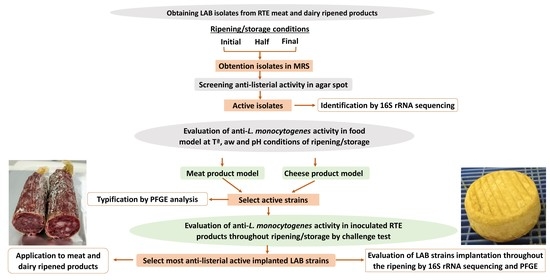
Research – Strategies for Biocontrol of Listeria monocytogenes Using Lactic Acid Bacteria and Their Metabolites in Ready-To-Eat Meat- and Dairy-Ripened Products

MDPI

Listeria monocytogenes is one of the most important foodborne pathogens. This microorganism is a serious concern in the ready-to-eat (RTE) meat and dairy-ripened products industries. The use of lactic acid bacteria (LAB)-producing anti-L. monocytogenes peptides (bacteriocins) and/or lactic acid and/or other antimicrobial system could be a promising tool to control this pathogen in RTE meat and dairy products. This review provides an up to date about the strategies of use of LAB and their metabolites in RTE meat products and dairy foods by selecting the most appropriate strains, by analysing the mechanism by which they inhibit L. monocytogenes and methods of effective application of LAB, and their metabolites in these kinds of products to control this pathogen throughout the processing and storage. The selection of LAB with anti-L. monocytogenes activity allows to dispose of effective strains in meat and dairy-ripened products, achieving reductions form 2–5 logarithmic cycles of this pathogen throughout the ripening process. The combination of selected LAB strains with antimicrobial compounds, such as acid/sodium lactate and other strategies, as the active packaging could be the next future innovation for eliminating risk of L. monocytogenes in meat and dairy-ripened products.

Research – Scientists identify environmental cue linked to illness caused by Salmonella

Science Daily

To survive in hostile environments, bacteria attach to one another, forming a supportive framework known as a biofilm. In biofilms of Salmonella — a major cause of food-borne diarrheal illness — a key component of this framework is curli amyloid protein.

Now, in new research, scientists at the Lewis Katz School of Medicine at Temple University show that the repression of curli by an environmental factor in the intestine plays a critical role in freeing Salmonella bacteria of strain S. Typhimurium from their biofilms, enabling them to cause active infection. The environmental cue is nitrate, which both represses curli and modulates levels of an intracellular molecule known as cyclic-di-GMP. These events ultimately lead to the activation of S. Typhimurium flagella, which in humans is a critical step in allowing individual S. Typhimurium bacteria to swim toward and infect intestinal cells.

“It had been unclear what factors trigger S. Typhimurium to switch between a sessile, biofilm lifestyle to a motile, free-swimming lifestyle in the intestine,” explained Çagla Tükel, PhD, Director of the Center for Microbiology and Immunology at the Katz School of Medicine and senior investigator on the new study. “Our study shows for the first time that nitrate produced in the intestinal lumen of the host serves as an environmental cue driving this switch.”

Research – Prevalence of Mycobacterium bovis in milk on dairy cattle farms: An international systematic literature review and meta-analysis

Science Direct

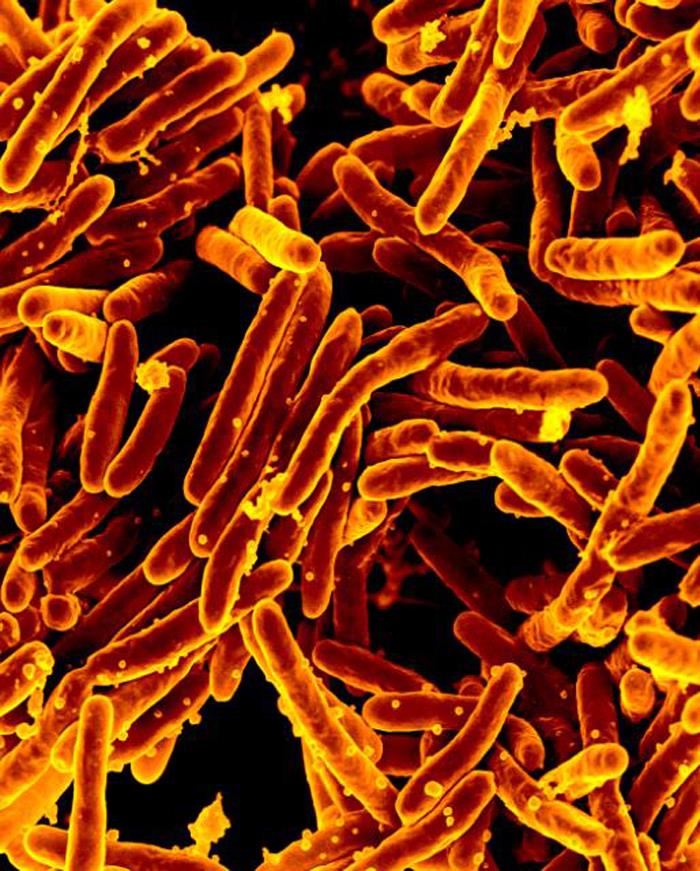
Bovine tuberculosis, caused by Mycobacterium bovis (M. bovis), is a globally distributed chronic disease of animals. The bacteria can be transmitted to humans via the consumption of unpasteurised (raw) milk, thus representing an important public health risk. To investigate the risk of zoonotic transmission of M. bovis via raw milk, this study systematically reviewed published studies to estimate the prevalence of M. bovis in on-farm bulk-tank milk (BTM) and individual cow’s milk (IM) by meta-analysis.

In total, 1,339 articles were identified through seven electronic databases and initially screened using titles and abstracts. The quality of 108 potentially relevant articles was assessed using full texts, and 67 articles comprising 83 studies (76 IM and 7 BTM), were included in the meta-analysis. The prevalence of M. bovis in IM and BTM was summarised according to the diagnostic test used, and the tuberculin skin test (TST) infection status of the individual cows (for IM) or herds (for BTM). Heterogeneity was quantified using the I-squared statistic. Prediction intervals (95% PIs) were also estimated.

For IM, the overall prevalence was summarised at 5% (95%CI: 3%–7%). In TST positive cows, prevalence was summarised at 8% (95%CI: 4%–13%). For BTM, the overall prevalence independent of individual herd TST infection status was summarised at 5% (95%CI: 0%–21%).

There was considerable heterogeneity evident among the included studies, while PIs were also wide. Inconsistency in the quality of reporting was also observed resulting in missing information, such as the TST infection status of the individual animal/herd. No study reported the number of M. bovis bacteria in test-positive milk samples. Several studies reported the detection of M. tuberculosis and M. africanum in milk.

Despite international efforts to control tuberculosis, this study highlights the risk of zoonotic transmission of M. bovis via unpasteurised milk and dairy products made using raw milk.