Category Archives: Research

USA – Foodborne illness source attribution estimates for 2017 for Salmonella, Escherichia coli O157, Listeria monocytogenes, and Campylobacter using multi-year outbreak surveillance data, United States,

CDC

In an ongoing effort to understand sources of foodborne illness in the United States, the Interagency Food Safety Analytics Collaboration (IFSAC) collects and analyzes outbreak data to produce an annual report with estimates of foods responsible for foodborne illnesses caused by pathogens. The report estimates the degree to which four pathogens – Salmonella, E. coli O157, Listeria monocytogenes, and Campylobacter – and specific foods and food categories are responsible for foodborne illnesses. The Centers for Disease Control and Prevention (CDC) estimates that, together, these four pathogens cause 1.9 million foodborne illnesses in the United States each year. The newest report (PDF), entitled “Foodborne illness source attribution estimates for 2017 for Salmonella, Escherichia coli O157, Listeria monocytogenes, and Campylobacter using multi-year outbreak surveillance data, United States,” can be found on the IFSAC website.

The updated estimates, combined with other data, may help shape agency priorities and inform the creation of targeted interventions that can help to reduce foodborne illnesses caused by these pathogens. As more data become available and methods evolve, attribution estimates may improve. These estimates are intended to inform and engage stakeholders and to improve federal agencies’ abilities to assess whether prevention measures are working.
Research – Microbiological Testing Results of Boneless and Ground Beef Purchased for the U.S. National School Lunch Program, School Years 2015 to 2018

Journal of Food Protection

ABSTRACT

The Agricultural Marketing Service (AMS) purchases beef for the National School Lunch Program and other federal nutrition assistance programs. For beef that will be delivered to food service facilities raw, each ca. 900-kg lot of boneless beef raw material and each ca. 4,500-kg sublot of resultant ground beef is tested for standard plate count (SPC) organisms, coliforms, Escherichia coli, Salmonella, and E. coli O157:H7. In addition, 1 of every 10 lots of boneless beef, randomly selected, is tested for E. coli O26, O45, O103, O111, O121, and O145. For beef that will be cooked using a validated lethality step at a federally inspected establishment before delivery, each lot of boneless beef and each sublot of ground beef is tested for SPC organisms, coliforms, and E. coli only. Any lot or sublot exceeding predefined critical limits (CLs) of 100,000 CFU g−1 for SPC organisms, 1,000 CFU g−1 for coliforms, or 500 CFU g−1 for E. coli or for beef containing Salmonella or any of previously mentioned E. coli serotypes is rejected for purchase. For school years 2015 through 2018 (July 2014 through June 2018), 220,497,254 kg of boneless beef and 189,347,318 kg of ground beef were produced for AMS. For boneless beef, 133 (0.06%), 164 (0.07%), and 106 (0.04%) of 240,488 lots exceeded CLs for SPC organisms, coliforms, and E. coli, respectively; 2,038 (1.30%) and 116 (0.07%) of 156,671 lots were positive for Salmonella and E. coli O157:H7, respectively; and 59 (0.36%) of 16,515 lots were positive for non-O157 Shiga toxin–producing E. coli. For ground beef, 46 (0.10%), 27 (0.06%), and 19 (0.04%) of 45,769 sublots exceeded CLs for SPC organisms, coliforms, and E. coli, respectively; and 329 (1.40%) and 18 (0.08%) of 23,475 sublots were positive for Salmonella and E. coli O157:H7, respectively. All lots and sublots found to exceed indicator organism CLs or to contain pathogens were identified, rejected for purchase, and diverted from federal nutrition assistance programs.

HIGHLIGHTS
  • AMS purchases beef for the National School Lunch Program.

  • Less than 0.10% of beef samples exceeded indicator organism critical limits.

  • Salmonella was found in 1.4% and E. coli O157:H7 was found in 0.08% of samples.

  • Indicator critical limit exceedance was weakly associated with pathogen presence.

  • Beef with excessive indicator organisms or containing pathogens was rejected for purchase.

Research -Antibacterial Interactions of Colloid Nanosilver with Eugenol and Food Ingredients

Journal of Food Protection

ABSTRACT

This study was conducted to investigate antibacterial properties of the colloidal silver nanoparticles (SNPs) and eugenol, alone and in combination, on Staphylococcus aureus and Salmonella Typhimurium and their interactions with food constituents (fat, protein, and carbohydrate). We examined antibacterial activities of SNPs and eugenol in Luria-Bertani (LB) broth and 1.5 and 3% fat ultrahigh-temperature (UHT) milk. MICs of eugenol and SNPs (particle size of 31.3 nm) were also investigated in the presence of sunflower oil, meat extract, and starch at concentrations of 2, 5, and 10% to examine the interactions between food constituents and antimicrobial agents. MICs and MBCs of eugenol and SNPs for both bacteria were at 2,500 and 25 μg/mL, respectively. Combinations of the two substances had additive and synergistic effects on Salmonella Typhimurium and S. aureus, respectively. Both compounds had bactericidal activity. In food matrices, results indicated that eugenol only in sunflower oil at 5 and 10% concentrations had significant antibacterial activity. A similar result was achieved for SNPs with 10% meat extract. In LB broth, eugenol at 2,500 and 5,000 μg/mL achieved 6-log reductions in the microbial population of both bacteria after 3 h, while SNPs achieved the same effect after 9 h. In UHT milk with 1.5% fat, eugenol at 5,000 μg/mL and SNPs at 25 μg/mL achieved 6-log reductions in bacterial populations after 24 h. Thus, the antimicrobial activity of both eugenol and SNPs depended on the medium in which the experiment was conducted, and the combination of both antimicrobial agents increased the antimicrobial effect.

HIGHLIGHTS
  • The interactions of eugenol, nanoparticles, and food constituents were investigated.

  • Eugenol and SNP had synergistic effects on S. aureus.

  • Protein and lipids reduced the efficacy of eugenol.

  • Protein negatively impacted the activity of SNPs.

Europe – Multi-country cluster of Listeria monocytogenes ST1247 in five EU countries

ECDC

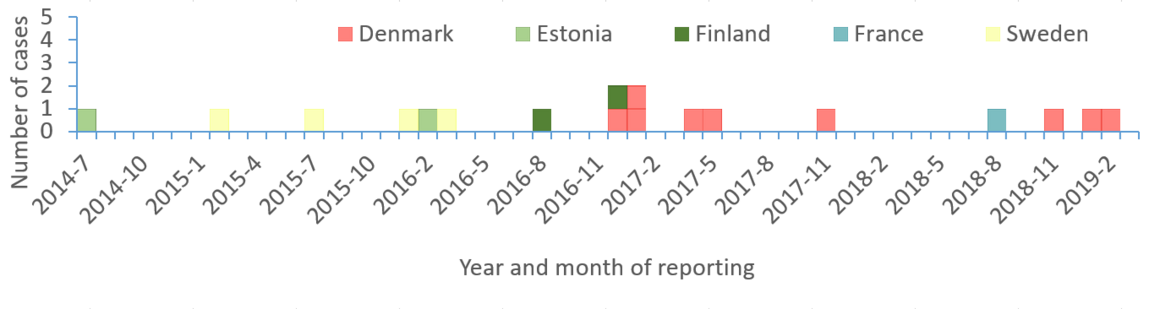
ECDC has identified a microbiological link between an outbreak of nine Listeria monocytogenes ST1247 cases in Denmark and nine additional cases reported between 2014 and 2018 in Estonia (2 cases) Finland (2), France (1) and Sweden (4).  In Denmark, the outbreak investigation is led by Statens Serum Institut (SSI), the Danish Veterinary and Food Administration and the DTU Food Institute.

Whole Genome Sequencing (WGS) analysis performed at the national level and by ECDC found all isolates from the 18 cases within two allelic differences from each other (core genome MLST using Moura scheme, 1540 of 1748 loci detected in all 18 isolates). The latest case was reported in Denmark in February 2019 (Figure 1).

Figure 1: Distribution of Listeria monocytogenes isolates by country and time of reporting 2014-2019 (n=18)

Figure 1: Distribution of Listeria monocytogenes isolates by country and time of reporting 2014-2019 (n=18)

A large-scale study led by ECDC on whole genome sequencing shows that most listeria outbreaks such as this one remain undetected. The study, published in 2018, suggests that more than half of the severe listeriosis cases in the European Union belong to clusters, many of which are not being picked up fast enough by the current surveillance system.

Listeria monocytogenes causes listeriosis, which primarily affects pregnant women, newborns, and adults with a weakened immune system. Listeriosis is a relatively rare but potentially severe food-borne disease that has been reported in increasing numbers in the EU/EEA countries since 2008. In 2016, 2 536 cases were reported, including 247 deaths.


Europe – Epidemiological update: Multi-country outbreak of Salmonella Enteritidis infections linked to Polish eggs

ECDC

Since the joint ECDC-EFSA rapid outbreak assessment ’Multi-country outbreak of Salmonella Enteritidis infections linked to Polish eggs’ published on 12 December 2017, 15 EU/EEA countries (Belgium, Czech Republic, Denmark, France, Hungary, Iceland, Ireland, Italy, Luxembourg, Netherlands, Norway, Poland, Slovenia, Sweden and United Kingdom) have reported 336 confirmed, 94 probable and 3 new historical-confirmed cases associated with this ongoing multi-country outbreak of Salmonella Enteritidis in the EU/EEA. In the same period, seven historical probable cases were reclassified as excluded.

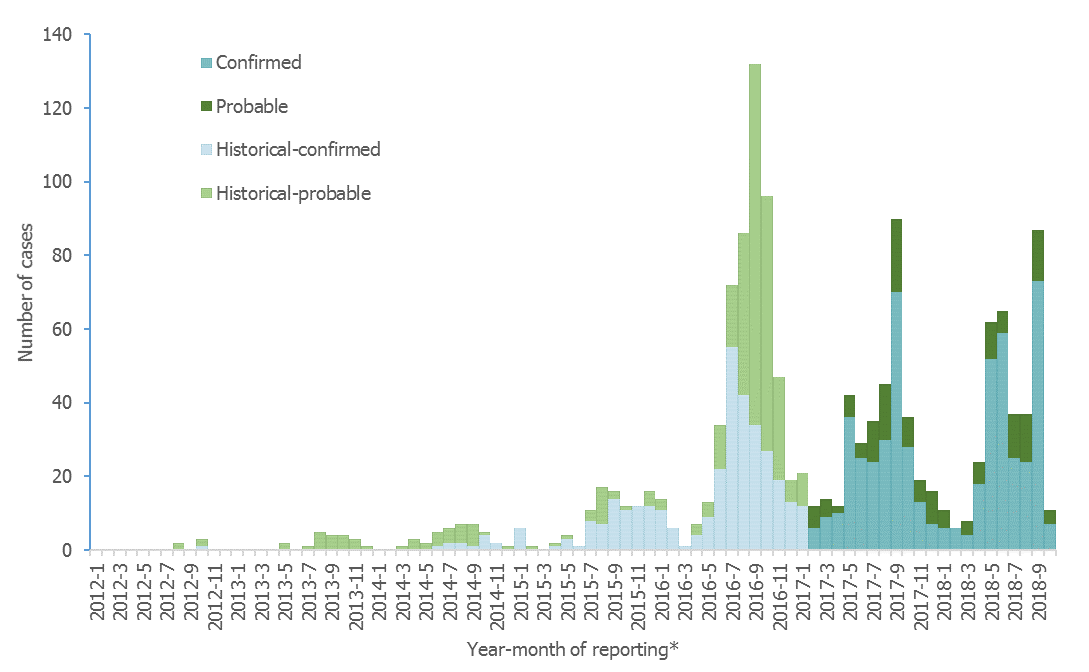
Overall, 1 412 cases have been found associated with this outbreak: 532 confirmed and 166 probable cases since 1 February 2017 and 343 historical-confirmed and 367 historical-probable cases between 2012 and 31 January 2017. In addition, no dates have been reported for four outbreak-confirmed cases, so they are unclassifiable as current or historical cases (Table 1).

Table 1. Distribution of cases by case classification and country, EU/EEA, February 2012 to November 2018 (n=1 420; 4 cases missing date of onset or sampling or receipt at reference laboratory), as of 12 November 2018

Reporting country Confirmed cases Probable cases Historical-confirmed cases Probable-confirmed cases Total number of cases
Belgium 0 46 14 127 187
Croatia 0 0 4 0 4
Czech Republic 0 6 0 3 9
Denmark 16 0 6 2 24
Finland 0 0 0 1 1
France 21 0 8 0 29
Greece 0 0 0 2 2
Hungary 0 29 0 5 34
Ireland 12 0 4 4 20
Ireland 1 0 0 0 1
Italy 0 12 1 19 32
Luxembourg 4 0 5 0 9
Netherlands 8 25 90 164 287
Norway 22 18 11 32 83
Poland 25 0 0 0 25
Slovenia 0 7 3 0 10
Sweden 11 20 12 2 45
United Kingdom 412 3 185 6 606
Total 532 166 343 367 1408
              698                 710


Most outbreak cases were reported during the summer months (Figure 1). Due to reporting delays, additional cases are expected to be reported with onset in recent months.

A total of 112 confirmed or historical-confirmed cases were reported with travel history in an EU country during the incubation period and therefore were likely infected there. Countries where infections likely took place were Poland (25 cases identified from 2016 to 2018), Bulgaria (22 cases from 2015 to 2018), Cyprus (14 cases in 2016 and 2018), Portugal (11 cases from 2015 to 2017) and Hungary (10 cases from 2016 to 2018). Additional travel-associated cases were also reported (<10 cases per country) with travel history to Austria, Belgium, Greece, Italy, the Netherlands, Romania, Slovenia and Spain.

Figure 1. Distribution of cases by month of onset* and case classification (n=1 412; 4 cases missing any date of report), EU/EEA, January 2012 to October 2018, as of 12 November 2018

Salmonella Enteritidis - Distribution of cases by month of onset* and case classification (n=1 412; 4 cases missing any date of report), EU/EEA, January 2012 to October 2018, as of 12 November 2018
 *: month of sampling or month of receipt by the reference laboratory if month of onset is not available.

The 2016 and 2017 European outbreak investigations identified eggs originating from Poland as the vehicle of infection in this outbreak (ECDC/EFSA rapid outbreak assessments published in March and December 2017). Outbreak-confirmed cases belong to four different WGS clusters.

Assessment

As reported in the previous ECDC/EFSA rapid outbreak assessment, in 2016 and 2017, evidence from epidemiological, microbiological, environmental and tracing investigations identified eggs originating from Poland as the vehicle of infections in this multi-strain outbreak. Control measures were implemented following these investigations. However, new outbreak cases were notified in 2017 and in 2018 with similar magnitude and temporal patterns. Based on the analysis of the travel-associated cases, it is likely that more countries where molecular typing is not performed routinely for human S. Enteritidis isolates are affected by the outbreak, including Bulgaria, Cyprus and Portugal.

Actions

ECDC monitors the occurrence of human cases associated with this threat and offers sequencing services for countries reporting probable cases of human S. Enteritidis isolates with MLVA profile 2-9-7-3-2 or 2-9-6-3-2 or
2-9-10-3-2 or 2-10-6-3-2 or 2-10-8-3-2 or 2-11-8-3-2. EU/EEA countries should consider interviewing new outbreak-confirmed cases.

Research – Antifungal Activity of Selected Natural Preservatives against Aspergillus westerdijkiae and Penicillium verrucosum and the Interactions of These Preservatives with Food Components

Journal of Food Protection

ABSTRACT

The present study examined the influence of primary food components on the antifungal activity of the essential oil of Origanum vulgare, carvacrol, thymol, eugenol, and trans-cinnamaldehyde against Penicillium verrucosum and Aspergillus westerdijkiae. The MIC was determined in food model media enriched with proteins (1, 5, or 10%), carbohydrates (1, 4, or 6%), or oil (1, 5, or 10%). Proteins increased the antifungal activity of O. vulgare essential oil, carvacrol, thymol, and eugenol, whereas the effect of trans-cinnamaldehyde decreased with increasing protein content. The presence of carbohydrates diminished the inhibitory effect of the natural preservatives on A. westerdijkiae; for P. verrucosum, their inhibitory effect increased with carbohydrates. Only the antifungal activity of trans-cinnamaldehyde did not depend on the carbohydrate content. The presence of oil had the strongest influence. At a concentration of 1% oil, the antifungal activity decreased significantly, and at 10% oil, almost no inhibition was observed. To investigate the effect of the antifungal agents on the morphology of the target molds, they were grown on malt extract agar containing carvacrol and trans-cinnamaldehyde and were examined by scanning electron microscopy. The hyphae, conidiophores, vesicles, and phialides were severely altered and deformed, and spore formation was clearly suppressed.

HIGHLIGHTS
  • The antifungal activity of natural preservatives is influenced by the food matrix.

  • Proteins increase the impact of O. vulgare EO, carvacrol, thymol, and eugenol.

  • Carbohydrates diminish the inhibition of natural preservatives on A. westerdijkiae.

  • In the presence of oil, natural inhibitors lose their antifungal effect.

  • Carvacrol and trans-cinnamaldehyde lead to distorted hyphae and loss of sporulation.

Research – Inactivation of Listeria monocytogenes, Staphylococcus aureus, and Salmonella enterica under High Hydrostatic Pressure: A Quantitative Analysis of Existing Literature Data

Journal of Food Protection

ABSTRACT

High hydrostatic pressure processing (HPP) is a mild preservation technique, and its use for processing foods has been widely documented in the literature. However, very few quantitative synthesis studies have been conducted to gather and analyze bacterial inactivation data to identify the mechanisms of HPP-induced bacterial inactivation. The purpose of this study was to conduct a quantitative analysis of three-decimal reduction times (t) from a large set of existing studies to determine the main influencing factors of HPP-induced inactivation of three foodborne pathogens (Listeria monocytogenes, Staphylococcus aureus, and Salmonella enterica) in various foods. Inactivation kinetics data sets from 1995 to 2017 were selected, and t values were first estimated by using the nonlinear Weibull model. Bayesian inference was then used within a metaregression analysis to build and test several models and submodels. The best model (lowest error and most parsimonious) was a hierarchical mixed-effects model including pressure intensity, temperature, study, pH, species, and strain as explicative variables and significant factors. Values for t and ZP associated with inactivation under HPP were estimated for each bacterial pathogen, with their associated variability. Interstudy variability explained most of the variability in t values. Strain variability was also important and exceeded interstudy variability for S. aureus, which prevented the development of an overall model for this pathogen. Meta-analysis is not often used in food microbiology but was a valuable quantitative tool for modeling inactivation of L. monocytogenes and Salmonella in response to HPP treatment. Results of this study could be useful for refining quantitative assessment of the effects of HPP on vegetative foodborne pathogens or for more precisely designing costly and labor-intensive experiments with foodborne pathogens.

HIGHLIGHTS
  • A meta-analysis was performed to identify factors influencing HPP inactivation of pathogens.

  • Three-decimal reduction times following HPP were estimated from existing data.

  • Staphylococcus aureus is the most piezoresistant of the three pathogens studied.

  • These three foodborne pathogens are less HPP resistant in acidic products.

Research – Culture-Independent Evaluation of Bacterial Contamination Patterns on Pig Carcasses at a Commercial Slaughter Facility

Journal of Food Protection

ABSTRACT

Traditionally, the microbiological status of meat is determined by culture-based techniques, although many bacteria are not able to grow on conventional media. The aim of this study was to obtain quantitative data on total bacterial cell equivalents, as well as taxa-specific abundances, on carcass surfaces during pig slaughter using quantitative real-time PCR. We evaluated microbial contamination patterns of total bacteria, Campylobacter, Escherichia coli, Lactobacillus group, Listeria monocytogenes, Salmonella, and Pseudomonas species throughout slaughtering and on different carcass areas. In addition, we compared contamination levels of breeding sow carcasses with fattening pig carcasses, and we assessed the efficacy of carcass polishing machines under two water amount conditions. Our results demonstrate that relevant meat-spoilage organisms show similar contamination patterns to total bacteria. The highest bacterial load was detected in the stunning chute (4.08 × 10⁵ bacterial cell equivalents per cm2) but was reduced by 3 log levels after singeing and polishing (P < 0.001). It increased again significantly by a 4.73-fold change until the classification step. Levels of Campylobacter, Lactobacillus, and Pseudomonas species and of E. coli followed a similar trend but varied between 0 and 2.49 × 10⁴ bacterial cell equivalents per cm2. Microbial levels did not vary significantly between sampled carcass areas for any analyzed taxa. Running the polishing machine with a low water amount proved to be less prone to microbial recontamination compared with a high water amount (17.07-fold change, P = 0.024). In the studied slaughterhouse, slaughter of breeding sows did not produce microbiologically safe meat products (>104 cells per cm2) and the implementation of specific hazard analysis critical control point systems for the slaughter of breeding sows should be considered. A larger cohort from different abattoirs is needed to confirm our results and determine whether this is universally valid.

HIGHLIGHTS
  • Spoilage bacteria maintain consistent populations throughout slaughtering.

  • Greater water volume during polishing creates higher bacterial populations on carcasses.

  • Microbial populations on breeding sows are higher compared with fattening pigs.

USA – Norovirus most common foodborne pathogen in 2017

Barf Blog

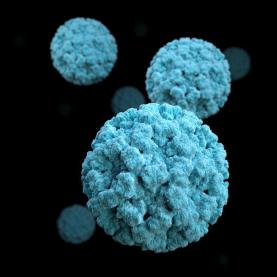
Food Borne Illness - Norovirus -CDC Photo

Image CDC

The Centers for Disease Control and Prevention (CDC) late last week released a summary of foodborne illnesses in 2017 based on an annual analysis of data from the Foodborne Disease Outbreak Surveillance System, and Norovirus was the most common pathogen reported, responsible for 46% of illnesses. Salmonella and Shiga toxin–producing Escherichia coli were also linked to a substantial number of outbreaks.  

In 2017, the CDC tracked 841 foodborne outbreaks, which included 14,481 illnesses, 827 hospitalizations, 20 deaths, and 14 food product recalls. A single etiologic agent was confirmed in 395 outbreaks (47%), which are defined as two or more related cases.

Research – Norway – Norway looks at Campylobacter risk factors in broilers

Food Safety News


A study on Campylobacter in Norwegian broiler flocks older than 50 days at slaughter has indicated age and outdoor access are important risk factors.

The research work in 2018 shows that 43.3 percent of flocks tested positive for Campylobacter jejuni when sampled at slaughter. Broilers more than 50 days of age at slaughter were last included in a surveillance program in 2006.

Campylobacter jejuni was the only species detected. Birds from a slaughterhouse with the oldest flocks had the highest prevalence of Campylobacter at 87.5 percent, or 21 of 24 flocks positive. They also had outdoor access.

Those from a slaughterhouse with the youngest flocks did not have outdoor access and had the lowest prevalence at 22.2 percent, or four of 18 flocks positive for Campylobacter.