Category Archives: Research

France – Gorgonzola PDO 150g from Castelli France

Oulah

Product recall: Gorgonzola PDO 150g from Castelli France

ENCOUNTERED PROBLEM

Presence of Listeria monocytogenes

PROPOSED SOLUTION

Those in possession of this product are asked not to consume it and to return it to the point of sale where it was purchased for reimbursement.

People who have consumed this product and who have a fever, isolated or accompanied by headaches, are invited to consult their attending physician, notifying them of this consumption.
Pregnant women should pay special attention to these symptoms, as well as immunocompromised people and the elderly. These symptoms may suggest listeriosis, a disease that can be serious and can take up to eight weeks to incubate.

FURTHER INFORMATION

▸ Presentation
tray of approximately 150g

▸ Barcode
2 449 187 XXX XXX

▸ DLC
02/10/2020

▸ Lot
P231005

▸ Sanitary stamp
IT 01 532 CE

▸ Consumer service contact
CASTELLI FRANCE SA is available to consumers to answer their questions on the toll-free number: 0805 805 950 (Monday to Friday, 8 a.m. to 6 p.m.).

▸ Source
https://www.carrefour.fr/

Scotland – Drinking Water Quality in Scotland 2019 Private Water Supplies

EXECUTIVE SUMMARY
The Drinking Water Quality Regulator for Scotland (DWQR) ensures that local authorities are meeting their regulatory duties in regard to the quality of private water supplies. DWQR also regulates the quality of water supplied by Scottish Water. The role of DWQR was created by the Water Industry (Scotland) Act 2002 (“the Act”), which gives the Regulator powers to obtain information. This report fulfils the requirement under the Act that the DWQR publishes a report
on the exercise of the Regulator’s functions during the previous year. This report relates to the calendar year 2019 and is for private water supplies. A similar report on the quality of water supplied by Scottish Water was published on Monday 10 August 2020. Private water supplies (PWS) are drinking water supplies that are not the responsibility of Scottish Water but of their owners and users. PWS regulations are enforced by local authorities. The regulations were revised in October 2017, bringing into force The Water Intended for
Human Consumption (Private Supplies) (Scotland) Regulations 2017 (“the 2017 regulations”). These cover large domestic or commercial supplies. Smaller household PWS (referred to as Type B supplies) continue to be governed by The Private Water Supplies (Scotland) Regulations 2006 (“the 2006 regulations”).

Research -Erythrosine B (Red Dye No. 3): A potential photosensitizer for the photodynamic inactivation of foodborne pathogens in tomato juice

Wiley Online

The objectives of this study were to evaluate the efficacy of erythrosine B (ERY, Red No. 3)‐mediated photodynamic therapy (PDT) for inactivating Escherichia coli O157:H7, Salmonella Typhimurium, and Listeria monocytogenes in tomato juice. The inoculated tomato juice was subjected to xenon light (E − L+), ERY (E + L−), or xenon light and ERY combination (E + L+) treatments. Treatment with E + L+ for 15 min decreased the cell counts of E. coli O157:H7, . Typhimurium, and L. monocytogenes by 6.77, 2.74, and 6.43 log CFU/mL, respectively, without generating sublethally injured cells. The cell count reductions of E. coli O157:H7 and L. monocytogenes in the E + L+ treatment group were higher than the sum of cell count reductions in the E − L+ and E + L− treatment groups, which indicated the synergistic activity of the treatment combination. The 3d and 5d values calculated by the Weibull model indicated that . Typhimurium exhibited higher resistance to the E + L+ treatment than the other two pathogens. Compared with control group, the E + L+ treatment group exhibited higher lycopene content and * (red) value, whereas the pH value and sensory attributes were not significantly ( > .05) altered. These results suggest that ERY‐mediated PDT can be potentially applied to control foodborne pathogens in tomato juice products without negatively affecting the product quality.

Research – Enhanced elimination of Salmonella Typhimurium and Campylobacter jejuni on chicken skin by sequential exposure to ultrasound and peroxyacetic acid

Wiley Online

The present study investigated the effects of combined ultrasound (37 kHz, 380 W for 5 min) and peroxyacetic acid (PAA; 50–200 ppm) treatment on the reduction of Salmonella Typhimurium and Campylobacter jejuni on chicken skin. Ultrasound was not sufficient to inactivate . Typhimurium (0.48 log CFU/g reduction) or C. jejuni (0.25 log CFU/g reduction), whereas PAA significantly ( < .05) reduced . Typhimurium (0.93–1.59 log CFU/g reduction) and C. jejuni (0.77–1.52 log CFU/g reduction). However, maximum reductions of 2.21 and 2.08 log CFU/g were observed for . Typhimurium and C. jejuni , respectively, for combined treatment with 5 min of ultrasound and 200 ppm PAA. Our results indicate that a combination of ultrasound treatment for 5 min and 200 ppm PAA was more effective in reducing . Typhimurium and C. jejuni compared to the individual treatments, without significantly affecting the color or texture of the chicken skin, thus, demonstrating its potential to increase the microbial safety during poultry processing.

Research – Effectiveness of edible coatings to inhibit browning and inactivate foodborne pathogens on fresh‐cut apples

Wiley Online

Multiple formulations of edible coating solutions were developed and evaluated for their ability to maintain the quality and minimize populations of foodborne bacteria on fresh‐cut apples. Fresh‐cut apples were artificially inoculated with Salmonella spp., Escherichia coli O157:H7, and Listeria monocytogenes , and dip‐treated with coating solutions. Changes in populations of pathogens and molds and yeasts (M&Y) were evaluated after solution treatments and during storage at 4°C for 35 days. Changes in color, texture firmness, and weight loss during storage were also determined. Among the formulations, the solution containing 1% of three organic acids (acetic, lactic, and levulinic acids), 2% N‐acetyl‐l‐cysteine or L‐cysteine with 0.5% chitosan demonstrated the best effectiveness for the simultaneous reduction of pathogenic and spoilage microorganisms, control of browning, and maintenance of the quality of fresh‐cut apples. The treated apple slices had nondetectable pathogens and M&Y (<1 log CFU) and the least quality changes for 35‐day storage. The developed solutions can be used at processing plants, retail stores, or homes to protect fresh‐cut apples or other fresh‐cut fruits and vegetables from microbiological and quality deterioration.


Research – Effect of antibacterial treatments and natural chemicals on the quality and safety of marinated raw crab paste during storage at −20°C

Wiley Online

The effects of antibacterial treatments and several natural chemicals on the quality and safety of crab paste during storage at −20°C were investigated. All antibacterial treatments significantly reduced the bacterial total viable count (TVC) of swimming crabs, with sodium hypochlorite (NaClO) combined with ultrasonic cleaning having the best effects. Four chemicals significantly inhibited the increase in TVC, pH, and the accumulation of total volatile basic nitrogen (TVB‐N) compared to controls, and their combined treatment had synergistic effects. The (3 orthogonal experiment showed that the optimum combination was 1332 (i.e., 0.1 g kg−1 nisin, 0.4 g kg−1 ε‐polylysine hydrochloride, 0.3 g kg−1 tea polyphenol, and 0.5 g kg−1 citric acid). The TVC, TVB‐N concentration, and pH in 1333‐treated samples remained far below the maximum acceptable limit for good‐quality marinated, raw, aquatic animal product after 12 months of frozen storage at −20°C. Furthermore, the combined treatment (1333) significantly inhibited the reproduction of foodborne pathogenic bacteria and spoilage bacteria. The antibacterial treatments and natural chemicals reduced foodborne pathogenic bacteria and inhibited microbial spoilage, and therefore maintained the quality and safety of crab paste during frozen storage. Antibacterial treatments and natural chemicals could be commercially utilized to maintain the quality and safety of crab paste.

Research – Microbiological quality of raw drinking milk and unpasteurised dairy products: results from England 2013–2019

cambridge.org

The aim of this study was to review microbiology results from testing >2500 raw drinking milk and dairy products made with unpasteurised milk examined in England between 2013 and 2019. Samples were collected as part of incidents of contamination, investigation of infections or as part of routine monitoring and were tested using standard methods for a range of both pathogens and hygiene indicators. Results from testing samples of raw cow’s milk or cheese made from unpasteurised milk for routine monitoring purposes were overall of better microbiological quality than those collected during incident or investigations of infections. Results from routine monitoring were satisfactory for 62% of milks, 82% of cream, 100% of ice-cream, 51% of butter, 63% of kefir and 79% of cheeses, with 5% of all samples being considered potentially hazardous. Analysis of data from cheese demonstrated a significant association between increasing levels of indicator Escherichia coli with elevated levels of coagulase positive staphylococci and decreased probability of isolation of Shiga toxin-producing E. coli. These data highlight the public health risk associated with these products and provide further justification for controls applied to raw drinking milk and dairy products made with unpasteurised milk.

Research – Viability of Listeria monocytogenes and Salmonella Typhimurium after isochoric freezing

Wiley Online

Isochoric freezing, different from isobaric (conventional) freezing, allows for storage below freezing temperatures without significant damage from ice formation. While several types of tissues have been successfully stored in sub‐zero isochoric conditions, it is unknown how isochoric freezing affects pathogenic microorganisms. Thus, the objective of this study was to investigate the survival of Salmonella Typhimurium and Listeria monocytogenes at below freezing storage (<0°C) in isochoric conditions. Tested conditions included storage at −4, −7, and −15°C for 24 hr and at −15°C for 1, 2, 3, 6, 12, and 24 hr. A comparison of bacterial survival during isobaric freezing was included with every trial. Additionally, bacterial cells were examined for morphological damage using transmission electron and field‐emission scanning electron microscopes. Isochoric freezing at −15°C for 24 hr reduced both species of bacteria down to unrecoverable levels and maximum efficacy achieved after the 6 hr timepoint for L. monocytogenes and the 12 hr timepoint for S. Typhimurium. When viewed using electron microscopy, S. Typhimurium cells were noticeably disfigured with regions of cytosol separated from the cell wall. The results of this study demonstrate that isochoric freezing is capable of substantial levels of pathogen reduction. Unlike conventional nonthermal interventions, isochoric freezing does not require additional devices such as elevated pressure machines or pulsed electric fields and can be achieved with simple, inexpensive, rigid closed volume containers such as household freezers or commercial cold storage facilities.

Research – Predicting Cholera Risk in Yemen

Earth Observatory

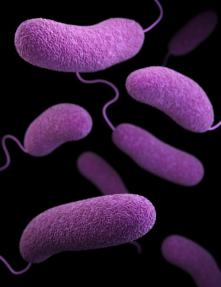
CDC Vibrio

Image CDC

This story is adapted from our recent feature, Of Mosquitoes and Models: Tracking Disease by Satellite.

In 2017, Yemen experienced one of its worst cholera outbreaks on record. Following heavy rains, flooding, and mass movement of the population due to civil unrest, more than one million people were suspected of contracting cholera and at least 2,000 died. A few scientists saw it coming, and they are now working to make sure people are prepared for future cholera outbreaks in Yemen and around the world.

Cholera is a waterborne bacterial infection that can spread quickly through a population. The disease is primarily contracted by consuming water or food contaminated with the cholera bacteria, Vibrio cholerae. It causes uncontrollable diarrhea that, if left untreated, can result in dehydration or death.

A team of NASA-funded researchers has been using satellite and ground-based data to forecast the risk of cholera in Yemen and other countries. The map above shows the forecasted risk of cholera in Yemen from August 10 to September 6, 2020. It was created with the Cholera Prediction Modeling System, which incorporates NASA precipitation data, air temperature data from NASA’s MERRA-2 reanalysis product, and population data. The number of cholera cases could increase in coming weeks, influenced by heavy rains that usually fall in August, though researchers predict the outbreaks should be limited to a few hotspots unless there is a large population displacement.

Research – Escape artists: How vibrio bacteria break out of cells

Science Daily

Food Illness

Image CDC

As soon as the foodborne pathogen Vibrio parahaemolyticus infects a human intestinal cell, the bacteria are already planning their escape. After all, once it is in and multiplies, the bacterium must find a way out to infect new cells.

Now, UT Southwestern scientists have discovered the surprising route that V. parahaemolyticus takes during this exit — or egress — from cells. The bacteria, they report in the journal eLife, gradually modify cholesterol found in a cell’s plasma membrane, eventually weakening the membrane enough so that it can break through.

“The more we understand how bacteria are manipulating host cells at a molecular level, the more we understand how they cause disease,” says study leader Kim Orth, Ph.D., professor of molecular biology and biochemistry at UTSW and a Howard Hughes Medical Institute investigator. “Bacteria have many different mechanisms to escape, but this stood out because it’s an especially novel one.”